







All Sauce from Weekly Gravy:

Childbirth is an overwhelming accomplishment, but new mothers would do best not to rest on their laurels following delivery, a new guideline says. New moms should clock at least two hours a week of moderate to vigorous physical activity in the first months following birth, experts recommend. Two to four hours of exercise per week can keep a new mother healthy and reduce her risk of postpartum depression or anxiety, researchers wrote in the British Journal of Sports Medicine. Experts also recommend daily pelvic floor exercises to reduce the risk of urinary incontinence, as well as taking steps to improve sleep quality. “The weeks and months following birth are a period of abrupt changes in physiological and psychological health,” wrote a team led by Margie Davenport, a professor of kinesiology, sport and recreation at the University of Alberta in Canada. “Postpartum women and people are at increased risk of depression, weight retention, sleep disorders, diabetes and cardiovascular disease, especially if they experienced pregnancy complications,” the team wrote. “Such conditions have significant consequences on the short-term and long-term health and well-being of both the mother and the infant.” For the new guidelines, researchers analyzed data from 574 prior studies related to the health of mother and child following delivery. After consulting with a panel of new mothers, the research team selected 21 “critical” and “important” outcomes…  read on >  read on >

Novo Nordisk, a Danish pharmaceutical company, has signed a major deal worth up to $2 billion for the rights to a new obesity and diabetes drug, the company announced March 24. The drug, called UBT251, is being developed by United Bio-Technology (Hengqin) Co., a Chinese pharmaceutical company. Novo Nordisk will pay $200 million up front, with up to $1.8 billion in additional payments down the line, The Wall Street Journal reported. The company also agreed to pay royalties based on future sales. Novo Nordisk now holds the exclusive rights to develop, manufacture and sell the drug worldwide, except in mainland China, Hong Kong, Macau and Taiwan. UBT251 is different from Novo Nordisk’s current drugs like Ozempic and Wegovy. The drug combines GLP-1 and GIP, which lower appetite and blood sugar, with glucagon, which helps prevent dangerously low blood sugar levels. “The addition of a candidate targeting glucagon, as well as GLP-1 and GIP, will add important optionality to our clinical pipeline, as we look to develop a broad portfolio of differentiated treatment options that cater to the diverse needs of people living with these highly prevalent diseases,” Martin Holst Lange, executive vice president for development at Novo Nordisk, told The Wall Street Journal. UBT251 is already approved for early clinical trials in China for adults with type 2 diabetes, fatty liver disease, chronic kidney disease…  read on >  read on >

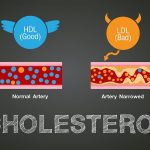
Statins are very cheap and highly effective cholesterol-lowering drugs — but high-risk heart patients may have an even better option, a new evidence review says. Combining statins with another drug, ezetimibe, significantly reduces the risk of death in patients with clogged arteries, according to findings published March 23 in Mayo Clinic Proceedings. Using a high-dose statin with ezetimibe significantly reduces levels of “bad” LDL cholesterol, increasing a person’s chances of reaching healthy levels by 85%, researchers found. The combo also brought about a 19% reduction in risk of death from any cause; a 16% reduction in heart-related deaths; an 18% decrease in the risk of a major cardiovascular health problem; and a 17% decline in stroke risk. This combination therapy would prevent more than 330,000 deaths a year worldwide among patients who have already suffered a heart attack, including almost 50,000 deaths in the U.S. alone, researchers said. “This study confirms that combined cholesterol lowering therapy should be considered immediately and should be the gold standard for treatment of very high-risk patients after an acute cardiovascular event,” senior researcher Dr. Peter Toth, a professor of clinical family and community medicine at the University of Illinois, said in a news release. Up to now, studies have been inconsistent regarding whether to provide combo cholesterol-lowering therapy immediately for high-risk patients, even before they suffer a heart attack…  read on >  read on >

Lifestyle factors like diet, exercise, smoking and blood pressure have a greater impact on the heart health of women than men, a new study says. Women with poor health have nearly five times the risk of heart disease compared to women with ideal health, according to findings scheduled for presentation Saturday at a meeting of the American College of Cardiology in Chicago. By comparison, men in poor health only have 2.5 times the risk of heart disease compared to men in ideal health. “For the same level of health, our study shows that the increase in risk [related to each factor] is higher in women than in men — it’s not one-size-fits-all,” lead researcher Dr. Maneesh Sud, an interventional cardiologist at Sunnybrook Health Sciences Center in Toronto, said in a news release. The new study is the first to show that such lifestyle risks are more strongly linked to women’s heart health, researchers said. “This is novel and something that hasn’t been seen in other studies,” Sud said. The study focused on eight factors associated with heart disease: diet, sleep, exercise, smoking, body mass index, blood sugar, cholesterol and blood pressure. (Body mass index is a estimate of body fat based on height and weight.) Researchers looked at these factors in more than 175,000 Canadian adults who enrolled in the Ontario Health Study between 2009…  read on >  read on >

How should a person eat in middle age to protect their health as they grow older? One diet came out a clear winner in a 30-year study involving more than 105,000 men and women and eight diets, researchers reported in the journal Nature Medicine. People whose dietary pattern more closely stuck to the Alternative Healthy Eating Index (AHEI) in middle-age had the greatest likelihood of good health in their 70s, researchers say. Those with the highest AHEI score had 86% better odds of healthy aging at 70, and were 2.2 times more likely to be healthy at 75, results show. The AHEI centers on a diet rich in fruits, vegetables, whole grains, nuts, legumes and healthy fats, and low in red and processed meats, sugary drinks, sodium and refined grains, researchers said. “Our findings suggest that dietary patterns rich in plant-based foods, with moderate inclusion of healthy animal-based foods, may promote overall healthy aging and help shape future dietary guidelines,” co-senior researcher Marta Guasch-Ferré, an associate professor of public health at the University of Copenhagen and adjunct associate professor of nutrition at the Harvard T.H. Chan School of Public Health, said in a news release. Harvard researchers created the AHEI in 2002 as an alternative to the U.S. Department of Agriculture’s Healthy Eating Index, which measures how well people’s diets stick to the federal Dietary…  read on >  read on >

A rare red meat allergy, usually linked to a bite from the lone star tick, may also be caused by other tick species found in different parts of the U.S., a new report shows. “Alpha-gal syndrome is relatively rare, but those who have it can have a full-on anaphylactic shock,” Douglas Norris, a professor of molecular microbiology and immunology at the Johns Hopkins Bloomberg School of Public Health, said in a report from NBC News. The U.S. Centers for Disease Control and Prevention (CDC) estimates nearly 450,000 people in the U.S. have this condition. Most cases are linked to the lone star tick, which is common in the Southeast and lower Midwest.  But new case reports from Maine and Washington state found two women who developed alpha-gal syndrome after being bitten by ticks in places where lone star ticks aren’t common. This suggests that other types of ticks, like the black-legged tick (also called deer tick) that transmits the bacteria that causes Lyme disease, and the western black-legged tick, may also cause the condition. “We do believe the lone star tick is still responsible for most of the cases of alpha-gal syndrome in the U.S.,” Dr. Johanna Salzer, a veterinary medical officer and epidemiologist with the CDC’s Division of Vector-Borne Diseases, told NBC News. In the Washington case, a 61-year-old woman went into anaphylactic shock…  read on >  read on >

Folks frequently use their smartwatches to monitor their daily step count, aiming to get enough physical activity to improve their health. But smartwatches are tracking another measure of health that could prove even more important, a new study suggests. Smartwatches also capture a person’s average daily heart rate, and dividing that by their daily number of steps provides a more reliable measure of a person’s heart fitness than either number on its own, according to research to be presented in Chicago Saturday at a meeting of the American College of Cardiology. “The metric we developed looks at how the heart responds to exercise, rather than exercise itself,” lead researcher Zhanlin Chen, a medical student at Northwestern University Feinberg School of Medicine in Chicago, said in a news release. “It’s a more meaningful metric because it gets at the core issue of capturing the heart’s capacity to adjust under stress as physical activity fluctuates throughout the day,” he added. “Our metric is a first attempt at capturing that with a wearable device.” Generally, people are recommended to get 10,000 steps a day, although the number has varied from study to study. For this new study, researchers analyzed data from nearly 7,000 American adults who provided Fitbit data and their electronic health records to an National Institutes of Health research program. All told, the data reflected 51…  read on >  read on >

People dealing with heart disease, diabetes or obesity are behind the eight ball when it comes to their chances of living longer. But they can improve their odds if they start following a healthy plant-based diet, according to a study scheduled for presentation Saturday in Chicago at a meeting of the American College of Cardiology. Closer adherence to a healthy plant-based diet is linked to a 17% to 24% reduced risk of premature death from any cause, heart disease or cancer, researchers report. “These findings may help individuals with cardiometabolic disorders make heathier lifestyle choices,” lead researcher Dr. Zhangling Chen of the Second Xiangya Hospital of Central South University in Changsha, China, said in a news release. Not all plant-based foods are healthy, however. Refined grains, potatoes and sugary drinks can pack on extra pounds and cause blood sugar to spike, researchers noted. As a result, people who have an unhealthy plant-based diet with more of those foods have a 28% to 36% increased risk of early death from any cause, heart disease or cancer, results show. “More intake of healthy plant-based foods, less intake of unhealthy plant-based foods and less intake of animal-based foods are all important,” Chen said. For the study, researchers analyzed data from nearly 78,000 people with obesity, heart disease or diabetes who participated in large studies in the U.K., U.S.…  read on >  read on >

Spring break is a time to relax and enjoy a respite from the daily grind. But whether you’re flying, driving or taking a cruise, it’s essential to take care of your health while traveling. Dr. W. Graham Carlos, a professor of clinical medicine at the Indiana University School of Medicine, offers key advice to help you stay healthy during your trip. “Crowded environments like airports, bus, train stations are great places to pick up viruses like norovirus and flu, so pay attention to good hand hygiene,” he said in a news release. “For those traveling south or to the sun, remember to pack sunscreen and stay hydrated as your skin and body have not acclimated to the warmer temperatures. Finally, use the time together to try to disconnect from media and connect with your family and friends with a specific plan to talk about mental and emotional well-being,” Carlos said. How you travel can make a difference in the precautions you take.  “Crowded environments increase the risk of exposure to various infectious diseases that can ruin your trip. Pay attention to hand hygiene in particular. Some people may wish to wear a mask for an extended time on a plane. For those driving to their destination, remember to get plenty of rest before a long trip and stop frequently to recharge,” Carlos added. For both…  read on >  read on >

There’s nothing like the feeling of years of hard work paying off — when you can finally transition to a life of non-work activities, whether it’s traveling, diving into personal projects or even learning a new language.  But retirement in a warm, affordable country may come with an unexpected downside: loneliness. A new study suggests that retirees who move abroad often experience greater social isolation than those who stay in their home state. The research, published recently in Psychology and Aging, compared nearly 5,000 Dutch retirees living abroad to more than 1,300 who stayed in the Netherlands.  It found that retirees who moved overseas were more socially isolated, even though they were often healthier and wealthier than those who stayed. “Although these retirement migrants generally report being happy, they may still face struggles adapting to a new country,” lead author Esma Betül Savaş, a doctoral researcher at the Netherlands Interdisciplinary Demographics Institute, said in a news release. Social loneliness comes from a lack of a broad circle of friends, while emotional loneliness is tied to a lack of close friends or partner. The study found that, overall, retirees who moved abroad had higher levels of social loneliness.  But those who stayed connected with friends and family back home or built strong relationships in their new country felt less isolated. Researchers also found that those who…  read on >  read on >