









All Sauce from Weekly Gravy:

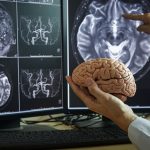
California skateboarder Jared Hager has become the first person to receive a transparent skull replacement, which allows doctors to better view the function of his brain. The window has allowed doctors to both monitor his progress and test new and better scanning methods for assessing brain health. Hager, 39, of Downey, Calif., sustained a traumatic brain injury from a skateboarding accident at a Palm Springs reservoir in April 2019. “I just went down this hill without even looking at it, which is like a really dumb thing to do,” Hager told ABC News. During emergency surgery, half of Hager’s skull was removed to relieve pressure on his brain. Doctors had planned to replace the skull bone once Hager recovered, but the pandemic derailed those plans. Elective surgeries were halted, leaving Hager with just skin and connective tissue protecting his brain for two years. “Even if a stick hits my head, it’s just my brain right here. It’s just my brain.” Hager recalled. But the timing made Hager a perfect candidate to receive an experimental skull implant made of a material that resembles plexiglass. Through this “window,” doctors have tested new ultrasound and CT techniques that produce high-resolution brain images. These brain imaging scans collect data on brain activity by measuring changes in blood flow or electrical impulses. They can provide key insights into how the…  read on >  read on >

America’s college students seem to be more stressed than ever, with a new report finding a sharp rise in cases of post-traumatic stress disorder (PTSD) and acute stress disorder (ASD) on campuses across the country. In a “national sample of U.S. college students, we found a notable increase in the prevalence of PTSD and ASD,” concluded a team led by Yusan Zhai, of the University of Alabama at Birmingham. Rates of PTSD rose by 4.1 percentage points between 2017 and 2022, and stress disorder diagnoses rose by 0.5 percentage points, the data showed. Their findings were published May 30 in the journal JAMA Network Open. As Zhai’s group explained, any number of events — campus shootings, sexual assault, physical violence and natural disasters, for example — can trigger either PTSD or ASD. PTSD can lead to more persistent symptoms, while ASD’s impact may be more transient — anywhere from a few days to a month. In their study, the Birmingham researchers focused on 2017 through 2022, “a period marked by escalated societal stressors and global health crises,” including, of course, the pandemic. They looked at data from the ongoing Healthy Minds study, which tracks the mental health of over 392,000 people attending 332 different colleges and universities across the United States. About 58% of the students were female. The data showed that during the study…  read on >  read on >

Even as suicide rates have risen among Americans generally, one group appears to be bucking that trend: People diagnosed with cancer. Experts are crediting improved access to counseling and other “psychosocial care” with easing the emotional toll of cancer and keeping more patients from making tragic decisions. Nevertheless, cancer patients still face elevated risks for suicide, noted a team led by Dr. Qiang Liu of the National Cancer Center at the Chinese Academy of Medical Sciences in Beijing. “The cancer-related suicide rate is estimated to be double that of the general population in the United States,” Liu’s group noted in the study. “Notably, the risk of suicide in men is significantly higher compared to women. This heightened cancer-related suicide risk remains elevated for up to 15 years following their diagnosis.” The new report was published May 27 in the journal Translational Psychiatry. In the study, Liu’s team looked at data on over 5 million Americans who’d been diagnosed with cancer between 1975 and 2017. Of the more than 8,000 who died by suicide, most (82%) were male, white (93%) and older (73% were ages 50 to 79). However, there was some good news: The rate at which suicide claimed the lives of people with cancer has declined steadily over the decades. These deaths first started to decline gradually between 1989 and 2013, the numbers showed,…  read on >  read on >

Stuttering is a neurological condition, not a psychological one, and scientists in Finland now believe they’ve found the disrupted network in the brain that may cause it. “These findings explain well-known features of stuttering, such as the motor difficulties in speech production and the significant variability in stuttering severity across emotional states,” said senior study author Juho Joutsa, a professor of neurology at the University of Turku. His team published its findings May 27 in the journal Brain. According to the researchers, anywhere from 5% to 10% of children will develop a stutter, and 1% of adults also struggle with stuttering. President Joe Biden has been open about his lifelong management of his own stuttering. “Stuttering was once considered a psychological disorder,” Jpoutsa said in a university news release. “However, with further research, it is now understood to be a brain disorder related to the regulation of speech production.” But just where in the brain a person’s stutter might originate has been unknown. In the study, Joutsa’s group first focused on 20 adults (ranging in age from 45 to 87) who all developed a stutter after suffering a stroke. Although the location in the brain where the stroke occurred varied between patients, the strokes did all seem to affect one particular brain network — unlike strokes that did not bring on stuttering. These networks connected…  read on >  read on >

The old joke holds that fatherhood causes a man’s hair to go prematurely gray. Whether or not that’s true, being a father does appear to put men at greater risk of poor heart health later in life, a new study finds. Dads tended to have worse heart health than men without kids, based on factors like diet, exercise, smoking, weight, blood pressure, cholesterol and blood sugar, researchers reported in the journal AJPM Focus. “The changes in heart health we found suggest that the added responsibility of childcare and the stress of transitioning to fatherhood may make it difficult for men to maintain a healthy lifestyle, such as a healthy diet and exercise,” said researcher Dr. John James Parker, an assistant professor of pediatrics and general internal medicine at Northwestern University Feinberg School of Medicine in Chicago. For the study, researchers analyzed data from more than 2,800 men ages 45 to 84. Although fathers had worse heart health, the study also found they actually have lower death rates than men without kids. That might be because fathers have a better social support system, and social connectedness has been linked to a lower risk of death, Parker said. “Fathers may also be more likely to have someone as their future caretaker [i.e., their children] to help them attend medical appointments and manage medications and treatments as they…  read on >  read on >

Folks typically think of heart disease as a byproduct of modern fast-food living, but a new study shows the condition has plagued humanity for centuries. More than a third (37%) of 237 adult mummies from seven different cultures spanning more than 4,000 years had evidence of clogged arteries, CT scans revealed. Researchers say the results show that humans have an innate risk of atherosclerosis — a build-up of plaque in the arteries that can lead to heart attack and stroke. “We found atherosclerosis in all time periods — dating before 2,500 BCE — in both men and women, in all seven cultures that were studied, and in both elites and non-elites,” said lead researcher Dr. Randall Thompson, a cardiologist at Saint Luke’s Mid America Heart Institute in Kansas City, Mo. “This further supports our previous observation that it is not just a modern condition caused by our modern lifestyles.” The mummies came from around the world, including ancient Egyptians, lowland ancient Peruvians, ancient highland Andean Bolivians, 19th century Aleutian Islander hunter-gatherers, 16th century Greenlandic Inuits, ancestral Puebloan, and Middle-Ages Gobi Desert pastoralists, researchers said. Most cases were consistent with early heart disease that’s often found on CT scans of modern patients, researchers said. The findings were published May 28 in the European Heart Journal. “This study indicates modern cardiovascular risk factors — such as smoking, sedentary…  read on >  read on >

A bilingual brain implant has allowed a stroke survivor to communicate in both Spanish and English, scientists report. Turning to an AI method known as a neural network, researchers trained the patient’s implant to decode words based on the brain activity produced when he tried to articulate those words, and then display those words and sentences on a screen. This method allows the brain implant to process data in a way that is similar to the human brain. Scientists at the University of California, San Francisco’s Center for Neural Engineering and Prostheses have labored for years to design a decoding system that could turn the patient’s brain activity into sentences in both languages. In a report published May 20 in the journal Nature Biomedical Engineering, the scientists share the details of their effort. “This new study is an important contribution for the emerging field of speech-restoration neuroprostheses,” Sergey Stavisky, a neuroscientist at the University of California, Davis, who was not involved in the study, said in a journal news release. Even though the study included only one patient and more research is needed, “there’s every reason to think that this strategy will work with higher accuracy in the future when combined with other recent advances,” Stavisky added. The saga of the bilingual brain implant first began five years ago. At age 20, a man identified…  read on >  read on >

Feeding kids peanuts early in childhood can drastically reduce their risk of developing a peanut allergy, a new clinical trial reports. Children regularly fed peanut products from infancy to age 5 had a 71% lower rate of peanut allergies by the time they reached their teen years, researchers reported May 28 in the journal NEJM Evidence. The study “should reinforce parents’ and caregivers’ confidence that feeding their young children peanut products beginning in infancy according to established guidelines can provide lasting protection from peanut allergy,” said Dr. Jeanne Marrazzo, director of the National Institute of Allergy and Infectious Diseases (NIAID).  “If widely implemented, this safe, simple strategy could prevent tens of thousands of cases of peanut allergy among the 3.6 million children born in the United States each year,” Marrazzo said in a NIAID news release. For the study, researchers tracked more than 500 kids who had earlier participated in a clinical trial to test exposure to peanut as a means of warding off peanut allergy. Half of the kids regularly consumed peanuts from infancy, while the other half avoided peanuts. Early introduction of peanut into their diets reduced kids’ risk of peanut allergy by 81% at age 5, researchers found. This new study followed up on those findings by tracking the kids into adolescence, with an average age of 13. The researchers found that…  read on >  read on >

Near-infrared light pulsing into a person’s skull appears to boost healing in patients with a severe concussion, a new study finds. Patients who wore a helmet emitting near-infrared light displayed a greater change in connectivity between seven different pairs of brain regions, researchers report. “The skull is quite transparent to near-infrared light,” explained co-lead researcher Dr. Rajiv Gupta, a radiologist with Massachusetts General Hospital in Boston. “Once you put the helmet on, your whole brain is bathing in this light.” For the study, researchers tested near-infrared light therapy on 17 patients who’d suffered an injury to the head serious enough to affect their thinking or be visible on a brain scan. Patients put on the light therapy helmet within 72 hours of receiving a traumatic brain injury, and researchers used brain scans to gauge the effects of the treatment. Another 21 patients put on the helmet but didn’t receive light therapy. The researchers focused on the brain’s resting-state function connectivity, or the communication that occurs between brain regions when a person is at rest and not engaged in a specific task. Researchers took brain scans a week after injury, two to three weeks post-injury and three months after injury. “There was increased connectivity in those receiving light treatment, primarily within the first two weeks,” said researcher Nathaniel Mercaldo, a statistician with Massachusetts General Hospital. “We…  read on >  read on >

Children exposed to traffic and other noise in their neighborhoods may be at higher risk for anxiety, researchers conclude, while air pollution could raise risks for other mental health woes. “Childhood and adolescent noise pollution exposure could increase anxiety by increasing stress and disrupting sleep,” wrote a team led by Joanne Newbury, of Bristol Medical School in Bristol, U.K. The findings were published May 28 in the journal JAMA Network Open. In the study, Newbury’s team looked at data from the Avon Longitudinal Study of Parents and Children, which tracked the health of children born in England between 1991 and 1993. A total of 9,065 supplied data on their mental health into adulthood. About 1 in every 5 reported some history of psychosis, 11.4% reported depression and 9.7% reported anxiety. The researchers said that kids who’d been exposed to “noise pollution” in their neighborhoods during childhood and/or adolescence had about a 20% higher odds for anxiety as they grew older. Neighborhood air pollution was also a risk factor for mental health issues: Children exposed to relatively high levels of particulate matter (tiny bits of pollution entering the lungs) while still in the womb had an 11% higher odds for psychosis, compared to those who didn’t have such exposures, and a 10% rise in depression risk. The researchers stressed the data couldn’t prove that noise or…  read on >  read on >