









All Sauce from Weekly Gravy:

Smoking cigarettes while pregnant has long been known to harm the fetus, but new research shows things get even worse when marijuana is in the mix. The study by a team at Oregon Health & Science University (OSHU) in Portland involved more than 3 million pregnancies.   It found heightened risks for underweight newborns, preterm delivery and even infant death among women who used tobacco and cannabis while pregnant. “With the growing legalization of cannabis around the country, there is often a perception that cannabis is safe in pregnancy,” study co-author Dr. Jamie Lo said in an OSHU news release.  “Because we know that many people who use cannabis often use tobacco or nicotine products, we wanted to better understand the potential health implications on both the pregnant individual and the infant,” she explained. Lo is associate professor of obstetrics and gynecology (maternal-fetal medicine) at OHSU. The findings were published May 7 in JAMA Network Open. Lo’s team analyzed hospital discharge data and vital statistics on more than 3 million pregnant women in California averaging about 29 years of age.   Of those women, just over 23,000 (0.7%) said they had used cannabis while pregnant; close to 57,000 (1.8%) had smoked tobacco; and more than 10, 300 (0.3%) had used both substances while pregnant. Compared to women who abstained from cigarettes or marijuana during pregnancy, the…  read on >  read on >

New mothers who like to smoke marijuana might wind up exposing their babies to THC through their own breast milk, a new study says. THC, the intoxicating compound in cannabis, dissolves in the fats contained in human milk, researchers found. Mother’s milk produced by weed users always had detectable amounts of THC, even when the mothers had abstained for 12 hours, results show. The amounts detected were low – infants receive an average of 0.07 milligrams of THC per day through breast milk, researchers estimate. By comparison, a common low-dose edible contains 2 milligrams of THC. However, researchers emphasize that no one knows how any amount of THC might affect an infant or its development. “Breastfeeding parents need to be aware that if they use cannabis, their infants are likely consuming cannabinoids via the milk they produce, and we do not know whether this has any effect on the developing infant,” lead researcher Courtney Meehan, a biological anthropologist at Washington State University, said in a news release. Worse, there’s no consistent time when a weed user can expect the THC concentrations in their breast milk to peak and then decline. Guidelines for new mothers say to wait at least two hours after drinking alcohol before breastfeeding. There are no similar guidelines for cannabis. For participants who used cannabis just once during the study, THC in…  read on >  read on >

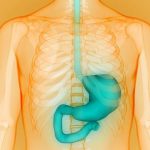
An experimental procedure could reduce levels of a hunger-triggering hormone by burning part of a person’s stomach lining, a new study reports. In the procedure, doctors snake a tube down the patient’s throat with a tiny device that singes the lining of the upper portion of the stomach, also called the gastric fundus. That’s the part of the stomach that produces ghrelin, the primary hormone that controls appetite, researchers said. A six-month clinical trial in which 10 obese women received the procedure resulted in a nearly 8% loss of body weight and a more than 40% reduction in fasting ghrelin levels, according to researchers. They’re slated to report the findings later this month at the Digestive Disease Week medical meeting in Washington, D.C. “This relatively brief, outpatient, non-surgical procedure can facilitate weight loss and significantly curb hunger, and it could be an additional option for patients who don’t want or aren’t eligible for anti-obesity medications, such as Wegovy and Ozempic, or bariatric surgery,” lead researcher Dr. Christopher McGowan, a gastroenterologist and medical director of the True You Weight Loss clinic in Cary, N.C., said in a news release. After snaking the tube into the stomach, doctors insert fluid to protect underlying stomach tissues and then burn (ablate) the mucosal lining of the gastric fundus. This reduces the number of ghrelin-producing cells in that part of…  read on >  read on >

Nine of 10 American adults are in the early, middle or late stages of a syndrome that leads to heart disease, a new report finds, and almost 10% have the disease already. “Poor cardiovascular, kidney, and metabolic health is widespread among the U.S. population,” concludes a team led by Dr. Muthiah Vaduganathan of Brigham and Women’s Hospital and Harvard Medical School in Boston. Researchers looked specifically at rates of what the American Heart Association has dubbed cardiovascular, kidney and metabolic (CKM) syndrome — interrelated factors that progress with time and, if left unchecked, lead to heart disease. CKM syndrome is divided into four stages: Stage 1: Excess fat buildup in the body (a risk factor for poor health) Stage 2: Emergence of other metabolic risk factors (for example, high blood pressure, high cholesterol, diabetes) Stage 3: Emergence of high-risk kidney disease and/or a high predicted risk of heart disease being diagnosed within the next 10 years  Stage 4: A diagnosis of full-blown heart disease, with or without kidney disease To find out how many Americans might fall into one of these four categories, the Boston team tracked U.S. federal health survey data for 2011 through 2020. Among adults age 20 or older, only 10.6% did not have some level of CKM syndrome, the researchers reported May 8 in the Journal of the American Medical Association. …  read on >  read on >

More than 320,000 U.S. children lost a parent to drug overdose during the past decade, according to a new study reported May 8 in JAMA Psychiatry. What’s more, the death rate accelerated during the period, more than doubling between 2011 and 2021, researchers found. About 27 children per 100,000 had a parent die from an overdose in 2011. Ten years later, 63 children per 100,000 lost a parent to lethal drug use, results show. “This first-of-its-kind study allows us to better understand the tragic magnitude of the overdose crisis and the reverberations it has among children and families,” Miriam Delphin-Rittmon, administrator of the federal Substance Abuse and Mental Health Services Administration, said in a news release. Nationwide death records show that nearly 650,000 people 18 to 64 died of a drug overdose between 2011 and 2021. Of those, an estimated 321,566 left behind a child, based on data from drug use surveys. “It is devastating to see that almost half of the people who died of a drug overdose had a child,” Dr. Nora Volkow, director of the National Institute on Drug Abuse, said in a news release. “No family should lose their loved one to an overdose, and each of these deaths represents a tragic loss that could have been prevented.” These findings come on the heels of another study reporting a three-fold rise…  read on >  read on >

Parents striving to be “perfect” will never attain that goal, and the aim isn’t even healthy for their families, a new study says. The risks of striving for perfection are such that researchers have now created a scale to help parents track their burnout and, if necessary, counter it. The first-of-its-kind Working Parent Burnout Scale is a 10-point survey that helps parents measure their stress and fatigue in real time, researchers say. “If maybe you’re prioritizing making sure your house is spotless all the time, but then you don’t feel like you have time to go for a walk every night with your children, maybe you need to reorganize or find a way to make both of those things work,” lead researcher Kate Gawlik, an associate clinical professor at the Ohio State College of Nursing, said in a news release. About 57% of parents who took part in a new survey said they’re burned out. Burnout can happen when a parent sets unrealistic expectations for themselves, as part of a “culture of achievement” that’s been spurred in part by social media. “You can look at people on Instagram or you can even just see people walking around, and I always think, ‘How do they do that? How do they seem to always have it all together when I don’t?’ ” Gawlik said. “We have high…  read on >  read on >

Children and young adults who are couch potatoes could wind up with enlarged hearts, increasing their risk of heart attack, stroke and early death. Sedentary behavior contributed as much as 40% to the total increase in heart size between the ages of 17 and 24, researchers found. Further, a lack of movement helped enlarge teens’ hearts independent of other risk factors like obesity or high blood pressure, researchers found. Childhood and teenage sedentary behavior amounts to a “ticking time bomb,” researcher Andrew Agbaje said in a news release. He’s an associate professor of clinical epidemiology and child health at the University of Eastern Finland in Kuopio. “There is growing evidence that childhood sedentariness is a health threat that needs to be taken seriously,” he said. On the other hand, children who regularly engaged in light physical activity reduced their increase in heart mass by 49%, researchers said. “Light physical activity is an effective antidote to sedentariness. It is easy to accumulate three to four hours of light physical activity daily,” Agbaje said. Examples of light physical activity include outdoor games, walking a dog, running errands, walking and biking to stores or to school, taking a stroll in the park, playing in the forest, gardening, and casual games of basketball, soccer, golf, frisbee, he said. Kids who regularly worked out even harder tended to increase their heart…  read on >  read on >

People who carry two copies of the gene mutation most strongly implicated in Alzheimer’s disease are almost certain to develop brain changes related to the degenerative disorder, a new study says. A single mutated APOE4 gene has been found to pose the strongest genetics-driven risk factor for late-onset Alzheimer’s, researchers said. Virtually everyone with two copies of the APOE4 gene mutation wound up with higher levels of Alzheimer’s-related brain by age 55, compared to people with another version of APOE, researchers reported May 6 in the journal Nature Medicine. By age 65, more than 95% of people with two APOE4 genes showed abnormal levels of amyloid protein in their cerebrospinal fluid and 75% had positive amyloid scans, researchers said. Amyloid beta plaques are one of the hallmark symptoms of Alzheimer’s. These findings suggest that having two copies of the APOE4 gene could represent a new genetic form of Alzheimer’s disease, said Dr. Juan Fortea, director of the Memory Unit at the Sant Pau Research Institute’s Neurology Service in Barcelona, Spain. “This gene has been known for over 30 years and it was known to be associated with a higher risk of developing Alzheimer’s disease. But now we know that virtually all individuals with this duplicated gene develop Alzheimer’s biology,” Fortea said in a news release. “This is important because they represent between 2 and 3%…  read on >  read on >

Researchers say they’ve identified a human “neural compass” — a pattern of brain activity that helps prevent humans from becoming lost. For the first time, the internal compass humans use to orient themselves and navigate through the environment has been pinpointed in the human brain, researchers reported May 6 in the journal Nature Human Behavior. This discovery could increase understanding of diseases like Alzheimer’s and Parkinson’s, in which a person’s navigation and orientation are frequently impaired. “Keeping track of the direction you are heading in is pretty important. Even small errors in estimating where you are and which direction you are heading in can be disastrous,” said lead researcher Benjamin Griffiths, a psychology fellow at the University of Birmingham in the U.K. “We know that animals such as birds, rats and bats have neural circuitry that keeps them on track, but we know surprisingly little about how the human brain manages this out and about in the real world,” Griffiths added in a news release. Tracking neural activity in humans usually requires participants to remain as still as possible, but for this study researchers employed mobile EEG devices and motion capture to analyze the brain waves of people on the move. A group of 52 participants moved their heads — or sometimes just their eyes — to orient themselves based on cues from different computer…  read on >  read on >

Parents can be very effective buzzkills for their teens, just by letting kids know they’re being closely watched, a new study reports. Teenagers are less likely to drink, smoke or use drugs when parents keep tabs on their activities, according to findings published in the Journal of Studies on Alcohol and Drugs. What’s more, teens don’t need to be busted at least once by their parents to get on the straight and narrow, results show. Simple awareness that parents are monitoring their behavior wound up cutting teens’ use of alcohol or drugs by 40%, without any actual punishment being doled out, researchers found. “Some parents think drinking or using drugs is something that kids are just going to do, no matter what,” lead researcher William Pelham, an assistant adjunct professor of psychiatry at the University of California-San Diego, said in a news release. “But that’s not true. Parents can make a difference.” Previous studies have found that teens are less likely to use drugs, alcohol or tobacco if they have parents who remain aware of their activities, know their friends, and know their whereabouts when they aren’t home, researchers said. The assumption up to now has been that monitoring works because parents are more likely to catch kids red-handed and inflict some sort of punishment like grounding them or taking away their smartphones, Pelham said.…  read on >  read on >