









All Sauce from Weekly Gravy:

Coupons for tobacco products appear to have a big impact on relapse rates for smokers who have recently kicked the habit, researchers report. A study of more than 5,000 former smokers who participated in a national survey found double the relapse rate for those who received cigarette coupons by direct mail or email. “We hypothesized that people who received coupons would be more likely to relapse, but we were surprised by the magnitude of the effect,” said lead author Jidong Huang, a professor in the Department of Health Policy and Behavioral Sciences at Georgia State University School of Public Health. “It really shows that smokers who have quit the past year are the most vulnerable to relapse, and it implies that policies that prohibit the distribution of tobacco coupons could help more people succeed in quitting,” he said in a university news release. Smoking continues to be the leading cause of preventable death for Americans. It claims more than 480,000 lives each year in the United States, according to the U.S. Centers for Disease Control and Prevention. Huang said strong tobacco prevention and control policies, including raising tobacco taxes, adopting comprehensive smoke free policies, conducting hard-hitting anti-tobacco media campaigns and implementing restrictions on tobacco advertising, have reduced cigarette smoking to all-time lows. Yet more regulation is needed. Physicians and smoking cessation counselors should warn people…  read on >  read on >

AI might not always be your most accurate source of health information, especially when it comes to cancer care, new research finds. Two new studies assessed the quality of responses offered by AI chatbots to a variety of questions about cancer care. One, published Aug. 24 in JAMA Oncology, zeroed in on the full-sentence conversational AI service known as ChatGPT, which launched to great fanfare last November. The upside: About two-thirds of cancer information offered by ChatGPT accurately matched current guidelines from the U.S. National Comprehensive Cancer Network. The downside: The rest did not. “Some recommendations were clearly completely incorrect,” said study author Dr. Danielle Bitterman, an assistant professor of radiation oncology at the Brigham and Women’s Hospital/Dana-Farber Cancer Institute and at Harvard Medical School in Boston. “For example, instances where curative treatment was recommended for an incurable diagnosis.” Other times, incorrect recommendations were more subtle — for instance, including some, but not all, parts of a treatment regimen, such as recommending surgery alone, when standard treatment also includes radiotherapy and/or chemotherapy, Bitterman said. That’s concerning, she said, given the degree to which “incorrect information was mixed in with correct information, which made it especially difficult to detect errors even for experts.” A second study in the same journal issue offered a much rosier assessment of AI accuracy. In this instance, investigators looked at answers…  read on >  read on >

The American middle-class squeeze has grown even worse in recent years, with many in the “forgotten middle” facing financial pressure and poor health as they near retirement age, a new study reports. Essentially, the U.S. middle class has split in two, and those relegated to the lower-middle are facing tough times in retirement, said lead researcher Jack Chapel. He is a doctoral candidate in economics at the University of Southern California Dornsife College of Letters, Arts and Sciences. “We see that the middle class is hollowing out a little bit and separating out into this lower-middle and upper-middle,” Chapel said. “People in this lower-middle group compared to people in the upper-middle group are going to be living longer lives, but living a longer proportion of their life with worse health.” For the study, researchers fed federal survey data into a computer simulation to estimate future life expectancy and disability for people in their 50s at different times between 1994 and 2018. Quality-adjusted life expectancy — living not just longer, but healthier — increased by 5% for people in the upper-middle economic status group, the results showed. However, their lower-middle peers didn’t experience a similar increase. Instead, their quality-adjusted life expectancy has stagnated, the researchers found. They will live longer, but also will suffer more in their old age. For example, an average 60-year-old woman in…  read on >  read on >

Stroll past the supplements in any drugstore and you’ll find broad claims about fish oil helping everything from heart and brain health, to joints, eyes and immune systems. But you just might be wasting your money, according to a new study. “We know from recent large, randomized trials that fish oil supplements do not prevent heart disease in the general population, but yet they are one of the most common supplements taken, often by people who still believe they will benefit their heart,” said lead study author Joanna Assadourian, fourth-year medical student at UT Southwestern Medical School in Dallas. The authors researched what these labels actually say, using data from labels of on-market fish oil supplements, to measure the frequency and types of health claims. They included both U.S. Food and Drug Administration-reviewed qualified health claims and those that made assertions about supporting structure or function in various organs. The researchers also assessed the total daily doses of combined EPA and DHA, the omega-3 fatty acids found in fish oil, found in supplements from 16 leading manufacturers and retailers. They found that 2,082 of the 2,819 analyzed made at least one health claim, which is nearly 74%. And of those, only 19% made an FDA-approved qualified health claim, which helps consumers understand any scientific uncertainty surrounding a claim. The others made general structure or function…  read on >  read on >

With 2023 predicted to be the hottest year on record, a new study is pointing to another potential consequence of heat waves: faster declines in older adults’ memory and thinking skills. The study, of nearly 9,500 older U.S. adults, found that those with greater exposure to heat waves over 12 years also showed a steeper decline in cognitive function — critical mental skills like memory, reasoning and judgment. The connection was specifically seen among older Black Americans and those living in poorer neighborhoods — groups who typically have fewer resources to protect themselves from scorching summer heat. Experts stressed that the findings show only an association between heat and cognitive decline, and cannot pin the blame on temperature extremes. Cognitive decline is complex and influenced by many factors, said lead researcher Eunyoung Choi, a postdoctoral associate at NYU School of Global Public Health in New York City. “Isolating the specific effect of extreme heat from this complex web is a challenging task,” she said. At the same time, there are reasons that repeated exposure to heat waves could affect older adults’ mental acuity, according to Choi. For one, there could be direct effects: Extreme heat can dull mental performance in the short term, and continued exposure over time might promote inflammation and damage brain cells. Sizzling temperatures could also act in indirect ways, Choi said.…  read on >  read on >

Living through days of smoky air from Canadian wildfires in June was unpleasant for New York City residents, but new data shows it wasn’t as immediately concerning for their lungs as feared. The research finds breathing-related hospital visits weren’t much worse in the city on these days than when pollen is especially high, though longer-term impacts aren’t so clear. “Thankfully, the respiratory effects of the wildfire smoke in June were not much worse than what had been seen on really bad pollen days back in the spring, and despite what many New Yorkers may have feared on seeing hazy, orange air,” study co-author Wuyue Yu said in an NYU news release. Yu is a doctoral student at NYU Langone Health in New York City. The researchers, from NYU Grossman School of Medicine, looked at the first six months of 2023, analyzing daily levels of PM2.5, tiny particles that can be breathed deep into the lungs. When wildfire smoke was at a peak in June, asthma-related visits to the ER rose 3% on average for every 10 microgram increase in PM 2.5 per cubic meter of air. On the smokiest day, 335 people visited emergency departments for their asthma — significantly more than the daily average of 188 earlier in the year. This peak wildfire number was only slightly higher than the 302 visits recorded on…  read on >  read on >

Young people have high levels of distress about climate change, and a new study argues that their anguish could be key to fighting it. “People of all ages are being affected by the climate crisis. Young people in particular, though, will live through more of the unfolding hazards of the climate crisis than older generations,” said researcher Emma Lawrance, mental health innovations fellow at Imperial College London’s Institute of Global Health Innovation. “Children born today will experience seven times the number of heat waves of their grandparents, for instance,” she noted. “At the same time, they are not yet in traditional positions of power to make the changes they know are urgently needed to safeguard their future.” For the research, Lawrance and her colleagues surveyed 539 people in the United Kingdom between 16 and 24 years of age. In all, 64.3% had moderate or high levels of climate distress. Those with diagnosed mental health conditions were significantly more likely to be among this group. Those who were more well-to-do had significantly higher odds for experiencing moderate as opposed to low climate distress. And guys were less likely to have high levels of climate distress. A child psychiatrist in New York hears the alarm coming from young people all the time. “If you speak to many young people today they will often say, ‘I’m worried about…  read on >  read on >

An international research team has achieved the first complete sequencing of the human Y chromosome, which is closely linked to male development. This is the last of the human chromosomes to be fully sequenced, an effort that may shed light on everything from fertility to disease. The work was led by the Telomere-to-Telomere (T2T) Consortium, which is a team of researchers funded by the National Human Genome Research Institute (NHGRI) in Bethesda, Md., part of the U.S. National Institutes of Health. The new sequence fills in gaps across more than 50% of the Y chromosome’s length. The research, published Aug. 23 in Nature, uncovered important genomic features, including factors in sperm production. While both the X and Y chromosomes have a central role in sexual development, the factors involved are spread across the genome and very complex, according to the study. Other recent work has shown that genes on the Y chromosome contribute to other aspects of human biology, including cancer risk. Researchers completed the first human genome sequence 20 years ago, but there were gaps in the sequences of all 24 chromosomes. While some had just small gaps, more than half of the Y chromosome’s sequence was unknown. The Y chromosome is unusually repetitive, which made its sequence particularly difficult to complete. Study authors explained the challenge with an example of reading a book.…  read on >  read on >

Millions of Americans who experience major depression will suffer a relapse, but a new study suggests that learning to focus on the positive, rather than the negatives in everyday life, might help reduce those odds. “What we started to realize is it’s not just about how people with depression process negative information but there’s something interesting about how they process positive information that might really be important in sustaining their negative mood or depressed mood,” said study co-author Lira Yoon, an associate professor of psychology at the University of Maryland, Baltimore County. Thinking “it might be important to examine both at the same time,” Yoon’s team analyzed 44 past studies to better understand how much time those with a history of major depression spend processing negative and positive information. The meta-analysis included more than 2,000 people who had a history of major depressive disorder and more than 2,200 without it. The studies looked at participants’ responses to negative, positive and neutral information, such as photos of people or words that were happy, sad or neither. The mentally healthy participants tended to respond faster to emotional and non-emotional information, regardless of whether it was positive, negative or neutral. They also had a significant difference in how much time they spent processing positive versus negative information. Those who had major depressive disorder spent more time on the…  read on >  read on >

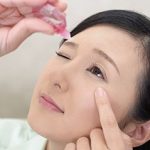
Tainted eye drops are back in the news, with federal regulators warning consumers not to use certain eye drops because of contamination concerns. The U.S. Food and Drug Administration on Tuesday advised people to avoid purchasing and immediately stop using Dr. Berne’s MSM Drops 5% Solution and LightEyez MSM Eye Drops—Eye Repair because the drops may be contaminated with bacteria, fungus or both. Specific microbes isolated from FDA testing include Bacillus (a bacterium) and fungal Exophiala in the Dr. Berne’s MSM Drops 5% Solution. In the LightEyez MSM Eye Drops—Eye Repair, FDA testing detected bacteria including Pseudomonas, Mycobacterium, Mycolicibacterium and Methylorubrum. The Dr. Berne’s products are distributed by Dr. Berne’s Whole Health Products. That company agreed on Monday to a voluntary recall of those particular eye drops. The LightEyez products are distributed by LightEyez Limited. LightEyez has not responded to an FDA email seeking to discuss the FDA’s concerns, the agency said. So far no one has reported adverse events from using the drops, the FDA said, but the products should be thrown out because using them could lead to minor or serious vision-threatening infections. That could even progress to a life-threatening infection, the agency warned. Patients who have signs or symptoms of an eye infection should talk to their health care professional or seek immediate medical care. The two eye drops included in the…  read on >  read on >