








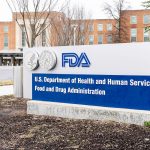
The official in charge of federal food and drug safety inspections will retire May 14. Michael Rogers, associate commissioner for inspections and investigations at the U.S. Food and Drug Administration (FDA), announced his decision Monday in an email to colleagues. “I have decided to retire. It was my decision, but it was time after 34 years,” Rogers told CBS News in an email. His departure comes at a time of many concerns within the agency. Some staff members say they are frustrated with the direction of inspections under new FDA Commissioner Dr. Marty Makary. Rogers led inspection efforts during the 2022 infant formula crisis, when the FDA was criticized for its slow response to problems at an infant formula plant linked to a deadly recall. He also led a reorganization of the inspections office last year, CBS News reported. Two FDA officials told CBS News that Rogers had recently shared with coworkers that he was unhappy at work. Their comments were made anonymously. They said that recent staffing cuts ordered by U.S. Health Secretary Robert F. Kennedy Jr. have already made it harder for the inspections team to keep up with demands. At the same time, Makary has promised to expand surprise foreign inspections. On Monday, he said at a White House event that the FDA would also shorten the length of foreign trips. “We’re…  read on >  read on >

What your child eats could play a role in when they start puberty, a new study shows. Researchers found that girls who ate more inflammatory foods were 15% more likely to get their first period in the next month. On the other hand, a healthier diet lowered the odds by 8%. The findings were published May 6 in the journal Human Reproduction. An early first period is more than just a milestone. It’s linked to a higher risk of breast cancer, heart disease and diabetes later in life, said study author Holly Harris, an epidemiologist at Fred Hutch Cancer Center in Seattle. “This may be an important time period for lowering risk of chronic diseases that occur in adulthood,” Harris told CNN. The study included more than 7,500 children ages 9 to 14 from the Growing Up Today Study. Researchers looked at their diets using two indexes: one gauging how foods and nutrients predict chronic disease, and another considering how inflammatory a diet was. “Eating a healthy diet in late childhood and early adolescence is associated with girls having a later first period compared to those consuming a less healthy diet. Importantly, this association was not explained by the impact of diet on body size,” Harris said. When body mass index (BMI), an estimate of body fat based on height and weight, was factored in,…  read on >  read on >

What your child eats could play a role in when they start puberty, a new study shows. Researchers found that girls who ate more inflammatory foods were 15% more likely to get their first period in the next month. On the other hand, a healthier diet lowered the odds by 8%. The findings were published May 6 in the journal Human Reproduction. An early first period is more than just a milestone. It’s linked to a higher risk of breast cancer, heart disease and diabetes later in life, said study author Holly Harris, an epidemiologist at Fred Hutch Cancer Center in Seattle. “This may be an important time period for lowering risk of chronic diseases that occur in adulthood,” Harris told CNN. The study included more than 7,500 children ages 9 to 14 from the Growing Up Today Study. Researchers looked at their diets using two indexes: one gauging how foods and nutrients predict chronic disease, and another considering how inflammatory a diet was. “Eating a healthy diet in late childhood and early adolescence is associated with girls having a later first period compared to those consuming a less healthy diet. Importantly, this association was not explained by the impact of diet on body size,” Harris said. When body mass index (BMI), an estimate of body fat based on height and weight, was factored in,…  read on >  read on >

Conversion therapy might harm a young person’s long-term heart health, a new study says. Young adults assigned male at birth were nearly three times as likely to be diagnosed with high blood pressure if they’d been exposed to conversion therapy, a discredited practice that attempts to alter a person’s sexual orientation or gender identity, researchers reported May 6 in JAMA Network Open. These young adults also had higher levels of inflammation and elevated blood pressure levels, both of which are potentially damaging to heart health, researchers report. “This is the first study, to our knowledge, to document elevated blood pressure and systemic inflammation, important factors shaping the risk of adverse cardiovascular health outcomes, among sexual and gender minority people exposed to [conversion therapy],” concluded the research team led by senior author Brian Mustanski, director of the Institute for Sexual and Gender Minority Health and Wellbeing at Northwestern University in Chicago. For the study, researchers analyzed health data on more than 700 young adults assigned male gender at birth, of whom 23% were transgender or gender diverse. About 10% of participants said they’d been put through conversion therapy, which tries to alter same-sex attractions or change sexual minority identity. “These interventions, rooted in discredited beliefs that sexual and gender minority identities, behaviors, and/or attractions are immoral, abnormal, and/or pathological, have been unequivocally denounced by leading medical,…  read on >  read on >

Conversion therapy might harm a young person’s long-term heart health, a new study says. Young adults assigned male at birth were nearly three times as likely to be diagnosed with high blood pressure if they’d been exposed to conversion therapy, a discredited practice that attempts to alter a person’s sexual orientation or gender identity, researchers reported May 6 in JAMA Network Open. These young adults also had higher levels of inflammation and elevated blood pressure levels, both of which are potentially damaging to heart health, researchers report. “This is the first study, to our knowledge, to document elevated blood pressure and systemic inflammation, important factors shaping the risk of adverse cardiovascular health outcomes, among sexual and gender minority people exposed to [conversion therapy],” concluded the research team led by senior author Brian Mustanski, director of the Institute for Sexual and Gender Minority Health and Wellbeing at Northwestern University in Chicago. For the study, researchers analyzed health data on more than 700 young adults assigned male gender at birth, of whom 23% were transgender or gender diverse. About 10% of participants said they’d been put through conversion therapy, which tries to alter same-sex attractions or change sexual minority identity. “These interventions, rooted in discredited beliefs that sexual and gender minority identities, behaviors, and/or attractions are immoral, abnormal, and/or pathological, have been unequivocally denounced by leading medical,…  read on >  read on >

The head of the U.S. Food and Drug Administration (FDA) reiterated Tuesday that the agency is applying a more skeptical approach to this year’s round of COVID-19 vaccine boosters. Companies applying for approval of COVID boosters are being encouraged to use “gold standard science,” including full-fledged clinical trials involving healthy people, FDA Commissioner Dr. Marty Makary said today at the American Hospital Association’s annual meeting in Washington, D.C. That approach could mean no COVID boosters will be approved in time for next winter’s respiratory disease season, Makary has warned in earlier interviews. “We need some better data. We can’t just extrapolate from a clinical trial from four or five years ago,” he said at the conference. “Americans have a very low uptake and a very low confidence of the COVID boosters right now.” For example, 85% of health care workers did not get the last COVID booster, Makary noted. “It’s reasonable to say we’d like to see a clinical trial rather than just some antibodies that spike after you give [the vaccine],” he said. “You can make antibodies spike to anything. That doesn’t tell us that it actually has a clinical benefit. Americans want to know, do we really, is there really a clinical benefit in healthy subjects?” The FDA also is considering whether COVID boosters should be given primarily to high-risk groups, as opposed…  read on >  read on >

A test commonly used to confirm a condition linked to high blood pressure is often inaccurate, causing doctors to skip treatment that might improve patients’ heart health, a new study says. The test checks for primary aldosteronism, a condition that affects up to 30% of people with high blood pressure, researchers said. Getting rid of this inaccurate test could “improve diagnostic accuracy and reduce time to treatment. This represents a large paradigm shift in the field of hypertension,” the research team led by Dr. Alexander Leung, an associate professor of medicine with the University of Calgary in Canada, said in a news release. Primary aldosteronism involves overproduction of the hormone aldosterone, which regulates levels of sodium and potassium in the bloodstream, according to the Cleveland Clinic. People with the condition tend to retain salt, increasing their blood pressure, researchers said. Excellent treatments for primary aldosteronism are available, but fewer than 1% of patients are diagnosed and treated due to the complicated process of dialing in a diagnosis, researchers said in background notes. One test used to confirm primary aldosteronism is the seated saline suppression test (SSST), researchers said, In the SSST, patients are given a saline IV drip while doctors test blood samples for levels of aldosterone. To see if the SSST truly helps dial in primary aldosteronism, researchers recruited 156 for a clinical trial…  read on >  read on >

A test commonly used to confirm a condition linked to high blood pressure is often inaccurate, causing doctors to skip treatment that might improve patients’ heart health, a new study says. The test checks for primary aldosteronism, a condition that affects up to 30% of people with high blood pressure, researchers said. Getting rid of this inaccurate test could “improve diagnostic accuracy and reduce time to treatment. This represents a large paradigm shift in the field of hypertension,” the research team led by Dr. Alexander Leung, an associate professor of medicine with the University of Calgary in Canada, said in a news release. Primary aldosteronism involves overproduction of the hormone aldosterone, which regulates levels of sodium and potassium in the bloodstream, according to the Cleveland Clinic. People with the condition tend to retain salt, increasing their blood pressure, researchers said. Excellent treatments for primary aldosteronism are available, but fewer than 1% of patients are diagnosed and treated due to the complicated process of dialing in a diagnosis, researchers said in background notes. One test used to confirm primary aldosteronism is the seated saline suppression test (SSST), researchers said, In the SSST, patients are given a saline IV drip while doctors test blood samples for levels of aldosterone. To see if the SSST truly helps dial in primary aldosteronism, researchers recruited 156 for a clinical trial…  read on >  read on >

Patients with diverticulitis often try to control the digestive condition by cutting nuts, seeds and popcorn out of their daily diet. But that’s not necessary, a new study has found. Nuts and seeds do not increase the risk of diverticulitis, according to findings published May 5 in the Annals of Internal Medicine. “Our findings refute the widely held belief that dietary intake of particulate matter [like nuts or seeds] should be avoided to prevent diverticulitis,” wrote the team led by senior researcher Dr. Anne Peery, a gastroenterologist with the University of North Carolina at Chapel Hill. However, people can lower their risk of diverticulitis by adopting one of four common health-focused diets, researchers found. “We assessed diet quality and found that multiple healthy diet patterns were associated with a reduced risk for incident diverticulitis in women,” researchers wrote. As people age, they develop small pouches that bulge outward in weak spots along the walls of the colon. These pouches are called diverticula. Diverticulitis occurs when one of these pouches becomes infected or inflamed. Symptoms can include abdominal pain, fever, nausea, vomiting, cramping, constipation or diarrhea.  “Patients with diverticulitis often attempt to control their diet with a particular focus on avoiding nuts and seeds,” assuming that the grainy particles could lodge in a pocket and cause inflammation, the research team wrote. To test this tactic, researchers…  read on >  read on >

Patients with diverticulitis often try to control the digestive condition by cutting nuts, seeds and popcorn out of their daily diet. But that’s not necessary, a new study has found. Nuts and seeds do not increase the risk of diverticulitis, according to findings published May 5 in the Annals of Internal Medicine. “Our findings refute the widely held belief that dietary intake of particulate matter [like nuts or seeds] should be avoided to prevent diverticulitis,” wrote the team led by senior researcher Dr. Anne Peery, a gastroenterologist with the University of North Carolina at Chapel Hill. However, people can lower their risk of diverticulitis by adopting one of four common health-focused diets, researchers found. “We assessed diet quality and found that multiple healthy diet patterns were associated with a reduced risk for incident diverticulitis in women,” researchers wrote. As people age, they develop small pouches that bulge outward in weak spots along the walls of the colon. These pouches are called diverticula. Diverticulitis occurs when one of these pouches becomes infected or inflamed. Symptoms can include abdominal pain, fever, nausea, vomiting, cramping, constipation or diarrhea.  “Patients with diverticulitis often attempt to control their diet with a particular focus on avoiding nuts and seeds,” assuming that the grainy particles could lodge in a pocket and cause inflammation, the research team wrote. To test this tactic, researchers…  read on >  read on >