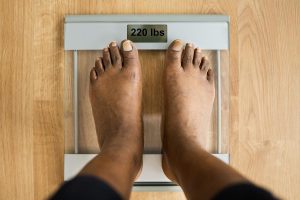









Good news for women of a certain age: Hormone replacement therapy for menopause appears to boost the effectiveness of GLP-1 weight loss drugs like Wegovy and Zepbound, a new study says. Women using tirzepatide (Zepbound) lost more weight if they also were taking hormone therapy — 17% of body weight lost versus 14% after a median 18 months, researchers reported Saturday at the Endocrine Society’s annual meeting in San Francisco. Further, more women taking Zepbound and hormone therapy achieved at least 20% total body weight loss, with 45% meeting this goal compared to 18% of those not on hormone therapy. “These data are the first to show the combined use of tirzepatide and menopause hormone therapy significantly increases treatment effectiveness in postmenopausal women,” presenting investigator Dr. Regina Castaneda, a research fellow in endocrinology at the Mayo Clinic in Jacksonville, Fla, said in a news release. Casteneda noted that previous studies of semaglutide (Ozempic/Wegovy) yielded similar findings. “Achieving these outcomes with a second obesity medication may indicate a broader efficacy trend for pairing these two classes of medications,” Castenada said. More women are using hormone therapy to manage menopause symptoms like hot flashes and night sweats, following research that found such therapy didn’t increase risk of diseases like breast cancer and heart disease as dramatically as previously thought. Menopause-related hormone changes often result in increased belly…  read on >  read on >

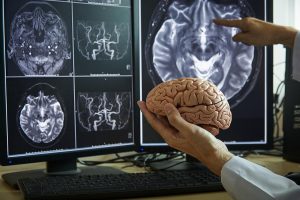
Folks who breathe in more air pollution have a higher risk of developing a common non-cancerous brain tumor, a new study says. Several different types of air pollutants, including particle pollution and nitrogen dioxide, appear to increase risk of meningiomas — tumors that form in the layers of tissue that cover the brain and spinal cord, researchers reported July 9 in the journal Neurology. “Various types of air pollution have been shown to have negative effects on health, and ultrafine particles are small enough to cross the blood-brain barrier and may directly affect brain tissue,” lead researcher Ulla Hvidtfeldt, a senior scientist at the Danish Cancer Institute in Copenhagen, Denmark, said in a news release. “Our study suggests that long-term exposure to air pollution from traffic and other sources may play a role in the development of meningioma and adds to the growing body of evidence that air pollution can affect the brain — not just the heart and lungs,” she  added. More than 170,000 people a year are diagnosed with meningioma in the United States, according to the Cleveland Clinic. Symptoms include headaches, dizziness, nausea, vision changes, hearing loss, seizures, memory problems, muscle weakness or paralysis, and behavioral or personality changes. Meningiomas can be treated with surgery, radiation therapy or chemotherapy, the Cleveland Clinic says.  For the new study, researchers followed nearly 4 million…  read on >  read on >

Folks who breathe in more air pollution have a higher risk of developing a common non-cancerous brain tumor, a new study says. Several different types of air pollutants, including particle pollution and nitrogen dioxide, appear to increase risk of meningiomas — tumors that form in the layers of tissue that cover the brain and spinal cord, researchers reported July 9 in the journal Neurology. “Various types of air pollution have been shown to have negative effects on health, and ultrafine particles are small enough to cross the blood-brain barrier and may directly affect brain tissue,” lead researcher Ulla Hvidtfeldt, a senior scientist at the Danish Cancer Institute in Copenhagen, Denmark, said in a news release. “Our study suggests that long-term exposure to air pollution from traffic and other sources may play a role in the development of meningioma and adds to the growing body of evidence that air pollution can affect the brain — not just the heart and lungs,” she  added. More than 170,000 people a year are diagnosed with meningioma in the United States, according to the Cleveland Clinic. Symptoms include headaches, dizziness, nausea, vision changes, hearing loss, seizures, memory problems, muscle weakness or paralysis, and behavioral or personality changes. Meningiomas can be treated with surgery, radiation therapy or chemotherapy, the Cleveland Clinic says.  For the new study, researchers followed nearly 4 million…  read on >  read on >

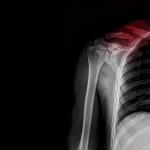
More kids are being hospitalized for broken collarbones, a new study has found. In fact, the hospitalization rate for broken collarbones more than doubled among children between 2014 and 2021, researchers reported. This increase occurred even though the overall rate of childhood clavicle fractures remained relatively stable during the past 10 years, researchers said. “This suggests that while the rate of clavicle fractures is stagnant, the severity of these fractures is rising,” wrote the research team led by Charu Jain, a student at the Icahn School of Medicine at Mount Sinai in New York City. For the study, researchers analyzed records from an injury surveillance database representing about 100 ERs in the United States, looking for collarbone fractures among kids 18 and younger. They wound up examining more than 391,000 cases of broken collarbone that occurred between 2014 and 2023. The hospitalization rate for broken collarbones rose to a high of 2.6% in 2021 from a low of 0.8% in 2014, researchers report. This jibes with previous studies that found more kids require metal implants to properly set their broken collarbones, indicating the fractures are too severe to be treated with a simple sling or cast, researchers said.  The study also found that younger kids are more likely to sustain a broken collarbone falling out of bed, while tweens and teens more often suffer breaks…  read on >  read on >

More kids are being hospitalized for broken collarbones, a new study has found. In fact, the hospitalization rate for broken collarbones more than doubled among children between 2014 and 2021, researchers reported. This increase occurred even though the overall rate of childhood clavicle fractures remained relatively stable during the past 10 years, researchers said. “This suggests that while the rate of clavicle fractures is stagnant, the severity of these fractures is rising,” wrote the research team led by Charu Jain, a student at the Icahn School of Medicine at Mount Sinai in New York City. For the study, researchers analyzed records from an injury surveillance database representing about 100 ERs in the United States, looking for collarbone fractures among kids 18 and younger. They wound up examining more than 391,000 cases of broken collarbone that occurred between 2014 and 2023. The hospitalization rate for broken collarbones rose to a high of 2.6% in 2021 from a low of 0.8% in 2014, researchers report. This jibes with previous studies that found more kids require metal implants to properly set their broken collarbones, indicating the fractures are too severe to be treated with a simple sling or cast, researchers said.  The study also found that younger kids are more likely to sustain a broken collarbone falling out of bed, while tweens and teens more often suffer breaks…  read on >  read on >

AI programs can exhibit racial bias when evaluating patients for mental health problems, a new study says. Psychiatric recommendations from four large language models (LLMs) changed when a patient’s record noted they were African American, researchers recently reported in the journal NPJ Digital Medicine. “Most of the LLMs exhibited some form of bias when dealing with African American patients, at times making dramatically different recommendations for the same psychiatric illness and otherwise identical patient,” said senior researcher Elias Aboujaoude, director of the Program in Internet, Health and Society at Cedars-Sinai in Los Angeles. “This bias was most evident in cases of schizophrenia and anxiety,” Aboujaoude added in a news release. LLMs are trained on enormous amounts of data, which enables them to understand and generate human language, researchers said in background notes. These AI programs are being tested for their potential to quickly evaluate patients and recommend diagnoses and treatments, researchers said. For this study, researchers ran 10 hypothetical cases through four popular LLMs, including ChatGPT-4o, Google’s Gemini 1.5 Pro, Claude 3.5 Sonnet, and NewMes-v15, a freely available version of a Meta LLM. For each case, the AI programs received three different versions of patient records: One that omitted reference to race, one that explicitly noted a patient was African American, and one that implied a patient’s race based on their name. The AI often…  read on >  read on >

AI programs can exhibit racial bias when evaluating patients for mental health problems, a new study says. Psychiatric recommendations from four large language models (LLMs) changed when a patient’s record noted they were African American, researchers recently reported in the journal NPJ Digital Medicine. “Most of the LLMs exhibited some form of bias when dealing with African American patients, at times making dramatically different recommendations for the same psychiatric illness and otherwise identical patient,” said senior researcher Elias Aboujaoude, director of the Program in Internet, Health and Society at Cedars-Sinai in Los Angeles. “This bias was most evident in cases of schizophrenia and anxiety,” Aboujaoude added in a news release. LLMs are trained on enormous amounts of data, which enables them to understand and generate human language, researchers said in background notes. These AI programs are being tested for their potential to quickly evaluate patients and recommend diagnoses and treatments, researchers said. For this study, researchers ran 10 hypothetical cases through four popular LLMs, including ChatGPT-4o, Google’s Gemini 1.5 Pro, Claude 3.5 Sonnet, and NewMes-v15, a freely available version of a Meta LLM. For each case, the AI programs received three different versions of patient records: One that omitted reference to race, one that explicitly noted a patient was African American, and one that implied a patient’s race based on their name. The AI often…  read on >  read on >

Folks who work out to ease their rheumatoid arthritis (RA) symptoms might find some relief from an unexpected source – a blood pressure cuff. People who apply pneumatic cuffs to a limb while working out experience reduced pain and improved strength and physical performance, a small-scale study indicates. This new form of exercise – called blood flow-restricted resistance training – could offer fresh hope for people with RA, researchers report in the journal Disability and Rehabilitation. Restricting blood flow to a limb during strength training forces muscles to work harder, even if a person is using lighter weights or less effort, researchers explained. “RA can cause a loss of muscle mass and strength, which affects day-to-day activities, independence, and increases the risk of falls and fractures,” lead researcher Hunter Bennett, a senior lecturer in exercise and sport science at the University of South Australia, said in a news release. “Resistance training is one of the best ways to rebuild that strength, but for people with RA, using heavy weights can be difficult or harmful due to pain, fatigue or injury risk,” Bennett said. “This is where blood flow-restricted resistance training can help.” For the pilot study, researchers had 12 people aged 45 to 75 with RA  work out with cuffs restricting blood flow to the limb being worked. The people worked out twice a week…  read on >  read on >

Folks who work out to ease their rheumatoid arthritis (RA) symptoms might find some relief from an unexpected source – a blood pressure cuff. People who apply pneumatic cuffs to a limb while working out experience reduced pain and improved strength and physical performance, a small-scale study indicates. This new form of exercise – called blood flow-restricted resistance training – could offer fresh hope for people with RA, researchers report in the journal Disability and Rehabilitation. Restricting blood flow to a limb during strength training forces muscles to work harder, even if a person is using lighter weights or less effort, researchers explained. “RA can cause a loss of muscle mass and strength, which affects day-to-day activities, independence, and increases the risk of falls and fractures,” lead researcher Hunter Bennett, a senior lecturer in exercise and sport science at the University of South Australia, said in a news release. “Resistance training is one of the best ways to rebuild that strength, but for people with RA, using heavy weights can be difficult or harmful due to pain, fatigue or injury risk,” Bennett said. “This is where blood flow-restricted resistance training can help.” For the pilot study, researchers had 12 people aged 45 to 75 with RA  work out with cuffs restricting blood flow to the limb being worked. The people worked out twice a week…  read on >  read on >

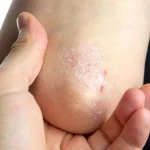
Psoriasis is a chronic autoimmune condition that mainly affects the skin. When you have psoriasis, your immune system sends signals to your skin cells to grow too fast. Normally, skin cells take about a month to form and rise to the surface. In people with psoriasis, this process happens in just a few days. Because the skin can’t shed these cells fast enough, they pile up and form thick, scaly patches called plaques. These plaques can appear anywhere, but they are most common on the elbows, knees, scalp and lower back. Psoriasis is not contagious, meaning you cannot catch it from someone else or give it to anyone. What causes psoriasis? Psoriasis develops when the immune system becomes overactive, but the exact reason why this happens isn’t fully understood. It seems to be a combination of genetics and triggers in the environment. Genetics: If someone in your family has psoriasis, your chances of getting it are higher. Immune system: Psoriasis is considered an autoimmune disease, in which your body attacks healthy skin cells by mistake. Triggers: Even if you’re genetically prone to psoriasis, it may only show up after something sets it off. Triggers vary from person to person, but common ones include: stress, infections (like strep throat), skin injuries (cuts, burns, bug bites), certain medications, cold or dry weather and smoking and heavy alcohol…  read on >  read on >