









A common diabetes drug can be repurposed to help overweight and obese people with knee arthritis, a new study says. Metformin reduced knee arthritis pain during a six-month treatment period, potentially delaying the need for knee replacement surgery, researchers reported recently in the Journal of the American Medical Association. “Metformin works in a number of ways on the knee, including affecting low-grade inflammation and other metabolic pathways that are important in knee osteoarthritis,” senior researcher Flavia Cicuttini, a professor of health systems services and policy at Monash University in Australia, said in a news release. “It is a different way to treat knee osteoarthritis pain.” Metformin is commonly prescribed to help lower blood sugar levels in people with type 2 diabetes. It reduces sugar absorption from the intestines, lowers glucose production in the liver, and improves insulin sensitivity, according to Drugs.com. For this study, researchers recruited 107 overweight or obese people with knee pain and randomly assigned about half to take metformin pills and the rest a placebo. The metformin group reported a 31-point reduction in pain after six months, compared with a 19-point reduction for the placebo group. The results show that metformin is a potentially new and affordable way to improve knee pain from arthritis, Cicuttini said. Today, people are asked to exercise and lose weight to reduce knee pain, which many find…  read on >  read on >

Don’t drink and drive is a message the public has largely accepted. Now how about don’t drink and scoot? A quarter of people injured in electric scooter accidents were drunk or high when their mishap occurred, researchers recently reported in the journal The American Surgeon. “In today’s landscape of rapidly growing scooter use, our study highlights how substance use among riders has played a significant role in the rise of severe, costly, and largely preventable injuries,” senior researcher Dr. Areti Tillou, a trauma surgeon and vice chair for education in the UCLA Department of Surgery, said in a news release. For the study, her team analyzed records on more than 7,300 people injured in scooter crashes between 2016 and 2021, drawn from a national hospital care database. During that period, annual scooter-related hospitalizations leaped more than eightfold, with more than 2,700 occurring in 2021. About 25% of the injuries occurred among people who had been drinking or using opioids, marijuana or cocaine, researchers found. Of those, more than 16% of adults had been drinking, the study says. Further, the risk of a concussion or brain injury among drunk or drugged scooter riders was nearly double that of people who weren’t impaired, results show. Scooter wrecks involving impaired riders also cost more to treat, with hospital costs higher by an average $4,600 per patient, researchers said.…  read on >  read on >

Don’t drink and drive is a message the public has largely accepted. Now how about don’t drink and scoot? A quarter of people injured in electric scooter accidents were drunk or high when their mishap occurred, researchers recently reported in the journal The American Surgeon. “In today’s landscape of rapidly growing scooter use, our study highlights how substance use among riders has played a significant role in the rise of severe, costly, and largely preventable injuries,” senior researcher Dr. Areti Tillou, a trauma surgeon and vice chair for education in the UCLA Department of Surgery, said in a news release. For the study, her team analyzed records on more than 7,300 people injured in scooter crashes between 2016 and 2021, drawn from a national hospital care database. During that period, annual scooter-related hospitalizations leaped more than eightfold, with more than 2,700 occurring in 2021. About 25% of the injuries occurred among people who had been drinking or using opioids, marijuana or cocaine, researchers found. Of those, more than 16% of adults had been drinking, the study says. Further, the risk of a concussion or brain injury among drunk or drugged scooter riders was nearly double that of people who weren’t impaired, results show. Scooter wrecks involving impaired riders also cost more to treat, with hospital costs higher by an average $4,600 per patient, researchers said.…  read on >  read on >

Men are more likely than women to die from high blood pressure, diabetes and HIV/AIDS, after shrugging off medical care for the conditions, a new study says. These differences crop up even though men and women are as likely to develop either high blood pressure or diabetes, researchers reported May 1 in the journal PLOS Medicine. The results show that more needs to be done to encourage men to participate in preventive care and health care, researchers said. Medicine also needs to accept that there are sex differences when it comes to health care, and craft guidelines and treatments that reflect reality, said senior researcher Angela Chang, an associate professor of public health with the University of Southern Denmark. “The evidence is clear: sex differences persist at nearly every point along the health pathway, from higher smoking rates in men to higher obesity prevalence in women, yet interventions rarely reflect this,” Chang said in a news release. For the study, researchers used data gathered from global health care databases to track differences between men and women at each step in the “health pathway.” The pathway runs from a risk factor contributing to a health problem, followed by diagnosis and treatment of the problem, researchers said. If not treated adequately or at all, the problem can end in death. Results show that men and women received…  read on >  read on >

Men are more likely than women to die from high blood pressure, diabetes and HIV/AIDS, after shrugging off medical care for the conditions, a new study says. These differences crop up even though men and women are as likely to develop either high blood pressure or diabetes, researchers reported May 1 in the journal PLOS Medicine. The results show that more needs to be done to encourage men to participate in preventive care and health care, researchers said. Medicine also needs to accept that there are sex differences when it comes to health care, and craft guidelines and treatments that reflect reality, said senior researcher Angela Chang, an associate professor of public health with the University of Southern Denmark. “The evidence is clear: sex differences persist at nearly every point along the health pathway, from higher smoking rates in men to higher obesity prevalence in women, yet interventions rarely reflect this,” Chang said in a news release. For the study, researchers used data gathered from global health care databases to track differences between men and women at each step in the “health pathway.” The pathway runs from a risk factor contributing to a health problem, followed by diagnosis and treatment of the problem, researchers said. If not treated adequately or at all, the problem can end in death. Results show that men and women received…  read on >  read on >

High school athletes with ADHD take longer to recover from a sport-related concussion, a new study says. Those with a concussion took about 16% longer to return to the classroom and 17% longer to return to sports, compared to athletes without ADHD, researchers reported April 29 in the Journal of Athletic Training. This is concerning because athletes with ADHD are considered more susceptible for multiple concussions, Steven Broglio, director of the University of Michigan Concussion Center, said in a news release. “It is believed that those with ADHD are less likely to pay full attention to their environment and other players while participating in sport,” said Broglio, who reviewed the findings. “In those instances, they may not appropriately brace for or avoid a head impact that results in a concussion.” For the study, University of Hawaii researchers tracked the outcomes of 935 athletes at 60 local high schools who received a concussion between the 2010 and 2018 school years. Of the group, 78 students said they had ADHD. Researchers compared their recovery to that of the rest. Overall, ADHD athletes took an average 13 days to return to class and 21 days to return to sports following a concussion, compared with 11 and 18 days for athletes without ADHD, results show. “In light of the study findings, health care providers need to recognize ADHD as…  read on >  read on >

High school athletes with ADHD take longer to recover from a sport-related concussion, a new study says. Those with a concussion took about 16% longer to return to the classroom and 17% longer to return to sports, compared to athletes without ADHD, researchers reported April 29 in the Journal of Athletic Training. This is concerning because athletes with ADHD are considered more susceptible for multiple concussions, Steven Broglio, director of the University of Michigan Concussion Center, said in a news release. “It is believed that those with ADHD are less likely to pay full attention to their environment and other players while participating in sport,” said Broglio, who reviewed the findings. “In those instances, they may not appropriately brace for or avoid a head impact that results in a concussion.” For the study, University of Hawaii researchers tracked the outcomes of 935 athletes at 60 local high schools who received a concussion between the 2010 and 2018 school years. Of the group, 78 students said they had ADHD. Researchers compared their recovery to that of the rest. Overall, ADHD athletes took an average 13 days to return to class and 21 days to return to sports following a concussion, compared with 11 and 18 days for athletes without ADHD, results show. “In light of the study findings, health care providers need to recognize ADHD as…  read on >  read on >

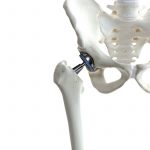
Folks are less likely to recover successfully from a total hip replacement if they have poor muscle quality going into the procedure, a small-scale study says. Patients whose MRI scans revealed fatty hip muscle prior to surgery were more likely to perform poorly on movement tasks following hip replacement, researchers reported today in the Journal of Orthopedic Research. “The findings from this study indicate that hip muscle quality may be an important predictor of post-operative biomechanical recovery following hip replacement,” senior researcher Jeannie Bailey, an associate professor of orthopedic surgery at the University of California-San Francisco, said in a news release. “Muscle quality is often overlooked, and magnetic resonance imaging is needed to visualize muscle composition, which is not routinely collected for hip replacement patients,” she added. Hip replacement can reduce pain and improve function in people with hip arthritis, but some patients continue to suffer long-term problems like muscle weakness, decreased mobility and increased fall risk following the procedure. For the new study, researchers studied 10 people who underwent an MRI prior to their hip replacement. People with fatty, flabby muscles in their hips had poorer movement following surgery, results show. On the other hand, a person’s level of wear-and-tear arthritis did not have any association with their post-op performance, results show. The results indicate that some hip replacement patients might benefit if they…  read on >  read on >

Folks are less likely to recover successfully from a total hip replacement if they have poor muscle quality going into the procedure, a small-scale study says. Patients whose MRI scans revealed fatty hip muscle prior to surgery were more likely to perform poorly on movement tasks following hip replacement, researchers reported today in the Journal of Orthopedic Research. “The findings from this study indicate that hip muscle quality may be an important predictor of post-operative biomechanical recovery following hip replacement,” senior researcher Jeannie Bailey, an associate professor of orthopedic surgery at the University of California-San Francisco, said in a news release. “Muscle quality is often overlooked, and magnetic resonance imaging is needed to visualize muscle composition, which is not routinely collected for hip replacement patients,” she added. Hip replacement can reduce pain and improve function in people with hip arthritis, but some patients continue to suffer long-term problems like muscle weakness, decreased mobility and increased fall risk following the procedure. For the new study, researchers studied 10 people who underwent an MRI prior to their hip replacement. People with fatty, flabby muscles in their hips had poorer movement following surgery, results show. On the other hand, a person’s level of wear-and-tear arthritis did not have any association with their post-op performance, results show. The results indicate that some hip replacement patients might benefit if they…  read on >  read on >