








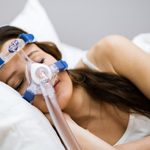
Millions of Americans deal with the sleep deficits brought on by sleep apnea, and many turn to one of the few treatments out there, continuous positive airway pressure (CPAP) machines. But what if new neurochemical targets in the brain could lead to new, less cumbersome therapies for sleep apnea? That’s what a team at the University of Missouri-Columbia are working on in their lab. They’ve pinpointed specific brain chemicals in mouse brains that link sleep apnea to one of its most unhealthy side effects, high blood pressure. “Our ultimate goal is to eventually help clinicians develop specific drugs to target either these neurochemicals or the proteins they bind to in a way that reduces high blood pressure,” explained senior study author David Kline, an investigator at the university’s Dalton Cardiovascular Research Center. The study, which was led by postdoctoral researcher Procopio Gama de Barcellos Filho, involved mice whose brains were subjected to a low-oxygen state similar to what humans experience when they periodically stop breathing due to sleep apnea. Examining the rodents’ neurochemistry, Filho and Kline noticed key changes when in this “hypoxic” state. “When oxygen levels in the blood drop during sleep apnea, the forebrain sends warning signals to the brainstem area that controls heart and lung functions,” Kline explained. “By studying these signals, we found that two neurochemicals, oxytocin and corticotropin-releasing hormone (CRH),… read on > read on >