






In the midst of a pandemic, many Americans still view face mask mandates as an assault on their personal freedoms, rather than a means of protecting themselves and others from COVID-19. But a group of researchers out of Duke University say the mask backlash can be turned around — as long as efforts to do so are grounded in empathy, not judgment. As coronavirus cases in the United States soar, face mask mandates have been issued by a growing number of cities, states and national retailers. The mandates make sense, health experts say. “I think face masking is a very important part [of curbing the spread of COVID-19] and ought to be done in this epidemic,” Dr. Robert Brook, distinguished chair of RAND Corporation’s health care services program, said in a HD Live! interview. “It’s one of the few things we can do that will slow the pandemic.” But there’s been no national public health campaign to tell Americans why face masks work, and how to use them properly, Brook added. May Chu, a clinical professor of epidemiology at the University of Colorado’s School of Public Health, concurred. “We have to teach people how to wear it, how to take care of them and when to use them,” she said in the same HD Live! interview. In the meantime, some Americans balk at wearing a…  read on >
As the U.S. coronavirus case count passed 4.3 million on Monday, companies launched the final phase of testing for two potential COVID-19 vaccines. In one trial begun on Monday, the first of 30,000 volunteers were either given a vaccine developed by Moderna Inc. and the U.S. National Institutes of Health or a placebo shot, the Washington Post reported. Pharmaceutical giant Pfizer also announced Monday that it was starting a 30,000-person final phase vaccine trial, to be conducted at 120 sites globally. “We are participating today in the launching of a truly historic event in the history of vaccinology,” Anthony Fauci, director of the U.S. National Institute of Allergy and Infectious Diseases, said during a news conference on the Moderna vaccine, the Post reported. He predicted that researchers would probably be able to tell whether the Moderna vaccine was effective by November or December, although he added that it was a “distinct possibility” an answer could come sooner. Pfizer officials have said the company expects to be able to seek regulatory authorization or approval for its vaccine by October, the Post reported. Both vaccines require two doses, spaced several weeks apart. Then researchers will have to wait to see whether people get infected or sick with COVID-19. A clear signal of success or failure will depend on how fast the trials recruit participants and how long…  read on >

People with a history of concussion may face increased risks of certain psychological and neurological conditions, a large new study suggests. The study of more than 186,000 Canadians found that those who suffered a concussion were more likely to develop any of several conditions, including: attention-deficit/hyperactivity disorder (ADHD); depression or anxiety; Parkinson’s disease; or dementia. Their risks were roughly 40% to 70% higher, compared to people who did not sustain a concussion during the 25-year study period. The researchers stressed that the vast majority of people in the study — concussed or not — did not develop Parkinson’s, dementia or ADHD. Depression and anxiety disorders were more common across the board, with a higher prevalence in the concussion group. “We’re not trying to scare people or have parents keep their kids out of sports,” said lead researcher Marc Morissette of the Pan Am Clinic Foundation in Winnipeg, Manitoba. Beyond that, the findings do not necessarily mean that concussions, per se, were to blame, said Dr. Sean Rose. Rose, who is co-director of the Complex Concussion Clinic at Nationwide Children’s Hospital in Columbus, Ohio, was not involved in the study. He said research like this can point to a correlation between concussion and later disease risks — but cannot prove cause and effect. It’s difficult, Rose said, to account for all the other variables that could…  read on >

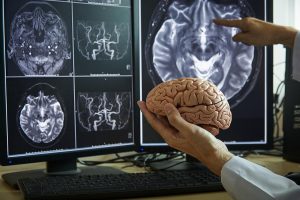
Smoking significantly increases a woman’s risk of potentially deadly brain aneurysms, a new study warns. An aneurysm is a weakened, bulging section of an artery. If an aneurysm ruptures, it can cause fatal bleeding. The study included 545 women, aged 30 to 60, who had brain scans at five large teaching and research hospitals in the United States and Canada between 2016 and 2018. The scans showed that 152 of the women had brain aneurysms that hadn’t ruptured. Compared to nonsmokers, the risk of aneurysm was four times higher in women who smoked, and seven times higher in those who smoked and had high blood pressure. The most common reason for a brain scan among the women was persistent headache, which occurred in 62.5% of those with an aneurysm, compared with 44% of those without an aneurysm, the study authors said. Most of the aneurysms were located in the carotid artery, which is the main blood vessel that leads to the brain. Women with brain aneurysms were heavier smokers than those with normal brain scans (average of 20 versus 12 cigarettes a day) and had smoked for longer (29 years versus 20 years, on average). One-third of the women with brain aneurysms had surgery or other invasive procedures, while two-thirds were placed on monitoring, according to the study published online July 27 in the Journal…  read on >

Coronavirus outbreaks throughout the Sun Belt started to show signs of leveling off on Tuesday, but the nation’s top infectious disease expert warned that COVID-19 cases are now on the rise in the Midwest. “We just can’t afford, yet again, another surge,” Dr. Anthony Fauci said Tuesday, as the country reported more than 1,000 coronavirus fatalities for the second day in a row, the Washington Post reported. Florida, Arkansas, Oregon and Montana saw their highest single-day death tolls to date on Tuesday, the Post reported. However, the number of cases nationwide appears to have leveled off to a seven-day moving average of around 66,000 new cases daily, the Post reported. A slight decline in new cases registered Tuesday followed five weeks of steadily rising numbers. On the vaccine front, the final phase of testing for two potential COVID-19 vaccines was launched on Monday. In one trial, the first of 30,000 volunteers were either given a vaccine developed by Moderna Inc. and the U.S. National Institutes of Health or a placebo shot, the Post reported. Pharmaceutical giant Pfizer also announced Monday that it was starting a 30,000-person final phase vaccine trial, to be conducted at 120 sites globally. Fauci predicted that researchers would probably be able to tell whether the Moderna vaccine was effective by November or December, although he added that it was a “distinct…  read on >

With everyday life turned upside down, efforts to prevent the spread of COVID-19 are taking a toll on the well-being and health of American families, a new poll reveals. More than 1,000 parents nationwide were surveyed in early June. “Without question, COVID-19 had a sudden and profound effect on families nationwide,” said survey leader Dr. Stephen Patrick. He’s director of the Center for Child Health Policy at Vanderbilt University School of Medicine in Nashville. Physical distance requirements, he noted, resulted in total upheaval, with “abrupt closures of schools, child care, community programs and workplaces. Parents lost jobs, child care, social networks. For kids, schools closed, they stopped going to pediatricians.” In many households, access to basic needs like food and supplies has been hard to come by, too. As a result, just over a quarter of parents said their mental health had deteriorated during the pandemic, and about 14% said their kids’ behavioral health suffered. Four percent said their kids’ physical health had suffered and nearly 1 in 5 said their own had also worsened. The online survey found women, unmarried parents and young children appeared to be most vulnerable. But the health impacts were similar for all races and ethnic groups, income levels, educational backgrounds and locations. The poll revealed that insurance coverage and medical routines have been compromised. About 3% of respondents said…  read on >

California and Oregon rolled back their reopenings on Monday, two of several states across the country that are struggling to get surging coronavirus case counts under control. California Gov. Gavin Newsom has ordered the statewide closure of all bars and halted the indoor operations of restaurants, wineries, theaters and a handful of other venues, the The New York Times reported. “We’re going back into modification mode of our original stay-at-home order,” Newsom said Monday. “This continues to be a deadly disease.” California’s two largest public school districts, in Los Angeles and San Diego, said on Monday that all teaching would remain online in the fall, the Times reported. In Oregon, Gov. Kate Brown again banned private indoor gatherings of more than 10 people and required face coverings be worn outside, the Washington Post reported. Other hard-hit states are also grappling with how to best slow the rampant spread of COVID-19. In Texas, a top medical adviser to Gov. Greg Abbott said the state may need to roll back its reopening plans and reinstitute a lockdown if cases keep climbing, the Times reported. Dr. Mark McClellan, a former commissioner of the U.S. Food and Drug Administration, told the Times that a lockdown in Texas was a “real possibility” that Abbott may be forced to impose in the next few weeks. “I don’t think we have much…  read on >

About one-third of people prescribed drugs to prevent HIV stopped taking the medications when they were forced to stay home due to the coronavirus pandemic, a new survey finds. The reason, they said: They weren’t having sex. Many discontinued the drugs without their doctor’s say-so, which has experts concerned. “Reducing the number of new HIV transmissions and ensuring access to critical HIV prevention services must remain a public health priority during this challenging time,” said Bruce Packett, executive director of the American Academy of HIV Medicine. The online survey included more than 400 people at high risk of HIV infection who were using what’s called pre-exposure prophylaxis (PrEP) to protect them from the AIDS-causing virus. Of the one-third who said they stopped the drugs due to shelter-in-place orders, 85% said they weren’t engaging in risky behaviors. That was the same overall rate among respondents. Only 11 respondents said their ability to obtain PrEP was affected by a factor such as lost job/insurance, inability to get a refill from their doctor, or inability to complete laboratory monitoring or testing for HIV or another sexually transmitted infection. More than half the respondents reported no sexual events and no sexual partners, while 89% said they’d reduced the number of sex partners. Ninety percent reported a decrease in the number of sex events, and 88% said they reduced the…  read on >

(HealthDay News) As 64,000 new U.S. coronavirus cases were reported Tuesday and states struggled to control the spread of the virus, the Trump Administration stripped the country’s leading public health agency of the ability to collect hospitalization data on COVID-19. Instead of patient information going to the U.S. Centers for Disease Control and Prevention, it will now be sent to a central database in Washington, The New York Times reported. The unprecedented move has alarmed health experts who fear the data will be politicized or withheld from the public, the newspaper said. From now on, the U.S. Department of Health and Human Services (HHS) will collect daily reports about cases, available beds and available ventilators, the Times reported. But the HHS database is not open to the public, which could affect the work of researchers, modelers and health officials who rely on CDC data to make projections and crucial policy decisions, the Times reported. “Historically, CDC has been the place where public health data has been sent, and this raises questions about not just access for researchers but access for reporters, access for the public to try to better understand what is happening with the outbreak,” Jen Kates, the director of global health and HIV policy with the nonpartisan Kaiser Family Foundation, told the Times. HHS spokesman Michael Caputo insisted the change was made to…  read on >

It has been the sole silver lining in the coronavirus pandemic — cleaner air and water on the planet. But will it continue? A new study says that isn’t yet clear. “The pandemic raises two important questions related to the environment,” said study author Christopher Knittel, from the MIT Sloan School of Management in Boston. “First, what is the short-run impact on fossil fuel consumption and greenhouse gas emissions? Second — and more important but harder to answer — what are the longer-term implications from the pandemic on those same variables? “The health impacts from the pandemic could stretch out for decades — if not centuries — depending on the policy response,” he said. “If the pandemic leads to a persistent global recession, there is a real threat to the adoption of clean technology, which could outweigh any ‘silver lining’ in environmental benefits,” said study co-author Jing Li, also from the MIT Sloan School of Management. For the study, the researchers analyzed the effect of the pandemic on carbon dioxide (CO2) levels from late March to June 7. They found reductions in the use of jet fuel (50%) and gasoline (30%). Natural gas use also dropped by nearly 20% and the demand for electricity dropped by less than 10%. “Overall, these reductions reflect a 15% total reduction in daily CO2 emissions, which is the largest…  read on >