









COVID-19 hits smokers much harder than nonsmokers, according to a new review. Researchers from the University of California, San Francisco (UCSF), analyzed 19 studies that included data on smoking and severity of COVID-19 among nearly 11,600 patients in the United States, China and Korea. Most patients were hospitalized, but two studies also included outpatients. Just over 6% of participants had a history of smoking. While COVID-19 symptoms worsened in 18% of all patients, the rate was 29.8% among current or former smokers, compared with 17.6% among nonsmokers. “Smoking is associated with substantially higher risk of COVID-19 progression,” said study co-author Stanton Glantz, director of the Center for Tobacco Control Research and Education at UCSF. And when COVID-19 progressed, current or ex-smokers had more acute or critical conditions and a higher risk of death, the researchers found. “This finding suggests that California’s ongoing strong tobacco control measures that have lowered smoking may, together with the state’s other strong public health interventions, be contributing to California’s efforts to thwart the effect of COVID-19,” Glantz said in a university news release. Co-author Dr. Roengrudee Patanavanich, a visiting scholar at UCSF, noted that the fact tobacco use is lower among COVID patients than the general population has been cited as evidence for a protective effect of smoking. “But this low prevalence may actually be due to an under-assessment of…  read on >

Insomnia may significantly increase the risk that older adults will be unable to shake off depression, researchers say. For the study, the investigators analyzed data on nearly 600 people over age 60 who visited primary care centers in New York City, Philadelphia and Pittsburgh. All had some level of depression. Compared to patients whose sleep improved, those with worsening sleep problems were about 28 times more likely to be diagnosed with major depression at the end of the 12-month study. Patients whose sleep worsened also had nearly 12 times the odds of minor depression and were 10% more likely to report having suicidal thoughts, according to the Johns Hopkins Bloomberg School of Public Health study. The report was recently published online in the journal Sleep. Compared to patients whose sleep improved, those with persistent, but not worsening, insomnia were more likely to have lasting depression. But their risk was not as high as patients whose sleep got worse. “These results suggest that, among older adults with depression, insomnia symptoms offer an important clue to their risks for persistent depression and suicidal ideation,” said study senior author Adam Spira, a professor of mental health at Johns Hopkins in Baltimore. “We can’t say that the sleep disturbances we’re seeing are necessarily causing the poor depression outcomes,” he said in a Hopkins news release. “But the results suggest…  read on >

The coronavirus pandemic has been tough on Americans of all ages, but parents need to watch their teens for signs of depression, anxiety, anger and other emotional and mental health problems, a leading pediatricians’ group says. “It’s normal for teens to feel sad during this time, crying sometimes because they miss their friends or because sports and musical productions were canceled,” said Dr. Sara Goza, president of the American Academy of Pediatrics (AAP). But some teens may find it especially difficult to cope, and parents should watch for the following signs that their teen may need more support, according to the AAP: Changes in mood, ongoing irritability, or feelings of hopelessness or rage. Changes in behavior, such as stepping back from personal relationships. Changes in weight or eating patterns. Changes in appearance, such as lack of basic personal hygiene. A lack of interest in activities the teen previously enjoyed. Difficulty falling or staying asleep, or starting to sleep all the time. Problems with memory, thinking, or concentration. An increase in risky or reckless behaviors, such as using drugs or alcohol, and thoughts about death or suicide, or talking about it. Parents should keep lines of communication open and check in with their teens often to discuss how they’re feeling and managing, and to watch for signs of mental health struggles. It’s important for parents to…  read on >

(HealthDay News) — While most U.S. states had loosened social distancing restrictions by Monday, new data shows the number of coronavirus cases in the country has dropped in recent days. According to The New York Times, in New York state case counts have dropped over the last month, and they have also plunged in hard-hit Massachusetts and Rhode Island. Some states, including Vermont, Hawaii and Alaska, are seeing hardly any new cases at all, the newspaper said. “We’re seeing a decline; undoubtedly, that is something good to see,” Jeffrey Shaman, an epidemiologist at Columbia University, told the Times. “But what we are also seeing is a lot of places right on the edge of controlling the disease.” Of course, testing will be key to further efforts to control the spread of the new coronavirus. But only about 3% of the population has been tested, with nearly 1.5 million cases recorded so far. And more than 1,000 Americans died from COVID-19 almost every day this past week, as the U.S. death toll neared 90,000 on Monday, the Times reported. Meanwhile, a new survey from the Washington Post reveals another dilemma: Though tests for the virus are finally becoming widely available, too few people are lining up to get them. The poll of governors’ offices and state health departments found at least a dozen states where testing…  read on >

Roughly 16 million Americans have chronic obstructive pulmonary disease (COPD), but only a fraction have access to a lifesaving treatment called pulmonary rehabilitation. COPD is a family of diseases, including emphysema and chronic bronchitis, that make breathing difficult and worsens over time. The main cause is smoking. Other causes include secondhand smoke and exposure to polluted air, chemical fumes or dusts. There is no cure. But pulmonary rehab can help after a hospital stay, according to Dr. David Mannino, director of the Pulmonary Epidemiology Research Laboratory at the University of Kentucky, in Lexington. Pulmonary rehab teaches patients to exercise, eat well and use medications appropriately in order to regain their strength. Rehab clinics can also foster socialization, as COPD patients often feel isolated, Mannino said. To learn more, a team from the University of Massachusetts studied data from almost 200,000 Medicare patients hospitalized for COPD in 2014. The findings were published May 12 in the Journal of the American Medical Association. Of that group, 1.5% (2,721 patients) began pulmonary rehabilitation within 90 days of leaving the hospital. In total, just over 38,300 patients died within one of year of discharge from the hospital. The difference in the outcomes between those who had rehab within 90 days and those who didn’t was striking: Within a year of discharge, 19.6% of the group who did not have…  read on >

(HealthDay News) — President Donald Trump told the World Health Organization on Monday that the United States would permanently end all funding to the organization if it did not agree to make significant changes in the next 30 days. The threat was delivered in a letter that Trump posted on his Twitter account. Sent to WHO Director General Dr. Tedros Adhanom Ghebreyesus, the letter also warned that the United States would reconsider its membership in the WHO because it was soft on China and “so clearly not serving America’s interests.” “It is clear the repeated missteps by you and your organization in responding to the pandemic have been extremely costly for the world,” the four-page letter said. Also in the letter, Trump claims that the WHO “consistently ignored credible reports of the virus spreading in Wuhan in early December 2019 or even earlier, including reports from the Lancet medical journal.” But the prestigious British medical journal shot back at that accusation in a statement released Tuesday, saying “The Lancet published no report in December, 2019, referring to a virus or outbreak in Wuhan or anywhere else in China. The first reports the journal published were on January 24, 2020.” Last year, the United States contributed about $553 million of the WHO’s $6 billion budget, with China providing $43 million, The New York Times reported. Before…  read on >

With U.S. coronavirus cases topping 1.2 million and the death toll climbing to more than 75,000 on Friday, the federal government’s monthly jobs report showed a staggering 14.7 percent of Americans are now unemployed. A total of 20.5 million jobs were lost during the April lockdown, and not since the Great Depression has the unemployment rate been so high, the New York Times reported. That was not the only bad economic news delivered this week: On Thursday, the weekly jobless claims report showed that another 3.2 million jobless claims were filed last week. That brought the total unemployed since the nation’s economy was first curtailed by social distancing measures in mid-March to an historic 33 million. Meanwhile, a personal valet of President Donald Trump has tested positive for COVID-19, raising concern about of potential spread of the virus in the White House, the Washington Post reported. Trump and Vice President Mike Pence have since tested negative, the White House said Thursday. While reopening parts of the U.S. economy will undoubtedly start to help some Americans get their jobs back, an internal report from the Trump administration predicted that reopening will come at a cost: 200,000 new coronavirus cases and 3,000 deaths every day by the end of May. Troubling predictions are coming from more than one source this week: A forecasting model from University of…  read on >

COVID-19 has directly claimed tens of thousands of U.S. lives, but conditions stemming from the novel coronavirus — rampant unemployment, isolation and an uncertain future — could lead to 75,000 deaths from drug or alcohol abuse and suicide, new research suggests. Deaths from these causes are known as “deaths of despair.” And the COVID-19 pandemic may be accelerating conditions that lead to such deaths. “Deaths of despair are tied to multiple factors, like unemployment, fear and dread, and isolation. Prior to the COVID-19 pandemic, there were already an unprecedented number of deaths of despair. We wanted to estimate how this pandemic would change that number moving forward,” said one of the study’s authors, Benjamin Miller. He’s chief strategy officer for the Well Being Trust in Oakland, Calif. Prior to the COVID-19 pandemic, the Well Being Trust reported that more lives had been lost to deaths of despair in 2017 than ever before. “The primary response at the time was to look at the opioid epidemic, but that didn’t even come close to cracking all of the issues of mental health related to deaths of despair,” Miller explained. Many things can contribute to deaths of despair, including loneliness, isolation, a lack of belonging, limited access to affordable health care, systemic racism, trauma and financial concerns, like a lack of housing and food, according to the Well…  read on >

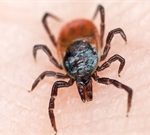
As pandemic-related restrictions ease and people return to parks and other outdoor spaces, remember to protect yourself against another threat — ticks. “With our latest mild winter, ticks have been active in much of the region on warmer days all winter long,” said Jody Gangloff-Kaufmann, an entomologist at Cornell University in Ithaca, N.Y., who said it’s too soon to predict population trends for 2020. She added that it is clear, however, that ticks are expanding their geographic range and moving into colder regions. That’s why it’s important to know how to recognize them, take preventive steps and do a tick check each time you venture out. “Although ticks aren’t everywhere, they can be anywhere so be aware of your surroundings,” Gangloff-Kaufmann said in a news release. Though no notable change in distribution or density has been reported in the past year, there is one exception, according to Laura Harrington, director of the U.S. Centers for Disease Control and Prevention Northeast Regional Center for Excellence in Vector-Borne Diseases at Cornell. Harrington said the Asian long-horned tick is expanding its range and has moved into New York state. “So far, it hasn’t been found infected with human pathogens, but it does transmit a hemorrhagic viral disease in Asia,” Harrington said. The bacterial infection that causes Lyme disease is the most important tick-borne illness in the United States,…  read on >

(HealthDay News) — As U.S. coronavirus cases topped 1.3 million and the death toll was set to pass 80,000 on Monday, three of the nation’s top health officials have started to quarantine themselves after being exposed to two White House aides who have been diagnosed with COVID-19. The officials include Dr. Anthony Fauci, director of the National Institute of Allergy and Infectious Diseases; Dr. Robert Redfield, director of the Centers for Disease Control and Prevention; and Dr. Stephen Hahn, commissioner of the Food and Drug Administration, the Washington Post reported. Fauci said Sunday that he was told his exposure risk was low, and that he plans to wear a mask at all times in public but will not completely isolate himself because he needs to attend certain meetings at the White House and work at the National Institutes of Health, the Post reported. He will be tested every time he goes to the White House. All three officials are members of the White House coronavirus task force. So far, President Donald Trump and Vice President Mike Pence have tested negative for COVID-19, the White House said. Meanwhile, troubling news emerged from New York City: Mayor Bill de Blasio said Sunday that 38 children in the city had contracted a new, serious inflammatory syndrome that seems to be linked to COVID-19 infection. Three of those patients,…  read on >