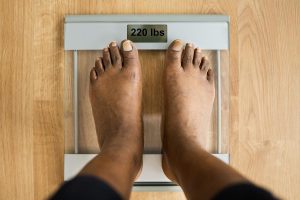










Even if you’re stuck at home waiting for the coronavirus all clear, you can still keep a healthy lifestyle. “Prevention is key in limiting the spread of coronavirus, and with more people working remotely or limiting their exposure to crowds, it’s important to maintain healthy habits at home,” said Dr. Eduardo Sanchez, chief medical officer for prevention at the American Heart Association (AHA). “Wash your hands often and stay home when you feel sick, but don’t disregard your physical activity and healthy eating habits,” he continued in an association news release. “These are the foundation to maintaining and improving your health.” Here are some tips for keeping healthy at home: Do a workout. Pick some exercises you can do at home like jumping jacks, lunges or jogging in place. Exercise in short bursts and repeat two to three times a day. Cook heart-healthy meals. Canned, frozen and dried fruits and vegetables, frozen meat and dried grains are great options to have on hand for recipes. Try a vegetarian three-bean chili or slow cooker barbecue chicken. Don’t stress out. Take a few minutes each day to meditate, practice good sleep habits and stay socially connected with friends and family via text, videochat or phone call. While the overall risk of getting seriously ill from the new coronavirus right now may be low, the AHA said that…  read on >

Schools are closing. Sports and other activities have been cancelled. Everything is changing. In the midst of this chaos, how do parents keep kids from stressing too much? “For families, this is truly now hitting home,” said psychologist Robin Gurwitch, from Duke University and the Center for Child and Family Health, in Durham, N.C. “Families now need to think about how to manage having children at home for extended periods of time. First, families need to set up a schedule and a routine. Keeping as much routine as possible is important,” she said. But Gurwitch added that it’s important to be flexible, too. “Things change quickly and anxieties are running very high. Parents will have to be more patient and attentive to their child’s needs,” she said. And, what about the elephant in the room — should you talk to your child specifically about coronavirus? Dr. Eric Herman, a clinical psychologist at Children’s Hospital of Michigan in Detroit, said, “It’s going to be hard to tell kids that everything is going to be fine when we’re closing schools. They have to think that something big is going on.” Herman said to let them ask questions, and to really listen and respond to the specific questions they’re asking. Gurwitch recommended a more proactive approach: “Ask children what they know. Ask, ‘What do you think about this?’…  read on >

People often turn to music to boost their mood or relieve stress. And new research suggests there may be science supporting that practice. The study found that listening to 30 minutes of music a day eased chest pain and anxiety in people who had recently had a heart attack. “Based on our findings, we believe music therapy can help all patients after a heart attack. It’s also very easy and inexpensive to implement,” study author Dr. Predrag Mitrovic said in an American College of Cardiology news release. Mitrovic is a professor of cardiology at the University of Belgrade School of Medicine in Serbia. The researchers aren’t suggesting music as someone’s only treatment, however. Music was used along with standard heart medications. Dr. Guy Mintz, director of cardiovascular health at the Sandra Atlas Bass Heart Hospital in Manhasset, N.Y., reacted to the findings. “Music therapy may be striking the right key, giving patients further benefit beyond standard therapy,” he said. “Thirty minutes a day of listening to music reduced anxiety, pain sensation and pain distress.” About 700,000 people survive heart attacks every year in the United States. Around one in nine survivors have episodes of chest pain and anxiety within 48 hours of their heart attack, the news release said. Patients are often given a variety of medications to prevent future heart issues and reduce chest…  read on >

Using past weather data to predict climate change-linked increases in extreme weather events may underestimate how often they’ll occur, with potentially serious consequences, a Stanford University study says. It found that predictions based solely on historical records underestimated by about half the actual number of extremely hot days in Europe and East Asia, as well as the number of extremely wet days in the United States, Europe and East Asia between 2006 and 2017. In some cases, the actual number of extreme events was much larger than predicted, said climate scientist Noah Diffenbaugh. He’s a senior fellow at Stanford’s Woods Institute for the Environment. “When I first looked at the results, I had this sinking feeling that our method for analyzing these extreme events could be all wrong,” Diffenbaugh said in a university news release. “As it turned out, the method actually worked very well for the period that we had originally analyzed — it’s just that global warming has had a really strong effect over the last decade.” The findings — published March 18 in the journal Science Advances — highlight how even slight increases in global warming can cause large increases in the risk of extreme weather events, particularly heat waves and heavy rainfall. “We are seeing year after year how the rising incidence of extreme events is causing significant impacts on people…  read on >

U.S. immigration policies may put Hispanic teens’ mental and physical health at risk, researchers say. Of 547 U.S.-born Hispanic kids surveyed in Atlanta, one-quarter had a parent, aunt, uncle or other family member who was detained or deported in 2017 or 2018. Participants were questioned twice, six months apart. Compared to other middle school- and high school-aged youth, those with a detained or deported family member had more than twice the risk of suicidal thoughts. They also were nearly three times more likely to report early alcohol use, and were also more likely to have engaged in risky behaviors, such as aggression or truancy. “This study found that among kids with a deportation or detention in the family, 28% later reported thinking of killing themselves sometimes or often; 18% said they had consumed alcohol and 23% had engaged in a high level of risky behavior,” said study author Kathleen Roche. She’s an associate professor of prevention and community health at George Washington University, in Washington, D.C. “The findings are worrisome because these kinds of risks during the early teen years often result in problems well into adulthood,” she added in a university news release. The study was published March 16 in the journal JAMA Pediatrics. “Our study offers the first direct scientific evidence indicating that current U.S. immigration policies might contribute to serious mental and…  read on >

(American Heart Association News) — Pandemic. Politics. An upending of life at a level that few Americans have ever experienced. And all of it amplified by social media. The ever-shifting news has some people constantly checking their phones for updates – and others saying they’re ready to walk away from their feeds entirely. “It’s really the perfect recipe for anxiety and panic,” said licensed clinical psychologist Debra Kissen of Chicago. And stress, it should be noted, may be a factor in heart disease. But Kissen, CEO of Light on Anxiety CBT Treatment Center, and others say anxiety can be managed – and social media, used properly, doesn’t have to send you on a mental-health spiral. It also can help you find balance. Kissen acknowledged the coronavirus pandemic is unprecedented because of the way uncertainty has crept into “every little nook and cranny” of life. People worry: Is your neighbor’s cough going to be the one? Is that touch going to be what does you in? Will I get infected in the supermarket? Your brain’s response to such uncertainty is the very definition of anxiety, she said. “Anxiety is all about a future ‘what if?’” Kissen said. “Is something bad going to happen, and what can I do to protect myself?” In the face of a visible threat, your brain can choose a course of action…  read on >

Schools are closing. Sports and other activities have been cancelled. Everything is changing. In the midst of this chaos, how do parents keep kids from stressing too much? “For families, this is truly now hitting home,” said psychologist Robin Gurwitch, from Duke University and the Center for Child and Family Health, in Durham, N.C. “Families now need to think about how to manage having children at home for extended periods of time. First, families need to set up a schedule and a routine. Keeping as much routine as possible is important,” she said. But Gurwitch added that it’s important to be flexible, too. “Things change quickly and anxieties are running very high. Parents will have to be more patient and attentive to their child’s needs,” she said. And, what about the elephant in the room — should you talk to your child specifically about coronavirus? Dr. Eric Herman, a clinical psychologist at Children’s Hospital of Michigan in Detroit, said, “It’s going to be hard to tell kids that everything is going to be fine when we’re closing schools. They have to think that something big is going on.” Herman said to let them ask questions, and to really listen and respond to the specific questions they’re asking. Gurwitch recommended a more proactive approach: “Ask children what they know. Ask, ‘What do you think about this?’…  read on >

The coronavirus crisis has millions of Americans questioning whether it’s wise, or even safe, to travel this spring. Now, an infectious disease expert has created a checklist to help you decide whether to go ahead with your trip or cancel it. COVID-19 is an illness caused by a new coronavirus. For most people with healthy immune systems, infection appears to result in mild symptoms — similar to a cold or flu. However, infection appears to be most severe, and occasionally fatal, for the frail elderly or those with chronic health issues or compromised immune systems. Dr. Susan Wootton, an infectious disease pediatrician at the University of Texas Health Science Center in Houston, has developed this nine-point checklist to help you decide whether your trip is a go or a no. If your answer matches the response in parentheses to each question, move on to the next question. If not, you may need to rethink your travel plans. Are the travelers healthy? (Yes.) Have the travelers received flu shots? (Yes.) Do any of the travelers or anyone the travelers have had contact with have any underlying high-risk conditions for the virus, such as chronic obstructive pulmonary disease? (No.) Are any travel restrictions for your destination listed on the U.S. Centers for Disease Control and Prevention or U.S. Department of State websites? (No.) Is the trip a…  read on >

For people who want to stop drinking, the world’s oldest alcohol support group is still the best way, a new review concludes. In an analysis of 27 studies, researchers found that Alcoholics Anonymous was typically more effective than behavioral therapies when it came to helping people remain abstinent. AA also appeared as good as those therapies in reducing excessive drinking, and the consequences of it. The researchers said the results might sound surprising: Behavioral therapies are delivered by mental health professionals, while AA is a support group run by lay people. Lead researcher Keith Humphreys said he was once a skeptic. “Early in my career, I thought it sounded silly,” said Humphreys, a professor of psychiatry at Stanford University School of Medicine in California. “What could come from a bunch of people sitting around talking?” But it turns out, Humphreys said, that the program can give many people what they need — fellowship. That includes other group members who are dealing with the same issues, and a “sponsor” who can serve as a role model — someone who has managed to stay sober and get his or her life back on track. AA was founded in 1935, by two men in Akron, Ohio, who were looking for a way to stop drinking. They began a support group, then later developed AA’s famous “12 steps” —…  read on >

Chronic pain can keep kids from being social and active, leading to anxiety and depression, a child psychiatrist says. Unfortunately, this can turn into a vicious cycle — worsening depression and anxiety can also worsen pain perception. Between 5% and 20% of children live with chronic pain. It usually takes the form of bone and muscle pain, headaches or abdominal pain. “Parents may feel helpless and frightened as they watch their children try to cope — which can make them feel anxious and depressed, just when they need to be their child’s biggest cheerleader,” said Dr. Taranjeet Jolly. He is a psychiatrist at Penn State Health Milton S. Hershey Medical Center in Harrisburg, Pa. But hope is not lost, he said. The first step is recognizing that a problem exists. “Look for red flags that depression may be overwhelming your child. Often your first clue is a change in their everyday routine,” Jolly said. “Is their sleep time way up or down? Is there a marked change in their social interaction? Maybe they are more irritable, angry or emotional.” Talk to your child about what’s going on and follow up with a pediatrician, he suggested. If he or she is diagnosed with depression, follow up with a child psychiatrist, he advised. “The treatment varies according to the level of severity, but something called cognitive behavioral…  read on >