

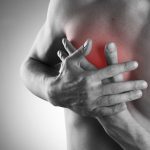






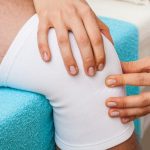
Early-onset arthritis may hit as many as one in every four young people who undergo anterior cruciate ligament (ACL) reconstruction surgeries, new research warns. The arthritic pain emerges within 6 to 12 months post-surgery, according to Michigan State University (MSU) researchers. Many of these cases occur in people under 40 and go unrecognized and untreated. “We’re trying to change the narrative,” said study lead author Matthew Harkey, an assistant professor of kinesiology at MSU. “We see fairly young, active individuals experiencing extensive symptoms, but these symptoms are not interpreted by clinicians as something that may be related to osteoarthritis. Ignoring these symptoms might be setting them up to experience long-term decline and function.” Tears to the ACL ligament within the knee are common, and often corrected with a surgery that replaces the ligament with a graft. Over 400,000 ACL reconstructions are performed in the United States annually, according to the National Institutes of Health. In the new study, Harkey’s team examined outcomes for 82 people, ages 13 to 35, who underwent ACL reconstructive surgeries. Almost a quarter of the patients reported “persistent early arthritis symptoms from 6 to 12 months after knee surgery,” according to a university news release. In another Harkey-led study, data from 3,200 individuals supplied by the New Zealand ACL Registry showed that almost a third of patients developed arthritic pain within…  read on >  read on >
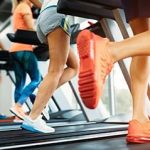
People with Long COVID might be able to exercise to improve their health, something that up to now has been discouraged, a new study suggests. “The World Health Organization [WHO] and other major bodies have said that people with post-COVID should avoid intense exercise,” said lead researcher Andrea Tryfonos, a postdoctoral investigator with the Karolinska Institute in Sweden. But the new findings show that Long COVID patients do just as well after exercise as healthy people, “even though they had more symptoms to begin with,” Tryfonos said in an institute news release. “By equally well, I mean that they did not worsen their symptoms or negatively affect their body during the 48 hours we observed them.” Early observations suggested that exercising with Long COVID could be harmful, researchers noted. Folks with Long COVID often experience symptoms like extreme fatigue, shortness of breath, elevated heart rate and muscle weakness, and these are often exacerbated by exertion. To see whether exercise helps or harms, researchers recruited 31 people with Long COVID and matched them to 31 healthy people. All participants completed three different exercise sessions consisting of high-intensity interval training and moderate-intensity aerobic exercise — both on an exercise bike – as well as strength training. The sessions happened in random order a few weeks apart, researchers said. All participants underwent a battery of medical exams before,…  read on >  read on >

Suicides among U.S. college athletes have doubled over the past two years, according to data from the National Collegiate Athletic Association (NCAA). Suicide is now the second most common cause of death for college athletes after accidents, results show. “Athletes are generally thought of as one of the healthiest populations in our society, yet the pressures of school, internal and external performance expectations, time demands, injury, athletic identity and physical fatigue can lead to depression, mental health problems and suicide,” wrote the research team led by Bridget Whelan, a research coordinator with the University of Washington in Seattle. For the study, Whelan and colleagues analyzed suicides among NCAA athletes from June 2002 to June 2022. During the two decades, 1,102 athletes died. Of those, 128 took their own lives, including 98 men and 30 women. The suicide rate among college athletes doubled comparing the first decade and the second, rising from 7.6% to 15.3%. At the same time, the overall U.S. suicide rate rose just 36%. Suicides among males increased each year throughout the study period, while suicides among females increased from 2010 onwards. Male suicides increased from 31 during the first 10 years to 67 in the second decade, results show. Female suicides increased from 9 to 21 between the two decades. There were nine deaths every two years in male athletes and three…  read on >  read on >

Desks that require folks to stand or move as they work also might help them produce better results on the job, a new study suggests. People’s brains became sharper when working at a desk that made them stand, step or walk rather than sit, results show. Reasoning scores in particular improved when at an active workstation, researchers said. “It is feasible to blend movement with office work that previously would have been done during long periods of sitting,” said senior study author Dr. Francisco Lopez-Jimenez, a preventive cardiologist with the Mayo Clinic. “Active workstations may offer a way to potentially improve cognitive performance and overall health, simply by moving at work.”  For the study, researchers recruited 44 participants to test four different office settings during four consecutive days. The first day, people sat at a typical desk for work. The next three days, they worked at an elevated desk, either standing, walking on a treadmill or using a stepper. Typing speed slowed down slightly at active workstations, but the accuracy of their typing was not affected, researchers found. On the other hand, tests revealed that their brain function either improved or stayed the same when they were active while working. The participants scored better on reasoning tests when standing, stepping or walking, compared to sitting, results show. The new study was published April 4 in…  read on >  read on >

Smacking a 100-mile-an-hour fastball or shooting down a fast-moving alien invader in a video game might involve more than fast reflexes, researchers report. Elite gamers and pro athletes may also have a hidden vision advantage over others, a new study finds. Some people can perceive rapidly changing visual cues better than others, researchers reported April 1 in the journal PLOS One. This advantage in eye tracking could explain why some people are better in settings where response time is critical, researchers said. “We don’t yet know how this variation in visual temporal resolution might affect our day-to-day lives, but we believe that individual differences in perception speed might become apparent in high-speed situations where one might need to locate or track fast-moving objects, such as in ball sports, or in situations where visual scenes change rapidly, such as in competitive gaming,” said lead researcher Clinton Haarlem, a doctoral candidate with Trinity College Dublin in Ireland. The rate at which people perceive the world is known as “temporal resolution,” researchers said. Some people effectively see more images per second than others. To quantify this, researchers asked participants to look at a flickering light source. If the light flickered faster than a person’s visual threshold, they saw the light as steady rather than blinking. Some participants saw the light as completely still when it was flashing about…  read on >  read on >
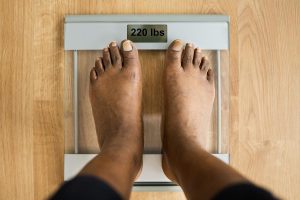
Seniors wound up with lower blood pressure after they were coached to get up and move more often, a new study says. Health coaching successfully reduced sitting time for a group of older adults by just over 30 minutes a day, according to a report published March 27 in the journal JAMA Network Open. Sitting less led to a reduction of nearly 3.5 points in the seniors’ average blood pressure, researchers said. By comparison, increased physical activity typically leads to an average 4-point reduction in blood pressure and weight loss an average 3-point reduction, they noted. “Our findings are really promising because sitting less is a change that may be easier for people than increasing physical activity, especially for older adults who are more likely to be living with restrictions like chronic pain or reduced physical function,” said lead researcher Dori Rosenberg, a senior scientific investigator at the Kaiser Permanente Washington Research Institute in Seattle. Older adults typically sit between 65% and 80% of their waking hours, researchers said in background notes. Such sedentary behavior can lead to heart disease and diabetes. The new study involved 283 seniors ages 60 to 89 covered by Kaiser Permanente’s health system in Washington state. The seniors all received a tabletop standing desk, an activity tracker and 10 health coaching sessions during a six-month period. In these sessions, participants…  read on >  read on >

Some folks struggling with obesity appear to be hampered by their own genes when it comes to working off those extra pounds, a new study finds. People with a higher genetic risk of obesity have to exercise more to avoid becoming unhealthily heavy, researchers discovered. “Genetic background contributes to the amount of physical activity needed to mitigate obesity. The higher the genetic risk, the more steps needed per day,” said senior researcher Douglas Ruderfer, director of the Center for Digital Genomic Medicine at Vanderbilt University Medical Center in Nashville, Tenn. Because of that, physical activity guidelines might not be so helpful when it comes to maintaining a healthy weight, since individual genetic differences drive how much exercise each person requires, Ruderfer noted. People instead need to be “active enough to account for their genetic background, or their genetic risk for obesity, regardless of how high that risk might be,” Ruderfer said in a Vanderbilt news release. For the study, researchers tracked more than 3,100 middle-aged people who weren’t obese and who walked an average 8,300 steps a day for more than five years. Obesity increased 43% among people with the highest genetic risk scores for obesity, but only by 13% among those with the lowest risk, researchers found. Results showed those with the highest genetic risk for obesity had to walk an average of 2,280…  read on >  read on >

Folks who consistently work out two to three times a week are less likely to suffer from insomnia, a new study says. That sort of long-term commitment to exercise also helps people get the recommended amount of sleep each night, according to findings published March 26 in the journal BMJ Open. The paper “indicates strongly that consistency in [physical activity] might be an important factor in optimizing sleep duration and reducing the symptoms of insomnia,” concluded the research team led by Icelandic psychologists Erla Bjornsdottir and Elin Helga Thorarinsdottir. For the study, researchers tracked the exercise habits and sleep quality of nearly 4,400 middle-aged adults from 21 hospitals in nine European countries. Participants were specifically asked how often they exercise to the point that they become out of breath or sweaty. Researchers found that people who persistently worked out at least a few times a week — totaling at least one hour of exercise weekly — were: 42% less likely to find it difficult to fall asleep 22% less likely to suffer any symptoms of insomnia 40% less likely to suffer more than one insomnia symptom Symptoms of insomnia include taking a long time to go to sleep, waking in the night and feeling excessively sleepy during the day. People who consistently exercised also were 55% more likely to get the normal, recommended amount of…  read on >  read on >

The weight room is becoming an increasingly dangerous place for folks trying to get into shape, a new study discovers. Head and facial injuries related to weightlifting have increased sharply during the past decade for both men and women, researchers found. Between 2013 and 2022, the annual rate of exercise- and weightlifting-related head and facial injuries increased by nearly 33%, according to their recent report in The Journal of Craniofacial Surgery. Most injuries occurred in men, who accounted for nearly 56% of face and head wounds. However, the increase in cases of injury was nearly twice as high in women than in men, 45% versus 24%. For the study, researchers analyzed injury data compiled by the U.S. Consumer Product Safety Commission, reviewing nearly 583,000 such injuries that occurred during the 10-year period. Prior studies of injuries related to exercise and weightlifting have focused on other parts of the body like the limbs or lower back, researchers said, neglecting injuries that can occur to the face and head. “Ego lifting” is likely behind at least part of the increase observed in men, said the research team led by Rohan Mangal, a medical student with at the University of Miami. Those men get hurt because they feel pressured to exercise or lift weights beyond their capacity, the researchers speculated. This is most likely true for 15- to…  read on >  read on >

If you’re in your 60s, 70s or even older, you might think your days of productively pumping iron are behind you. That’s just not true, said Dr. Adil Ahmed, an assistant professor in the Joseph Barnhart Department of Orthopedic Surgery at Baylor College of Medicine in Houston. Building and maintaining muscle is a great way to stay all-round healthy, he said. “The protective effect of muscle and muscle mass has been well studied — everything from the musculoskeletal system to orthopedics and even brain health,” Ahmed said in a Baylor news release. “Building muscle in your body has been well shown to delay dementia and the effects of dementia and preserve cognitive function.” Don’t forget bone health, either: According to Ahmed, maintaining muscle is the only thing proven to help aging bones stay dense and strong. “It’s a very good protective long-term process,” he said.  However, if you’re thinking of engaging into a late-life weight-lifting regimen, be sure to first consult with an expert — a personal trainer or a trusted friend who already understands the process. Ahmed recommends starting first with controlled resistance training and then moving to free weights, with an emphasis on building good (and safe) technique. “In my opinion, free weights are the best for muscle building because of the force you exert with your muscles,” he said. “There’s also a balance…  read on >  read on >