






All Sauce from Weekly Gravy:

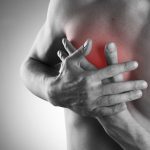
Low-dose aspirin is no longer universally recommended to prevent heart health emergencies, but it might help people with type 2 diabetes, a new study says. People with type 2 diabetes who took low-dose aspirin were less likely to have a heart attack or stroke, according to findings that will be presented Nov. 9 at the upcoming annual meeting of the American Heart Association in New Orleans. “We were somewhat surprised by the magnitude of the findings,” researcher Dr. Aleesha Kainat, a clinical assistant professor of medicine at the University of Pittsburgh Medical Center, said in a news release. “People with type 2 diabetes and a higher risk of cardiovascular disease who reported taking low-dose aspirin were much less likely to have had a heart attack, stroke or death over 10 years when compared to similar individuals who did not report taking low-dose aspirin,” Kainat said. “That benefit was greatest for those who took aspirin consistently, throughout most of the follow-up time,” she added. For decades, experts had recommended that people take low dose aspirin to lower their risk of a first heart attack and stroke. But in 2022, the U.S. Preventive Services Task Force revised its recommendations after deciding that aspirin’s heart health benefits barely outweighed the bleeding risk created by the drug’s blood thinning properties. “We know that in recent studies aspirin hasn’t proven…  read on >  read on >

Low-dose aspirin is no longer universally recommended to prevent heart health emergencies, but it might help people with type 2 diabetes, a new study says. People with type 2 diabetes who took low-dose aspirin were less likely to have a heart attack or stroke, according to findings that will be presented Nov. 9 at the upcoming annual meeting of the American Heart Association in New Orleans. “We were somewhat surprised by the magnitude of the findings,” researcher Dr. Aleesha Kainat, a clinical assistant professor of medicine at the University of Pittsburgh Medical Center, said in a news release. “People with type 2 diabetes and a higher risk of cardiovascular disease who reported taking low-dose aspirin were much less likely to have had a heart attack, stroke or death over 10 years when compared to similar individuals who did not report taking low-dose aspirin,” Kainat said. “That benefit was greatest for those who took aspirin consistently, throughout most of the follow-up time,” she added. For decades, experts had recommended that people take low dose aspirin to lower their risk of a first heart attack and stroke. But in 2022, the U.S. Preventive Services Task Force revised its recommendations after deciding that aspirin’s heart health benefits barely outweighed the bleeding risk created by the drug’s blood thinning properties. “We know that in recent studies aspirin hasn’t proven…  read on >  read on >
The U.S. Food and Drug Administration (FDA) has recalled over half a million bottles of a widely prescribed blood pressure medication, prazosin hydrochloride, because of concerns about a potentially cancer-causing chemical. New Jersey-based Teva Pharmaceuticals and drug distributor Amerisource Health Services initiated the voluntary recall for more than 580,000 bottles of the capsule drug, CBS News reported. The prazosin capsules may contain nitrosamine impurities in the medication. Nitrosamines are a group of chemicals that, at high levels or over long periods of exposure, are considered potentially cancer-causing in humans. The FDA said these chemicals can form due to a chemical reaction during the drug’s manufacturing process or leaching from packaging. The recall affects 1 mg, 2 mg and 5 mg doses of prazosin distributed by Teva Pharmaceuticals and 5 mg doses distributed by Amerisource Health Services. The pills were districted nationwide within the United States only, according to the FDA. Prazosin is primarily used to treat hypertension by relaxing blood vessels, which improves blood flow. Beyond treating high blood pressure, the medication may be prescribed for other off-label uses. The FDA classified the recall as a Class II risk, meaning the product may cause temporary or medically reversible adverse health consequences, or that the probability of serious adverse health consequences is remote. Patients taking these prazosin capsules should contact their doctor or pharmacist for guidance…  read on >  read on >

Folks using melatonin supplements as a sleep aid might be putting themselves at risk for future heart problems, a new study says. Adults with insomnia who’d been using melatonin for a year or more had 90% higher odds of heart failure, researchers are scheduled to report Nov. 10 in New Orleans at a meeting of the American Heart Association. Further, people taking melatonin are nearly 3.5 times more likely to be hospitalized for heart failure, researchers found. “Melatonin supplements are widely thought of as a safe and ‘natural’ option to support better sleep, so it was striking to see such consistent and significant increases in serious health outcomes, even after balancing for many other risk factors,” lead researcher Dr. Ekenedilichukwu Nnadi said in a news release. He’s chief resident in internal medicine at SUNY Downstate/Kings County Primary Care in Brooklyn, New York. Melatonin is a hormone that naturally occurs in the body and helps regulate people’s sleep-wake cycle. Levels increase during darkness and decrease during daylight. Melatonin supplements are widely available over the counter in the United States, and are promoted and marketed as a safe sleep aid, researchers noted. To see how long-term melatonin use might affect people’s health, researchers reviewed five years of electronic health records for nearly 131,000 people diagnosed with chronic insomnia. More than 65,000 reported taking melatonin for more than…  read on >  read on >

Folks using melatonin supplements as a sleep aid might be putting themselves at risk for future heart problems, a new study says. Adults with insomnia who’d been using melatonin for a year or more had 90% higher odds of heart failure, researchers are scheduled to report Nov. 10 in New Orleans at a meeting of the American Heart Association. Further, people taking melatonin are nearly 3.5 times more likely to be hospitalized for heart failure, researchers found. “Melatonin supplements are widely thought of as a safe and ‘natural’ option to support better sleep, so it was striking to see such consistent and significant increases in serious health outcomes, even after balancing for many other risk factors,” lead researcher Dr. Ekenedilichukwu Nnadi said in a news release. He’s chief resident in internal medicine at SUNY Downstate/Kings County Primary Care in Brooklyn, New York. Melatonin is a hormone that naturally occurs in the body and helps regulate people’s sleep-wake cycle. Levels increase during darkness and decrease during daylight. Melatonin supplements are widely available over the counter in the United States, and are promoted and marketed as a safe sleep aid, researchers noted. To see how long-term melatonin use might affect people’s health, researchers reviewed five years of electronic health records for nearly 131,000 people diagnosed with chronic insomnia. More than 65,000 reported taking melatonin for more than…  read on >  read on >

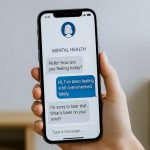
A growing number of Americans are turning to therapy by text message, and new research suggests it can be just as effective as traditional video sessions for some patients. In a study published Oct. 30 in JAMA Network Open, researchers found that people with mild to moderate depression who used text-based therapy showed similar improvements to those who received weekly video-based therapy. The clinical trial involved 850 adults randomly assigned to either weekly video therapy or unlimited messaging with a licensed therapist for 12 weeks.  By the end of the study, both groups reported similar improvements in depression symptoms. “We were pleasantly surprised to see that it was as good as weekly video therapy,” study co-author Patricia Areán, a former professor at the University of Washington School of Medicine, told The New York Times. “We didn’t really find any differences in the outcomes.” The study was supported by Talkspace, a fast-growing digital mental health platform, which collaborated with researchers to conduct the trial.  Areán said the company was seeking real-world data to support potential insurance reimbursement for text-based care, a service most insurers do not cover.  “They knew that they needed data,” Areán added. Experts say the results could be particularly important for people who struggle to attend traditional or virtual appointments. Text-based therapy “could eventually fit into a stepped-care model,” Dr. Jane Zhu, associate…  read on >  read on >

A growing number of Americans are turning to therapy by text message, and new research suggests it can be just as effective as traditional video sessions for some patients. In a study published Oct. 30 in JAMA Network Open, researchers found that people with mild to moderate depression who used text-based therapy showed similar improvements to those who received weekly video-based therapy. The clinical trial involved 850 adults randomly assigned to either weekly video therapy or unlimited messaging with a licensed therapist for 12 weeks.  By the end of the study, both groups reported similar improvements in depression symptoms. “We were pleasantly surprised to see that it was as good as weekly video therapy,” study co-author Patricia Areán, a former professor at the University of Washington School of Medicine, told The New York Times. “We didn’t really find any differences in the outcomes.” The study was supported by Talkspace, a fast-growing digital mental health platform, which collaborated with researchers to conduct the trial.  Areán said the company was seeking real-world data to support potential insurance reimbursement for text-based care, a service most insurers do not cover.  “They knew that they needed data,” Areán added. Experts say the results could be particularly important for people who struggle to attend traditional or virtual appointments. Text-based therapy “could eventually fit into a stepped-care model,” Dr. Jane Zhu, associate…  read on >  read on >

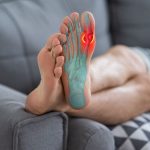
A new gene test might be able to predict which gout patients will have a bad skin reaction to a common medication for the condition, researchers say. A newly discovered gene combined with an already known genetic factor could explain the risk of skin side effects in more than 80% of U.S. gout patients prescribed allopurinol, researchers reported Oct. 29 in JAMA Dermatology. “We found a new genetic association, HLA-A*34:02, which appears very important as a risk factor in U.S. allopurinol severe cutaneous adverse reactions patients,” lead researcher Dr. Elizabeth Phillips said in a news release. She’s a professor of clinical research, medicine, dermatology, pharmacology and pathology, microbiology and immunology at Vanderbilt University Medical Center in Nashville, Tennessee. Gout occurs when the kidneys are not able to filter out excess levels of uric acid from a person’s bloodstream. The uric acid forms needle-like crystals that lodge in joints, causing sudden and severe pain and swelling among gout patients. Allopurinol reduces the production of uric acid in the body, but it also is associated with severe skin reactions in some patients. One side effect, called Stevens-Johnson syndrome/toxic epidermal necrolysis, causes skin to rash, blister and peel. Most who develop this syndrome from allopurinol use are hospitalized, and as many as 30% die, researchers said in background notes. A gene called HLA-B*58:01 already has been associated with…  read on >  read on >

A new gene test might be able to predict which gout patients will have a bad skin reaction to a common medication for the condition, researchers say. A newly discovered gene combined with an already known genetic factor could explain the risk of skin side effects in more than 80% of U.S. gout patients prescribed allopurinol, researchers reported Oct. 29 in JAMA Dermatology. “We found a new genetic association, HLA-A*34:02, which appears very important as a risk factor in U.S. allopurinol severe cutaneous adverse reactions patients,” lead researcher Dr. Elizabeth Phillips said in a news release. She’s a professor of clinical research, medicine, dermatology, pharmacology and pathology, microbiology and immunology at Vanderbilt University Medical Center in Nashville, Tennessee. Gout occurs when the kidneys are not able to filter out excess levels of uric acid from a person’s bloodstream. The uric acid forms needle-like crystals that lodge in joints, causing sudden and severe pain and swelling among gout patients. Allopurinol reduces the production of uric acid in the body, but it also is associated with severe skin reactions in some patients. One side effect, called Stevens-Johnson syndrome/toxic epidermal necrolysis, causes skin to rash, blister and peel. Most who develop this syndrome from allopurinol use are hospitalized, and as many as 30% die, researchers said in background notes. A gene called HLA-B*58:01 already has been associated with…  read on >  read on >