





All Sauce from Weekly Gravy:

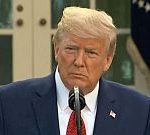
Hours after President Donald Trump held a rally on the White House lawn for hundreds of supporters, his doctor said he is “no longer considered a transmission risk to others.” In a memo released Saturday night, White House physician Dr. Sean Conley said he was sharing information about the status of Trump’s coronavirus infection with permission from Trump, The New York Times reported. But the amount of information he provided was limited. Trump was first diagnosed with COVID-19 on Oct. 2. Health experts have repeatedly questioned the severity of Trump’s illness, and his health could still deteriorate in the next few days, they added. “I don’t think he’s out of the woods for certain,” Dr. Krutika Kuppalli, an infectious disease physician based in South Carolina, told the Times. Trump’s recent course of steroids, which suppress certain parts of the immune system, could also make him vulnerable to other infections, Kuppalli added. “I would still be careful with someone like him.” The start date of Trump’s symptoms has also remained unclear, the Times reported. According to the U.S. Centers for Disease Control and Prevention, most people stop being infectious 10 days after becoming sick. By Conley’s assessment, Trump would have needed to show signs of his illness on Wednesday, Sept. 30, for Saturday to qualify as 10 days from the onset of symptoms. “This evening I…  read on >
Even as the nation’s top infectious diseases expert said Friday that the White House experienced a “superspreader” event in the Rose Garden last month, President Donald Trump announced he will hold his first public event at the White House since testing positive for the coronavirus a week ago. The Saturday event, which will have Trump speaking from a balcony to a crowd of supporters on the South Lawn, has already caused concern among some officials in the White House, which has been rocked by an outbreak following Trump’s diagnosis, the Washington Post reported. Trump’s medical team has not yet released the results of Trump’s latest COVID-19 test, so it was unclear whether Trump is still contagious, the Post reported. But Trump has ignored his advisers’ calls for caution, the newspaper reported, instead playing down the virus and using his own battle with it to argue that the nation has already overcome the pandemic. “I haven’t even found out numbers or anything yet, but I’ve been retested,” he said. “And I know I’m at either the bottom of the scale or free.” He added that he has been tested for the virus “every couple of days or so.” The lack of a negative test did not stop Trump from claiming to be cured and working from the Oval Office on Friday afternoon. Trump has been eager…  read on >

The new coronavirus is striking the Upper Midwest with a vengeance, as Wisconsin and the Dakotas became COVID-19 hotspots and health officials scrambled for hospital beds on Thursday. After months where residents of those states downplayed the virus and rejected mask requirements, all three now lead all other states in new cases per capita, the Associated Press reported. “It’s an emotional roller coaster,” said Melissa Resch, a nurse at Wisconsin’s Aspirus Wausau Hospital, which is working to add beds and reassign staff to keep up with a rising caseload of seriously ill COVID-19 patients. “Just yesterday I had a patient say, ‘It’s OK, you guys took good care of me, but it’s OK to let me go,’” Resch told the AP. “I’ve cried with the respiratory unit, I’ve cried with managers. I cry at home. I’ve seen nurses crying openly in the hallway.” What is unfolding in the Upper Midwest mirrors what has happened in other parts of the country since the pandemic began. In the spring, New York City hastily built field hospitals as emergency rooms were flooded with COVID-19 patients. Then, the coronavirus spread to states like Arizona, Texas, Florida and California over the summer. It then moved into the Midwest. “What worries me is we haven’t learned our lessons,” Ali Mokdad, a professor of health metrics sciences at the University of Washington…  read on >

The so-called love hormone, oxytocin, may be worth investigating as a treatment for COVID-19, a new study suggests. One of the most serious complications of infection with the new coronavirus is a “cytokine storm,” in which the body attacks its own tissues. There are currently no U.S. Food and Drug Administration-approved treatments for COVID-19, which means that “repurposing existing drugs that can act on the adaptive immune response and prevent the cytokine storm in early phases of the disease is a priority,” according to the researchers. Previous research suggests that oxytocin — a hormone that’s produced in the brain and is involved in reproduction and childbirth — reduces inflammation. In this new study, researcher Ali Imami, a graduate research assistant at the University of Toledo in Ohio, and colleagues used a U.S. National Institutes of Health database to analyze characteristics of genes treated with drugs closely related to oxytocin. The investigators found that one drug in particular, carbetocin, has similar characteristics (called a signature) to genes with reduced expression of the inflammatory markers that trigger cytokine storm in COVID-19 patients. Carbetocin’s signature suggests that the drug may trigger activation of immune cells called T-cells that play an important role in immune response. In addition, carbetocin’s signature is also similar to that of lopinavir, an antiretroviral medication under study as a treatment for COVID-19. All of…  read on >

Learning to play a musical instrument helps fine-tune kids’ brains, researchers say. In a new study, 40 children (aged 10 to 13) performed memory and attention tasks while their brain activity was monitored with functional MRI. This type of imaging scan detects small changes in blood flow within the brain. Twenty of the children played an instrument, had completed at least two years of lessons, practiced at least two hours a week and regularly played in an orchestra or ensemble. The other 20 children had no musical training other than in the school curriculum. The two groups had no differences in reaction time. But the musically trained children did better on the memory task, according to the report published online Oct. 8 in the journal Frontiers in Neuroscience. And along with better memory recall, the musically trained kids had more activation in brain regions associated with attention control and auditory encoding — functions associated with improved reading, higher resilience, greater creativity and a better quality of life. “Our most important finding is that two different mechanisms seem to underlie the better performance of musically trained children in the attention and … memory task,” said team leader Leonie Kausel, a violinist and neuroscientist at the Pontifical Catholic University of Chile, in Santiago. Music training may increase the functional activity of certain brain networks, Kausel explained in…  read on >

The type of heating coil used in an e-cigarette and the amount of voltage sent through it could be contributing to vaping-related lung injuries, a new animal study contends. Laboratory rats suffered lung injuries when exposed to vapor from devices using high-powered heating coils made of nickel-chromium alloy, something that did not occur in earlier experiments using stainless steel heating coils, researchers report. “When we looked at their lungs, we saw they had very severe damage to the lung structure,” said lead researcher Michael Kleinman, a professor of occupational and environmental medicine at the University of California, Irvine. “We found we got the worst effects in coils that contained nickel and chromium, which is a typical kind of coil.” E-cigarettes turn liquid into vapor using a heating coil similar to those found in toasters, Kleinman said. The coil is surrounded by the liquid, and when voltage is sent through the coil, it rapidly heats up. Kleinman and his colleagues were doing vaping research on lab rats using devices equipped with stainless steel coils when they made their discovery. The manufacturer stopped making the specific device they were using, so they had to switch to a compatible model that used nickel-chromium coils, Kleinman recalled. “When we got the new coils and we ran them at the high power settings, we immediately noticed after the first set…  read on >

Regeneron Pharmaceuticals Inc. said Wednesday that it is seeking emergency approval from the U.S. Food and Drug Administration for an experimental antibody cocktail given to President Donald Trump shortly after he was diagnosed with COVID-19. Hours before the company made the announcement, Trump proclaimed in a video released by the White House that the drug had an “unbelievable” effect on his recovery from coronavirus infection, the Washington Post reported. “I think this was the key,” Trump said, after acknowledging that the antibody cocktail was one of several drugs he was prescribed by his medical team. While there is no hard evidence yet proving the drug’s effectiveness in humans, it has shown promise in treating mild cases of the new coronavirus, the Post reported. In his video, Trump said, “I have emergency-use authorization all set, and we’ve got to get it signed now.” However, an FDA spokeswoman told The New York Times Wednesday that the agency does not confirm or deny product applications. Regeneron said in its statement that it could initially produce doses of the antibody cocktail for 50,000 patients, and then ramp production up to doses for 300,000 patients in the next few months if granted emergency authorization. The antibody cocktail is now in late-stage testing. The company has granted fewer than 10 “compassionate use” requests allowing people not enrolled in its trials to…  read on >

Facebook chatter from the anti-vaccination movement now frames the issue as one of civil liberties, a new study finds. As a COVID-19 vaccine gets closer to becoming a reality, opposition from so-called anti-vaxxer groups could become a political movement, researchers warn. For the study, the investigators looked at more than 250,000 posts on 204 Facebook pages opposing vaccines between October 2009 and October 2019. Opposition has traditionally centered on medical safety and government conspiracy theories. But vaccine opponents have recast their objections, saying it is a civil right to refuse vaccination. The latest recent spike in the anti-vaxxer movement was a 2019 Facebook campaign with posts that included a U.S. state in their title, such as “Michigan for Vaccine Choice.” The posts cited vaccine safety concerns and alternative medicines, and encouraged opposition to vaccine mandates. “Starting in 2019, we saw a large increase in these state-level pages, especially in places considering vaccine-related legislation,” said study co-author Mark Dredze, an associate professor of computer science at Johns Hopkins University, in Baltimore. “These pages make it easy for vaccine opponents to know how to vote in their local elections to make it easier to opt out of vaccination,” Dredze added in a Hopkins news release. There were two prior events that also changed the online discourse, the study authors reported. The first event was a measles outbreak…  read on >

Black people who have a strong sense of psychological well-being may have better heart health, a new study indicates. It suggests that feelings of optimism and a sense of purpose and control — hallmarks of psychosocial resilience — are more important to heart health than where people live, researchers said. Lead researcher Tené Lewis, an associate professor at Emory University’s Rollins School of Public Health in Atlanta, noted that differences in heart health between Black and white Americans have been documented for decades. But individual factors affecting Black Americans have not been well understood. “Almost everything we know about Black Americans and their health focuses on deficits, yet we really need to begin to identify strengths,” she said. “Understanding which strengths matter most for Black Americans — and under which contexts — will allow us to develop the most appropriate and applicable public health interventions for this group.” For the study, the researchers recruited nearly 400 Black volunteers between the ages of 30 and 70. They investigated whether the American Heart Association’s Life’s Simple 7 metrics were linked to better heart health among them. The seven measures include smoking, physical activity, diet, weight, blood sugar, cholesterol and blood pressure. Participants also completed standard questionnaires gauging their psychosocial health. This information was then compared with neighborhood data on heart disease and stroke and death rates. In…  read on >

Everyone agrees about the good news — folks whose asthma is spurred on by allergies don’t appear to have an increased risk of life-threatening illness if they contract COVID-19. “Asthma has not risen as one of the top comorbid diseases for worse COVID-19 outcomes,” said Dr. Sandhya Khurana, director of the Mary Parkes Center for Asthma, Allergy and Pulmonary Care at the University of Rochester (N.Y.) Medical Center. “We always worry with asthma and viral infections, because they seem to trigger asthma exacerbation unreasonably. But what we’ve seen so far is reassuring.” But debate continues to swirl regarding the potential severity of COVID infection in people with non-allergic asthma. Some studies have suggested that people who have asthma caused by something other than allergies — exercise, stress, air pollution, weather conditions — might have an increased risk of severe COVID-19. For example, Harvard researchers found that having non-allergic asthma increased the risk of severe COVID-19 by as much as 48%. That conclusion was based on data from 65,000 asthma sufferers presented in the June issue of the Journal of Allergy and Clinical Immunology. “For those people, I think being more cautious would be good for them,” said senior researcher Liming Liang, an associate professor of statistical genetics at the Harvard T.H. Chan School of Public Health in Boston. “I think the next wave is coming.…  read on >