






All Sauce from Weekly Gravy:

WEDNESDAY, Sept. 16, 2020 (Healthday News) — A single infusion of an experimental drug dramatically lowers levels of coronavirus in the bodies of newly infected patients and cuts their chances of hospitalization, the drug’s maker reported Wednesday. Eli Lilly’s announcement did not include detailed data and hasn’t been peer-reviewed or published yet, The New York Times reported. The news comes from interim results of a trial sponsored by Eli Lilly and the U.S. National Institutes of Health. NIH officials would not comment on the announcement until they have seen more detailed data from the trial, the Times reported. How does the drug work its magic? It is a monoclonal antibody, a manmade copy of an antibody produced by a patient who recovered from COVID-19, the Times reported. Scientists around the world have high hopes that that monoclonal antibodies will prove to be powerful coronavirus treatments, but they come with a caveat: They are difficult to manufacture, and would take time to produce, the Times reported. In the trial, 452 newly diagnosed COVID patients received the monoclonal antibody or a placebo infusion. Some 1.7 percent of those who got the drug were hospitalized, compared with 6 percent of those who received a placebo — a 72 percent reduction in risk, Eli Lilly said. At the same time, blood levels of the coronavirus plummeted among those who…  read on >

Exercise is often recommended to combat stress and anxiety. But it might not be the solution to your pandemic-related worries, new research indicates. For the study, researchers analyzed data gathered from more than 900 pairs of identical and same-sex fraternal twins in Washington state during the early stages of the pandemic. While 42% said their physical activity levels fell, 27% said they rose. Another 31% reported no change. Those who said their physical activity levels had declined in the first two weeks after stay-at-home orders were issued reported higher levels of stress and anxiety, a finding that the researchers expected. But they were surprised that the same was true among many twins who boosted their physical activity levels, according to the study. “Certainly, people who don’t exercise know that there are associations with mental health outcomes, yet the ones that increased their exercise also reported increased anxiety and stress,” said study co-author Glen Duncan. He’s a professor at Washington State University College of Medicine, in Spokane. “It’s hard to know exactly what’s going on, but it could be that they are trying to use exercise as a means to counter that stress and anxiety they’re feeling because of COVID,” Duncan added in a university news release. The link between decreased physical activity and stress was confounded by genetic and environmental factors, the researchers noted. In…  read on >

COVID-19 is unlike other respiratory viruses known to humans, but in time it could evolve into a seasonal scourge like the flu. That’s according to a new report in which researchers lay out the case for a possible seasonal COVID. The scenario depends on many unknowns, and assumes the new coronavirus will bend to weather factors. And that would not happen until enough people have been exposed to the virus — or vaccinated — to provide a level of herd immunity, the researchers said in their report in the journal Frontiers in Public Health. But they believe that endemic respiratory viruses — including the flu and common coronaviruses that cause cold symptoms — give hints as to what could happen with COVID. All of those viruses have a seasonal variation, being susceptible to changes in weather patterns like temperature and humidity. SARS-CoV-2 has yet to show any signs of seasonality. Cases in the United States soared during the hot summer months, in contrast to typical respiratory viruses that dissipate at that time. But as more people are exposed to SARS-CoV-2, that pattern could change, according to report author Dr. Hassan Zaraket, of American University of Beirut in Lebanon. “We think it’s highly likely, given what we know so far, COVID-19 will eventually become seasonal, like other coronaviruses,” he said in a journal news release. However,…  read on >

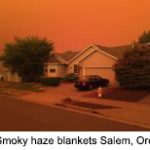
HVAC repairman Brad Sissell shrugged off the acid-yellow air surrounding him and kept working, preparing a gas pipe for a new range going into a Salem, Ore., home. Less than a half-hour’s drive away, nearly 200,000 acres were burning in one of the major Oregon wildfires that has sent a full tenth of the state’s population fleeing for shelter. But it was a workday and so Sissell kept at his job, masked in the driveway with smoke wreathing his efforts. “We haven’t stopped,” Sissell, 35, said. “We’ve been working the whole time. I know they say the air’s not good for you. I think it’s going to suck for everybody.” The air quality index in Salem has been at the hazardous level since late last week, with people urged to stay indoors lest they risk their health. In fact, the West Coast cities of Portland, Seattle, San Francisco and Vancouver, B.C., have had the worst air quality of all major metropolitan areas in the world as wildfires burn unchecked, the Washington Post reported. Public health experts have warned people up and down the coast to remain indoors with the windows shut and their air conditioners running on recirculated air. The smoke from these wildfires contains fine particles and a toxic mix of chemicals that can irritate the lungs and inflame the airways, said Dr. Clayton…  read on >

TUESDAY, Sept. 15, 2020 (Healthday News) — In a sign that Americans are becoming more wary about the safety of a new coronavirus vaccine, a new poll shows a majority of adults don’t trust what President Donald Trump has said on vaccine development. More than half (52%) of adults said they don’t trust the president’s vaccine comments, the NBC News/Survey Monkey poll found, while just 26 percent say they do. Twenty percent said they were “not aware” whether they trust what the president has said about a vaccine, NBC News reported. Those polled were also more skeptical about whether they or their families would get a government-approved coronavirus vaccine if one became widely available, NBC News reported. The poll’s latest data show that just 39% said they would get it, 23% said they wouldn’t and 36 percent say they weren’t sure. Just a month ago, 44% of Americans said they would get a government-approved vaccine, 22% said they wouldn’t, and 32% said they weren’t sure. The highest level of confidence in a coronavirus vaccine came during the week of Aug. 17 to Aug. 23, when 45% polled said they would get a vaccine. Despite public hesitancy, President Trump has promised a “safe and effective vaccine this year,” and the U.S. Centers for Disease Control and Prevention has advised states to prepare for “large-scale” vaccine distribution…  read on >

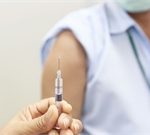
MONDAY, Sept. 14, 2020 (Healthday News) — Oxford University has announced that final-stage testing of a coronavirus vaccine it is developing with drug maker AstraZeneca will restart following a pause last week after a serious side effect showed up in a volunteer. “The independent review process has concluded and following the recommendations of both the independent safety review committee and the U.K. regulator… the trials will recommence in the U.K.,” the university said in a statement released on Saturday. No further details were given on the results of the review. Media reports have said the person who had the suspected adverse reaction had been volunteering in a trial based in the United Kingdom. The volunteer was diagnosed with transverse myelitis, an inflammatory syndrome that affects the spinal cord and is often sparked by viral infections. The AstraZeneca vaccine is considered a frontrunner among the dozens of coronavirus vaccines in various stages of testing around the world, the Associated Press reported. The university said in large trials “it is expected that some participants will become unwell and every case must be carefully evaluated to ensure careful assessment of safety.” Globally, some 18,000 people have received its vaccine so far, the AP reported. Two other vaccines are in final testing in the United States, one made by Moderna Inc. and the other by Pfizer and Germany’s BioNTech.…  read on >

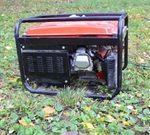
A portable generator may power up your home after a hurricane or storm knocks out your electricity, but it also poses the risk of carbon monoxide poisoning, one expert says. Carbon monoxide is often called the silent killer because it’s colorless, odorless and tasteless. “Never use a generator in your home or garage, even if the doors and windows are open,” said Dr. Lindell Weaver, medical director of hyperbaric medicine at Intermountain Medical Center and LDS Hospital in Salt Lake City, Utah. “Only use generators outside, more than 20 feet away from your home, doors and windows,” Weaver added in an Intermountain news release. All homes and businesses should have a carbon monoxide alarm. Carbon monoxide poisoning should be suspected if multiple people have “flu-like” symptoms all at once, especially if fever is absent, Weaver said. Another sign is if a person improves when out of the area where suspected carbon monoxide exposure is occurring. Carbon monoxide poisoning symptoms include: headache, dizziness, weakness, vomiting, chest pain, confusion, seizure, loss of consciousness and death. If a person develops symptoms consistent with carbon monoxide poisoning, evacuate the area immediately and call 911, Weaver said. Treatment for carbon monoxide poisoning reduces the risk of permanent brain or heart injury, but patients may still suffer disability. It’s crucial to take precautions to prevent and avoid carbon monoxide exposure, Weaver…  read on >

A portable generator may power up your home after a hurricane or storm knocks out your electricity, but it also poses the risk of carbon monoxide poisoning, one expert says. Carbon monoxide is often called the silent killer because it’s colorless, odorless and tasteless. “Never use a generator in your home or garage, even if the doors and windows are open,” said Dr. Lindell Weaver, medical director of hyperbaric medicine at Intermountain Medical Center and LDS Hospital in Salt Lake City, Utah. “Only use generators outside, more than 20 feet away from your home, doors and windows,” Weaver added in an Intermountain news release. All homes and businesses should have a carbon monoxide alarm. Carbon monoxide poisoning should be suspected if multiple people have “flu-like” symptoms all at once, especially if fever is absent, Weaver said. Another sign is if a person improves when out of the area where suspected carbon monoxide exposure is occurring. Carbon monoxide poisoning symptoms include: headache, dizziness, weakness, vomiting, chest pain, confusion, seizure, loss of consciousness and death. If a person develops symptoms consistent with carbon monoxide poisoning, evacuate the area immediately and call 911, Weaver said. Treatment for carbon monoxide poisoning reduces the risk of permanent brain or heart injury, but patients may still suffer disability. It’s crucial to take precautions to prevent and avoid carbon monoxide exposure, Weaver…  read on >

A lot has been made of the so-called “quarantine 15.” Now, a new study suggests certain people are more likely to binge eat during the coronavirus pandemic than others. Most often they are young adults who faced social stigma about being overweight before COVID-19 swept the globe. The researchers found this group had higher levels of depressive symptoms, stress, eating as a coping strategy and binge-eating behaviors compared to those who hadn’t dealt with weight stigma previously. The risk of binge eating was nearly three times higher among those who’d been teased or mistreated because of their size compared to those who hadn’t, according to the study. The study included nearly 600 young adults who took part in a previous study on eating and activity, and completed a follow-up survey during the pandemic. “Understanding whether weight stigma elevates risk for health challenges during the pandemic represents a critical first step for the development of health messaging, responses, and support during outbreaks of COVID-19 and similar public health emergencies,” said study author Rebecca Puhl. She is deputy director of the University of Connecticut’s Rudd Center for Food Policy and Obesity. “With additional outbreaks and more cases of COVID-19 expected in the coming months, it is important to support individuals who may be prone to worse health and health behaviors exacerbating their risk during these times of…  read on >

The coronavirus pandemic silenced choirs around the globe, but researchers in Sweden say it may be safe to sing with others if you take precautions. “There are many reports about the spreading of COVID-19 in connection with choirs singing. Therefore, different restrictions have been introduced all over the world to make singing safer,” said Jakob Löndahl, an associate professor of aerosol technology at Lund University. “So far, however, there has been no scientific investigation of the amount of aerosol particles and larger droplets that we actually exhale when we sing,” he said in a university news release. Löndahl and his colleagues wanted to gain a better understanding of the amount of aerosols (small airborne particles), droplets and coronavirus emitted when people sing. They conducted tests with 12 healthy singers and two people with confirmed COVID-19. Seven of the participants were professional opera singers. The study found that singing — particularly loud and consonant-rich singing — spreads a lot of aerosol particles and droplets into the surrounding air. According to Malin Alsved, a doctoral student of aerosol technology at the university, “Some droplets are so large that they only move a few decimeters from the mouth before they fall, whereas others are smaller and may continue to hover for minutes. In particular, the enunciation of consonants releases very large droplets and the letters B and P…  read on >