





All Sauce from Weekly Gravy:

FRIDAY, Sept. 4, 2020 (Healthday News) — The chief adviser for the White House vaccine program said Thursday it was “extremely unlikely, but not impossible” that a vaccine could be available by the end of October. Speaking with National Public Radio, Dr. Moncef Slaoui said that the U.S. Centers for Disease Control and Prevention’s guidance to states to prepare for a vaccine as early as late October was “the right thing to do” in case a vaccine was ready by that time. “It would be irresponsible not to be ready if that was the case,” Slaoui said, adding that he first heard about the new CDC guidance from media reports, the Washington Post said. Still, Slaoui, the chief scientific adviser for Operation Warp Speed, described getting a vaccine by late October as a “very, very low chance.” That message ran counter to optimistic claims from the White House that a vaccine could be ready for distribution before the November presidential election. During the National Republican Convention, President Trump announced that a vaccine could be ready “before the end of the year or maybe even sooner.” Slaoui did confirm that the two main vaccine candidates, referred to as Vaccine A and Vaccine B by the CDC, were being developed by Pfizer and Moderna, respectively. He said there was “no intent” to introduce a vaccine before clinical…  read on >

In the midst of the ‘Me Too’ movement, a new study finds that people sexually harassed at work may be at increased risk for attempted suicide and suicide. The findings out of Sweden show that workplace sexual harassment may “represent an important risk factor for suicidal behavior,” said study author Linda Magnusson Hanson, an associate professor in the psychology department at Stockholm University, and colleagues. The research included more than 85,000 male and female workers in Sweden who completed a questionnaire between 1995 and 2013. It asked if they’d been sexually harassed at work in the past 12 months by either fellow workers, superiors or by what they termed “others,” such as clients, passengers, students or patients. Overall, nearly 5% of the workers reported workplace sexual harassment: about 2% of men and 7.5% of women. Those who said they were sexually harassed were more likely to be younger, single, divorced, in low-paid but high-strain jobs, and born outside of Europe. The workers were then followed for an average of up to 13 years. During that time, 125 died by suicide and 816 made a suicide attempt. While the study was only observational and did not prove a cause-and-effect link, workplace sexual harassment was associated with a nearly threefold increased risk of suicide and almost doubled increased risk of attempted suicide, the researchers found. The increased…  read on >

THURSDAY, Sept. 3, 2020 (Healthday News) — Colleges across America struggled to control coronavirus outbreaks on campus, even as Dr. Anthony Fauci warned on Wednesday that sending students home after an outbreak is “the worst thing you could do.” Universities continue to be hit with alarming infection rates, and many have already switched to online learning, the Washington Post reported. In some instances, students have been told to move out of their dorms and return home, the newspaper said. But Fauci, the nation’s top infectious diseases expert, told NBC’s “Today” show that it was important to ensure that infected students are placed in isolation, “but don’t have them go home, because they could be spreading it in their home state.” Along with shutting down in-person instruction, many universities are cracking down on student activities that fuel the spread of COVID-19, the Post reported. At the University of Illinois, where more than 700 students have tested positive in less than two weeks, administrators instituted a ban on “gathering in small or large groups under any circumstances.” In what is the equivalent of stay-at-home orders, students will not be allowed to leave their dorm rooms for anything besides essential activities — attending class, buying groceries, solo outdoor exercise, religious services and medical visits. The college also plans to aggressively crack down on parties, the Post reported. “We…  read on >

Men: A bulging belly may be bad for more than your heart. A new study suggests it might also up your risk of dying from prostate cancer. Researchers analyzed data from more than 218,000 men in Britain who were free of cancer when they enrolled in the U.K. BioBank study between 2006 and 2010. Over almost 11 years of follow-up, nearly 600 of the men died of prostate cancer. There was no clear association between risk of prostate cancer death and body mass index (BMI — an estimate of body fat based on weight and height) or total body fat percentage. However, there was a link between high levels of fat around the belly and waist (central adiposity) and prostate cancer death risk, according to the study being presented this week at the virtual European and International Conference on Obesity. Men in the top 25% for waist circumference were 35% more likely to die of prostate cancer than men in the bottom 25%, while those in the top 25% for waist-to-hip ratio were 34% more likely to die than men in the bottom 25%. “We found a significant association between concentration of body fat around the belly and waist and the risk of prostate cancer death, but no clear association between total body fat and risk of prostate cancer death,” said study author Aurora Pérez-Cornago,…  read on >

In a finding that should encourage scientists who are racing to develop coronavirus vaccines, a new study out of Iceland suggests that immunity to the disease may not be as fleeting as first thought. Among 30,000 Icelandic residents who were tested for antibodies to COVID-19, researchers discovered the antibodies stayed in people’s systems for at least four months, the study found. Of those who tested positive for the coronavirus, 487 had received multiple antibody tests. In the first two months after a patient was diagnosed, the antibodies that can confer immunity rose significantly. For the next two months, antibody levels remained stable, according to the study published Tuesday in the New England Journal of Medicine. In a commentary that accompanied the study, scientists from Harvard University and the U.S. National Institutes of Health noted that while the Icelandic research focused on a largely homogeneous population, “this study provides hope that host immunity to this unpredictable and highly contagious virus may not be fleeting and may be similar to that elicited by most other viral infections.” Earlier research on coronavirus antibodies had indicated that immunity might be short-lived, leaving people vulnerable to reinfection. But the Icelandic study offers hope that a vaccine that triggers a strong immune response will have a longer-lasting effect than some had believed. Interestingly, the Icelandic researchers also found that women, nonsmokers…  read on >

Cellphone activity could be used to monitor and predict spread of the new coronavirus, researchers say. They analyzed cellphone use in more than 2,700 U.S. counties between early January and early May to identify where the phones were used, including workplaces, homes, retail and grocery stores, parks and transit stations. Between 22,000 and 84,000 points of publicly available, anonymous cellphone location data were analyzed for each day in the study period. Counties with greater declines in workplace cellphone activity during stay-at-home orders had lower rates of COVID-19, according to findings published Aug. 31 in the journal JAMA Internal Medicine. Researchers said their findings suggest that this type of cellphone data could be used to better estimate COVID-19 growth rates and guide decisions about shutdowns and reopenings. “It is our hope that counties might be able to incorporate these publicly available cellphone data to help guide policies regarding reopening throughout different stages of the pandemic,” said senior study author Dr. Joshua Baker, an assistant professor of medicine and epidemiology at the University of Pennsylvania School of Medicine. “Further, this analysis supports the incorporation of anonymized cellphone location data into modeling strategies to predict at-risk counties across the U.S. before outbreaks become too great,” he added in a university news release. Baker said it also may be possible to use cellphone data to forecast hotspots and take…  read on >

The U.S. Department of Agriculture (USDA) announced on Monday that it would extend its flexible free school meals program through the fall, to help keep millions of kids fed as the coronavirus pandemic continues to hold the country in its grip. The program, which allowed parents and caregivers to collect free meals for their kids at any school this summer, was set to expire at the start of September but pressure had been mounting on the agency to continue the program, the Washington Post reported. In mid-August, Secretary of Agriculture Sonny Perdue said that extending the full scope of the free meals for kids program beyond August would go “beyond what [the] USDA currently has the authority to implement and would be closer to a universal school meals program which Congress has not authorized or funded.” However, Perdue said in a statement released Monday that his agency was “extending summer meal program flexibilities for as long as we can, legally and financially.” The statement said the millions of families that rely on the program would be able to do so until as late as the end of the year. “We appreciate the incredible efforts by our school foodservice professionals year in and year out, but this year we have an unprecedented situation,” Perdue said. “This extension of summer program authority will employ summer program sponsors…  read on >

Drug use is common among people taking part in virtual raves and happy hours during the coronavirus pandemic, a new study finds. “We explored whether stay-at-home orders changed how people use drugs — and it appears that drug use during virtual gatherings is somewhat prevalent among the party-going population we studied,” said study author Joseph Palamar. He’s associate professor of population health at NYU Langone Health in New York City. The researchers conducted online surveys in April and May 2020 with 128 New Yorkers who said they attend electronic dance music parties and reported recent drug use. About 56% said they had attended virtual raves and about 70% attended virtual happy hours during the pandemic. Of those, more than one-third said they had used illegal drugs during the events, including 41% of virtual rave attendees and 34% who attended virtual happy hours. Seven out of 10 participants used alcohol, and 30% said they used marijuana during both types of events, the survey found. Use of other drugs was less common. At virtual raves, about 9% used ecstasy, 7% used LSD and about 4% used cocaine. Slightly more than 3% of virtual happy hour attendees used cocaine and/or ketamine. The findings suggest that virtual dance parties and nightclub events could be an opportunity for drug use outreach and education, the researchers noted in a university news…  read on >

Telemedicine might help people with stubbornly high blood pressure get their numbers down — and possibly lower their risk of heart disease and stroke in the long run, a new study suggests. Doctors already recommend that people with high blood pressure use a home monitor to track their numbers. But research suggests that home readings, alone, only make a small difference in getting the condition under control. “People really don’t have the agency to act [on those readings] on their own,” said Dr. Karen Margolis, executive director of research at the HealthPartners Institute in Minneapolis. And if there is no clear plan for what to do about high home numbers, she said, any issues may only come to light at the periodic doctor visit. So Margolis and her colleagues tested a “telemonitoring” program designed to give patients more help: Their home readings were sent electronically to a pharmacist within the health system who then had regular phone “visits” with the patients. Over the next 18 months, the tactic worked. Compared with patients on standard care, those in the telemonitoring program lowered their blood pressure by an extra 7 to 10 points, on average, the study found. And over five years, they were half as likely to suffer a heart attack or stroke, or develop heart failure, according to the report. That finding, Margolis said, fell…  read on >

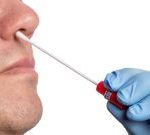
The new rapid COVID-19 test approved last week is probably not the most reliable option for determining whether someone is infected. But it’s cheap and it’s fast, and if used correctly, it could be the basis of a screening strategy to keep Americans safe as they return to school and work, infectious disease experts say. The BinaxNOW COVID-19 Ag Card produced by Abbott Laboratories is an antigen test, a type of scan that looks for specific structural proteins of the coronavirus that form during infection. The test will produce results within 15 minutes and cost $5, Abbott says. Antigen tests are notorious for producing many false positives, indicating that people are infected when they really aren’t, said Dr. Gary Procop, medical director and co-chair of the Enterprise Laboratory Stewardship Committee at the Cleveland Clinic in Ohio. And he said that’s absolutely fine if the test is used appropriately, as a screening tool to make sure folks infected with SARS-CoV-2 don’t make it into a crowded school or a basketball court or an assembly line. “Whenever you do screening tests, you actually want a lot of false positives because you want to capture everybody with disease,” Procop said. The key is to make the antigen test the first in a two-step screening process, he said. Everyone who tests positive should then receive a confirmatory PCR test…  read on >