









All Sauce from Weekly Gravy:

Since the coronavirus pandemic began, rates of hospital admission and death from COVID-19 have been significantly higher in men than women. Now, new Dutch research suggests a reason why: Compared to women, men have higher concentrations of a blood enzyme that helps the new coronavirus infect human cells. The enzyme is called angiotensin-converting enzyme 2 (ACE2). “ACE2 is a receptor on the surface of cells,” explained lead researcher Dr. Adriaan Voors, a professor of cardiology at the University Medical Center Groningen, in the Netherlands. His team published their findings May 11 in the European Heart Journal. ACE2 “binds to the coronavirus and allows it to enter and infect healthy cells,” Voors explained in a journal news release. “High levels of ACE2 are present in the lungs and, therefore, it is thought to play a crucial role in the progression of lung disorders related to COVID-19.” Because of the importance of ACE2 in heart failure, the Dutch team was already exploring the enzyme’s role in cardiovascular health long before the new coronavirus appeared on the scene. In their study, the researchers tracked ACE2 concentrations in the blood of almost 1,500 men and more than 500 women. All were older people treated for heart failure at medical institutions in 11 European countries. In a long list of possible factors that might influence ACE2 concentrations in the blood,…  read on >

(HealthDay News) — As states across America move through the early phases of reopening their economies, the nation’s top infectious disease expert plans to issue an ominous warning during a Senate hearing on Tuesday: Open too quickly, and “needless suffering and death” will follow. Dr. Anthony Fauci is one of four top health officials who will testify remotely before the Senate Health, Education, Labor and Pensions Committee, the New York Times reported. “The major message that I wish to convey to the Senate HLP committee tomorrow is the danger of trying to open the country prematurely,” he wrote to a Times reporter late Monday night. “If we skip over the checkpoints in the guidelines to ‘Open America Again,’ then we risk the danger of multiple outbreaks throughout the country. This will not only result in needless suffering and death, but would actually set us back on our quest to return to normal.” Fauci is one of three top health officials who have begun to quarantine themselves after being exposed to two White House aides who have been diagnosed with COVID-19. The other officials are Dr. Robert Redfield, director of the U.S. Centers for Disease Control and Prevention; and Dr. Stephen Hahn, commissioner of the U.S. Food and Drug Administration, the Washington Post reported. Fauci said Sunday that he was told his exposure risk was low,…  read on >

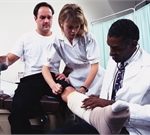
Need counseling about the care of bone or joint issues? During the coronavirus pandemic, it may be available on the American Academy of Orthopaedic Surgeons’ (AAOS) website. Its OrthoInfo.org blog includes tips for treating bone and joint pain while sheltering in place, as well as a look the pandemic’s implications for postponed surgery. “To say that the COVID-19 pandemic has been an unparalleled challenge for all of us is an understatement,” AAOS spokesman Dr. Stuart Fischer said in an academy news release. “The AAOS recognizes that patients, families and caregivers are facing a host of unique and unexpected worries about their current, and even future, orthopedic care.” The blog provides answers to common patient questions, including: How can I continue my orthopedic care while sheltering in place during the pandemic? Telehealth phone and video calls can be used if it’s not possible to see your doctor in person. What should I do if my orthopedic surgery is postponed? Talk to your doctors. They can help patients better understand what is an “elective procedure” and why many hospitals are postponing these procedures during the pandemic, the AAOS says. Can my orthopedic surgeon still provide treatment? AAOS says: “Although the COVID-19 pandemic presents many hurdles to delivering patient care, orthopedic surgeons continue to provide safe and effective treatment in the midst of what has become the ‘new…  read on >

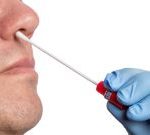
(HealthDay News) — The first emergency use authorization for a COVID-19 antigen test has been issued by the U.S. Food and Drug Administration. Antigen tests are a new category of tests for use in the coronavirus pandemic and quickly detect fragments of proteins from the virus in samples collected by swab from people’s noses. The approval was issued Friday to the Quidel Corp. for the Sofia SARS Antigen FIA, which is “authorized for use in high and moderate complexity laboratories certified by Clinical Laboratory Improvement Amendments (CLIA), as well as for point-of-care [ie, doctor’s office] testing,” according to an FDA news release. “I am very enthusiastic about antigen testing because of its ability to be scaled up to millions of tests a day, and because it has a much more rapid turnaround,” Dr. Ashish Jha, director of the Harvard Global Health Institute, told The New York Times. “A lot of us have been looking forward to this moment.” “It’s a very rapid test that could be used in a doctor’s office,” former FDA Commissioner Scott Gottlieb explained Sunday on CBS’s “Face the Nation.” “Doctors now have about 40,000 of these Sofia machines already installed in their offices” where they are used to test for strep throat and flu, he explained. The FDA said it expects to issue more emergency use authorizations (EUAs) for antigen tests…  read on >

(HealthDay News) — As U.S. coronavirus cases topped 1.3 million and the death toll was set to pass 80,000 on Monday, three of the nation’s top health officials have started to quarantine themselves after being exposed to two White House aides who have been diagnosed with COVID-19. The officials include Dr. Anthony Fauci, director of the National Institute of Allergy and Infectious Diseases; Dr. Robert Redfield, director of the Centers for Disease Control and Prevention; and Dr. Stephen Hahn, commissioner of the Food and Drug Administration, the Washington Post reported. Fauci said Sunday that he was told his exposure risk was low, and that he plans to wear a mask at all times in public but will not completely isolate himself because he needs to attend certain meetings at the White House and work at the National Institutes of Health, the Post reported. He will be tested every time he goes to the White House. All three officials are members of the White House coronavirus task force. So far, President Donald Trump and Vice President Mike Pence have tested negative for COVID-19, the White House said. Meanwhile, troubling news emerged from New York City: Mayor Bill de Blasio said Sunday that 38 children in the city had contracted a new, serious inflammatory syndrome that seems to be linked to COVID-19 infection. Three of those patients,…  read on >

Asking your child to mow the lawn is a risky proposition, a new study suggests. About 9,400 American kids are injured by lawn mowers each year, and mowers cause 12% to 29% of all traumatic amputations among them, according to the American Academy of Orthopaedic Surgeons. Toe and foot amputations are the most common. “Lawn mower injuries are largely preventable, but despite increased awareness, my colleagues and I continue to see a significant number of cases from May through October, some of which can be truly devastating,” said study senior author Dr. Theodore Ganley, an orthopedic surgeon at Children’s Hospital of Philadelphia. His team analyzed data on more than 1,300 patients under age 18 who were treated for lawn mower injuries at 49 U.S. hospitals between 2005 and 2017. The lawn mower incident rate was 7.26 injuries per 100,000 cases in rural areas, and 1.47 injuries per 100,000 in urban areas, the findings showed. The average age of injured kids was 7.7 years. Rural areas had a significantly higher percentage of injuries among 1- to 5-year-olds, compared to urban areas. Ganley said that’s likely due to the increased use of riding mowers. “I personally encourage parents not to give toddlers rides on lawn mowers for fun, because when a child hears the mower, they are likely to run outside for a ride and the operator…  read on >

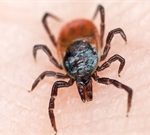
As pandemic-related restrictions ease and people return to parks and other outdoor spaces, remember to protect yourself against another threat — ticks. “With our latest mild winter, ticks have been active in much of the region on warmer days all winter long,” said Jody Gangloff-Kaufmann, an entomologist at Cornell University in Ithaca, N.Y., who said it’s too soon to predict population trends for 2020. She added that it is clear, however, that ticks are expanding their geographic range and moving into colder regions. That’s why it’s important to know how to recognize them, take preventive steps and do a tick check each time you venture out. “Although ticks aren’t everywhere, they can be anywhere so be aware of your surroundings,” Gangloff-Kaufmann said in a news release. Though no notable change in distribution or density has been reported in the past year, there is one exception, according to Laura Harrington, director of the U.S. Centers for Disease Control and Prevention Northeast Regional Center for Excellence in Vector-Borne Diseases at Cornell. Harrington said the Asian long-horned tick is expanding its range and has moved into New York state. “So far, it hasn’t been found infected with human pathogens, but it does transmit a hemorrhagic viral disease in Asia,” Harrington said. The bacterial infection that causes Lyme disease is the most important tick-borne illness in the United States,…  read on >

COVID-19 has directly claimed tens of thousands of U.S. lives, but conditions stemming from the novel coronavirus — rampant unemployment, isolation and an uncertain future — could lead to 75,000 deaths from drug or alcohol abuse and suicide, new research suggests. Deaths from these causes are known as “deaths of despair.” And the COVID-19 pandemic may be accelerating conditions that lead to such deaths. “Deaths of despair are tied to multiple factors, like unemployment, fear and dread, and isolation. Prior to the COVID-19 pandemic, there were already an unprecedented number of deaths of despair. We wanted to estimate how this pandemic would change that number moving forward,” said one of the study’s authors, Benjamin Miller. He’s chief strategy officer for the Well Being Trust in Oakland, Calif. Prior to the COVID-19 pandemic, the Well Being Trust reported that more lives had been lost to deaths of despair in 2017 than ever before. “The primary response at the time was to look at the opioid epidemic, but that didn’t even come close to cracking all of the issues of mental health related to deaths of despair,” Miller explained. Many things can contribute to deaths of despair, including loneliness, isolation, a lack of belonging, limited access to affordable health care, systemic racism, trauma and financial concerns, like a lack of housing and food, according to the Well…  read on >

It’s happened before: Couples stuck at home during blizzards, hurricanes or other natural disasters enjoy some “alone time” — and a baby boom follows. But a new survey from researchers at the University of Florence in Italy suggests the same probably won’t unfold during the COVID-19 pandemic. Why? “What we found the main reasons that led people to not wanting to conceive included worries related to future economic difficulties and consequences on pregnancy,” said study author Elisabetta Micelli, from the university’s Assisted Reproduction Technologies Center. The researchers conducted nearly 1,500 online interviews and found that nearly 82% of those surveyed said they didn’t plan to conceive during the coronavirus pandemic. The survey was conducted in the third week of the lockdown in Italy and included men and women in a stable heterosexual relationship for at least one year. The findings were published May 7 in the Journal of Psychosomatic Obstetrics and Gynecology. Of the 268 participants who said that, prior to the pandemic, they had plans to have a child, more than one-third abandoned their intentions when the pandemic struck. The main reasons were worries about future economic struggles (58%) and any potential consequences on pregnancy (58%) from the new coronavirus. Even though almost half of those who responded to the survey had not lost their jobs or income, “the fear of imminent and future…  read on >

With U.S. coronavirus cases topping 1.2 million and the death toll climbing to more than 75,000 on Friday, the federal government’s monthly jobs report showed a staggering 14.7 percent of Americans are now unemployed. A total of 20.5 million jobs were lost during the April lockdown, and not since the Great Depression has the unemployment rate been so high, the New York Times reported. That was not the only bad economic news delivered this week: On Thursday, the weekly jobless claims report showed that another 3.2 million jobless claims were filed last week. That brought the total unemployed since the nation’s economy was first curtailed by social distancing measures in mid-March to an historic 33 million. Meanwhile, a personal valet of President Donald Trump has tested positive for COVID-19, raising concern about of potential spread of the virus in the White House, the Washington Post reported. Trump and Vice President Mike Pence have since tested negative, the White House said Thursday. While reopening parts of the U.S. economy will undoubtedly start to help some Americans get their jobs back, an internal report from the Trump administration predicted that reopening will come at a cost: 200,000 new coronavirus cases and 3,000 deaths every day by the end of May. Troubling predictions are coming from more than one source this week: A forecasting model from University of…  read on >