







All Sauce from Weekly Gravy:

Social distancing guidelines crafted by the federal government to stem the spread of coronavirus expire on Thursday, but President Donald Trump said Wednesday he has no intention of extending the measures. “They’ll be fading out, because now the governors are doing it,” Trump explained during a media briefing. More than half of the United States, at least 28 states, will be partially reopened by the end of the week when their stay-at-home orders end, CNN reported. That is likely welcome news to the millions of businesses that have had to shut down or curtail operations during six weeks of stay-at-home orders, with 3.8 million Americans added to the nation’s jobless rolls on Thursday. That brings the six-week total to more than 30 million newly unemployed, The New York Times reported. As the U.S. coronavirus case count climbed past 1 million and the death toll neared 61,000, President Donald Trump signed an executive order that forces beleaguered meat processing plants to stay open so the country’s food supply isn’t threatened. The order used the Defense Production Act to classify meat processing as critical infrastructure, to try to keep chicken, pork and other meat flowing to supermarket coolers, the Associated Press reported. More than 20 meatpacking plants have been shuttered under pressure from local authorities and their own workers because of the virus. Others have slowed production…  read on >

If you toss and turn every night because the coronavirus epidemic has left you anxious and worried, one sleep expert has some advice. Financial struggles, loss of control, or worries about loved ones can affect peoples’ quality and duration of nightly sleep, said sleep psychologist Emerson Wickwire, an associate professor of psychiatry and medicine at the University of Maryland School of Medicine. “We are especially vulnerable to poor sleep during COVID-19, due to spending more time in front of blue light-emitting screens and the loss of traditional daytime structure and schedules,” said Wickwire. He is director of the Insomnia Program at the University of Maryland Medical Center. “An adequate amount of healthy sleep is crucial to help regulate mood, improve brain function, and increase energy and overall productivity. Without enough sleep, our bodies simply cannot function at their best,” Wickwire explained in a news release from the American Academy of Sleep Medicine (AASM). It’s important to focus on healthy sleep habits during the coronavirus pandemic. Get enough sleep. If you’re unsure how much sleep you should get, use the AASM’s bedtime calculator, which can help identify your appropriate bedtime based on when you need to wake up and your age. Maintain a sleep routine. Structure your schedule to support a regular bedtime and wake time. If possible, skip naps. Create a comfortable sleep environment: Make…  read on >

New research adds to a growing body of evidence that suggests men are far more vulnerable to severe COVID-19 than women are. Although both genders fall ill in the same numbers, men are 2.5 times more likely to get severe disease and die, the study from China showed. The finding comes as scientists in New York and California are starting to test a novel hypothesis that sex hormones might play a part in disease severity. Last week, doctors on Long Island started treating COVID-19 patients with estrogen to boost their immune systems, The New York Times reported. And beginning next week, physicians in Los Angeles will start treating male patients with progesterone, a hormone that is predominantly found in women. Progesterone has anti-inflammatory properties and might prevent the immune system from overreacting, the researchers explained. “There’s a striking difference between the number of men and women in the intensive care unit, and men are clearly doing worse,” Dr. Sara Ghandehari, a pulmonologist and intensive care physician at Cedars-Sinai in Los Angeles, told the Times. She is the principal investigator for the progesterone study. But experts who study sex differences in immunity warned that hormones may not be the answer. Even elderly women with COVID-19 are outliving their male peers, despite drastic reductions in levels of hormones for women after menopause, they noted. In the study…  read on >

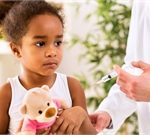
Fear of exposure to COVID-19 appears to be exacting an unexpected toll on public health: Childhood vaccination rates have plummeted, leaving millions at risk for other life-threatening illnesses. “We’re seeing a general drop in pediatrician visits of 70% to 80% — and that’s very concerning,” said Dr. Sara Goza, president of the American Academy of Pediatrics (AAP). She added that the pandemic has prompted many parents to skip “well visits” for their little ones. Babies under age 2 traditionally get check-ups this time of year, and older kids get vaccinated for summer camp. But not this spring, she said. Dr. Sean O’Leary, an associate professor of pediatrics-infectious diseases at the University of Colorado, in Aurora, agreed. “Most practices are seeing a huge drop,” he said. The U.S. Centers for Disease Control and Prevention is trying to get a handle on the pandemic’s effect on childhood vaccine rates. “We are currently examining the impact on a national level,” said Dr. Melinda Wharton of the CDC’s National Center for Immunization and Respiratory Diseases. The agency’s findings and additional guidance will be published in the next several weeks, she added. Evidence of a potential public health disaster is already more than anecdotal. The New York Times reported last week on a pediatric vaccine survey by the Physician’s Computer Company (PCC), a pediatric electronic health records firm. PCC contacted…  read on >

As the U.S. coronavirus case count climbed past 1 million and the death toll neared 60,000, President Donald Trump signed an executive order on Tuesday that forces beleaguered meat processing plants to stay open so the country’s food supply isn’t threatened. The order used the Defense Production Act to classify meat processing as critical infrastructure, to try to keep chicken, pork and other meat flowing to supermarket coolers, the Associated Press reported. More than 20 meatpacking plants have been shuttered under pressure from local authorities and their own workers because of the virus. Others have slowed production as workers have fallen ill or stayed home to avoid getting sick, the wire service said. But unions representing workers in those plants quickly fired back at the order, saying the White House was prioritizing cold cuts over workers’ health, the AP reported. Meanwhile, a troubling study out of China found evidence that the novel coronavirus can spread through air. That had been demonstrated in lab experiments, but now Chinese scientists say they captured tiny droplets containing genetic markers for the virus in real-world conditions, The New York Times reported. “Those [droplets] are going to stay in the air floating around for at least two hours,” said Linsey Marr, a professor of civil and environmental engineering at Virginia Tech who was not involved with the Chinese study. “It…  read on >

Work stress may increase your risk for ending up in the hospital with peripheral artery disease, a new study suggests. Peripheral artery disease (PAD) occurs when cholesterol or other fatty substances accumulate in blood vessels away from the heart — usually in the legs — and restrict blood flow. Left untreated, PAD increases the risk of heart disease and stroke. Previous studies have linked work stress to other types of artery-clogging disease, but few have specifically examined PAD. This new study assessed the association between work stress and hospital treatment for PAD. The results were published April 28 in the Journal of the American Heart Association. “Our findings suggest that work-related stress may be a risk factor for peripheral artery disease in a similar way as it is for heart disease and stroke,” lead study author Katriina Heikkilä said in a journal news release. She’s a senior researcher at the Karolinska Institute in Stockholm, Sweden. Researchers analyzed the health records of 139,000 men and women who took part in 11 studies conducted between 1985 and 2008 in Finland, Sweden, Denmark and the United Kingdom. Participants were ages 39-49 on average, and had no history of PAD when the studies began. Over an average 13 years of follow-up, 0.2% to 1.8% of the participants were hospitalized for PAD. The risk was 1.4 times higher among those…  read on >

Young people who pull themselves out of poverty may be no better off when it comes to their heart health, a new study suggests. Researchers found that “upwardly mobile” U.S. adults tended to be less stressed and depressed than peers who spent their whole lives below the poverty line. Unfortunately, it did not make a difference in their cardiovascular health. They were just as likely to have conditions like obesity and elevated blood pressure, blood sugar and cholesterol, the study found. The results might sound surprising, said Dr. Nieca Goldberg, a cardiologist and volunteer expert with the American Heart Association. After all, both higher income and better mental health have been consistently linked with better physical health. “But I can think of a few reasons for the findings,” said Goldberg, who was not involved in the study. “When you consider it, these are people who work very hard,” she said. “They may be really focused on their jobs, at the expense of other things. They may have no time for exercise, or end up eating a lot of grab-and-go foods.” Compared with people whose income stays low, Goldberg said, they may be less worried about money and security — and, therefore, in better mental shape. But that doesn’t necessarily mean their lifestyles are healthy. Lead researcher Gregory Miller agreed that lack of time for exercise…  read on >

With job losses skyrocketing because of the coronavirus pandemic, hunger is a growing issue for millions of Americans, according to a new report. Surveying more than 10,000 people across the United States late last month, researchers found that nearly 4 in 10 had too little to eat or difficulty obtaining healthy foods. Southern states have been especially hard hit, with nearly half in some states having “food insecurity,” the survey shows. “Food insecurity was high in America before the pandemic, and it has gotten even worse,” said lead researcher Kevin Fitzpatrick, a sociology professor at the University of Arkansas. “The U.S. food system is in the middle of a crisis.” Food insecurity is both uncertainty about being able to buy food when you run out and having to cut back on the size of meals, or in the most severe cases, actually skipping a whole day’s worth of food, explained Elaine Waxman, a senior fellow at the Urban Institute, a think tank based in Washington, D.C. The issue affects poor minorities far more than the white middle-class, Fitzpatrick said. And even before COVID-19-related shutdowns left scores of Americans without paychecks, organizations that feed the needy were under pressure. Many providers were already at their limits and unable to respond to the greater demand, Fitzpatrick said. When he and his university colleagues conducted their survey the…  read on >

While health experts continued to call for a national strategy to test more Americans for coronavirus, President Donald Trump on Monday announced a “blueprint” for boosting testing capacity as some states began reopening their economies. But the national guidance says states must develop their own testing plans and rapid-response programs while the White House provides “strategic direction and technical assistance,” and helps “align laboratory testing supplies and capacity with existing and anticipated laboratory needs,” the Washington Post reported. Trump was joined at the media briefing by some major retailers who said they had ramped up both testing and the production of medical supplies. They predicted they would doubling both their rate of testing and the number of sites that would be available to the public in the next month. Admiral Brett Giroir, the assistant secretary for health, told CBS News that the Trump administration is prepared to send all 50 states enough tests to screen 2 % of their population per month for the virus, roughly 6.6 million people. By Sunday, the United States had conducted about 5.5 million tests, according to the Covid Tracking Project, which compiles those figures from individual states. But that number is only equivalent to about 1.7 % of the U.S. population, the Post reported. In contrast, Germany increased testing earlier than the United States did and had tested 2.5…  read on >

Grocery shopping has become a daunting endeavor during the coronavirus pandemic, but there are things you can do to protect yourself and others, the U.S. Food and Drug Administration says. Prepare a shopping list in advance and buy just one to two weeks’ worth of groceries at a time. Buying more than you need can create temporary shortages, the FDA said in a news release. Wear a face covering or mask while you’re in the store. Some stores and localities may require it. Check your state, county or city guidelines for any other requirements. Carry your own wipes, or use those provided by the store to wipe down the handles of the shopping cart or basket. If you use reusable shopping bags, ensure they are cleaned or washed before each use. Practice social distancing while shopping, which means keeping at least 6-feet between you, other shoppers and store employees. Keep your hands away from your face. Wash your hands with warm water and soap for at least 20 seconds when you return home and again after you put away your groceries. There is no evidence of food packaging being associated with the transmission of the coronavirus, the FDA said. But, if you wish to do so as an extra precaution, you can wipe down product packaging and allow it to air dry. Grocery stores may…  read on >