









Tainted food, trash-filled parklands and even hungry kids: Public health could be increasingly at risk as the U.S. government shutdown drags into its 21st day, experts say. Crucial inspections intended to protect Americans have either been curtailed or are not being performed because the responsible federal workers have been furloughed, said Dr. Georges Benjamin, executive director of the American Public Health Association. “We have a very refined regulatory process which protects people from known and unknown hazards,” Benjamin said. These inspections are designed to protect people against threats like tainted drugs, foodborne illnesses and water contamination, he explained. “Even though we have a system that’s pretty good, things fall through,” Benjamin said, noting the frequency of drug recalls, foodborne disease outbreaks and polluted drinking water. “And that’s when we’re running on all cylinders, everyone’s funded, everyone’s at work,” he added. Large sections of the government have been shut down since late last month. President Donald Trump is insisting on government funding of more than $5 billion to start building a wall along the U.S.-Mexico border; Democrats have refused to fork over the money. Congress already has passed five of its major appropriations bills, which fund about three-quarters of the government. The shutdown hasn’t affected the U.S. Department of Health and Human Services, the U.S. Centers for Disease Control and Prevention and the Department of Veterans…  read on >

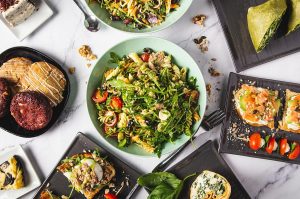
A large, new analysis helps confirm that eating lots of grains, vegetables and fruit lowers your risk of dying early from cancer or heart disease. When compared with those who consume very little fiber, people at the high end of the fiber-eating spectrum saw their risk for dying from heart disease, stroke, type 2 diabetes and/or colon cancer plummet by 16 to 24 percent, investigators reported. The team also concluded that more is definitely more: For every additional 8 grams of dietary fiber a person consumes, the risk for each of those illnesses was found to fall by another 5 to 27 percent. “The health benefits of fiber are supported by over 100 years of research into its chemistry, physical properties, physiology and effects on metabolism,” said study author Andrew Reynolds, a postdoctoral research fellow at the University of Otago in New Zealand. “What really surprised us was the range of conditions that higher intakes of dietary fiber seemed to improve,” Reynolds added. “Heart disease, type 2 diabetes and [colon] cancers are some of the most detrimental diseases of our time.” The conclusions follow a deep-dive into the results of 185 observational studies conducted over the last four decades, alongside the findings of another 58 clinical trials involving more than 4,600 participants. Reynolds and his colleagues reported their work, which was commissioned by the World…  read on >

Over the past few decades, the amount of food Americans eat away from home has increased from 18 percent to 33 percent. At the same time, restaurant meals with oversized portions have become a major contributor to the nation’s obesity epidemic. While much of the blame has been aimed at fast-food places, these aren’t the only restaurants to supersize portions. A study done at Tufts University found that meals from non-chain restaurants averaged 1,200 calories, about the same as offerings from the large chains. And meals from three of the most popular cuisines — American, Italian and Chinese — tallied even higher, close to 1,500 calories. With 92 percent of restaurant meals delivering more calories than needed in one sitting, it’s pretty easy to gain weight. Half of all U.S. restaurants are individual establishments or part of a chain small enough to be exempt from having to provide nutritional information — such as calorie counts — so you’re on your own for making careful choices. Here are steps you can take. First, watch out for the freebies, such as any tasty bites from the chef presented as you sit down, as well as a bottomless bread basket. Dipping bread in olive oil rather than spreading on butter cuts out saturated fat, but not calories, so skip it if you want to spend those calories elsewhere.…  read on >

(HealthDay News) — Teens typically have a significant increase in appetite around the age of 10 in girls and 12 in boys, the American Academy of Pediatrics says. During adolescence, boys require an average of 2,800 calories per day and girls an average of 2,200 calories per day. Hunger typically starts to subside once teens stop growing, the academy adds. But taller teens and those who play sports may require more calories into late adolescense, the doctor’s group says.

With concerns about overfishing, it’s shocking to learn that 40 percent of the edible U.S. seafood supply is lost or wasted every year — and half of that is by consumers. That’s not only money down the drain, but also a loss of valuable nutrients like protein and omega-3 fatty acids. To cut waste, calculate the amount of fish you really need before shopping based on the recipe you’ll be following and portion sizes. It will also help to have a plan for any leftovers, such as a brown bag lunch the next day. Be sure the seafood is fresh when you buy it. At the store, it should be refrigerated or displayed on ice in a case or under a cover. Fish should smell like the sea, not fishy or ammonia-like — those are signs of spoilage in raw or cooked fish. Seafood shopping tips: The eyes of whole fish should be clear and bulge slightly. Flesh should be shiny, not slimy, and spring back when pressed. Shrimp flesh should be translucent. Consider buying frozen seafood, like bags of shrimp, which can be economical and used as needed. At home, store fresh seafood properly so it won’t spoil before you can eat it. If you’ll cook it within two days, you can put it in the fridge, optimally on ice. Otherwise, wrap it tightly…  read on >

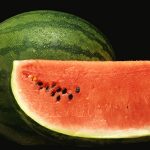
A “low-energy-dense food diet” sounds like just another weight loss fad, but it’s an approach with decades of research behind it. The concept is simple: Eat more foods with a higher water content to get more volume for fewer calories. Energy density is simply the amount of energy — or calories — in a gram of a food. Foods can be very low-, low-, medium- or high-energy density. Butter, for instance, is a high-density food with 180 calories in 20 grams. Watermelon is very low, with just 7 calories in 20 grams. Portion size is another way to see the difference. For example, one and a half juicy oranges have the same number of calories as a mere three pretzel rods. To find a food’s energy density, divide the number of calories in a serving by the number of grams in that serving. Energy density ranges in the very low category are from 0.5 to 1 calorie/gram. As you move to the high end, it’s from 4 to 9 calories per gram. You can easily calculate the energy density of any food. Use a calorie counter to do the math for fresh foods. For packaged ones, use the Nutrition Facts Panel and divide the calories by the grams in a portion. Low-energy density foods are usually high in fiber as well as water, so they’re…  read on >

Is your budget at odds with your desire to eat healthy? Seafood, lean cuts of meat and fresh produce can be pricey, but there are many foods that let you stretch your shopping dollars. At about 15 cents each, protein-rich eggs are a great buy. Scrambled for breakfast, baked into a frittata for dinner and hard boiled as a snack on the run, eggs can fit into any meal. If watching calories, eat twice the number of whites as yolks. For pennies a serving, plain oatmeal, especially the steel-cut variety, offers a wealth of benefits. It’s high in the type of soluble fiber that helps remove cholesterol from your bloodstream, lowers your risk for heart disease and keeps you regular. When it comes to canned veggies, whole tomatoes top the list. Because they’re cooked, they have more of the antioxidant lycopene. They can be quickly heated with herbs for a side dish or pureed into a sauce. Look for whole peeled tomatoes, often less processed during canning, and chop them yourself. Just avoid brands with a lot of added salt. Compared to beef, chicken is a great protein value, especially if you buy on sale, whether whole or parts. While skinless and boneless breasts are convenient, they’re more expensive. You can easily pull the skin off whole chicken breasts before cooking. And using bone-in pieces…  read on >

If you think a switch from sugar to a calorie-free sweetener might help you get healthier and shed pounds, think again. After years of research, there’s still only very weak evidence that no-cal sweeteners might be beneficial, according to German researchers who looked over data from 56 studies involving either adults or kids. The investigators looked at a variety of health outcomes including weight, blood sugar, oral health, cancer, heart disease, kidney disease, mood and behavior. “Most health outcomes did not seem to have differences between the non-sugar sweetener exposed and unexposed groups,” concluded the team led by Joerg Meerpohl of the University of Freiburg. The quantity of non-sugar sweetener used didn’t seem to matter, either, the team added. In children, no evidence was found in weight gain between those who used non-sugar sweeteners or sugar, the research showed. There was also no evidence of any effect of non-sugar sweeteners on overweight or obese adults or children who were actively trying to lose weight. In the few studies that did show a mild health benefit for no-cal sweetener use, population sizes were either very small or the duration of the trial was too short to make any firm conclusions, the study authors noted. One nutritionist in the United States wasn’t surprised by the findings. “No matter how they are marketed, [non-sugar sweeteners] are still chemicals…  read on >

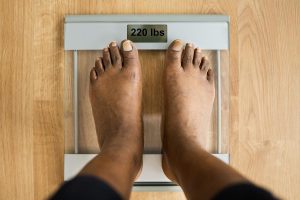
Restrictive diets are hard to stick with, especially when you must eliminate most of your favorite foods. Research has also found that cutting out a particular food can cause cravings and may lead to overindulgence — and weight regain — when you allow yourself to enjoy it again. Since permanent weight loss really involves a forever approach, learning how to work in your favorites, especially sweets, is a must even during the weight-loss phase. Penn State University researchers set out to test whether purposefully including a favorite snack in a diet could help people stick with their eating plan and achieve weight loss success. They conducted a small study in which all the participants followed a low-calorie, high-nutrient diet of whole grains, vegetables, fruits, non-fat milk and lean protein with a small number of daily calories going to a sweet treat. For one group of participants the treat was one small square of chocolate twice a day plus a sugar-free cocoa drink. For the other group, the treat was red licorice, plus the cocoa drink. After 18 weeks, both groups lost inches and pounds, with the chocolate group achieving slightly better results. The researchers also found that participants didn’t overindulge in their treats — they kept within the overall calorie-range of their diet — and that the snacks kept cravings under control. To try this…  read on >

(HealthDay News) — Some decorations sold for use on birthday cakes may not be what parents wish for, the U.S. Food and Drug Administration says. Some decorative glitters and dusts may contain ingredients that shouldn’t be eaten, the agency says. They’re marketed as luster dust, disco dust, twinkle dust, sparkle dust highlighter, shimmer powder, pearl dust and petal dust. The FDA offers these suggestions before deciding on how to decorate a cake: Carefully check the label of any decorative product. Edible glitters and dusts are required by law to include a full list of ingredients on the label. Look for ingredients such as sugar, acacia, maltodextrinornstarch and color additives specifically approved for food use. Most edible glitters and dusts state “edible” on the label. If the label simply says “non-toxic” or “for decorative purposes only” and does not include an ingredients list, you should not use the product on foods.