






Sen. Mitch McConnell is back home more than two weeks after he fell at a private dinner and was hospitalized with a concussion and broken rib. The Senate Minority Leader spent five days in the hospital and the remainder of the 2-1/2 weeks following his fall in inpatient physical therapy. “I’m in frequent touch with my Senate colleagues and my staff,” McConnell said in a statement released Saturday. “I look forward to returning in person to the Senate soon.” McConnell said he resumed talking directly with his team leadership last Tuesday, saying he was “eager” to return. McConnell, 81, was injured March 8 at a private dinner at a Washington hotel. He’s not the only senator currently out for illness. Sen. Dianne Feinstein (D-Calif.) is recovering from shingles, while Sen. John Fetterman (D-Pa.) is receiving inpatient treatment for clinical depression. Although it’s not clear exactly when McConnell will return to his office, he said he will be working from home for now. The Senate starts an Easter recess Thursday and won’t reconvene until April 17, the Washington Post reported. More information The U.S. Centers for Disease Control and Prevention has more on concussion. SOURCE: Washington Post  read on >

Boys born to women who had COVID-19 during pregnancy may be at risk for developmental delays, a new study suggests. Delays in speech and motor function were the most commonly diagnosed conditions in these children at 12 months. They were seen in boys but not in girls, the study authors said. “These findings suggest that male offspring exposed to SARS-CoV-2 in utero may be at increased risk for neurodevelopmental disorders,” said lead researcher Dr. Andrea Edlow. She is an associate professor of obstetrics, gynecology and reproductive biology at Harvard Medical School, in Boston. However, she added, “The motor and speech delays noted in our study do not, per se, reveal anything about risk for autism, ADHD [attention-deficit/hyperactivity disorder], or other diagnoses, which are made later in life. Our study cannot yet answer those questions, and only points to the need for longer-term follow-up of these children, given that increased neurodevelopmental risk has already been noted.” It’s not uncommon that infections during pregnancy affect infants, Edlow pointed out. “Multiple viral and bacterial infections in pregnancy have been associated with increased risk for neurodevelopmental diagnoses in offspring. The common thread is maternal immune activation during infection in pregnancy, rather than a specific pathogen,” she explained. As to why boys but not girls are affected, Edlow said that is also seen with other infections. “Boys are known to…  read on >  read on >

Anxiety disorder can make it hard to navigate life, but lately CBD has been touted as a natural treatment for the nerve-wracking condition. You can buy CBD almost anywhere — gas stations, spas, farmers markets and grocery stores. It comes in many forms — from gummies to tablets to tinctures to lozenges and patches. But is CBD good for anxiety? Here, experts share their thoughts on whether the evidence supports CBD for anxiety. What is CBD? According to Harvard Health, CBD is an active ingredient found in the marijuana plant. However, CBD is typically derived from marijuana’s cousin, the hemp plant. CBD is not psychoactive, so it will not cause the “high” that THC from marijuana does. It is not believed to be addictive by itself. The hemp plant is legal, so CBD derived from hemp is considered to be legal. CBD works by interacting with the body’s endocannabinoid (eCB) system. The endocannabinoid system acts as a neuromodulator for the body, Harvard Health says, and controls most neurotransmitter levels and activities. It also plays a role in the immune and gastrointestinal systems. Endocannabinoids and their receptors are found throughout the body. The eCB system integrates the perception of whether internal and external stimuli are stressful. CBD and anxiety According to the Anxiety and Depression Association of America, insufficient scientific evidence backs the claim that CBD…  read on >  read on >

Lots of folks gained their COVID weight during the housebound months of the pandemic, and now those extra pounds are weighing heavy on many, a new survey shows. Nearly a third (29%) of just over 1,700 adults surveyed in December 2021 said COVID-19 made them more worried than ever about being obese, according to findings published recently in the journal Surgery for Obesity and Related Diseases. That means an estimated 6.4 million thought about using either weight-loss surgery or prescription anti-obesity drugs for the first time, the researchers said. “We’ve definitely seen a significant rise in interest in weight-loss surgery and other underutilized treatments since obesity was linked to worse outcomes from COVID-19,” said co-researcher Dr. Shanu Kothari, immediate past president of the American Society for Metabolic and Bariatric Surgery (ASMBS). “COVID-19 lit the match for many people to get healthier and protect themselves from severe disease, whether that be COVID-19, diabetes, or heart disease. Treating obesity, the source of so many of these diseases, is the best way,” Kothari said in an ASMBS news release. Nearly 1 out of 5 people (18%) said they were more likely to initiate a discussion about their weight specifically because of the added risk of severe COVID in the obese and overweight, survey results showed. Those numbers were even higher among Black (28%) and Hispanic (29%) Americans, as…  read on >  read on >

There’s nothing like the comfort and security of home. For many, a home is a place filled with fond memories of happy times. It’s no wonder older adults choose to extend their independence by trying to stay in their homes as they get older, an experience called aging in place. But as a person ages, what used to be ordinary in the home can be challenging or even a hazard. Almost one-third of older adults experience a fall. Among them, 55% fall inside the home and 23% fall outside the home, according to AARP. As a caregiver, it’s important to consider what you can do to make the home safe and accessible for an older loved one. “We’re hearing more from the caregivers that are modifying their home so their older relative can move in with them,” Sandy Markwood, chief executive of USAging, a national association of local Area Agencies on Aging, noted in a recent AARP article. Here are some ideas on what changes to the home could make a big difference. Hallway and stair safety AARP suggests checking the stairs to make sure they’re in good condition. Stairwells should be well-lit and there should be secure handrails on both sides. Remove throw rugs in the home. You should also declutter hallways, walkways and stair areas. To improve visibility inside the home at night,…  read on >  read on >

Children with autism are less likely than their peers to receive important vision screening despite a high risk for serious eye disorders, researchers report. Only about 36% of children with autism spectrum disorder (ASD) completed vision screenings during their health checkups, a new study found. That was far fewer than the 59% rate for children without ASD. In addition, the screening rate for Black children with ASD was just under 28%, compared with nearly 40% for white and multiracial kids, the findings showed. “I noticed that many of our patients with autism have never had vision screening, even though it’s recommended for all young children,” said senior author Dr. Brittany Perry, a pediatrician at the Nemours Swank Autism Center in Wilmington, Del. “So, I wanted to study whether this might be a broader disparity — whether kids with autism receive vision screening less often than other kids,” she added in a Nemours news release. Early childhood is crucial for vision development, as well as for early detection and treatment of eye problems, the study authors noted. For the study, Perry’s team examined data for more than 63,800 well visits across a primary care network in Delaware, Pennsylvania and Florida. Children were 3 to 5 years of age. In Florida, nearly 46% of kids with ASD had vision screening, compared to 28% each in Delaware and…  read on >  read on >

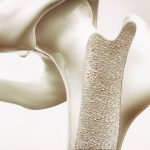
For some older adults, thinning bones may be a harbinger of waning memory, a new study suggests. The study, of more than 3,600 older adults, found that those with relatively low bone density were at greater risk of being diagnosed with dementia within the next decade. The one-third of participants with the lowest bone mass at the hip faced double the risk of dementia as the third with the strongest hip bones. Researchers said the findings — published March 22 in the journal Neurology — do not mean that thinner bones help cause dementia. Instead, they suspect that declining bone mass is one part of the early dementia process — before problems with memory and thinking skills become apparent. And that implies that doctors should pay attention to bone health as soon as older adults are diagnosed with dementia, said senior researcher Dr. Mohammad Arfan Ikram. One of the main reasons that people with dementia end up in nursing homes is poor mobility and falls, noted Ikram, a professor at Erasmus University Medical Center in Rotterdam, the Netherlands. “We know that low bone mineral density is a strong risk factor for poor mobility, and falls and fractures,” he said. “Therefore, it can be helpful in persons with early-stage dementia to also pay proper attention to their bone health — and where possible optimize it.” The…  read on >  read on >

Obesity is a well-known risk factor for severe COVID-19, and researchers think they’ve uncovered a possible reason why. Obese folks appear to have a blunted inflammatory response to COVID, leaving their immune systems less capable of fighting it, according to a recent study. The findings were a surprise to researchers, given that severe COVID often has been tied to an overactive immune response that produces damaging levels of inflammation in humans. People who are obese already have higher levels of inflammatory biochemicals in their blood, so it was suspected that COVID’s damaging inflammation would be even worse, noted researcher Menna Clatworthy, a clinician scientist at the University of Cambridge in the United Kingdom. “During the pandemic, the majority of younger patients I saw on the COVID wards were obese,” Clatworthy said in a university news release. “Given what we know about obesity, if you’d asked me why this was the case, I would have said that it was most likely due to excessive inflammation. What we found was the absolute opposite.” For this study, Clatworthy and her colleagues analyzed blood and lung samples taken from 13 obese patients with severe COVID who required mechanical ventilation and intensive care. They compared those samples against 20 COVID patients who weren’t obese and didn’t require ventilation. The researchers found the obese patients had underactive immune and inflammatory responses…  read on >  read on >

Much has been made of the so-called “obesity paradox” — the observation that people with a heart condition seem less likely to die if they are overweight or obese. But European researchers now say they’ve debunked that theory, which was based on earlier research that relied on body mass index (BMI, a measure based on weight and height) to judge whether a person carried excess weight. The major new study shows the obesity paradox vanishes if other heart risk factors are considered along with a person’s BMI. Further, researchers found that another measure of obesity, the waist-to-height ratio, more accurately reflected the real heart health risk that comes from having too much body fat. “Better measures of adiposity [excess fat] than BMI, such as waist-height ratio, eliminate the ‘obesity survival paradox’ and, indeed, show that greater adiposity is associated with a higher rate of hospital admission for worsening heart failure and worse symptoms and quality of life,” said senior researcher Dr. John McMurray, a professor of cardiology at the University of Glasgow. For this study, McMurray and his colleagues analyzed data from nearly 8,400 heart failure patients suffering from reduced ejection fraction, a condition in which the heart is not able to pump a normal amount of blood throughout the body. The patients were taking part in a clinical trial evaluating the safety and effectiveness…  read on >  read on >

(HealthDay News) – A drug-resistant bacteria linked to recalled eye drops has now killed three people. The U.S. Centers for Disease Control and Prevention reported Tuesday that infections with Pseudomonas aeruginosa had led to two additional deaths. In all, 68 people have become infected in 16 states. Eight of the patients have lost their vision. Four people have had to have their eyeballs removed. Three eye products have been recalled from Global Pharma Healthcare Private Limited in India. They were sold online, at stores and provided through ophthalmologist offices. While the P. aeruginosa strain involved in the recalls is resistant to 12 antibiotics, there may be new hope for treating it. Researchers at the University of California, San Diego, say they have identified a bacteriophage that has potential for working on the bacteria, CBS News reported. “Phage” treatments send viruses in to attack the drug-resistant bacteria. The university’s Center for Innovative Phage Applications has previously reported on therapies it developed to save patients with drug-resistant infections, CBS News reported. The center did not immediately respond to CBS News’ request for comment. It’s not known how many patients have been treated with the phage identified for this bacteria. In unrelated contamination incidents, two additional eye products from other manufacturers have been recently recalled, CBS News reported. More information The National Library of Medicine has more on…  read on >  read on >