







New research offers up some good news for diehard marathon runners: You don’t necessarily have to give up running if you are experiencing hip or knee pain. Contrary to widespread opinion, running marathons does not increase your risk for developing hip or knee osteoarthritis, the wear and tear form of the disease, a new study of seasoned Chicago marathoners showed. “You don’t develop knee or hip osteoarthritis simply because of how fast you run or how many miles you put on your body,” said study author Dr. Matthew James Hartwell, an orthopedic surgery sports medicine fellow at the University of the University of California, San Francisco. So, what does increase a runner’s risk for hip or knee arthritis? Basically, the same things that up these risks in non-marathoners, Hartwell said. This includes advancing age, family history of hip or knee arthritis, and previous injuries or knee surgery, as well as higher body mass index (BMI), a measure of body fat based on height and weight. For the study, more than 3,800 Chicago marathoners (mean age: nearly 44) answered questions about their running history, including number of marathons, number of years spent running, and average weekly mileage. They also answered questions about known risk factors for knee and hip arthritis. Participants completed an average of 9.5 marathons, ran 27.9 miles per week, and had been running…  read on >  read on >

Returning to golf, tennis or pickleball after shoulder replacement surgery shouldn’t be too hard. Healing does take time, but within a few months most people can get back to play at their pre-surgery level without the pain that they experienced before, a pair of new studies show. “Recovery after both an anatomic and reverse shoulder replacement or from any shoulder replacement is identical,” said Dr. Jonathan Levy, director of the Levy Shoulder Center at the Paley Orthopedic and Spine Institute in Boca Raton, Fla., who led both studies. “Patients are protected for the first six weeks and allowed to stretch for the next six weeks, but not allowed to return to the sport for at least three months,” he said. On average, it took patients about six months to play at their former level, Levy said. “But they were given the green light beginning at around three months,” he added. Recovery after shoulder replacements is relatively straightforward, Levy said. “It’s not an extraordinarily painful recovery,” he said. “If people are taking pain medication, it’s for a very short time. It’s just going through the stages of recovery where you go through healing, stretching, and then strength recovery and return to activity.” The first study included 69 golfers who had shoulder replacement surgery. Of this group, 36 returned to the golf course six months after surgery…  read on >  read on >
Can vitamin D lower dementia risk? Quite possibly, a team of British and Canadian researchers report. In their study, investigators spent roughly a decade tracking more than 12,000 older people. None had dementia at the start of the study period. In the end, the team determined that those who had been taking vitamin D supplements during that time appeared to face a 40% lower risk for dementia, compared with those who had never taken the supplements. Even so, Claire Sexton, senior director of scientific programs and outreach at the Alzheimer’s Association, cautioned that much more research is needed to better understand a possible link between vitamin D and dementia risk. For one thing, she noted that the study team did not track how much vitamin D supplementation any of the participants took, nor how long they had been taking them. Similarly, overall patient vitamin D levels were never assessed — either at the study launch or conclusion. In addition, the study was observational, Sexton added, meaning at no point were patients told to take, or not to take, vitamin D. That means the study cannot prove that vitamin D actually causes dementia risk to fall. Still, study author Dr. Zahinoor Ismail said that fresh evidence of vitamin D’s power against dementia has “great biological plausibility.” For example, prior research indicates that people with genetic mutations…  read on >  read on >

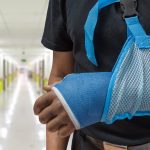
You can keep an arm in a cast from wasting away, researchers say, by working out your free arm. A small group of young men who performed eccentric contraction exercises with one arm — lowering a dumbbell in a slow and controlled motion — saw a 4% strength improvement in the other arm, even though it was immobilized by a cast at the elbow. Another group assigned to perform concentric contraction exercises — lifting a dumbbell — only lost about 4% of muscle strength in their immobilized arm, the study results showed. By comparison, a “control group” that did no exercises suffered a 15% decrease in their immobilized arm during the three-week study. It was already known that gaining muscle strength in one limb through resistance training will transfer to the same muscle on the opposite side of the body, said lead researcher Ken Nosaka. He is head of exercise and sports science at the Edith Cowan University School of Medical and Health Sciences, in Australia. “This is known as the cross-education effect,” Nosaka said in a university news release. “The key aspect of this study is one particular type of muscle contraction proved most effective.” For the study, 36 young men had their non-dominant arm immobilized by a cast at their elbow joint for three weeks. They were then split into three groups evenly:…  read on >  read on >

Consumers have been using a common over-the-counter oral decongestant known as phenylephrine for years, but that may not continue much longer. The U.S. Food and Drug Administration has asked a panel of its advisors to reassess the drug’s effectiveness. The medication’s safety isn’t in question, just whether it actually does what it claims to do. The FDA’s Nonprescription Drugs Advisory Committee will meet in April to consider the effectiveness of the oral version of phenylephrine. The same panel had decided the drug “may be effective” in a 2007 meeting following federal efforts to fight illegal manufacturing of methamphetamine, which required the decongestant known as pseudoephedrine to be sold behind pharmacy counters, CBS News reported. The FDA initially received a new petition to withdraw the medication back in 2015, submitted by University of Florida pharmacy professors Leslie Hendeles and Randy Hatton. The duo had cited new data that showed phenylephrine was not more effective than a placebo, CBS News reported. “Let me be clear, oral phenylephrine is not a safety risk,” Hatton told CBS News. “It just doesn’t work.” In 2022, both professors questioned the FDA’s inaction on their 2015 petition in a commentary in the Annals of Pharmacotherapy. “I get it. Risk takes priority. But eight years is long enough to wait, you know what I mean? That’s millions and millions of dollars wasted on…  read on >  read on >

An injection that relieves low back pain by helping damaged spinal discs regenerate appears to have sustained benefits, new clinical trial data show. Most patients who received an injection of VIA Disc received back pain relief that lasted at least three years, said lead researcher Dr. Douglas Beall, chief of radiology at Clinical Radiology of Oklahoma in Edmond. About 60% of patients had a 50% or better improvement in their pain three years after treatment, results showed, while more than 70% had a greater than 20-point improvement in movement and function. “This is durable relief out through 36 months,” said Beall, who is scheduled to present these findings Monday at a meeting of the Society for Interventional Radiology, in Phoenix. Findings presented at medical meetings are considered preliminary until published in a peer-reviewed journal. VIA Disc — the trade name for viable disc allograft supplementation — is a blend of bone marrow cells and ground-up spinal disc tissue from donors, Beall said. The cells are “one of the precursors to forming disc,” Beall said. They are selected from exactly the area where they’re precursors to form the disc material, tested for their capability to renew and differentiate from other cells and then mixed with the allograft (disc material) and injected. Once injected, the VIA Disc blend of cells and donor tissue encourages the cells within…  read on >  read on >

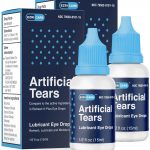
An outbreak of serious bacterial infections in 13 U.S. states linked to use of artificial tears has prompted experts to offer tips for keeping dry eyes safe. Five of the 58 people infected with Pseudomonas aeruginosa had vision loss, and one person died, leading to the recall of EzriCare and Delsam Pharma artificial tears. Some of those sickened also reported lung and urinary tract infections. Tests of opened bottles used by those affected found a rare, highly drug-resistant strain of the bacterium — one never before reported in the United States, according to the U.S. National Eye Institute. While it’s unclear if the contamination occurred during or after manufacturing, and while testing continues, there are ways regular users of artificial tears for dry eye disease, contact lens use and refractive surgery can keep themselves safer. “Formulations with preservatives reduce the risk of bacterial growth and potential infection,” said Dr. Chantal Cousineau-Krieger, an ophthalmologist at the National Eye Institute. “However, commonly added preservatives such as benzalkonium chloride, polyquaternium, or sodium chlorite themselves can be irritating to the eye, especially if used five or more times a day,” she said in an institute news release. Repeatedly using an eyedrop bottle that contains no preservatives can lead to contamination, increasing infection risk. “People who require preservative-free artificial tears can purchase single-use, individual dose vials, which cut contamination risk…  read on >  read on >

You toss, you turn, you can’t fall asleep. Certainly, there are sleep medications that can be prescribed by a doctor. And with some investment of time, cognitive-behavioral therapy for insomnia is considered to be an effective option. Yet, there are also a lot of healthy sleep habits and natural sleep aids that some experts believe can make a difference, too. With more than 60 million Americans suffering from poor sleep quality, according to Johns Hopkins Medicine, it seems like these easily accessible options could be worth a try when searching for the best natural sleep aid. Practice good sleep hygiene About 20% of Americans take sleep medication, according to recent research from the U.S. National Center for Health Statistics. Those include a long list of drugs, such as Sonata, Lunesta and Ambien. But Dr. Sanjeev Kothare, a sleep expert and pediatric neurologist at Cohen Children’s Medical Center in Queens, N.Y., suggests starting with some basics to make sleep a little easier. ‘There are certain natural things that you can take and there are certain things that you can do,” Kothare said. Start with healthy sleep hours, Kothare recommends. For adults, that means going to bed at roughly 10 to 11 p.m. and waking up at 7 a.m., to get a good seven to eight hours of sleep. Teenagers need eight or nine hours a night.…  read on >  read on >

(HealthDay News) – A brain-eating amoeba has killed a Florida man, state health officials reported. The man may have acquired this very rare infection after rinsing his sinuses with tap water, the Florida Department of Health in Charlotte County said in a news release. While health officials continue to investigate the cause of the Naegleria fowleri infection, they emphasized that it can’t be contracted from drinking tap water. These infections only happen when contaminated water enters through the sinuses, officials said. That more typically happens from swimming in warm lakes or rivers in summer. N. fowleri grows in warm temperatures, according to the U.S. Centers for Disease Control and Prevention. It can be found in soil and fresh water. Health officials have not publicly identified the man who died. Cases have been reported in United States for each of the past four years, including three cases last year that happened in Arizona, Iowa and Nebraska. The Iowa case happened last June and involved a Missouri resident who swam in the Lake of Three Fires in Taylor County. The Nebraska case was a child who died within 10 days of being hospitalized after swimming in the Elkhorn River in August, NBC News reported. The disease typically progresses quickly after patients have symptoms that include headaches, fever, nausea, disorientation, loss of balance, a stiff neck and seizures.…  read on >  read on >

Don’t put lip balm on your eyelid, even if you saw it on TikTok. It’s bad for your eyes, according to a Michigan Medicine expert. The trend first began back in the 2010s, but has seen a resurgence in 2023. Called “beezin’,” because the trend is to use Burt’s Bees lip balm in particular, some believe it gets them high, heightens the sensation of being drunk or high, or increases feelings of alertness. It doesn’t, said Dr. Olivia Killeen, a clinical lecturer in the department of ophthalmology and visual sciences at Michigan Medicine, in Ann Arbor. “The peppermint oil or menthol in the balm can cause a tingling sensation, but it is not actually getting people high or causing the same type of chemical reaction in the body that’s produced by drugs or alcohol,” Killeen said in a Michigan Medicine news release. Rather, it can irritate the eyelids, causing redness, swelling and inflammation. If it ends up getting into the eyes, it can cause tearing, redness and painful burns to the surface of the eyes. It may even scar the eyes in severe cases or cause vision loss. It may also increase the risk of infection, especially if the balm was also used on the lips, because it may introduce viruses or bacteria into the eye. Among the potential infections are conjunctivitis, or “pink eye.”…  read on >  read on >