









The Grammy-winning singer Adele told a crowd at her New Year’s Eve concert that “really bad sciatica” is causing her to wobble on stage. The award-winning singer first talked about her chronic back problems in a 2021 interview with The Face. “I slipped my first disk when I was 15 from sneezing,” she said. “I was in bed and I sneezed and my fifth one flew out. In January, I slipped my sixth one, my L6. And then where I had a C‑section, my core was useless. … I’ve been in pain with my back for, like, half of my life, really. It flares up, normally due to stress or from a stupid bit of posture.” Someone shared a video on TikTok of the “Hello” singer asking her concert crowd if anyone else had the condition. She received loud screams in response, CBS News reported. “What if it’s becoming more common because we all are sitting down on our asses all day,” Adele told the crowd. Lumbar radiculopathy, better known as sciatica, causes leg, hip, butt and back pain that ranges from mild to severe. Some feel weakness or tingling in their legs and feet. It stems from the sciatic nerve, the largest nerve in the body, extending from the back of the pelvis to the back of the leg just below the knee. The…  read on >  read on >

Herbal cigarettes: They carry a certain “coolness factor” and sound like they might be a healthier alternative to tobacco, but are they really safer to smoke? Not really, experts say. “Even herbal cigarettes with no tobacco give off tar, particulates and carbon monoxide, and are dangerous to your health,” according to the American Cancer Society (ACS). The ACS outlines the dangers of a few of these herbal alternatives — from clove cigarettes known as kreteks to flavored cigarettes known as bidis and water pipes called hookahs. “Hookah is not a safe alternative to smoking cigarettes,” Dr. Ellen Rome from Cleveland Clinic in Ohio said in a post about the dangers of sharing these pipes that heat tobacco with charcoal and filter it through cool water. “A typical one-hour session involves inhaling 100 to 200 times the volume of smoke inhaled from a single cigarette,” Rome noted. What are herbal cigarettes? The U.S. National Cancer Institute (NCI) defines herbal cigarettes as containing a mixture of flowers, herbs and other natural ingredients. What is not in herbal cigarettes? No tobacco or nicotine. Despite these natural ingredients, they still emit many of the same harmful chemicals that cigarettes have, such as tar and carbon monoxide, according to the NCI. While certain herbal cigarettes are well known, others are more obscure. A study published recently in the American Chemical…  read on >  read on >

Sometimes it really does “take a village” to help you meet life’s challenges, and quitting smoking can be one of the toughest challenges out there. That’s why specially designed smoking-cessation programs can make all the difference, experts say. Many programs employ a combination approach, one that treats the physical and the psychological addictions you’re trying to break. Dr. Amit Mahajan, a volunteer medical spokesperson for the American Lung Association (ALA), says proven ways to help people quit often include professional counseling — including psychotherapies such as cognitive behavioral therapy. Such therapies are typically given alongside nicotine replacement patches and gums (to help ease cravings), and/or addiction-countering drugs, such as Chantix and bupropion (Wellbutrin). Programs that offer up these combo strategies have a higher likelihood of success, Mahajan said. “At the end of the day, the data is pretty clear that if there’s behavioral therapy combined with pharmacotherapy medications, that is the best option for smokers who want to quit and people who’ve already tried and were unable to quit,” he said. Breaking free The ALA offers up its own program, called Freedom From Smoking. First begun in 1975 and then updated and refined ever since, the program helps overcome the physical, mental and social aspects of addiction. It even offers up an online quiz that folks can take to confirm that they’re mentally ready to…  read on >  read on >

Researchers studying dry eye disease in mice have found that the condition can alter how the cornea heals itself. They have also identified potential treatments. “We have drugs, but they only work well in about 10% to 15% of patients,” said senior researcher Dr. Rajendra Apte, a professor at Washington University School of Medicine in St. Louis. “In this study involving genes that are key to eye health, we identified potential targets for treatment that appear different in dry eyes than in healthy eyes.” Tens of millions of people around the world, including 15 million in the United States, have eye pain and blurred vision as a result of complications and injury associated with dry eye disease, Apte said in a university news release. “By targeting these proteins, we may be able to more successfully treat or even prevent those injuries,” he said. In dry eye disease, the eye can’t provide adequate lubrication with natural tears. Various types of drops can help replace those, but when the eyes are dry, the cornea is more susceptible to injury. The researchers found that proteins made by stem cells that regenerate the cornea may be new targets for treating and preventing such injuries. To study this, the investigators analyzed genes expressed by the cornea in several mouse models. They looked at dry eye disease, diabetes and other conditions.…  read on >  read on >

A comprehensive eye exam could be the key to determining if you have glaucoma, a silent thief of sight. Glaucoma is a group of eye diseases that affect the optic nerve, and the leading cause of preventable blindness, according to The Glaucoma Foundation. But most people are unaware of their risk. Glaucoma affects about 80 million people worldwide, and that number is expected to reach almost 112 million by 2040. The condition can run in families. It disproportionately affects people of color. Most people are diagnosed after age 40, and at least half of glaucoma patients had no symptoms until their vision was already significantly damaged. As many as 1.5 million Americans are unaware that glaucoma is silently damaging their optic nerves right now, according to the foundation. High-risk factors for glaucoma include a family history of the disease and being over age 40. Having a family member with glaucoma doesn’t necessarily mean you’ll get the disease, however. The most important risk factor is having abnormally high intraocular pressure (IOP), the foundation explained in a news release. Being of African, Hispanic and Asian descent also increases the risk. People with African and Hispanic ancestry have a greater tendency for developing primary open-angle glaucoma. People of Asian ancestry are more apt to develop angle-closure glaucoma and normal-tension glaucoma. Other risk factors include diabetes, nearsightedness, previous eye…  read on >  read on >

It’s safe for kids to take the COVID-19 vaccine after they’ve suffered a rare complication from a prior COVID infection, a U.S. National Institutes of Health-supported study has concluded. Multisystem inflammatory syndrome in children (MIS-C) affects about 1 in every 3,000 to 4,000 kids who contract COVID-19, according to the U.S. Centers for Disease Control and Prevention. The complication, which occurs a few weeks after COVID-19 infection, involves an intense immune response that can lead to life-threatening organ failure. Seventy-four deaths in the United States have been linked to MIS-C during the pandemic, the CDC says. A lingering question of COVID vaccine safety is how it might affect the more than 9,000 children and adolescents who’ve been diagnosed with MIS-C, the researchers noted. To figure that out, 22 North American medical centers enrolled 385 children aged 5 and older who’d had MIS-C from an earlier COVID infection but were now eligible to receive the vaccine. Of the group, about half received at least one vaccine dose. The average length of time between MIS-C diagnosis to the first vaccine dose was 9 months. The average age of participants in the study was 12 years old, and about 74% were boys. Participants were racially diverse. The report was published online Jan. 3 in JAMA Network Open. Mild side effects like arm soreness and fatigue occurred in 49%…  read on >  read on >
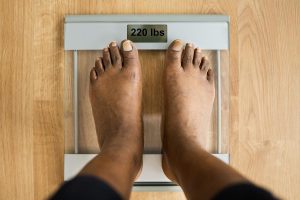
Losing weight is one of the most popular New Year’s resolutions — possibly to give yourself an excuse for some New Year’s Eve overindulgence. “I’m going to cram it all in tonight, so tomorrow I start afresh,” jokes registered dietitian Connie Diekman, a nationally known food and nutrition consultant. But those waking up bleary-eyed on New Year’s Day will find themselves facing a bewildering array of fad diets and quick weight-loss schemes. Which would be best for you? In large part, it’s going to be the diet that you can incorporate into your everyday life to improve your health rather than lose weight, Diekman said. “Making changes to our eating habits is a process. It takes time. Give yourself a break,” Diekman said. “Set one goal at a time. Work through it. When you’re successful, now you feel more empowered to do the next goal, and the next goal, and the next goal. “Yes, it takes time. But remember, this is about your health. It’s not about the weight. It’s a healthy you,” Diekman continued. “Because if you lose 10 pounds, 20 pounds, 30 pounds, but it was muscle mass and not body fat, it didn’t do you any good.” Also remember that weight loss requires that you take in fewer calories than you burn in a day, regardless of the diet you adopt, said…  read on >  read on >

Giving up cigarettes can be excruciating, with cravings and withdrawal symptoms lingering for weeks, especially if you aren’t strongly motivated. Yet, just minutes after that first smoke-free breath, your body starts to change for the better. And with all the healthy breaths you take in the weeks and months that follow, the benefits only multiply. The health benefits of quitting smoking is the first and biggest reason to quit, according to the American Lung Association (ALA). “Even persons who have smoked for many years or who have smoked heavily can realize health and financial benefits from quitting smoking,” Dr. Robert Redfield, then director of the U.S. Centers of Disease Control and Prevention, wrote in a forward to the 2020 U.S. Surgeon General’s report on smoking cessation. “Although the benefits of quitting are greater the earlier in life that an individual quits, this report confirms that it is never too late to quit smoking,” he added. Quitting will be hard, but worthwhile Here’s what happens when you stop smoking: Withdrawal symptoms of quitting smoking include cravings, irritability and restlessness. Some will also have issues with concentration, trouble sleeping, hunger, weight gain and feelings of depression, anxiety or sadness, according to the CDC. The health benefits of quitting smoking start about 20 minutes after the last drag. That’s when a smoker’s heart rate and blood pressure both…  read on >  read on >

Could hydration hold the key to longevity? Maybe, suggests new research that discovered older adults who are properly hydrated may be healthier and live longer than those who aren’t, having less incidence of conditions like heart and lung disease. “Staying well-hydrated may slow down aging, prevent or delay development of chronic diseases, and therefore prolong disease-free life,” said lead investigator Natalia Dmitrieva, a researcher from the Laboratory of Cardiovascular Regenerative Medicine at the U.S. National Heart, Lung and Blood Institute. “The best way for people to keep well-hydrated is to be aware of the amount of fluids they drink without engaging in intensive sports activities or [spending] a long time in a hot environment,” Dmitrieva said. The current recommendations vary from 2 to 3 liters of fluid daily — for women, that’s 6 to 9 cups of fluids like water each day, while men need around 8 to 12 cups, she said. “Worldwide population surveys estimate that more than 50% of people drink less fluid than recommended and therefore have an opportunity to decrease their risk of developing chronic diseases by increasing water intake to the recommended levels,” Dmitrieva said. Samantha Heller, a senior clinical nutritionist at NYU Langone Health in New York City, agreed that being well-hydrated is essential for healthy living. “Our bodies work hard to maintain a healthy fluid balance, which includes…  read on >  read on >

As millions of Americans born in the baby boomer generation are already finding out, bone loss is a common sign of aging. And now experts at the American College of Physicians (ACP) — one of the leading groups representing primary care doctors — is issuing updated guidelines on how best to prevent and treat weakening bones. “Osteoporosis is a systemic skeletal disease characterized by decreasing bone mass and deterioration of bone tissue that leads to an increased risk for bone fragility and fracture, especially in the hip, spine, and wrist,” the ACP explained in a news release. The ACP estimates that over 10 million Americans older than 49 currently have osteoporosis, while another 43.3 million have low bone mass that could progress to full-blown osteoporosis. The new guidelines, published Jan. 2 in the Annals of Internal Medicine, were based in part on new data on the safety and effectiveness of a variety of newer classes of drugs. Those medicines include human parathyroid hormone-related peptides and sclerostin inhibitors, the group said. However, the guidelines maintain that the “first-line” treatment for postmenopausal women with diagnosed osteoporosis, as well as any men diagnosed with the condition, should involve a long-used class of drugs known as bisphosphonates. Bisphosphonates include well-known medicines such as alendronate (Fosamax), risedronate (Actonel) and ibandronate (Boniva). Using bisphosphonates first “had the most favorable balance between…  read on >  read on >