






Just one dose of Pfizer’s coronavirus vaccine might be enough to largely protect people from being infected with COVID-19, preliminary research shows. The vaccine became 90% effective 21 days after the first shot in a two-dose regimen, said British researchers who looked at data from Israel, where the vaccine has been rolled out to a large portion of the population. “A second dose of the Pfizer vaccine would normally be given 21 days or more after the first, to top up and lengthen the effect of the first dose,” explained lead researcher Paul Hunter, from the University of East Anglia’s Norwich Medical School. “But here in the U.K., the decision was made to delay the timing of the second injection until 12 weeks after the first,” Hunter said in a university news release. “The logic behind this is to protect more people sooner and so reduce the total number of severe infections, hospitalizations and deaths,” Hunter explained. “But this decision caused criticism from some quarters, due in part to a belief that a single injection may not give adequate immunity.” Hunter noted that an earlier study, which has not been peer-reviewed, reported that a single shot of the Pfizer vaccine might not provide sufficient protection. “But we saw a number of flaws in how they looked at the data, including the fact that they did…  read on >  read on >

Joe DiMeo’s life changed forever when he fell asleep at the wheel on U.S. Route 22 in New Jersey on July 14, 2018. The horrific crash left him with third-degree burns on 80% of his body and a grim prognosis. Now, more than two years later, DiMeo, 22, is the recipient of the world’s first successful double hand and face transplant, and on the road to recovery. The historic surgery, which took place on Aug. 12, 2020, at NYU Langone in New York City, involved more than 140 health care professionals. Over 23 hours, they successfully transplanted two hands, three dominant nerves to the hand, six blood vessels, 21 tendons and a full face, including forehead, eyebrows, both ears, nose, eyelids, lips, and underlying skull, cheek, nasal and chin bone segments. Face and hand transplants have been performed independently, but this double procedure had been attempted twice before and was unsuccessful both times. For this procedure, surgeons used computer-generated three-dimensional guides. They ensured that bones were properly aligned and implants were in position to anchor the grafted face and hands to DiMeo. Technology aside, a big part of DiMeo’s success owes to his can-do attitude, according to the head of his surgical team, Dr. Eduardo Rodriguez, director of NYU Langone’s Face Transplant Program. “He is the most highly motivated patient I have ever met,” Rodriguez…  read on >  read on >

Many young Americans are prescribed psychiatric drugs to treat medical conditions, but nearly one-third of them wind up misusing the medications, a new study finds. “Misuse of prescription substances is alarmingly high among U.S. youth and young adults,” said lead researcher Israel Agaku, a part-time lecturer in oral health policy and epidemiology at the Harvard School of Dental Medicine, in Boston. The study found that, overall, 35% of young people (aged 12 to 25) said they had taken a prescribed psychoactive drug in the past year, and 31% of those said they had misused that drug. While opioids were the most commonly prescribed drug, misuse of stimulants and tranquilizers was higher. Psychotropic drugs change a person’s mental state and can have intoxicating effects. “This study draws attention to the silent epidemic of prescription stimulant use among youth,” Agaku said. “With increasing popularity of performance-enhancing stimulants in schools, it is imperative for policymakers, school administrators, health care professionals and parents to become more aware of this emerging danger and take appropriate steps, similar to what has been done for the opioid epidemic.” Dr. Scott Krakower, an attending psychiatrist in child and adolescent psychiatry at Zucker Hillside Hospital in Glen Oaks, N.Y., said, “It is very alarming to see so many young people having access to controlled substances.” It is important for doctors to screen for illicit…  read on >  read on >

Just one dose of Pfizer’s coronavirus vaccine might be enough to largely protect people from being infected with COVID-19, preliminary research shows. The vaccine became 90% effective 21 days after the first shot in a two-dose regimen, said British researchers who looked at data from Israel, where the vaccine has been rolled out to a large portion of the population. “A second dose of the Pfizer vaccine would normally be given 21 days or more after the first, to top up and lengthen the effect of the first dose,” explained lead researcher Paul Hunter, from the University of East Anglia’s Norwich Medical School. “But here in the U.K., the decision was made to delay the timing of the second injection until 12 weeks after the first,” Hunter said in a university news release. “The logic behind this is to protect more people sooner and so reduce the total number of severe infections, hospitalizations and deaths,” Hunter explained. “But this decision caused criticism from some quarters, due in part to a belief that a single injection may not give adequate immunity.” Hunter noted that an earlier study, which has not been peer-reviewed, reported that a single shot of the Pfizer vaccine might not provide sufficient protection. “But we saw a number of flaws in how they looked at the data, including the fact that they did…  read on >  read on >
Joe DiMeo’s life changed forever when he fell asleep at the wheel on U.S. Route 22 in New Jersey on July 14, 2018. The horrific crash left him with third-degree burns on 80% of his body and a grim prognosis. Now, more than two years later, DiMeo, 22, is the recipient of the world’s first successful double hand and face transplant, and on the road to recovery. The historic surgery, which took place on Aug. 12, 2020, at NYU Langone in New York City, involved more than 140 health care professionals. Over 23 hours, they successfully transplanted two hands, three dominant nerves to the hand, six blood vessels, 21 tendons and a full face, including forehead, eyebrows, both ears, nose, eyelids, lips, and underlying skull, cheek, nasal and chin bone segments. Face and hand transplants have been performed independently, but this double procedure had been attempted twice before and was unsuccessful both times. For this procedure, surgeons used computer-generated three-dimensional guides. They ensured that bones were properly aligned and implants were in position to anchor the grafted face and hands to DiMeo. Technology aside, a big part of DiMeo’s success owes to his can-do attitude, according to the head of his surgical team, Dr. Eduardo Rodriguez, director of NYU Langone’s Face Transplant Program. “He is the most highly motivated patient I have ever met,” Rodriguez…  read on >  read on >

WEDNESDAY, Feb.3, 2021A majority of dermatology patients are happy with telehealth appointments in place of in-person office visits, a new study finds. The COVID-19 pandemic has forced many medical specialties to move from in-person to online appointments, but dermatology had already seen increased use of telehealth visits over the last decade, according to the George Washington (GW) University researchers. “Teledermatology boasts a number of benefits, including increased access to care, cost savings for patients, convenience, and, with the current pandemic, avoids physical contact,” study co-author Samuel Yeroushalmi said in a university news release. He’s a third-year medical student at the GW School of Medicine and Health Sciences in Washington, D.C. However, virtual appointments do have potential issues, including privacy concerns, appropriate image acquisition and adequate health care provider training, the study authors noted. To assess patient satisfaction with teledermatology appointments, the researchers distributed an online survey to dermatology patients at the GW Medical Faculty Associates. Nearly half (47%) of the respondents said they’d had a previous appointment canceled due to the COVID-19 pandemic, and almost 18% were new patients with no previous in-office appointment. Patients said they liked that telehealth visits were time-efficient, didn’t require transportation and maintained social distancing. Reasons they didn’t like virtual appointments included lack of physical touch and feeling they received an inadequate assessment. When asked if they would recommend telehealth…  read on >  read on >

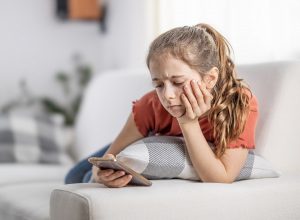
Living in a noisy neighborhood with less green space negatively affects teens’ sleep, which may lead to poorer memory and thinking skills, according to a pair of studies. In a study on residential environment, researchers found that as noise levels steadily increased, so too did the time needed for teens to fall asleep. They also didn’t sleep as long as kids in quieter, greener neighborhoods. But as the average number of trees rose, teens dozed off sooner and slept longer. “For adolescents, the harms of insufficient sleep are wide-ranging and include impaired cognition [thinking skills] and engagement in antisocial behavior,” said study author Stephanie Mayne. She’s assistant professor of pediatrics at Children’s Hospital of Philadelphia and the University of Pennsylvania School of Medicine. As such, it critical to identify ways to prevent and treat the problem, Mayne said in a news release from the U.S. National Heart, Lung, and Blood Institute. “Our findings suggest that neighborhood noise and green space may be important targets for interventions,” Mayne said. In Mayne’s study, 110 teens wore watches that measured their rest and activity for 14 days each in both eighth and ninth grades. The researchers mapped their home addresses to determine sound levels, tree cover, housing and population density. The second study showed how sleep loss associated with reduced time in bed affected the brain waves of…  read on >  read on >

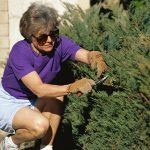
The great outdoors can soothe the soul, but new research suggests that working outside might also guard against breast cancer. The study wasn’t designed to say how working outside affects chances of developing breast cancer, but vitamin D exposure may be the driving force, the researchers suggested. “The main hypothesis is that sun exposure through vitamin D production may decrease the risk of breast cancer after age 50,” said study author Julie Elbaek Pedersen, of the Danish Cancer Society Research Center in Copenhagen. Vitamin D deficiency has been linked to a host of diseases and conditions including breast cancer. Vitamin D is often called the “sunshine vitamin” because your body produces it when exposed to the sun’s ultraviolet B rays. The body mainly makes vitamin D in the middle of the working day so outdoor workers are exposed to considerably higher levels than those who work indoors, Pedersen said. “Women who work outdoors may regularly be exposed to sunlight and thereby have more sufficient long-term levels of vitamin D compared with women working indoors,” she said. You don’t need much sun exposure to make adequate amounts of D. “Maximum daily vitamin D levels are secured after only minutes in the sun in the summertime, and more time will not increase the levels further,” Pedersen said. In recent years, the push to wear sunscreen and avoid…  read on >  read on >
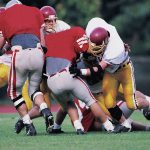
College football players suffer more concussions and head hits in practice than they do actually playing the game, a new study suggests. Across five seasons of football, 72% of concussions and 67% of head impacts incurred by players on six National Collegiate Athletic Association (NCAA) Division I teams happened during practice rather than on game day, researchers found. The incidence of concussion and head impacts also were disproportionately higher in the preseason than the regular season, said lead researcher Michael McCrea, director of the Brain Injury Research Program at the Medical College of Wisconsin in Milwaukee. “Our data suggest modifying preseason training activities and football practice throughout the season could lead to a substantial reduction in overall concussion incidence and head impact exposure,” McCrea said. The findings were published Feb. 1 in the journal JAMA Neurology. While these specific findings are new, experts and coaches have known for years that practice is at least as dangerous as actual play when it comes to head trauma, said Dr. Robert Cantu, medical director and director of clinical research at the Cantu Concussion Center at Emerson Hospital in Concord, Mass. That’s why the National Football League agreed in 2015 to dramatically reduce full-contact practices in its collective bargaining agreement with the NFL Players Association, said Cantu, who wrote an editorial accompanying the new study. The NFL now has…  read on >  read on >

It only takes a second. Experts are warning that unsecured televisions, bedroom dressers and other heavy furniture can crush, maim and even kill curious children, and the issue may only worsen during stay-at-home lockdowns. According to the U.S. Consumer Product Safety Commission (CPSC), between 2000 and 2019, 451 kids aged 17 years and younger died in tip-over accidents, the CPSC said. And an average 11,100 per year were treated in hospital emergency rooms for tip-over-related injuries from 2017 through 2019. “Tip-over injuries and deaths are among the most tragic we see,” Robert Adler, the agency’s acting chairman, said in a CPSC news release. “Parents and caregivers don’t suspect that the bookcase or dresser in their child’s room can be hazardous — it’s a truly hidden hazard. And these tip-overs happen so fast; it’s literally in the blink of an eye, often with a parent close by.” About eight in 10 tip-over deaths involved kids under age 6, and 75% of fatalities for children involved a TV, according to the new report. With millions of Americans preparing to watch the Super Bowl on Feb. 7, now is the time to anchor all TVs in your home, the agency said. This short CPSC video shows how quickly these tragedies can occur: A CPSC survey last year found that many parents and caregivers considered anchoring furniture and TVs…  read on >  read on >