









Too much screen time can make your toddler more distractible, British researchers warn. The use of smartphones and tablets by babies and toddlers has soared in recent years. “The first few years of life are critical for children to learn how to control their attention and ignore distraction, early skills that are known to be important for later academic achievement,” said lead author Tim Smith, a professor at the Center for Brain and Cognitive Development at Birkbeck, University of London. “There has been growing concern that toddler touchscreen use may negatively impact their developing attention, but previously there was no empirical evidence to support this,” Smith added. To learn more, Smith’s team studied toddlers with different levels of touchscreen usage, assessing them at 12 months, 18 months and 3.5 years of age. At each visit, the toddlers did computer tasks while an eye-tracker measured their attention. Objects appeared in different locations of the computer screen, and researchers monitored how quickly the children looked at the objects and how well they ignored distracting objects. Toddlers with high daily touchscreen use were quicker to look when objects appeared and were less able to resist distraction than those with little or no daily screen time, the study found. Main researcher Ana Maria Portugal, an associate research fellow at Birkbeck University of London, said the team could not conclude,…  read on >  read on >
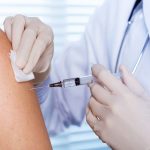
WEDNESDAY, Jan. 27, 2021 (HealthDay News) — Retired doctors and nurses are being called to the front lines of the U.S. coronavirus vaccination effort, the White House COVID-19 Response team announced Wednesday. The U.S. Department of Health and Human Services (HHS) is amending its rules to allow retired health professionals to administer COVID-19 vaccine shots, said Jeff Zients, the White House COVID-19 Response coordinator. The rules, drafted under the Public Readiness and Emergency Preparedness Act, will also be adapted to allow licensed doctors, nurses and health practitioners to administer shots across state lines, Zients said. “We need to increase the number of places where people can get vaccinated, and also at the same time increase the number of vaccinators,” Zients said. “This action by HHS today will help get more vaccinators in the field.” The team also went over other strategies being implemented to increase vaccination rates across the United States, including: Planning the launch of 100 community vaccination centers across the country during February. Arranging to supply vaccines directly to pharmacies. Standing up mobile vaccination clinics to reach under-served communities. Speeding up the production of low-dead-space syringes that can squeeze an extra sixth dose out of Pfizer vaccine vials. “I want to level with the public. We are facing two constraining factors,” said Andrew Slavitt, senior advisor to the White House COVID-19 Response team.…  read on >  read on >

People who’ve recovered from severe COVID-19 may have stronger long-term immune protection from reinfection than those with milder illness, researchers report. They examined blood samples from 39 COVID-19 patients and 10 people who hadn’t been exposed to the virus (their blood samples were given pre-pandemic). In all, they analyzed the expression of individual genes of more than 80,000 CD8+ T-cells. CD8+ T-cells are immune cells that destroy virus-infected host cells, and “memory” CD8+ T-cells protect the body from reinfection by many types of viruses. Of the COVID-19 patients, 17 had milder illness and weren’t hospitalized, 13 had been hospitalized, and nine ended up in intensive care. The researchers were surprised to find that patients with milder COVID-19 had weaker CD8+ T-cell responses. The strongest CD8+ T-cell responses were in severely ill patients who required hospitalization or intensive care. “There is an inverse link between how poorly T-cells work and how bad the infection is,” study co-author Dr. Christian Ottensmeier said in a news release from the La Jolla Institute for Immunology in California. He’s a professor at the University of Liverpool in the U.K. and an adjunct professor at the La Jolla institute. The researchers found that CD8+ T-cells in people with mild COVID-19 had signs of T-cell “exhaustion,” in which cells receive so much immune system stimulation to combat viruses that they become less…  read on >  read on >

Too much screen time can make your toddler more distractible, British researchers warn. The use of smartphones and tablets by babies and toddlers has soared in recent years. “The first few years of life are critical for children to learn how to control their attention and ignore distraction, early skills that are known to be important for later academic achievement,” said lead author Tim Smith, a professor at the Center for Brain and Cognitive Development at Birkbeck, University of London. “There has been growing concern that toddler touchscreen use may negatively impact their developing attention, but previously there was no empirical evidence to support this,” Smith added. To learn more, Smith’s team studied toddlers with different levels of touchscreen usage, assessing them at 12 months, 18 months and 3.5 years of age. At each visit, the toddlers did computer tasks while an eye-tracker measured their attention. Objects appeared in different locations of the computer screen, and researchers monitored how quickly the children looked at the objects and how well they ignored distracting objects. Toddlers with high daily touchscreen use were quicker to look when objects appeared and were less able to resist distraction than those with little or no daily screen time, the study found. Main researcher Ana Maria Portugal, an associate research fellow at Birkbeck University of London, said the team could not conclude,…  read on >  read on >

WEDNESDAY, Jan. 27, 2021 (HealthDay News) — Retired doctors and nurses are being called to the front lines of the U.S. coronavirus vaccination effort, the White House COVID-19 Response team announced Wednesday. The U.S. Department of Health and Human Services (HHS) is amending its rules to allow retired health professionals to administer COVID-19 vaccine shots, said Jeff Zients, the White House COVID-19 Response coordinator. The rules, drafted under the Public Readiness and Emergency Preparedness Act, will also be adapted to allow licensed doctors, nurses and health practitioners to administer shots across state lines, Zients said. “We need to increase the number of places where people can get vaccinated, and also at the same time increase the number of vaccinators,” Zients said. “This action by HHS today will help get more vaccinators in the field.” The team also went over other strategies being implemented to increase vaccination rates across the United States, including: Planning the launch of 100 community vaccination centers across the country during February. Arranging to supply vaccines directly to pharmacies. Standing up mobile vaccination clinics to reach under-served communities. Speeding up the production of low-dead-space syringes that can squeeze an extra sixth dose out of Pfizer vaccine vials. “I want to level with the public. We are facing two constraining factors,” said Andrew Slavitt, senior advisor to the White House COVID-19 Response team.…  read on >  read on >

Too much screen time can make your toddler more distractible, British researchers warn. The use of smartphones and tablets by babies and toddlers has soared in recent years. “The first few years of life are critical for children to learn how to control their attention and ignore distraction, early skills that are known to be important for later academic achievement,” said lead author Tim Smith, a professor at the Center for Brain and Cognitive Development at Birkbeck, University of London. “There has been growing concern that toddler touchscreen use may negatively impact their developing attention, but previously there was no empirical evidence to support this,” Smith added. To learn more, Smith’s team studied toddlers with different levels of touchscreen usage, assessing them at 12 months, 18 months and 3.5 years of age. At each visit, the toddlers did computer tasks while an eye-tracker measured their attention. Objects appeared in different locations of the computer screen, and researchers monitored how quickly the children looked at the objects and how well they ignored distracting objects. Toddlers with high daily touchscreen use were quicker to look when objects appeared and were less able to resist distraction than those with little or no daily screen time, the study found. Main researcher Ana Maria Portugal, an associate research fellow at Birkbeck University of London, said the team could not conclude,…  read on >  read on >

WEDNESDAY, Jan. 27, 2021 (HealthDay News) — Retired doctors and nurses are being called to the front lines of the U.S. coronavirus vaccination effort, the White House COVID-19 Response team announced Wednesday. The U.S. Department of Health and Human Services (HHS) is amending its rules to allow retired health professionals to administer COVID-19 vaccine shots, said Jeff Zients, the White House COVID-19 Response coordinator. The rules, drafted under the Public Readiness and Emergency Preparedness Act, will also be adapted to allow licensed doctors, nurses and health practitioners to administer shots across state lines, Zients said. “We need to increase the number of places where people can get vaccinated, and also at the same time increase the number of vaccinators,” Zients said. “This action by HHS today will help get more vaccinators in the field.” The team also went over other strategies being implemented to increase vaccination rates across the United States, including: Planning the launch of 100 community vaccination centers across the country during February. Arranging to supply vaccines directly to pharmacies. Standing up mobile vaccination clinics to reach under-served communities. Speeding up the production of low-dead-space syringes that can squeeze an extra sixth dose out of Pfizer vaccine vials. “I want to level with the public. We are facing two constraining factors,” said Andrew Slavitt, senior advisor to the White House COVID-19 Response team.…  read on >  read on >

WEDNESDAY, Jan. 27, 2021 (HealthDay News) — Retired doctors and nurses are being called to the front lines of the U.S. coronavirus vaccination effort, the White House COVID-19 Response team announced Wednesday. The U.S. Department of Health and Human Services (HHS) is amending its rules to allow retired health professionals to administer COVID-19 vaccine shots, said Jeff Zients, the White House COVID-19 Response coordinator. The rules, drafted under the Public Readiness and Emergency Preparedness Act, will also be adapted to allow licensed doctors, nurses and health practitioners to administer shots across state lines, Zients said. “We need to increase the number of places where people can get vaccinated, and also at the same time increase the number of vaccinators,” Zients said. “This action by HHS today will help get more vaccinators in the field.” The team also went over other strategies being implemented to increase vaccination rates across the United States, including: Planning the launch of 100 community vaccination centers across the country during February. Arranging to supply vaccines directly to pharmacies. Standing up mobile vaccination clinics to reach under-served communities. Speeding up the production of low-dead-space syringes that can squeeze an extra sixth dose out of Pfizer vaccine vials. “I want to level with the public. We are facing two constraining factors,” said Andrew Slavitt, senior advisor to the White House COVID-19 Response team.…  read on >  read on >

While researchers continue to try to find the key that unlocks the cause of Parkinson’s disease, new research suggests that what a person eats could make a difference. Researchers in Canada found a strong correlation between eating either a Mediterranean diet or the MIND diet (which combines elements of the Mediterranean diet and a diet known as Dietary Approaches to Stop Hypertension), and a delay in onset of Parkinson’s disease. “Sticking really closely to these diets, both the MIND and the Mediterranean diet, coincided with a later onset of Parkinson’s disease,” said Avril Metcalfe-Roach, a graduate student at the University of British Columbia, in Vancouver. “For women, that was actually up to 17.4 years when they adhered really closely to the MIND diet and for men it was about eight years.” The study, published online recently in the journal Movement Disorders, offers a glimmer of hope because there’s a lack of medications to prevent or delay Parkinson’s disease, the researchers noted. Metcalfe-Roach acknowledged that the study has limitations. It asked the 167 study participants what they ate after they were diagnosed with Parkinson’s disease, and presumed those were eating habits they had maintained for some time. “That is a limitation of our study. We don’t really know how long they have been on those diets, but ideally for neurodegenerative diseases and your health in general,…  read on >  read on >

TUESDAY, Jan. 26, 2021 (HealthDay News) – – “You snooze, you lose” may not be true when it comes to your brain: A new study finds that napping in the afternoon may actually boost mental agility. The study couldn’t prove cause and effect, but a midday nap was associated with a rise in “locational awareness,” verbal fluency and working memory, the Chinese researchers reported Jan. 25 in the journal General Psychiatry. “Among the things that are good for you and fun, you can now count daytime naps,” said Dr. Gayatri Devi, a neurologist specializing in memory disorders at Lenox Hill Hospital in New York City. “We know that healthy sleep habits are protective for dementia and this study suggests that at least for some, midday naps may be of benefit in keeping the brain healthy,” said Devi, who wasn’t involved in the new research. He stressed, however, that “more studies are needed to confirm this preliminary finding.” The new study was led by Dr Lin Sun, of the Alzheimer’s Disease and Related Disorders Center at the Shanghai Mental Health Center, in Shanghai. Sun’s team collected data on more than 2,200 people at least age 60 who lived in Chinese cities including Beijing, Shanghai and Xian. In all, more than 1,500 took regular afternoon naps, which were no more than two hours long, and 680 did…  read on >  read on >