







Puffy coats have their place, but it’s not inside a car seat. The American Academy of Pediatrics (AAP) offers a variety of tips for keeping your little ones safe and warm while traveling by car. The first is to avoid dressing children in puffy coats or snowsuits before buckling them in, because car seat straps won’t tighten enough. That creates a danger that the fluffy padding will flatten in the force of a crash and the youngster will slip from the seat and be thrown from the car. Puffy coats are not safe in a car seat or under a seat belt for someone of any age, the AAP said. “Parents may not recognize the potential danger of buckling up a child who is wearing a puffy coat,” said Dr. Sarah Denny, a pediatrician with expertise in injury prevention. “A car seat harness or belt needs to fit snugly enough so that you cannot pinch the straps of the car seat harness. A safer alternative is to drape a blanket or coat over the car straps.” The AAP offers additional tips, including staying warmer by storing the carrier portion of an infant seat indoors and packing extra socks, mittens and hats. If your child likes to suck his or her thumb, choose half-gloves with open fingers. Dress your child in thin layers. This would include…  read on >  read on >

Not many people have had the opportunity to get the COVID-19 vaccine yet. But while you wait your turn, there are some steps you can take to give the vaccine — whichever brand you get — a boost when it’s available to you. An Ohio State University review of 49 vaccine studies dating back 30 years examined how stress, depression and healthy behaviors, such as exercise, can affect immune response to a vaccine. Although it’s not realistic to entirely transform your health and habits in a few weeks or months, there are some steps everyone can take — even last-minute ones — to make a difference. Those include getting good sleep as well as exercise in the days before and after you get your shot, said the review’s senior author, Janice Kiecolt-Glaser. She is director of Ohio State’s Institute for Behavioral Medicine Research, in Columbus. “There are several things that are really reasonable and relatively easy,” she said. Pandemic-related stress may have set people back when it comes to maintaining the behaviors that keep them healthier, the study authors noted. Recent data from around the world have revealed higher rates of depression and anxiety, more insomnia, increased alcohol sales and more overeating, according to the review. The studies in this review looked at the effects of psychological factors and behaviors on immune response to a…  read on >  read on >

Not many people have had the opportunity to get the COVID-19 vaccine yet. But while you wait your turn, there are some steps you can take to give the vaccine — whichever brand you get — a boost when it’s available to you. An Ohio State University review of 49 vaccine studies dating back 30 years examined how stress, depression and healthy behaviors, such as exercise, can affect immune response to a vaccine. Although it’s not realistic to entirely transform your health and habits in a few weeks or months, there are some steps everyone can take — even last-minute ones — to make a difference. Those include getting good sleep as well as exercise in the days before and after you get your shot, said the review’s senior author, Janice Kiecolt-Glaser. She is director of Ohio State’s Institute for Behavioral Medicine Research, in Columbus. “There are several things that are really reasonable and relatively easy,” she said. Pandemic-related stress may have set people back when it comes to maintaining the behaviors that keep them healthier, the study authors noted. Recent data from around the world have revealed higher rates of depression and anxiety, more insomnia, increased alcohol sales and more overeating, according to the review. The studies in this review looked at the effects of psychological factors and behaviors on immune response to a…  read on >  read on >

Not many people have had the opportunity to get the COVID-19 vaccine yet. But while you wait your turn, there are some steps you can take to give the vaccine — whichever brand you get — a boost when it’s available to you. An Ohio State University review of 49 vaccine studies dating back 30 years examined how stress, depression and healthy behaviors, such as exercise, can affect immune response to a vaccine. Although it’s not realistic to entirely transform your health and habits in a few weeks or months, there are some steps everyone can take — even last-minute ones — to make a difference. Those include getting good sleep as well as exercise in the days before and after you get your shot, said the review’s senior author, Janice Kiecolt-Glaser. She is director of Ohio State’s Institute for Behavioral Medicine Research, in Columbus. “There are several things that are really reasonable and relatively easy,” she said. Pandemic-related stress may have set people back when it comes to maintaining the behaviors that keep them healthier, the study authors noted. Recent data from around the world have revealed higher rates of depression and anxiety, more insomnia, increased alcohol sales and more overeating, according to the review. The studies in this review looked at the effects of psychological factors and behaviors on immune response to a…  read on >  read on >

As worldwide obesity rates continue to soar, new research shows that growing numbers of people are developing a potentially blinding type of weight-linked headache that was once considered rare. Though the study was conducted in Wales, one U.S. expert said the same surge in these headaches is likely happening in this country and elsewhere, but he cautioned that just because someone is obese and has headaches doesn’t mean he or she have this rare headache, known as idiopathic intracranial hypertension (IIH). “Obese individuals are at greater risk for more frequent migraine, too,” noted Dr. Brian Grosberg, director of the Hartford HealthCare Headache Center in Connecticut. In the study, IIH rates increased sixfold in Wales between 2003 and 2017 — from 12 per 100,000 people to 76 per 100,000 people. During the same 15-year span, obesity rates in Wales rose from 29% of the population to 40%. “The considerable increase in IIH incidence” has several causes, but is likely “predominately due to rising obesity rates,” said study author William Owen Pickrell, a consultant neurologist at Swansea University. “The worldwide prevalence of obesity nearly tripled between 1975 and 2016, and therefore, these results also have global relevance.” His findings were published in the Jan. 20 issue of Neurology. IIH is a type of headache that occurs when the fluid around your brain and spinal cord builds up…  read on >  read on >

Not many people have had the opportunity to get the COVID-19 vaccine yet. But while you wait your turn, there are some steps you can take to give the vaccine — whichever brand you get — a boost when it’s available to you. An Ohio State University review of 49 vaccine studies dating back 30 years examined how stress, depression and healthy behaviors, such as exercise, can affect immune response to a vaccine. Although it’s not realistic to entirely transform your health and habits in a few weeks or months, there are some steps everyone can take — even last-minute ones — to make a difference. Those include getting good sleep as well as exercise in the days before and after you get your shot, said the review’s senior author, Janice Kiecolt-Glaser. She is director of Ohio State’s Institute for Behavioral Medicine Research, in Columbus. “There are several things that are really reasonable and relatively easy,” she said. Pandemic-related stress may have set people back when it comes to maintaining the behaviors that keep them healthier, the study authors noted. Recent data from around the world have revealed higher rates of depression and anxiety, more insomnia, increased alcohol sales and more overeating, according to the review. The studies in this review looked at the effects of psychological factors and behaviors on immune response to a…  read on >  read on >

As worldwide obesity rates continue to soar, new research shows that growing numbers of people are developing a potentially blinding type of weight-linked headache that was once considered rare. Though the study was conducted in Wales, one U.S. expert said the same surge in these headaches is likely happening in this country and elsewhere, but he cautioned that just because someone is obese and has headaches doesn’t mean he or she have this rare headache, known as idiopathic intracranial hypertension (IIH). “Obese individuals are at greater risk for more frequent migraine, too,” noted Dr. Brian Grosberg, director of the Hartford HealthCare Headache Center in Connecticut. In the study, IIH rates increased sixfold in Wales between 2003 and 2017 — from 12 per 100,000 people to 76 per 100,000 people. During the same 15-year span, obesity rates in Wales rose from 29% of the population to 40%. “The considerable increase in IIH incidence” has several causes, but is likely “predominately due to rising obesity rates,” said study author William Owen Pickrell, a consultant neurologist at Swansea University. “The worldwide prevalence of obesity nearly tripled between 1975 and 2016, and therefore, these results also have global relevance.” His findings were published in the Jan. 20 issue of Neurology. IIH is a type of headache that occurs when the fluid around your brain and spinal cord builds up…  read on >  read on >

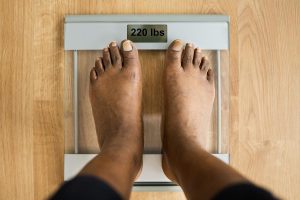
The harmful effects of obesity on the heart can’t be undone by exercise, and it’s not possible to be “fat but healthy,” Spanish researchers warn. “Exercise does not seem to compensate for the negative effects of excess weight,” said study author Alejandro Lucia, a professor of exercise physiology at European University in Madrid. The study findings “refute the notion that a physically active lifestyle can completely negate the deleterious effects of overweight and obesity,” he said. Lucia and his colleagues analyzed data from nearly 528,000 working adults in Spain. The participants’ average age was 42 and close to 7 out of 10 were men. About 42% of these adults were normal weight; 41% were overweight, and 18% were obese. Most were inactive (63.5%); 12.3% got some but not enough exercise, and 24.2% were regularly active. About 30% of participants had high cholesterol; 15% had high blood pressure, and 3% had diabetes. No matter how active they were, however, overweight and obese people had a higher risk of heart disease than those whose weight was normal, according to the study, published Jan. 22 in the European Journal of Preventive Cardiology. Compared to active people of normal weight, active obese people were about twice as likely to have high cholesterol, four times more likely to have diabetes, and five times more likely to have high blood pressure.…  read on >  read on >

As worldwide obesity rates continue to soar, new research shows that growing numbers of people are developing a potentially blinding type of weight-linked headache that was once considered rare. Though the study was conducted in Wales, one U.S. expert said the same surge in these headaches is likely happening in this country and elsewhere, but he cautioned that just because someone is obese and has headaches doesn’t mean he or she have this rare headache, known as idiopathic intracranial hypertension (IIH). “Obese individuals are at greater risk for more frequent migraine, too,” noted Dr. Brian Grosberg, director of the Hartford HealthCare Headache Center in Connecticut. In the study, IIH rates increased sixfold in Wales between 2003 and 2017 — from 12 per 100,000 people to 76 per 100,000 people. During the same 15-year span, obesity rates in Wales rose from 29% of the population to 40%. “The considerable increase in IIH incidence” has several causes, but is likely “predominately due to rising obesity rates,” said study author William Owen Pickrell, a consultant neurologist at Swansea University. “The worldwide prevalence of obesity nearly tripled between 1975 and 2016, and therefore, these results also have global relevance.” His findings were published in the Jan. 20 issue of Neurology. IIH is a type of headache that occurs when the fluid around your brain and spinal cord builds up…  read on >  read on >

The harmful effects of obesity on the heart can’t be undone by exercise, and it’s not possible to be “fat but healthy,” Spanish researchers warn. “Exercise does not seem to compensate for the negative effects of excess weight,” said study author Alejandro Lucia, a professor of exercise physiology at European University in Madrid. The study findings “refute the notion that a physically active lifestyle can completely negate the deleterious effects of overweight and obesity,” he said. Lucia and his colleagues analyzed data from nearly 528,000 working adults in Spain. The participants’ average age was 42 and close to 7 out of 10 were men. About 42% of these adults were normal weight; 41% were overweight, and 18% were obese. Most were inactive (63.5%); 12.3% got some but not enough exercise, and 24.2% were regularly active. About 30% of participants had high cholesterol; 15% had high blood pressure, and 3% had diabetes. No matter how active they were, however, overweight and obese people had a higher risk of heart disease than those whose weight was normal, according to the study, published Jan. 22 in the European Journal of Preventive Cardiology. Compared to active people of normal weight, active obese people were about twice as likely to have high cholesterol, four times more likely to have diabetes, and five times more likely to have high blood pressure.…  read on >  read on >