









Injuries in the United States take a huge toll on the workplace, new research shows. For the study, researchers analyzed millions of workplace health insurance claims among adults aged 18 to 64 between 2014 and 2015, with a specific focus on non-fatal injuries treated in emergency departments. The injuries examined in the study included burns, poisonings, gunshot wounds, falls, bites and stings, traffic crashes, and those caused by machinery and overexertion. The researchers found that such injuries result in an estimated loss of $1,590 and an average of 11 days off work per injured employee every year. There was a range from 1.5 days and $210 for bites and stings to 44 days and $6,196 for motorcycle injuries. Days taken off work ranged from four for other head, face and neck injuries to almost 20 for traumatic brain injuries, according to the study published online May 4 in the journal Injury Prevention. The findings don’t include caregivers, people who don’t have workplace health insurance, and those without jobs. Each year in the United States, there are more than 30 million visits to emergency care for non-fatal injuries, resulting in total medical costs of more than $133 billion, according to lead researcher Dr. Cora Peterson, from the National Center for Injury Prevention and Control at the U.S. Centers for Disease Control and Prevention. Peterson and colleagues…  read on >

People suffering from regular migraines despite medication might consider investing in a yoga mat. That’s according to a new trial that tested the effects of a gentle yoga practice — with slow-paced physical postures, breathing exercises and relaxation. Researchers found that people who added the practice to their usual migraine medication suffered about half as many headache attacks as they normally did. In contrast, study patients who stuck with medication alone saw only a small decline in migraine flare-ups. The findings appear in the May 6 online issue of the journal Neurology. Worldwide, an estimated 1 billion people have migraine headaches, according to the Migraine Research Foundation. For people who suffer frequent episodes, there are medications that can help prevent them. But it may not be enough. “The good news is that practicing something as simple and accessible as yoga may help much more than medications alone,” lead researcher Dr. Rohit Bhatia, a neurologist at the All India Institute of Medical Sciences in New Delhi, India, said in a journal news release. “And all you need is a mat.” Instruction helps, too, however. In this study, migraine patients first had classes with a yoga teacher three times a week for one month. After that, they practiced at home with a manual for another two months. By that three-month mark, their average headache frequency had dropped.…  read on >

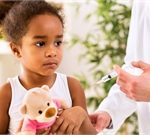
Fear of exposure to COVID-19 appears to be exacting an unexpected toll on public health: Childhood vaccination rates have plummeted, leaving millions at risk for other life-threatening illnesses. “We’re seeing a general drop in pediatrician visits of 70% to 80% — and that’s very concerning,” said Dr. Sara Goza, president of the American Academy of Pediatrics (AAP). She added that the pandemic has prompted many parents to skip “well visits” for their little ones. Babies under age 2 traditionally get check-ups this time of year, and older kids get vaccinated for summer camp. But not this spring, she said. Dr. Sean O’Leary, an associate professor of pediatrics-infectious diseases at the University of Colorado, in Aurora, agreed. “Most practices are seeing a huge drop,” he said. The U.S. Centers for Disease Control and Prevention is trying to get a handle on the pandemic’s effect on childhood vaccine rates. “We are currently examining the impact on a national level,” said Dr. Melinda Wharton of the CDC’s National Center for Immunization and Respiratory Diseases. The agency’s findings and additional guidance will be published in the next several weeks, she added. Evidence of a potential public health disaster is already more than anecdotal. The New York Times reported last week on a pediatric vaccine survey by the Physician’s Computer Company (PCC), a pediatric electronic health records firm. PCC contacted…  read on >

The severity of COVID-19 illness may be influenced by what researchers call “cytokine storms.” In a new study, investigators assessed 522 COVID-19 patients, aged 5 days to 97 years, who were admitted to two hospitals in Wuhan, China, in December and January. The study also included a “control group” of 40 healthy people. Compared to the control group, 76% of COVID-19 patients had significantly lower levels of T cells — a type of white blood cell that plays a crucial role in immune response against viral infections. Patients admitted to the intensive care unit had much lower T cell counts than those who didn’t require ICU care. Patients over age 60 had the lowest T cell counts, the findings showed. And the T cells that did survive in COVID-19 patients were exhausted and unable to function at full capacity, the study authors said. COVID-19 patients also had high levels of cytokines — a protein that normally helps fight off infection. Too many cytokines can prompt an excessive inflammatory response called a “cytokine storm,” which causes the proteins to attack healthy cells. That suggests the new coronavirus does not attack T cells directly. Instead, it triggers the cytokine release, which results in the loss and exhaustion of T cells, according to the authors of the study published May 1 in the journal Frontiers in Immunology. The…  read on >

Though most Americans are well aware that protecting themselves from sunburn is important, many don’t take precautions, a new survey finds. Protecting yourself from exposure to sunlight is the best way of preventing skin cancer, according to the American Academy of Dermatology (AAD). The results of the AAD survey show that 76% of Americans know the importance of sun protection, but only 41% regularly protect themselves outdoors. Exposure to harmful ultraviolet (UV) rays is the most preventable risk factor for skin cancer, but 28% of survey respondents said they rarely or never use sun protection and 65% don’t know that shade protects them from UV rays. “It is estimated that more than 9,500 people are diagnosed with skin cancer every day, and nearly 20 Americans die every day from melanoma, the deadliest form of skin cancer,” said Dr. Bruce Thiers, the president of the AAD. “Skin cancer affects more Americans than any other cancer, yet most cases are preventable by seeking shade, wearing sun-protective clothing and applying sunscreen on all skin not covered by clothing,” he added in an AAD news release. The AAD recommends that everyone: Seek shade when the sun’s rays are the strongest, between 10 a.m. and 2 p.m. Wear sun-protective clothing, such as long-sleeved shirts, pants, a wide-brimmed hat and sunglasses. Use a broad-spectrum, water-resistant sunscreen with a sun-protection factor (SPF)…  read on >

Love to cuddle up? It might bring a ‘mind meld,’ too, new research shows. People in close physical contact appear to have synchronized brain patterns, a revolutionary new MRI technique has revealed. A functional MRI scan of two people cuddling under a blanket showed that their brains appeared to be falling into similar patterns of action and response, as they took turns gently tapping the other’s lips, a Finnish research team reports. “In general terms, it shows how the brains of two individuals become ‘tuned in’ together during this kind of elementary human interaction,” said senior researcher Lauri Nummenmaa, head of the Human Emotion Systems laboratory at the University of Turku in Finland. Research of this sort could be valuable in dealing with conditions where people have trouble with social interactions, he said. “Such processes are disrupted in numerous conditions, such as autism spectrum disorder, and understanding the elementary mechanisms of sociability will help us in understanding these conditions better,” Nummenmaa said. Here’s how participants were positioned in the scanner: It’s not surprising that the 10 couples in the study — either friends or romantic partners — appeared to have had synchronized brain responses, said Tiffany Field, director of the Touch Research Institute at the University of Miami. “There’s this intimacy that generates similar patterns of physiological and biochemical responses, and this is a good…  read on >

Contact lens users may be at increased risk for coronavirus infection, so they need to be extra careful, an eye expert says. “There are no confirmed cases of COVID-19 transmission by handling of contact lenses,” said David Chu, assistant professor of ophthalmology at Rutgers New Jersey Medical School, in Newark. “However, since contact lenses can cause eye irritation, wearers tend to touch their face or to rub their eyes more often, which puts them at a higher risk for acquiring infection.” Strict hygiene is essential when wearers handle their contacts. “They must wash their hands for a minimum of 20 seconds with soap and water, and dry their hands completely before handling contact lenses,” Chu said in a Rutgers news release. Standard contact lens care techniques should be adequate during the coronavirus pandemic. But people who are more vulnerable to COVID-19 or who live with someone diagnosed with the virus should consider switching to glasses, Chu suggested. Even though SARS-CoV-2, the virus that causes COVID-19, has been found in human tears, it seems to be uncommon, Chu said. In case studies, patients who tested positive for the virus in their nose and throat did not have detectable levels in their tears. It’s not clear whether tears can transmit COVID-19, but it appears unlikely, according to Chu. Conjunctivitis (“pink eye”) is a symptom of COVID-19, but…  read on >

You can’t hug or shake hands these days without risking coronavirus infection, but new research finds that sexual intercourse might be safe. Researchers analyzed semen samples from 34 men in China an average of one month after they were diagnosed with mild to moderate cases of COVID-19, the illness caused by the coronavirus. Laboratory tests did not detect the coronavirus in any of the semen samples, and there was no evidence of the virus in the men’s testes, according to the study published online recently in the journal Fertility and Sterility. While this small study suggests that the chances of sexual transmission of the coronavirus are remote, it wasn’t comprehensive enough to fully rule out the possibility, the researchers noted. “The fact that in this small, preliminary study that it appears the virus that causes COVID-19 doesn’t show up in the testes or semen could be an important finding,” said study co-author Dr. James Hotaling, an associate professor of urology specializing in male fertility at University of Utah Health. “If a disease like COVID-19 were sexually transmittable, that would have major implications for disease prevention and could have serious consequences for a man’s long-term reproductive health,” he said in a university news release. Along with the small number of patients, another limitation of the study was that none of them were severely ill with COVID-19,…  read on >

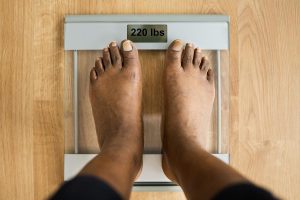
Beware of your fridge, pantry and couch during the coronavirus pandemic. Being cooped up at home with easy access to food can lead to overeating. Couple that with routine housekeeping, working from home, homeschooling your kids and tending to loved ones, and it’s a sure-fire recipe for weight gain, experts at the University of Georgia in Athens warn. “These tasks have been added to our many other responsibilities,” said Emma Laing, director of dietetics in the College of Family and Consumer Sciences. “So if something has to give as we strive to find our new normal, routines surrounding eating and physical activity might go out the window.” To stay on track, get up off the couch. Try to set times during the day for physical activity you enjoy, and to eat regular meals and snacks that provide adequate energy and hydration. “In creating this schedule, do so while maintaining flexibility,” Laing said. “It’s important to trust our bodies’ cues for hunger, so listen to those first.” Try to avoid mindless snacking. Social distancing during the coronavirus pandemic doesn’t mean you have to stop exercising. In fact, physical activity is a crucial stress management strategy. Ali Berg, a Cooperative Extension nutrition and health specialist, pointed out that “physical activity is good for maintaining immunity, in addition to adequate nutrition. Being active is also good for mental…  read on >

Children of parents with mental illness are at increased risk for injuries, researchers report. Risk is highest before 1 year of age, but remains elevated to age 17, according to the new study. “Our results show there is a need for increased support to parents with mental illness, especially during the first year of life,” said Alicia Nevriana. She is one of the study authors and a Ph.D. student in the global public health department at the Karolinska Institute in Sweden. “There are already recommendations for new parents to ensure their children’s safety, but we think there is a need to update these recommendations also by taking into account parents’ mental health,” Nevriana said in an institute news release. For the study, the researchers analyzed data from 1.5 million children in Sweden born between 1996 and 2011. More than 330,000 had at least one parent diagnosed with a mental illness during that period or five years earlier. Those up to age 1 year had a 30% higher risk of injuries if they had a parent with a mental illness when compared with other kids. The risk declined as children got older, but was still 6% higher among those aged 13 to 17, the findings showed. The risk of injuries was slightly higher if parents had common mental disorders, such as depression, anxiety or stress-related illnesses,…  read on >