






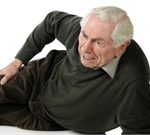
As you shelter at home during the coronavirus pandemic, eliminate hazards inside that could lead to falls, the American Academy of Orthopaedic Surgeons (AAOS) suggests. Preventing injuries will help avoid putting added strain on a health care system struggling to treat COVID-19 patients, academy spokesman Dr. Todd Swenning said. One out of five falls causes a serious injury, such as a broken bone or even head trauma, he added. “While common perception is that falls only happen to older populations, the truth is that anyone is susceptible, especially with increased family members in the home or changes to your daily routine,” Swenning said in an academy news release. “The good news is that most falls can be prevented with a few simple precautions.” Start with your footwear. Wear sturdy and proper footwear, make sure your shoes are properly tied, don’t wear socks without grips, and replace stretched out or loose slippers, Swenning advised. In the bedroom: Place a lamp, telephone or flashlight near your bed; have a bed that’s easy to get into and out of; put a nightlight between your bedroom and the bathroom; and arrange clothes in your closet so that they’re easy to reach. In other areas of your home: Arrange furniture so there are clear paths between rooms; install easy-access light switches at room entrances so you don’t have to walk…  read on >

Can zinc help shorten a COVID-19 infection? Will vitamin C or other supplements prevent it? These claims and plenty more can be found on social media and internet sites, but be advised: There is no pill or treatment that can prevent or cure COVID right now. “We want to think that there is a quick way to get rid of this. But there is not a product out there that will keep you from getting the coronavirus,” said Rebecca Dutch, a virologist with the University of Kentucky in Lexington. The pandemic has spawned a wave of products claiming to protect you by boosting your immune system — a simple claim people think they understand, said retired psychiatrist Dr. Stephen Barrett, who runs Quackwatch, a website that debunks pseudoscientific claims. “They think, ‘If I can boost my immune system, I’ll be more resistant to the virus,’” but it’s just not that simple, he said. “The immune system is quite complex,” Barrett explained. “There’s not even a scientific process called strengthening or boosting the immune system.” He agreed with Dutch: “There is no product you can take that will prevent or cure COVID,” he said. Even a group representing supplement makers agreed. Two major industry groups –the Council for Responsible Nutrition and the American Herbal Products Association — recently asked stores selling dietary supplements to refuse to…  read on >

Once you’ve had COVID-19 and recovered, are you now immune from the virus? That’s the critical question that will help shape how the United States re-opens for business in the coming months. Unfortunately, there’s still no clear answer. It’s still too soon to tell if the first wave of COVID-19 survivors will remain immune to the virus for any appreciable length of time. But the nation’s top infectious disease expert, Dr. Anthony Fauci, thinks there’s a good chance that people might gain lasting immunity following COVID-19 infection. “We’re making an assumption, which I think is a reasonable assumption, that this virus is not changing very much,” said Fauci, director of the U.S. National Institute of Allergy and Infectious Diseases. “If we get infected in February and March, and recover, next September or October the person who was infected I believe is going to be protected. We don’t know 100% for sure, but I think that is a reasonable assumption.” But there’s also reason to question the potential for lasting immunity against COVID-19, said Dr. Greg Poland, director of the Vaccine Research Group at the Mayo Clinic, in Rochester, Minn. Immunity may vary The novel coronavirus behind COVID-19 belongs to a family of viruses that has a very uneven track record with the human immune system, Poland noted. “With the four seasonal beta coronaviruses that circulate…  read on >

It’s clear that age and chronic disease make bouts of the pandemic coronavirus more severe — and even deadly — but obesity might also put even younger people at higher risk, a pair of new studies suggest. The researchers suspect that inflammation throughout the body linked to obesity could be a powerful factor in the severity of COVID-19, the disease caused by the coronavirus. And, they added, it could even be more significant than heart or lung disease. “This has relevance in the U.S., where 40% of Americans are obese, and will no doubt contribute to increased morbidity and likely mortality, compared to other countries,” said Dr. Jennifer Lighter, co-author of one of the studies. Lighter is an assistant professor of pediatric infectious diseases at NYU School of Medicine in New York City. Though people under age 60 are generally considered at low risk for COVID-19, her team found that those who are obese are twice as likely to be hospitalized for the disease. And, compared to patients whose weight is normal, those who are morbidly obese are twice as likely to need acute care and three times more likely to be confined to the intensive care unit, the study found. Though patients studied were obese, none had diabetes or heart disease, Lighter said, but they might be on the verge of them. “They have…  read on >

New research suggests that having an underlying health condition might be one of the most significant risk factors for developing a severe case of COVID-19. Scientists at the U.S. Centers for Disease Control and Prevention took a look at a group of U.S. adult COVID-19 patients and found roughly three-quarters of those who wound up in the hospital had at least one underlying health issue. For 457 patients who were admitted to intensive care, 78% had other health conditions, while 71% of 732 patients admitted to the hospital, but not intensive care, had at least one other health issue. The mortality data showed an even stronger correlation: Among all hospitalized COVID-19 adult patients with complete information on underlying conditions or risk factors, 184 deaths occurred. Of those, 173 (94%) involved patients with at least one underlying condition, according to the CDC’s COVID-19 Response Team, led by researcher Nancy Chow. Those conditions include diseases that strike people of all ages, including asthma and diabetes, along with heart disease and lung disease. Unfortunately, those very conditions are quite common among Americans, the researchers noted: In 2018, the prevalence of diagnosed diabetes among U.S. adults was just over 10%, while the prevalence of heart disease was 10.6% in 2017. Meanwhile, the prevalence of COPD (chronic obstructive pulmonary disease) among U.S. adults was almost 6% and the prevalence of…  read on >

One side effect of the coronavirus pandemic could be long-lasting: U.S. school closures may worsen the child obesity crisis, experts warn. Previous research has shown that kids tend to gain weight when they’re out of school during the summer — especially Hispanic and black youngsters and children who are already overweight. “There could be long-term consequences for weight gained while children are out of school during the COVID-19 pandemic,” said Andrew Rundle, who studies ways to prevent childhood obesity. He’s an associate professor of epidemiology at Columbia University Mailman School of Public Health in New York City. “Research shows that weight gained over the summer months is maintained during the school year and accrues summer to summer,” Rundle said in a university news release. “When a child experiences obesity, even at a young age, they are at risk for higher, unhealthy weight, all the way into middle age.” Rundle and his colleagues predicted that COVID-19-related school closures will double out-of-school time this year for many children in the United States. And that, in turn, will aggravate risk factors for unwanted weight gain, they warned. Social distancing and stay-at-home orders limit opportunities to exercise, particularly for city kids living in small apartments. As a result, inactivity, screen time and snacking are likely to increase, Rundle and colleagues wrote in their study published recently in the journal…  read on >

Your teeth provide a detailed account of your life, much as a tree’s rings record its history, a groundbreaking study shows. “A tooth is not a static and dead portion of the skeleton. It continuously adjusts and responds to physiological processes,” said lead study author Paola Cerrito, a doctoral candidate studying anthropology and dentistry at New York University (NYU) in New York City. “Just like tree rings, we can look at ‘tooth rings’: continuously growing layers of tissue on the dental root surface,” she said in a university news release. “These rings are a faithful archive of an individual’s physiological experiences and stressors from pregnancies and illnesses to incarcerations and menopause that all leave a distinctive permanent mark.” For the study, the NYU researchers compared nearly 50 teeth from skeletons of people who ranged in age from 25 to 69 to information about their medical history and lifestyle, such as age, illnesses, significant events and where they lived. The researchers focused on cementum, the tissue covering the tooth’s root. It begins to form yearly layers from the time the tooth appears in the mouth. Using imaging techniques to illuminate cementum bands, the investigators uncovered links between tooth formation and various events in the lives of those included in the study. “The cementum’s microstructure, visible only through microscopic examination, can reveal the underlying organization of the…  read on >

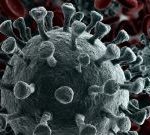
It has spread across the globe in just a few short months, sickening hundreds of thousands, but the new coronavirus has the dubious distinction of not really being a living organism, biologists say. “Viruses aren’t considered alive — in class, I call them pseudo-alive,” said Eric Mendenhall, an associate professor of biological sciences at the University of Alabama in Huntsville. “They require a host to even begin to function. However, since they use DNA or RNA to pass information to the next round of viruses the cell makes for them, they are subject to some of the same principles of evolution and selection that alive organisms are subject to,” he explained in a university news release. “A virus usually enters the cell through a protein our cells have on their surface. COVID-19 — and SARS [severe acute respiratory syndrome] before that — use a protein called ACE2, which is on the surface of the cells in our lung, throat and intestinal tract,” Mendenhall said. Coronaviruses are a category of viruses that typically infect mammals and birds; there were only six that could infect humans before COVID-19 showed up. “Four cause mild symptoms, like a cold,” Mendenhall said. “SARS was quite famous in 2003 but not seen since 2004, I believe, and MERS [Middle East respiratory syndrome], which is also deadly and is found in camels…  read on >

Less than half of patients with a sports-related mild traumatic brain injury (mTBI) recover within two weeks, new research shows. “This study challenges current perceptions that most people with a sports-related mTBI recover within 10 to 14 days,” said lead author Dr. Stephen Kara, from Axis Sports Medicine in Auckland, New Zealand. He and his colleagues analyzed recovery time in nearly 600 patients in New Zealand treated during a two-year period for sports-related mTBI. More than 3 out of 4 were male, and their average age was 20. About 7.5% were under age 12. All patients followed a standard protocol. It included 48 hours of “relative rest,” meaning they avoided mental and physical tasks that could aggravate their head injury. They then gradually increased such tasks. After 14 days, 45% of patients had recovered, the study found. Recovery rose to 77% after four weeks and to 96% eight weeks after injury. Recovery time was similar across all age groups. However, current guidelines from the global Concussion in Sports Group (CISG) say that nearly all sports-related concussions resolve within 10 days. U.S. guidelines for youth concussions call for follow-up care from a health care provider after the emergency room visit, then a plan for gradual return to school and play when fully recovered. Each person should be evaluated individually. The study findings appear in the March…  read on >

The coronavirus crisis has millions of Americans questioning whether it’s wise, or even safe, to travel this spring. Now, an infectious disease expert has created a checklist to help you decide whether to go ahead with your trip or cancel it. COVID-19 is an illness caused by a new coronavirus. For most people with healthy immune systems, infection appears to result in mild symptoms — similar to a cold or flu. However, infection appears to be most severe, and occasionally fatal, for the frail elderly or those with chronic health issues or compromised immune systems. Dr. Susan Wootton, an infectious disease pediatrician at the University of Texas Health Science Center in Houston, has developed this nine-point checklist to help you decide whether your trip is a go or a no. If your answer matches the response in parentheses to each question, move on to the next question. If not, you may need to rethink your travel plans. Are the travelers healthy? (Yes.) Have the travelers received flu shots? (Yes.) Do any of the travelers or anyone the travelers have had contact with have any underlying high-risk conditions for the virus, such as chronic obstructive pulmonary disease? (No.) Are any travel restrictions for your destination listed on the U.S. Centers for Disease Control and Prevention or U.S. Department of State websites? (No.) Is the trip a…  read on >