









One in six patients serviced by a major California health care system said they used marijuana regularly, with many citing health reasons for doing so, a new study finds. In most cases, doctors may not know that weed is part of a patient’s daily life. “Patients may not tell their primary care providers about their cannabis use, and their doctors may not ask about it,” said study author Dr. Lillian Gelberg, a professor of health policy and management at the University of California, Los Angeles (UCLA). “Not asking patients about their cannabis use results in a missed opportunity for opening up doctor-patient communication regarding use of cannabis generally and for management of their symptoms,” Gelberg added in a UCLA news release. Relaxed laws around marijuana have greatly boosted Americans’ access to the drug. In total, 38 states, three U.S. territories and the District of Columbia now allow cannabis for medical use, and 24 of these states also permit recreational use. At the same time, the potency of all this cannabis has greatly increased, the researchers noted. Numerous studies have linked cannabis overuse to conditions such as new-onset psychosis. Concerned, a leading independent advisory board known as the U.S. Preventive Services Task Force recommended in 2022 that physicians routinely screen patients for cannabis use. In the study, Gelberg’s team looked at the medical records of almost…  read on >  read on >
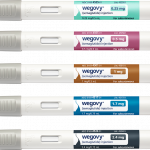
Despite recent concerns that taking Ozempic, Wegovy or other GLP-1 medications might be unsafe before a surgery, a new review has uncovered no such danger. The issue arose because weight-loss drugs slow gastric emptying. The thought was that food might linger in the stomach so patients might be at higher risk of aspirating food particles and choking while under anesthesia. But a new review of data from 15 randomized studies found only a minimal change in gastric emptying among GLP-1 users, not enough to pose any danger during surgery. “While GLP-1 medications affect gastrointestinal tract motility [movement], their quantified impact may not be as significant as previously assumed,” said study senior author Dr. Walter Chan. “It appears safe to continue these medications before a procedure requiring anesthesia or sedation, with minor precautions like abstaining from solid food for a day to minimize any potential risk of aspiration,” said Chan, who directs the Center of Gastrointestinal Motility at Brigham and Women’s Hospital in Boston. His team published its findings in the June issue of the American Journal of Gastroenterology. As the researchers explained, guidelines around GLP-1 use prior to a surgery are mixed. The American Society of Anesthesiologists recommends that patients stop taking GLP-1 medications for up to a week before elective surgeries and procedures.  On the other hand, the American Gastroenterological Association suggests proceeding with…  read on >  read on >

Teenagers who are part of close-knit neighborhoods and families are less likely to have sex at a young age, a new study has found. On the other hand, teens’ schools have less influence on their sexual behavior, researchers report. “Our results echo other studies’ findings on the importance of families and neighborhoods in protecting youth from risky behaviors, and show that feeling connected to one’s local community can mitigate sexual risky behaviors,” said lead researcher Dr. Camila Cribb Fabersunne, a pediatrician with the University of California, San Francisco (UCSF). Teens whose parents restricted their dating were 55% less likely to have sex by 10th grade, results showed. So were kids who spend less time alone when home (8% less likely), and who had tight-knit families (7% less likely). Teenagers from close-knit neighborhoods were 10% less likely to have sex by 10th grade, results show. However, no school factors were associated with delaying sex until later in high school, researchers found. Meanwhile, teens from disadvantaged neighborhoods with less education were about 24% more likely to have sex by 10th grade, researchers added. “Parents should not underestimate the impact they can have on their children,” said senior researcher Dr. Tracy Richmond, a professor of pediatrics at Harvard Medical School. “Simple parenting strategies like limiting dating can make a big difference on the timing of their child’s first sexual encounter, which…  read on >  read on >

One of the biggest obstacles to treating brain cancer is getting tumor-killing drugs past the blood-brain barrier that normally protects the brain from foreign invaders. Now, new research shows that ultrasound waves emitted from a device implanted in a cancer patient’s skull could be the key to getting chemotherapy and immunotherapy drugs into the brain. This ultrasound technology allowed doctors at Northwestern Medicine in Chicago to get a small dose of these drugs past the blood-brain barrier, according to a report published June 6 in the journal Nature Communications. What’s more, the treatment boosted the immune system’s recognition of brain cancer cells, the researchers added. “This is the first report in humans where an ultrasound device has been used to deliver drugs and antibodies to glioblastoma to change the immune system, so it can recognize and attack the brain cancer,” said researcher Dr. Adam Sonabend, an associate professor of neurological surgery at Northwestern University Feinberg School of Medicine. “This could be a major advance for the treatment of glioblastoma, which has been a frustratingly difficult cancer to treat, in part due to poor penetration of circulating drugs and antibodies into the brain,” Sonabend added in a Northwestern news release. The study involved four patients with advanced brain cancer. They had already been treated with chemotherapy and had taken part in an experimental clinical trial, but…  read on >  read on >

Doctors already warn folks off salt due to its heart risks, but new research suggests sodium isn’t helping your skin either. Researchers found that as daily salt intake rose, so did the odds for the skin disorder eczema, also known as atopic dermatitis. “Restriction of dietary sodium intake may be a cost-effective and low-risk intervention for atopic dermatitis,” concluded a team led by Dr. Katrina Abuabara, associate professor of dermatology at the University of California, San Francisco (UCSF). The data came from on an ongoing British research database called the UK Biobank, involving almost 216,000 people aged 37 and older at the time they were recruited into the study. As part of the Biobank effort, people were asked to provide a urine sample, which could then be used to gauge a person’s sodium intake. About 5% of the people in the Biobank had a diagnosis of eczema. The average person’s 24-hour “urine sodium excretion” was about 3 grams, but the study found that folks’ daily excretion of sodium went up by just 1 gram, their odds for a flare-up of their eczema rose by 22%. The effect seemed stronger among women than men. People whose urine sample suggested high salt intake faced an 11% higher odds of severe eczema, the researchers said. On the other hand, folks who stuck to health guidelines when it came…  read on >  read on >

In new guidelines released Tuesday, U.S. health officials now recommend that certain people take the antibiotic doxycycline as a morning-after pill to lower the risk of some sexually transmitted diseases (STDs). The latest recommendations only apply to gay and bisexual men and transgender women who have had an STD in the past year and are at high risk of getting infected again. While past research has shown that doxycycline works for those populations, there’s not enough evidence to recommend the preventive treatment, known as doxy PEP, for all American adults, the U.S. Centers for Disease Control and Prevention noted. The new guidelines were published in the CDC publication Morbidity and Mortality Weekly Report. CDC officials stressed that better ways to slow the spread of STDs are needed. “No vaccines and few chemoprophylaxis options exist for the prevention of bacterial sexually transmitted infections… [specifically syphilis, chlamydia, and gonorrhea]. These infections have increased in the United States and disproportionately affect gay, bisexual and other men who have sex with men [MSM] and transgender women,” wrote researchers led by Laura Bachmann, chief medical officer of the CDC’s Division of STD Prevention. “In three large randomized controlled trials, 200 [milligrams] mg of doxycycline taken within 72 hours after sex has been shown to reduce syphilis and chlamydia infections by >70% and gonococcal infections by approximately 50%,” they added. When…  read on >  read on >

Could the blockbuster GLP-1 meds like Wegovy and Ozempic have a role to play in helping people cut down on problem drinking? A new study suggests so. Researchers at Case Western Reserve University in Cleveland report that obese folks with drinking issues who took the drugs to shed pounds had an up to 56% reduction in re-occurrence of alcohol use disorder over one year later, compared to those not using the meds. “This is very promising news in that we may have a new therapeutic method to treat alcohol use disorder,” said lead researcher Rong Xu. She’s a professor of biomedical informatics at the Case Western’s School of Medicine. Prior data has suggested that something about GLP-1 diabetes/weight-loss drugs can have the effect of curbing excess drinking. And the Case Western team have already shown that semaglutide (Ozempic/Wegovy) can have other unexpected health benefits. “In January we showed that semaglutide is associated with a decrease in suicidal thoughts, and in March, we demonstrated that semaglutide is also associated with a reduction in both new diagnoses and recurrence of cannabis use disorder,” Xu noted in a university news release. So what about alcohol intake? In the new study, Xu’s team pored over the electronic health records of nearly 84,000 patients with obesity.  Compared to people who weren’t taking semaglutide, those who took the med saw a…  read on >  read on >

Ozempic and Wegovy appear to improve people’s sensitivity to tastes, potentially lowering their desire for sweets, a new study suggests. The active ingredient in the weight-loss medications, semaglutide, also appears to affect the way that the tongue and brain respond to sweet tastes, researchers reported Saturday at the Endocrine Society’s annual meeting in Boston. “People with obesity often perceive tastes less ‘intensely,’ and they have an inherently elevated desire for sweet and energy-dense food,” said researcher Mojca Jensterle Sever, an endocrinologist with the University Medical Centre in Ljubljana, Slovenia. For the study, researchers randomly assigned obese women to receive either semaglutide injections or a placebo. For four months, researchers measured the participants’ taste sensitivity using strips containing different concentrations of tastes. They also used MRI scans to measure brain responses to a sweet solution dripping onto their tongues, both before and after the women ate a standard meal. Researchers also took tissue samples to evaluate genetic activity in the participants’ tongues. Women receiving semaglutide experienced changes in their taste perception, in the ways their taste bud genes expressed themselves and the way their brain responded to sweets. The changes track with those seen in animal studies, Jensterle Sever said. “Clinicians will likely correlate the findings with reports from their patients on changes in desire for certain foods, which go beyond broad changes in appetite and…  read on >  read on >

Ozempic and Wegovy might help lower the risk of pancreatitis in patients with obesity and type 2 diabetes, a new study says. Up to now, doctors have been cautious about prescribing semaglutide to patients with a history of pancreatitis, because they feared the drug could worsen the condition, said lead researcher Dr. Mahmoud Nassar, a fellow in endocrinology, diabetes, and metabolism at the University of Buffalo in New York. In fact, the drug’s prescribing information even warns about this potential side effect, Nassar noted. “Our research highlights the safety and the potential for GLP-1 receptor agonists [like semaglutide] to reduce the risk of acute pancreatitis recurrence in individuals with obesity and type 2 diabetes, challenging previous concerns and offering new hope for effective disease management,” Nassar said. For the study, researchers analyzed data on more than 638,000 patients with a history of pancreatitis. The patients were located across 15 countries, but they were mainly from the United States. Researchers tracked how many patients developed pancreatitis again within 15 years of starting either semaglutide or other drugs for diabetes and obesity. The other drugs included SGLT2 inhibitors, which decrease blood sugar levels by preventing glucose from being absorbed in the kidneys, and DPP4 inhibitors, which help the pancreas release insulin. About 15% of patients taking semaglutide had wound up suffering a recurrence of pancreatitis, compared with…  read on >  read on >

Nerve surgery can reduce the number of headache days for people who suffer frequent migraines, a new review finds. The procedure also can decrease the frequency and intensity of migraine attacks, according to results published in the June issue of the journal Plastic and Reconstructive Surgery. “Our study adds new evidence that headache surgery improves both sets of measures, providing a more comprehensive assessment of the results of headache surgery,” said researcher Dr. Jeffrey Janis, a professor of plastic surgery, surgery, neurosurgery and neurology at the Ohio State University Wexner Medical Center. Migraine surgery seeks to relieve nerve compression at trigger sites in the head and neck, researchers explained. This pressure is thought to contribute to headaches. Neurologists assessing migraine treatments tend to focus on whether they reduce the number of days a person has a headache, Janis said. On the other hand, plastic surgeons performing headache surgery typically use an index that evaluates the frequency, intensity and duration of migraines, Janis added. “This discrepancy is one reason why some headache specialists have been slow to recognize the growing body of evidence showing the effectiveness of headache surgery,” Janis noted in a journal news release. For this review, researchers decided to consider both ways of assessing the effectiveness of migraine surgery, so that both groups of professionals could find common ground regarding the procedure. The…  read on >  read on >