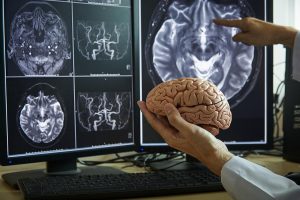









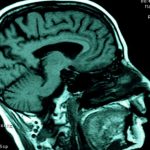
Why does one person take a lot of risks and another proceed with more caution? Researchers came closer to that answer with a new study that shows risk-taking behavior may be related to characteristics in the brain. The study found there is no one risk area in the brain. Instead, there are many regions where anatomy is altered in people who take risks. Yet there is a connection between genes, lower levels of gray matter and risky behavior, researchers concluded. “People have different tendencies to engage in behavior that risks their health or that involve uncertainties about the future,” senior author Gideon Nave said in a University of Pennsylvania news release. He’s an assistant professor of marketing at the university’s Wharton School. The research team gathered brain scans and genetic data from more than 12,600 people of European ancestry and then from another 13,000 people. All were aged 40 to 69 and enrolled in the UK Biobank. Investigators used self-reported risky behaviors — smoking, drinking, sexual promiscuity and driving above the speed limit — to create an overall indicator of risk tolerance. They estimated the relationship between total gray matter volume across the brain and the risk-tolerance score. Higher risk tolerance was correlated with overall lower gray matter volume, researchers said, though only an association was seen. Gray matter carries out the basic functions of…  read on >  read on >

While pandemic lockdowns may have initially triggered feelings of isolation and worry, stay-at-home stress dissipated with time as people adjusted to their “new normal,” research suggests. In the study, scientists did a state-by-state analysis of Google search trends between January and June of 2020, covering topics such as COVID regulation policies, mental health concerns and in-home activities. On the “negative feelings” side of the ledger, search terms included “antidepressants” and “suicide.” More positive searches included “cooking” and “exercise tips.” Search trends were then stacked up against the varying timing and nature of each state’s particular lockdown experience. The result: “Google searches for mental health symptoms such as ‘isolation’ and ‘worry’ spiked after the implementation of the mitigation policies,” noted study author Bita Farkhad, an economist and a postdoctoral researcher in psychology at the University of Illinois Urbana-Champaign. But after two to four weeks, those spikes fell. In fact, Farkhad and her colleagues found that Google searches for terms that might indicate serious mental health issues — such as “suicide,” “antidepressant” and/or antidepressant drug names (Xanax, Prozac, Zoloft) — actually tended to drop off following the launch of stay-at-home orders. Why? The team theorized that not everything revolving around stay-at-home orders is by definition negative. For example, lockdowns also afford some with a rare opportunity to spend more time with loved ones, or to develop new,…  read on >  read on >

There have long been theories that women’s menstrual cycles align with the moon, and now a new study suggests there’s some truth to that. Using years of records kept by 22 women, researchers found that for many, menstrual cycles “intermittently” synced up with the phases of the moon. The link happened only about one-quarter of the time for women aged 35 or younger, and just 9% of the time for older women. There was a great deal of variance, though, among individuals. And for a few women, there were hints that excessive exposure to artificial light at night could have thrown off any moon-menstruation synchrony. One expert called the findings “interesting,” and said they might reflect remnants of a lunar influence that benefited humans’ ancient ancestors. Early primates were nocturnal creatures, so a degree of moon-influenced behavior would make sense for them, according to Deena Emera. Emera, who was not involved in the study, is an evolutionary geneticist based at the Buck Institute’s Center for Reproductive Longevity and Equality, in California. Mating is risky business, Emera noted, as it makes animals vulnerable to predators. So mating during the new moon, under cover of more darkness, would be a “reasonable strategy,” she said. That also means there would be an advantage to ovulation being timed to the new moon. “I think any [moon-menstruation] synchronization seen today…  read on >  read on >

There have long been theories that women’s menstrual cycles align with the moon, and now a new study suggests there’s some truth to that. Using years of records kept by 22 women, researchers found that for many, menstrual cycles “intermittently” synced up with the phases of the moon. The link happened only about one-quarter of the time for women aged 35 or younger, and just 9% of the time for older women. There was a great deal of variance, though, among individuals. And for a few women, there were hints that excessive exposure to artificial light at night could have thrown off any moon-menstruation synchrony. One expert called the findings “interesting,” and said they might reflect remnants of a lunar influence that benefited humans’ ancient ancestors. Early primates were nocturnal creatures, so a degree of moon-influenced behavior would make sense for them, according to Deena Emera. Emera, who was not involved in the study, is an evolutionary geneticist based at the Buck Institute’s Center for Reproductive Longevity and Equality, in California. Mating is risky business, Emera noted, as it makes animals vulnerable to predators. So mating during the new moon, under cover of more darkness, would be a “reasonable strategy,” she said. That also means there would be an advantage to ovulation being timed to the new moon. “I think any [moon-menstruation] synchronization seen today…  read on >  read on >

There have long been theories that women’s menstrual cycles align with the moon, and now a new study suggests there’s some truth to that. Using years of records kept by 22 women, researchers found that for many, menstrual cycles “intermittently” synced up with the phases of the moon. The link happened only about one-quarter of the time for women aged 35 or younger, and just 9% of the time for older women. There was a great deal of variance, though, among individuals. And for a few women, there were hints that excessive exposure to artificial light at night could have thrown off any moon-menstruation synchrony. One expert called the findings “interesting,” and said they might reflect remnants of a lunar influence that benefited humans’ ancient ancestors. Early primates were nocturnal creatures, so a degree of moon-influenced behavior would make sense for them, according to Deena Emera. Emera, who was not involved in the study, is an evolutionary geneticist based at the Buck Institute’s Center for Reproductive Longevity and Equality, in California. Mating is risky business, Emera noted, as it makes animals vulnerable to predators. So mating during the new moon, under cover of more darkness, would be a “reasonable strategy,” she said. That also means there would be an advantage to ovulation being timed to the new moon. “I think any [moon-menstruation] synchronization seen today…  read on >  read on >

There have long been theories that women’s menstrual cycles align with the moon, and now a new study suggests there’s some truth to that. Using years of records kept by 22 women, researchers found that for many, menstrual cycles “intermittently” synced up with the phases of the moon. The link happened only about one-quarter of the time for women aged 35 or younger, and just 9% of the time for older women. There was a great deal of variance, though, among individuals. And for a few women, there were hints that excessive exposure to artificial light at night could have thrown off any moon-menstruation synchrony. One expert called the findings “interesting,” and said they might reflect remnants of a lunar influence that benefited humans’ ancient ancestors. Early primates were nocturnal creatures, so a degree of moon-influenced behavior would make sense for them, according to Deena Emera. Emera, who was not involved in the study, is an evolutionary geneticist based at the Buck Institute’s Center for Reproductive Longevity and Equality, in California. Mating is risky business, Emera noted, as it makes animals vulnerable to predators. So mating during the new moon, under cover of more darkness, would be a “reasonable strategy,” she said. That also means there would be an advantage to ovulation being timed to the new moon. “I think any [moon-menstruation] synchronization seen today…  read on >  read on >

Too much screen time can make your toddler more distractible, British researchers warn. The use of smartphones and tablets by babies and toddlers has soared in recent years. “The first few years of life are critical for children to learn how to control their attention and ignore distraction, early skills that are known to be important for later academic achievement,” said lead author Tim Smith, a professor at the Center for Brain and Cognitive Development at Birkbeck, University of London. “There has been growing concern that toddler touchscreen use may negatively impact their developing attention, but previously there was no empirical evidence to support this,” Smith added. To learn more, Smith’s team studied toddlers with different levels of touchscreen usage, assessing them at 12 months, 18 months and 3.5 years of age. At each visit, the toddlers did computer tasks while an eye-tracker measured their attention. Objects appeared in different locations of the computer screen, and researchers monitored how quickly the children looked at the objects and how well they ignored distracting objects. Toddlers with high daily touchscreen use were quicker to look when objects appeared and were less able to resist distraction than those with little or no daily screen time, the study found. Main researcher Ana Maria Portugal, an associate research fellow at Birkbeck University of London, said the team could not conclude,…  read on >  read on >

Too much screen time can make your toddler more distractible, British researchers warn. The use of smartphones and tablets by babies and toddlers has soared in recent years. “The first few years of life are critical for children to learn how to control their attention and ignore distraction, early skills that are known to be important for later academic achievement,” said lead author Tim Smith, a professor at the Center for Brain and Cognitive Development at Birkbeck, University of London. “There has been growing concern that toddler touchscreen use may negatively impact their developing attention, but previously there was no empirical evidence to support this,” Smith added. To learn more, Smith’s team studied toddlers with different levels of touchscreen usage, assessing them at 12 months, 18 months and 3.5 years of age. At each visit, the toddlers did computer tasks while an eye-tracker measured their attention. Objects appeared in different locations of the computer screen, and researchers monitored how quickly the children looked at the objects and how well they ignored distracting objects. Toddlers with high daily touchscreen use were quicker to look when objects appeared and were less able to resist distraction than those with little or no daily screen time, the study found. Main researcher Ana Maria Portugal, an associate research fellow at Birkbeck University of London, said the team could not conclude,…  read on >  read on >

A racist mortgage appraisal practice used in the United States decades ago has resulted in less green space in some urban neighborhoods today, researchers say. Those so-called “redlined” neighborhoods have higher rates of air and noise pollution, racial segregation and poverty — all of which can contribute to poorer health. In the 1930s, the Home Owners’ Loan Corporation (HOLC) gave neighborhoods nationwide risk grades that were based on racial makeup and other factors. “Hazardous” areas — often those whose residents included people of color — were outlined in red on HOLC maps. In the decades since, these neighborhoods have seen less private and public investment and have remained segregated. “Though redlining is now outlawed, its effects on urban neighborhoods persist in many ways, including by depriving residents of green space, which is known to promote health and buffer stress,” said study first author Anthony Nardone, a medical student at the University of California, San Francisco. Senior author Joan Casey called for action to remedy the problem. “Future policies should, with the input of local leaders, strive to expand availability of green space, a health-promoting amenity, in communities of color,” she said. Casey is an assistant professor of environmental health sciences at Columbia University’s Mailman School of Public Health in New York City. For the study, the researchers examined the relationship between HOLC risk grades and…  read on >  read on >

Exercise programs that are standard for heart attack survivors can also benefit people who’ve suffered a stroke, a new pilot study suggests. Researchers found that a three-month cardiac rehabilitation program improved fitness levels and muscle strength in 24 stroke survivors. While the study was small, the researchers said it offers evidence of what’s intuitive: People recovering from a stroke benefit from regular, structured exercise. Cardiac rehab programs have long been offered to people with heart disease. Yet insurance does not cover the therapy for stroke patients. That’s partly because after a stroke, the emphasis is often on rehab for any disabilities a patient might have, said Elizabeth Regan, a clinical assistant professor of physical therapy at the University of South Carolina, in Columbia. “We haven’t thought enough about the importance of cardiovascular endurance for stroke patients,” she said. After a stroke, people are often in a deconditioned state, so working on fitness and muscle strength is vital. Beyond that, Regan said, exercise can help lower their risk of having another stroke. Unfortunately, research shows that most stroke survivors do not exercise regularly. Regan said that cardiac rehab, which includes supervised exercise, might help people gain the self-confidence they need to exercise on their own. To study the question, she and her colleagues recruited two dozen stroke survivors. They ranged in age from 33 to 81,…  read on >  read on >