










The U.S. government has shut down or paused several major anti-smoking efforts.  Public health leaders say the cuts could reverse decades of progress that have smoking rates in the country at all-time lows. Last week, the Department of Health and Human Services (HHS) made major cuts to tobacco control offices at the U.S. Centers for Disease Control and Prevention (CDC) and U.S. Food and Drug Administration (FDA). Dozens of workers were let go, including Brian King, the FDA’s top tobacco regulator. The CDC’s Office on Smoking and Health, which led work on smoking cessation and research into youth tobacco use, was also cut. Former CDC Director Dr. Tom Frieden, now president of the global health organization Resolve to Save Lives, called the decision a “gift to Big Tobacco.” “The only winner here is the tobacco industry and cancer cells,” Frieden told NBC News. One of the biggest casualties? The CDC’s popular “Tips From Former Smokers” ad campaign. The program, which began in 2012, features real people who suffered health damage from smoking. A study published recently in the journal Nicotine & Tobacco Research shows that the ads lead to a sharp rise in calls to quit lines each time they air. “We estimate the Tips campaign generated nearly 2.1 million additional calls to 1-800-QUIT-NOW during 2012-2023,” the researchers wrote. 1-800-QUIT-NOW, the national quit line, connects…  read on >  read on >

Smoke from wildfires driving you mad? You’re not alone, a new study says. Short-term exposure to air choked with wildfire smoke increases people’s risk of mental health problems, according to findings published April 4 in JAMA Network Open. Hospital emergency rooms experience surges in patients with mental health conditions on days when smoke pollution is at its worst, researchers found. “Wildfire smoke isn’t just a respiratory issue — it affects mental health, too,” said corresponding author Dr. Kari Nadeau, chair of environmental health at the Harvard T.H. Chan School of Public Health. “Our study suggests that — in addition to the trauma a wildfire can induce — smoke itself may play a direct role in worsening mental health conditions like depression, anxiety, and mood disorders,” Nadeau added in a news release. For the study, researchers tracked levels of particle pollution caused by California wildfires that occurred between July and December 2020 — the state’s most severe wildfire season on record. They compared that data to ER visits for mental health problems, and found that exposure to wildfire smoke substantially increased the number. Specifically, a 10 microgram-per-cubic-meter increase in wildfire particle pollution was linked to more ER visits for: Any mental health condition, with an 8% increased risk. Depression, with a 15% increased risk. Other mood disorders, with a 29% increased risk. Anxiety, with a 6%…  read on >  read on >

Ozone air pollution increases the risk of asthma among preschoolers and kindergarteners, a new study says. Relatively small increases in ozone smog in a child’s first two years of life is associated with an increased risk of asthma and wheeze at 4 to 6 years of age, researchers reported April 2 in JAMA Network Open. However, ozone exposure didn’t increase risk of asthma at ages 8 and 9, results show. “It’s a puzzling finding,” said lead researcher Logan Dearborn, a doctoral student with the University of Washington Department of Environmental & Occupational Health Sciences. “It’s something we spent a long time trying to consider, and I don’t know if we ever came up with a satisfying answer.” “But these findings are important,” Dearborn added in a news release. “Even if we only see the effects early in life, there are still all kinds of associated health care costs and stresses for families.” For the study, researchers analyzed data on more than 1,100 children from a federal research project investigating how environmental factors can affect children’s health. The children lived in six cities – Minneapolis; San Francisco; Seattle; Memphis, Tenn.; Rochester, N.Y.; and Yakima, Wash. The team compared kids’ asthma and wheeze as reported by their moms to federal data on ozone pollution in their area. Previous studies have linked childhood asthma to exposure to fine…  read on >  read on >

Antidepressants appear to increase people’s risk of sudden cardiac death, a new study says. People taking the mood meds are more likely to die suddenly from heart problems, and their risk rises the longer they’re on the drugs, according to findings presented Monday in Vienna at a meeting of the European Society of Cardiology. “Exposure time to antidepressants was associated with a higher risk of sudden cardiac death, and linked to how long the person had been exposed to antidepressants,” said lead researcher Jasmin Mujkanovic of Rigshospitalet Heart Center in Copenhagen. “Those exposed for six years or more were at even more increased risk than those exposed for one to five years, when compared with people unexposed to antidepressants in the general population,” Mujkanovic said in a news release. For the new study, researchers examined all deaths among adults in Denmark in 2010, looking for people taking andepressants and people who suffered sudden cardiac death. Sudden cardiac death involves a person’s heart unexpectedly stopping due to some heart-related problem, researchers said in background notes. Younger adults usually suffer sudden cardiac death due to heart disease or an electrical problem with the heart, while older people most often fall prey due to clogged arteries, researchers said. Overall, people who’d been taking antidepressants for one to five years had a 56% increased risk of sudden cardiac death,…  read on >  read on >

Disrespected by a neighbor or colleague? Eyerolls from servers at a restaurant or store? Denied a job or a mortgage due to skin color? More than half of Americans have experienced some such form of discrimination, and this mistreatment dramatically increases their risk of depression or anxiety, a new study says. Nearly 56% of Americans have encountered discrimination in their lives, and almost 4% said they’d experienced high levels of discrimination, according to findings published March 28 in JAMA Network Open. Those exposed to high levels of discrimination are five times more likely to be diagnosed with depression or anxiety, and nearly nine times more likely to screen positive for both mood disorders, results show. “Everyday discrimination is a widespread issue that negatively impacts mental health across all racial and ethnic groups,” lead researcher Monica Wang, an associate professor of community health services at Boston University School of Public Health, said in a news release. For the study, researchers analyzed 2023 federal survey data to gauge experiences of discrimination, depression and anxiety among nearly 30,000 U.S. adults. Discrimination was scored based on answers to questions like: “How often are you treated with less courtesy or respect than others?” “How often do you receive poorer service at restaurants or stores compared to others?” “How often do people act as if they think you are not smart?”…  read on >  read on >

Insomnia and vertigo are health conditions so well-known that movies have been named after them. But only a quarter of Americans know about a condition that occurs even more often than vertigo or insomnia, called dysphagia, a new study says. Dysphagia is a condition in which people have trouble swallowing, due to nerve, muscle or structural problems in the mouth, throat or esophagus, according to the American College of Gastroenterology. Malnutrition and pneumonia are two common health problems caused by dysphagia, researchers said “When someone has dysphagia, food and liquid can go into the lungs and cause pneumonia — which in some cases can be fatal,” said lead researcher Sonja Molfenter, an associate professor of communicative sciences and disorders at NYU Steinhardt School of Culture, Education, and Human Development in New York City. Nearly 7% of Americans report some difficulty swallowing, with the percentage even higher among seniors older than 65, Molfenter noted in a news release. But public knowledge of dysphagia is not widespread, researchers suspected. For this study, researchers surveyed 2,000 people about their knowledge of insomnia, vertigo, dysphagia and ataxia (a lack of muscle control). Only 25% knew what dysphagia was, compared with 99% for insomnia and 87% for vertigo, results show. Only 18% knew about ataxia. Likewise, only 44% people correctly identified impairments associated with dysphagia, compared with 99% for insomnia,…  read on >  read on >

Splenda doesn’t directly add calories to your diet, but the sweetener still might lead people to pack on pounds, a new study says. The sugar substitute might spur on a person’s appetite and feelings of hunger, potentially leading them to overeat, according to results published March 26 in the journal Nature Metabolism. Splenda’s main ingredient, sucralose, appears to confuse the brain by providing a sweet taste without also delivering the calories one would expect, senior investigator Dr. Kathleen Page, director of the University of Southern California Diabetes and Obesity Research Center, said in a news release. “If your body is expecting a calorie because of the sweetness, but doesn’t get the calorie it’s expecting, that could change the way the brain is primed to crave those substances over time,” she said. About 40% of Americans regularly consume sugar substitutes, usually as a way to reduce their sugar intake, researchers said in background notes. “But are these substances actually helpful for regulating body weight?” Page asked. “What happens in the body and brain when we consume them, and do the effects differ from one person to the next?” To explore this further, researchers tested how 75 people responded after consuming water, a drink sweetened with sucralose or a drink sweetened with regular sugar. The team collected MRI brain scans, blood samples and hunger ratings from participants…  read on >  read on >

Is there a person in your life who just can’t stop scrolling social media, almost as if they’ve formed an emotional dependence on sites like Instagram and TikTok? Such an attachment might be associated with worse mental health symptoms among young people being treated for depression, anxiety or suicidal thoughts, a new study says. About 40% of troubled 8- to 20-year-olds reported social media use that could be problematic, saying that they feel discontented, disconnected and upset when they can’t log on to their favorite sites, researchers report in the April issue of Journal of Affective Disorders. These young people also had higher levels of depression, anxiety and suicidal thoughts, as well as poorer overall well-being, compared to peers in treatment who weren’t overly attached to social media, researchers found. “There has long been speculation that excessive social media use among young people may be a factor in increased rates of suicidal thoughts and behaviors, but the relationship is not fully understood,” lead researcher Betsy Kennard, a teaching professor of psychiatry at UT Southwestern Medical Center in Dallas, said in a news release. “Our findings are instructive because they characterize the prevalence of problematic social media use in children and adolescents who are receiving care for depression, suicidal ideation and/or suicidal behaviors, which gives us insight into how they might intersect,” she added. For the…  read on >  read on >
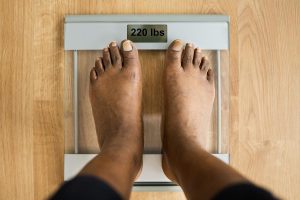
A mom’s health and lifestyle choices can affect her kids’ risk of obesity as adults, a new study says. Specifically, a child is 3 to 4 times more likely to become an obese adult if their mom was obese, researchers reported March 26 in PLOS One. A mom’s smoking also increased their kid’s risk of adult obesity by 60% to 80%, results show. “In particular, we note that the effect of maternal influences persists through to age 42 and that strikingly, those predictors were just as powerful (and prevalent) in the era before the current obesity pandemic began,” concluded the research team led by Glenna Nightingale, a research fellow with the University of Edinburgh in the U.K. In effect, factors beyond a person’s control can influence whether they become overweight or obese as adults, researchers said. For the new study, researchers analyzed data on nearly 11,500 children who participated in an ongoing British study of kids born on a single week in March 1958 across England, Scotland and Wales. The team observed health trends among these children out to age 42, and compared their health to aspects of their parents’ life that might influence their risk for obesity. Results showed that if a mom was obese or if she smoked, her child was more likely to be obese in adulthood. “The persistent importance of maternal…  read on >  read on >

Tobacco control measures like anti-smoking campaigns and cigarette taxes have prevented nearly 4 million lung cancer deaths during the past five decades, a new American Cancer Society study estimates. More than 3.8 million lung cancer deaths were averted due to substantial reductions in smoking, gaining a little more than 76 million years of extra life among Americans, researchers say in CA: A Cancer Journal for Clinicians. “The substantial estimated numbers of averted lung cancer deaths and person-years of life gained highlight the remarkable effect of progress against smoking on reducing premature mortality from lung cancer,” lead investigator Dr. Farhad Islami, the ACS’ senior scientific director for cancer disparity research, said in a news release.  In fact, the number of averted lung cancer deaths accounts for roughly one-half of all cancer deaths that were prevented in recent decades, researchers said. “However,” Islami added, “Despite these findings, lung cancer is still the leading cause of cancer death in the United States, and smoking-attributable morbidity and mortality from other cancers or diseases remain high.” For the study, researchers analyzed federal health data from 1970 through 2022, estimating the expected number of cancer deaths for each year and comparing them to the deaths that actually occurred. In all, more than 2.2 million expected lung cancer deaths in men and 1.6 million in women were averted during the five-decade period.…  read on >  read on >