










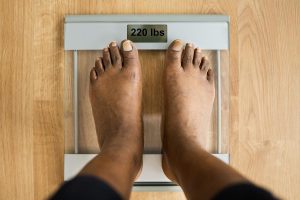
People dealing with heart disease, diabetes or obesity are behind the eight ball when it comes to their chances of living longer. But they can improve their odds if they start following a healthy plant-based diet, according to a study scheduled for presentation Saturday in Chicago at a meeting of the American College of Cardiology. Closer adherence to a healthy plant-based diet is linked to a 17% to 24% reduced risk of premature death from any cause, heart disease or cancer, researchers report. “These findings may help individuals with cardiometabolic disorders make heathier lifestyle choices,” lead researcher Dr. Zhangling Chen of the Second Xiangya Hospital of Central South University in Changsha, China, said in a news release. Not all plant-based foods are healthy, however. Refined grains, potatoes and sugary drinks can pack on extra pounds and cause blood sugar to spike, researchers noted. As a result, people who have an unhealthy plant-based diet with more of those foods have a 28% to 36% increased risk of early death from any cause, heart disease or cancer, results show. “More intake of healthy plant-based foods, less intake of unhealthy plant-based foods and less intake of animal-based foods are all important,” Chen said. For the study, researchers analyzed data from nearly 78,000 people with obesity, heart disease or diabetes who participated in large studies in the U.K., U.S.…  read on >  read on >

There’s nothing like the feeling of years of hard work paying off — when you can finally transition to a life of non-work activities, whether it’s traveling, diving into personal projects or even learning a new language.  But retirement in a warm, affordable country may come with an unexpected downside: loneliness. A new study suggests that retirees who move abroad often experience greater social isolation than those who stay in their home state. The research, published recently in Psychology and Aging, compared nearly 5,000 Dutch retirees living abroad to more than 1,300 who stayed in the Netherlands.  It found that retirees who moved overseas were more socially isolated, even though they were often healthier and wealthier than those who stayed. “Although these retirement migrants generally report being happy, they may still face struggles adapting to a new country,” lead author Esma Betül Savaş, a doctoral researcher at the Netherlands Interdisciplinary Demographics Institute, said in a news release. Social loneliness comes from a lack of a broad circle of friends, while emotional loneliness is tied to a lack of close friends or partner. The study found that, overall, retirees who moved abroad had higher levels of social loneliness.  But those who stayed connected with friends and family back home or built strong relationships in their new country felt less isolated. Researchers also found that those who…  read on >  read on >
Night owls — people who stay up late — have been shown to have an increased risk of depression. And now a new study says why that might be. Dusk dwellers tend to be less mindful — that is, less engaged in the present moment, researchers found. That, along with poor sleep quality and higher alcohol consumption, are likely explanations for their increased depression risk, researchers reported in the journal PLOS One. “Importantly, we considered the different facets of mindfulness as factors,” concluded the team led by senior researcher Simon Evans, a lecturer in neuroscience of the University of Surrey in the U.K.  “Results pointed specifically to a protective role of the ‘acting with awareness’ facet,” in which people engage fully in the present moment and carry out actions with deliberate attention rather than on autopilot, researchers wrote. For the study, researchers surveyed nearly 550 university students using an online questionnaire. Students reported information on their sleep patterns, mindfulness, alcohol use and levels of depression and anxiety. The responses revealed that night owls were indeed more likely to report symptoms of depression compared to average sleepers, researchers report. Night owls also had worse sleep quality than average sleepers or morning birds, and they tended to consume more alcohol. These results jibe with earlier studies linking bad sleep and alcohol to depression, researchers noted. But this…  read on >  read on >

Microplastics that invade and burrow deep within the human body are becoming an increasing concern among doctors and health experts. Now, a new study shows that even medical care is causing increased exposure to the tiny plastic particles. Microplastics can be found in the solutions administered through plastic IV bags, researchers recently reported in the journal Environment & Health. In fact, thousands of plastic particles could be delivered directly to a person’s bloodstream from a single standard 8.4-ounce bag of IV fluid, researchers said. “Our findings highlight an aspect of plastic pollution that affects humans most directly, as microplastics are being injected into the bloodstream,” concluded the research team led by senior researcher Liwu Zhang, a professor with the Fudan University Department of Environmental Science & Engineering in Shanghai, China. Studies have tied microplastics to a range of health problems, a recent Forbes article noted. These include dementia and brain health, heart disease, stroke, reproductive issues and infant illnesses. Microplastics have been found in human blood, and they tend to accumulate in organs like the lungs, liver, kidneys and spleen, researchers said in background notes. A study published earlier this year in Nature found that the amount of microplastics found in human brains has increased by about 50% — the equivalent of a plastic spoon in weight. For the new study, researchers purchased two different…  read on >  read on >

Nearly 1 in 3 children live with a chronic condition that could significantly affect their health for the rest of their lives, a new study says. Chronic illnesses affected more than 30% of children ages 5 to 17 by 2018, up from around 23% in 1999, researchers report in the journal Academic Pediatrics. This adds up to about 130,000 more children each year being diagnosed with a chronic illness. This increase has been driven by diagnoses of ADHD/ADD, autism, asthma, prediabetes and mood disorders like depression or anxiety, lead researcher Lauren Wisk, an assistant professor of medicine at the David Geffen School of Medicine at UCLA, said in a news release. “The prevalence of childhood conditions is currently higher than previous estimates suggest,” she said. “Youth who are subject to socioeconomic vulnerability such as having less education, lower income, are on public insurance, or unemployed are all more likely to live with a chronic condition than youth with socioeconomic advantages.” For the study, researchers analyzed data on more than 236,000 people between 5 and 25 years of age who participated in the National Health Interview Survey between 1999 and 2018. The results also showed that chronic illness increased among 18- to 25-year-olds, rising from about 19% to 29% between 1999 and 2018 — an additional 80,000 young adults per year. Nearly all these conditions are…  read on >  read on >

The blues and the jitters are very common among people battling chronic pain, a new evidence review says. About 40% of adults with chronic pain have symptoms of depression or anxiety, researchers report in JAMA Network Open. Women, younger adults and people suffering from fibromyalgia are particularly vulnerable to mood disorders caused by chronic pain, researchers found. “People who have chronic pain are more likely than those who don’t to have depression and anxiety,” lead researcher Rachel Aaron, an assistant professor of physical medicine and rehabilitation at the Johns Hopkins University School of Medicine, said in a news release. “This is a significant public health problem that should be addressed with routine screening of depression and anxiety in clinical settings and the development of novel treatments that target their (mood disorder),” Aaron said. At the same time, she added, this is also a story of resilience.  “Most people with chronic pain do not have depression or anxiety,” Aaron said. “These results challenge the ableist narrative that chronic pain is inherently depressing and remind us that people with chronic pain can and do lead psychologically healthy, fulfilling, lives.” About 21% of U.S. adults have a condition that causes chronic pain, researchers said in background notes. For the study, researchers pooled data from 376 studies conducted in 50 countries involving nearly 350,000 people. The average age of…  read on >  read on >

The time of day — or year — an asthma test takes place can affect its accuracy, a new study says. Routine asthma testing is more reliable when done in the morning, researchers reported in the journal Thorax. Starting at 8:30 a.m., the chances of the test accurately detecting a person’s asthma decreases by 8% for every subsequent hour that passes, results show. People are also 33% less likely to have a positive result on an asthma test if it is done during the autumn compared to the winter, researchers found. These results startled researchers, even though they jibe with the known fact that patients respond better to asthma drugs in the morning than in the afternoon. “Given what we know about how the risk of an asthma attack changes between night and day, we expected to find a difference in how people responded to the lung function test, but even so, we were surprised by the size of the effect,” said lead investigator Ben Knox-Brown, lead research respiratory physiologist at Royal Papworth Hospital NHS Foundation Trust in Cambridge, U.K. “This has potentially important implications,” he added in a news release. “Doing the test in the morning would give a more reliable representation of a patient’s response to the medication than doing it in the afternoon, which is important when confirming a diagnosis such as…  read on >  read on >

Playing with a dog for just 15 minutes can significantly reduce a person’s stress, a new study reports. Stressed students who interacted with a friendly dog reported less stress, had a reduced heart rate and had lower levels of the stress hormone cortisol in their saliva, researchers said in the journal PLOS One. The experience also appears to be beneficial for dogs, researchers added. Fecal tests showed that canine cortisol levels were lower a week after hanging with a human. “Even brief interactions with dogs can significantly reduce stress levels among university undergraduate students,” concluded the research team led by senior investigator Jaruwan Khonmee with Chiang Mai University in Thailand. For the study, researchers recruited six friendly dogs 3 to 6 years old to interact with college students. They included five chihuahuas raised by veterinarians and a Shetland sheepdog raised by a psychologist. None of the dogs were certified for therapy work, researchers noted. This was the first time they’d participated in any sort of canine-assisted intervention, and they participated without the presence of their owner. In the main library of Chaing Mai University, 122 students completed a stress assessment questionnaire, had their blood pressure and pulse taken, and provided a saliva sample for cortisol testing. They then were given 15 minutes to play with a dog after being told the pooch’s name, personality traits…  read on >  read on >

Nostalgia might be met by eyerolls from some, as the emotion might inspire insipid images of rose-tinted glasses, gooey sentimentality and living in a time-lost past. But people prone to nostalgia have an edge when it comes to their health and well-being, a new study says. Nostalgic people have more close friends and put more effort into maintaining friendships and relationships than less sentimental sorts, researchers reported in the journal Cognition and Emotion. Even teenagers can feel and benefit from nostalgia, researchers noted. “People who feel nostalgic more often and value those memories are more aware of their important relationships and the need to nurture them,” lead researcher Kuan-Ju Huang, a doctoral student at Kyoto University in Japan, said in a news release. “This means these friendships may be more likely to last, even as we get older and our lives, interests and responsibilities, change,” Huang continued. Social networks play a critical role in a person’s well-being, providing psychological and cognitive benefits into old age, researchers said in background notes. The reported results come from three experiments involving nearly 1,500 people in the U.S. and Europe, researchers said. In the first, a group of nearly 450 undergraduate students at the University of Buffalo in New York were surveyed about their level of nostalgia and their networks of friends. Those who said they were nostalgic put…  read on >  read on >

Purposeful splishing and splashing can help you trim your waist size and drop excess pounds, a new evidence review has concluded. Water aerobics led to about 6 pounds of weight loss and more than an inch off the waists of overweight and obese people, researchers reported in the journal BMJ Open. “Specifically, water aerobics interventions lasting over 10 weeks significantly reduced body weight and waist circumference, with a more pronounced effect observed in females,” concluded the research team led by senior investigator Jong-Chul Park with Pukyong National University in Busan, South Korea. For the evidence review, researchers pooled data from 10 previous clinical trials involving 286 participants. Water aerobics is particularly good for people with excess weight, as the buoyancy of water helps reduce joint injuries that might occur during land-based exercise, researchers said in background notes. The water exercises in these trials included aerobics, Zumba dance, yoga and jogging, six to 12 weeks. People exercised mostly two to three times a week, with most sessions lasting an hour. While water aerobics did help people drop pounds and cut waist size, it wasn’t associated with a reduction in Body Mass Index (BMI) or percentage of body fat, researchers noted. (BMI is an estimate of body fat based on height and weight.) The studies included few men, making it hard to judge water aerobics’ effectiveness among…  read on >  read on >