







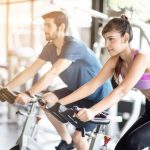
A more personalized approach to exercise may be necessary, claims a new study that found fat burning varied widely between individuals. Even worse, this rate often does not align with the “fat-burning zone” on commercial exercise machines, the researchers added. Clinical exercise testing, a diagnostic procedure to measure a person’s physiological response to exercise, may be a more useful tool, the study authors said. “People with a goal of weight or fat loss may be interested in exercising at the intensity which allows for the maximal rate of fat burning. Most commercial exercise machines offer a ‘fat-burning zone’ option, depending upon age, sex and heart rate,” said lead study author Hannah Kittrell. She is a PhD candidate at Icahn Mount Sinai in the Augmented Intelligence in Medicine and Science laboratory, in New York City. “However, the typically recommended fat-burning zone has not been validated, thus individuals may be exercising at intensities that are not aligned with their personalized weight-loss goals,” Kittrell said in a Mount Sinai news release. The researchers noted that the term FATmax is sometimes used to represent the exercise intensity and associated heart rate at the time when the body reaches its highest fat-burning rate during aerobic exercise. Fat is a significant fuel source at this point. For the study, the investigators compared heart rate at FATmax, as measured during a clinical…  read on >  read on >

The link between pro football and the risk for a neurodegenerative disease called chronic traumatic encephalopathy (CTE) is well known, and now a new study suggests that football may also up the risk for Parkinson’s disease, even among past high school and college players. “Parkinson’s disease has been commonly reported in boxers, but we have not explored this link in great detail in football,” said study author Michael Alosco, an associate professor of neurology at Boston University Chobanian & Avedisian School of Medicine. “This is additional evidence that shows a link between football and later-in-life neurologic problems.” The common denominator is likely blows to the head. Parkinsonism is an umbrella term for a group of neurological disorders that result in movement problems. Parkinson’s disease is the most common cause. Symptoms include tremors, stiffness, a shuffling gait and slow movement. Exactly what causes Parkinson’s disease is not fully understood, but a combination of genetic and environmental factors likely play a role, according to the Michael J. Fox Foundation for Parkinson’s Research. For the study, researchers evaluated 1,875 athletes, including 729 men who played football, predominantly at the amateur level, and 1,146 men who played other sports. All of the participants were enrolled in Fox Insight, an online study of people with and without Parkinson’s disease sponsored by the Michael J. Fox Foundation. Participants who did not…  read on >  read on >
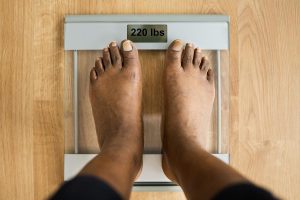
If you’re one of the millions of folks bent on racking up at least 10,000 steps a day, read on. A new study finds that heart health starts to improve with as few as 2,300 steps a day. The research also indicates your risk of dying from any disease starts to decrease with only about 4,000 daily steps. However, the more daily steps you get, the bigger the benefit becomes, the study also found. “Ten thousand steps per day is, in fact, still a correct way of thinking if we take into account the most pronounced [death] reduction,” said study author Dr. Maciej Banach. He is a professor of cardiology at the Medical University of Lodz in Poland, and an adjunct professor at the Center for the Prevention of Cardiovascular Disease at Johns Hopkins University School of Medicine. Ten thousand steps equates to about 4-5 miles of walking, experts say. For the study, researchers analyzed 17 prior studies involving about 227,000 people. They were followed for roughly seven years. Adults over age 60 saw risk of death reduced by 42% if they clocked between 6,000 and 10,000 steps a day. Among younger adults, there was a 49% reduction when they walked between 7,000 and 13,000 steps a day, the study showed. “Every increase of steps by 1,000 steps/day is associated with a 15% reduction in…  read on >  read on >

It seems obvious that texting and walking can be a dangerous duo, but now a new Australian study offers solid evidence of the dangers. Emergency room doctors Dr. Michael Levine and Dr. Matthew Harris, who were not involved in the study, weren’t surprised by the findings. “I think we’ve had, this summer, several people who either have been distracted while walking and have been hit by a car or been hit by a bicycle,” said Harris, from Northwell Health in New Hyde Park, N.Y. “I’ve definitely seen people stepping off curbs when they were not supposed to, not seeing cars come… because they were too busy looking at their phone when they should have realized where the sidewalk ended,” added Levine, from UCLA Health. “So, I’ve seen all different permutations of people getting injured from texting and walking across the street.” For the study, Australian researchers recruited 50 students from the University of New South Wales and had them go through four exercises. One was to text while sitting, another was to walk without texting, another was to have them walk and text, “The quick brown fox jumps over the lazy dog,” and the last one was to have students walk and text the same message while going through a walkway specifically designed by one of the scientists to have tiles slip out of place.…  read on >  read on >

Patients being treated for ovarian cancer often experience peripheral neuropathy, a side effect from their chemotherapy that can cause both pain and numbness for months, or even years. Now, a new study suggests that six months of aerobic exercise may ease this unpleasant side effect. “The results from this trial hold the potential to transform supportive care for ovarian cancer survivors by offering a new approach to managing CIPN [chemotherapy-induced peripheral neuropathy],” said senior study author Leah Ferrucci, an assistant professor of epidemiology at the Yale School of Public Health and a member of Yale Cancer Center. “These findings provide compelling evidence that a structured, home-based aerobic exercise program can significantly improve CIPN in ovarian cancer survivors who have completed chemotherapy,” Ferrucci said in a Yale news release. The structured aerobic exercise intervention in the study had already been found to improve physical health-related quality of life. For this new research on patients with ovarian cancer who received chemotherapy, the investigators evaluated the impact of the exercise program and compared it to a control group of patients not in the exercise program. Patients in the exercise intervention arm of the study had a reduction of 1.3 points in CIPN symptoms at the end of the six-month program. Those in the control group, who only received weekly health education phone calls, had a minor increase in…  read on >  read on >

Patients with a type of multiple sclerosis (MS) known as relapsing-remitting MS could have less fatigue if they got more active and were in better physical shape, according to new research. The study also found that a lower disability rate was also associated with less fatigue. “The findings are interesting and support previous studies very well,” said corresponding author Marko Luostarinen, a doctoral researcher at the University of Eastern Finland, in Kuopio. “Patients with MS should find a suitable form of exercise, taking into account their disability, which maintains their functional capacity and reduces fatigue.” In relapsing-remitting MS (RRMS), patients experience periods of new symptoms or relapses that are followed by quiet periods of remission that can last months or even years. Fatigue is a common MS symptom. The aim of the study was to investigate the connection between fatigue and disability in patients with RRMS. The study used several methods to gauge this, including measures of fatigue, disability and physical activity. Patients whose level of disability, as assessed by a measure called the expanded disability status scale (EDSS), was moderately low (0 to 2.5) had a higher level of fatigue than healthy participants with whom they were compared, the study found. At the same time, they had less fatigue than patients whose disability was higher (EDSS of 3 to 5.5). The researchers found a…  read on >  read on >

Yoga is known for its benefits to both the mind and body. And a gentle form of yoga may be an ideal early intervention technique for older women at risk of Alzheimer’s disease, new research suggests. In a small study involving kundalini yoga, participants reported that its stress-relieving effects translated to more efficient memory. “Women tend to practice yoga more readily than men. And I’ve done other studies previously in people, older adults with mild cognitive [mental] impairment and in caregivers with similar interventions,” said Dr. Helen Lavretsky, the lead psychiatrist on the study. “We are focusing now on women who are not as impaired as in my previous study, but still at risk for cognitive decline. And the idea is to get to the level where doing yoga would prevent future cognitive decline and development of Alzheimer’s disease,” said Lavretsky, a professor-in-residence at the University of California, Los Angeles. Kundalini yoga involves chanting, singing, breathing exercises, meditation and gentle poses with the aim of increasing awareness in the mind and body. Previous scientific research has found that yoga can help regulate blood pressure and increase cardiorespiratory fitness, as well as benefit the hippocampus, or the region in the brain that is associated with memory. In this study, scientists examined the effects of kundalini yoga versus memory enhancement training (MET) on the hippocampus in 22…  read on >  read on >

Golfing may be a great way to get outdoors and enjoy the pleasures of a classic summer pastime. But a new study warns that walking the greens for hours on end without adequate sun protection may notably increase the risk for skin cancer. Researchers in Australia found that more than one-quarter of golfers in that country have been diagnosed with skin cancer at some point, making Aussie players 2.4 times more likely to get the disease than their non-golfing peers. “Our previous research, and that of others worldwide, has demonstrated the positive impact of golf on people’s health, including physical, mental and cognitive well-being,” said study lead author Brad Stenner. At the same time, “Australia is well known for its high skin cancer rates, and frequency and intensity of sun exposure,” said Stenner, a lecturer in health and human performance at the University of South Australia in Adelaide. However, “the cumulative effects of sun exposure do increase the risks of skin cancer, regardless of where you live,” he added. Knowing this, golfers should more actively strive to protect themselves, Stenner and other experts said. In the new research, just 7% of those in the general public reported ever having a skin cancer diagnosis versus 27% of the golfers. This suggests golfers face a nearly 250% greater risk of developing skin cancer than non-players, the study…  read on >  read on >

First Lady Jill Biden gains at least some of her inner strength by working on her physical strength. Featured in the September issue of Women’s Health magazine, Biden, 72, talks about waking at 5:45 a.m. most days to fit in a workout. That includes jogging on the White House driveway, bicycle rides when getting away to the family beach home in Delaware and spin classes while she’s traveling. Biden also rides a Peloton bike and takes barre classes. “I need to be with myself and find inner strength so I can be strong for everyone else,” Biden said in the Women’s Health interview. Some of Biden’s workouts are at SoulCycle studios in Washington, D.C., but she also squeezes in workouts while traveling. Those workouts have included taking a spin class with Akshata Murty, the wife of British Prime Minister Rishi Sunak, during her May trip to London for King Charles III’s coronation, the Associated Press reported. According to the AP, during a trip to the White House a month later, Sunak told President Joe Biden that “I gather our wives have even started to take spin classes together.” Jill Biden has always exercised, starting with roller skating as a kid, ice skating in college and swimming while pregnant with her daughter, Ashley. When Ashley was a teen, Biden would run, she wrote in her memoir.…  read on >  read on >

Taking the stairs rather than an elevator. Raking leaves. Toting heavy grocery bags. Pushing a vacuum. Playing hard with your kids or pets. Short bursts of vigorous physical activity during everyday events like these — most lasting less than a minute — can help lower cancer risk even in people who don’t like to exercise, a new study finds. People who got around 3.5 minutes of vigorous intermittent lifestyle physical activity (VILPA) each day reduced their overall cancer risk by about 18%, said researcher Emmanuel Stamatakis, a professor of physical activity, lifestyle and population health at the University of Sydney in Australia. More minutes produced even more cancer protection, particularly for cancers already known to respond well to physical activity. “For people who find it hard to initiate or adhere to an exercise program, our study suggests that doing a few short bursts of intense activity as the day goes by may be beneficial for long-term health,” Stamatakis said. The study, published online July 27 in JAMA Oncology, showed that non-exercisers can still benefit from getting off the couch throughout the day, said Erika Rees-Punia, a senior principal scientist of epidemiology and behavioral research with the American Cancer Society. “We often say that something is better than nothing in terms of physical activity, and this is really more evidence for that,” Rees-Punia said. “It turns…  read on >  read on >