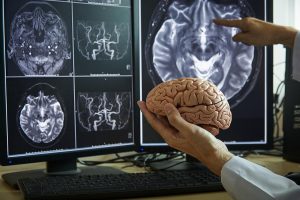








It’s long been thought that working out helps a person stay sharp, but a new review argues there’s little solid scientific evidence for the mental benefits of physical exercise. Individual clinical trial results have tended to support the idea that regular exercise helps maintain brain health. But a combined review of 109 trials involving more than 11,000 healthy folks found evidence for that notion is weak overall, according to findings published March 27 in Nature Human Behavior. “There is little evidence for a positive relationship between regular physical exercise and improved cognition in healthy people,” said lead researcher Luis Ciria, a postdoctoral researcher with the Mind, Brain and Behavior Research Center at the University of Granada in Spain. “Our findings suggest caution in claims and recommendations linking regular physical exercise to cognitive benefits in the healthy human population until more reliable causal evidence accumulates,” he added. The new evidence review focused on clinical trials, which are considered the gold standard for assessing the effectiveness of drugs or therapies. Evidence for the physical benefits of exercise has steadily accumulated over the last century, Ciria said, which suggests working out might benefit the brain as well. “If physical exercise positively affects so many physiological systems, why wouldn’t it have a beneficial effect on the brain?” he said. During the last 50 years, there has been a steady…  read on >  read on >
A new study hones in on what part of your brain controls walking. Researchers discovered that two main regions of the cortex were activated as people moved in various ways through an environment. But the occipital place area (OPA) didn’t activate during crawling, while the second region, the retrosplenial complex (RSC), did. RSC supports map-based navigation, according to the researchers. This involves finding the way from a specific place to some distant, out-of-sight place. Study co-author Daniel Dilks, of Emory University in Atlanta, has theorized that OPA supports visually guided navigation, such as moving through the kitchen without bumping into things. His theory has been controversial, in part because the OPA doesn’t seem to support visually guided navigation until around age 8 and yet young kids still manage to walk through their homes before that and to crawl even earlier. “We asked ourselves, ‘Does the OPA come on early, but just mature slowly?’” Dilks said. “Or does crawling use an entirely different system?” If OPA just matured slowly, then it should be activated by both walking and crawling, Dilks reasoned. To test this theory, he and his team recorded videos from the perspective of someone walking through an environment. They then made similar videos from the perspective of someone crawling through that same environment. The researchers also patched together random shots of the videos and…  read on >  read on >
Exercise can help improve movement-related symptoms for people who have Parkinson’s disease, a new review finds. And any type of structured exercise is better than none, researchers added. The findings were published recently in the Cochrane Reviews. “Parkinson’s disease cannot be cured, but the symptoms can be relieved, and physiotherapy or other forms of exercise may help, too. Until now, it has been unclear whether some types of exercise work better than others,” said Elke Kalbe, a professor of medical psychology at the University of Cologne in Germany. “We wanted to find out what exercise works best to improve movement and quality of life,” she said in a journal news release. Parkinson’s disease is a progressive disorder of the nervous system that mostly affects people over 60. Symptoms can include trembling, stiffness, slowness of movement, balance issues and lack of coordination. Patients may also have emotional and mood problems, fatigue, sleep problems and thinking difficulties. In the new review, published researchers analyzed 156 randomized controlled trials, comparing exercise with no exercise and with different types of exercise. The trials included nearly 8,000 people from around the world, which the authors said made this the largest and most comprehensive systematic review on the effects of physical exercise in people with Parkinson’s. The reviewers found that physical exercise including dance, water exercise, strength and resistance exercise, endurance…  read on >  read on >

Problems walking and talking or thinking at the same time might be a warning sign of impending dementia, a new study suggests. Being unable to juggle two tasks simultaneously has been recognized as a sign of mental (or “cognitive”) decline after age 65, but this research shows that the ability actually starts to fall off in middle-age. The finding could spur calls for earlier screening, researchers say. “The ability to maintain walking performance while performing another task, a common scenario of walking in daily life, starts to decline in the middle of the sixth decade of lifespan,” said lead researcher Junhong Zhou. He’s an assistant scientist at the Hinda and Arthur Marcus Institute for Aging Research at Harvard Medical School, in Boston. The decline of dual-task walking can lead to falls and injuries. Zhou said it’s closely linked to thinking skills and underlying brain function. “This outcome would be a marker for brain health and, in turn, taking interventions that target cognitive function may help preserve and enhance the dual-task walking, reducing the risk of dementia in later life,” Zhou said. With advancing age, the brain’s ability to handle multiple tasks at the same time is diminished, he noted. And the ability to dual task while walking drops off by age 55 — up to a decade sooner than what is traditionally defined as “old…  read on >  read on >

If you feel like the pandemic made you a permanent couch potato, a new study shows you’re not alone: Well after lockdown measures were relaxed, many Americans were still taking fewer steps each day. Researchers found that, on the whole, Americans’ daily step count plummeted at the beginning of the pandemic in 2020 — an understandable decline that prior studies have charted. However, based on the new findings, people had not yet bounced back as of December 2021: U.S. adults were still taking around 700 fewer steps per day, compared to their pre-pandemic norm. “It was really surprising to see that kind of impact over a year-and-a-half into the pandemic,” said senior researcher Dr. Evan Brittain, a heart disease specialist at Vanderbilt University Medical Center in Nashville, Tenn. Physical activity is key in staving off weight gain and keeping up cardiovascular fitness levels — which, in turn, lowers the risk of developing serious health conditions like type 2 diabetes and heart disease. So any sustained drop in an adult’s physical activity is concerning, said Dr. Carl “Chip” Lavie, medical director of cardiac rehabilitation and prevention at John Ochsner Heart and Vascular Institute in New Orleans. Lavie, who was not involved in the study, said it adds to research documenting the nation’s collective drop in step count since the pandemic’s start. In some cases, he noted,…  read on >  read on >

As the weather warms, folks are bringing out their bicycles for a ride. That’s great, but it’s important to be ready for a safe biking season: The national rate of bike accidents is two fatal crashes and 2,630 accidents requiring emergency room visits every week. Angela Mountz, community car seat safety program coordinator at Penn State Health Children’s Hospital in Hershey, offers some tips for parents to help their young cyclists avoid serious childhood riding accidents. “I had a cousin who was hit by a car [while on a bike],” Mountz said in a hospital news release. Mountz’s cousin didn’t die, but suffered from the injuries for the rest of his life. “Kids go around thinking, ‘It’s not going to happen to me,’” she said. “But it’s so important to protect yourself.” A helmet is at the very top of her list. The odds that a child will suffer a serious injury if involved in a crash while biking go up 40% if they’re not wearing a helmet, Mountz said. Parents should also wear a helmet while riding: “We need to teach them by example,” Mountz said. Aim for safety over style, Mountz added. Look for a sticker from the American National Standards Institute or the Snell Memorial Foundation to be sure your child’s helmet is certified. Check your kids’ helmets every two months to…  read on >  read on >

It’s well-established that American football players can suffer significant brain impacts as they age. Now, new research shows that elite European soccer players are also more likely than the average person to develop dementia. Men in the Swedish top soccer division between 1924 and 2019 were 1.5 times more likely to develop neurodegenerative disease than those in a control group. The study of more than 6,000 players found they had an increased risk of developing Alzheimer’s disease and other dementias. They did not, however, have any increased risk for motor neuron disease, such as amyotrophic lateral sclerosis (also known as ALS, or Lou Gehrig’s disease). And they had even lower risk of Parkinson’s disease than a control group matched by age, sex and region. Unlike their outfield counterparts, goalkeepers did not have an increased risk of dementia. This supports the theory that heading the ball increases the risk, according to the report published March 16 in The Lancet Public Health. “Goalkeepers rarely head the ball, unlike outfield players, but are exposed to similar environments and lifestyles during their [soccer] careers and perhaps also after retirement,” said Dr. Peter Ueda, an assistant professor at Karolinska Institute in Sweden. “It has been hypothesized that repetitive mild head trauma sustained through heading the ball is the reason [soccer] players are at increased risk, and it could be that…  read on >  read on >

Practicing yoga might help older adults become a little surer on their feet, a new research review suggests. The review, of 33 small clinical trials, found that older adults who participated in yoga programs typically gained some lower-body strength and boosted their walking speed. Experts said the findings suggest that yoga might help older adults manage some of the strength and movement limitations that can come with age. At the same time, it’s hard to give specific advice based on the research that’s been done, according to lead researcher Dr. Julia Loewenthal, a geriatrician at Brigham and Women’s Hospital in Boston. The trials varied in the groups they studied, she said — sometimes healthy older adults living at home, sometimes nursing home residents, sometimes people with health conditions like knee arthritis or Parkinson’s disease. The studies also differed in the style of yoga they used, Loewenthal said. Yoga is an ancient practice that blends physical postures, breathing practices and meditation. In the modern world, though, yoga classes vary widely in style — with some favoring a vigorous physical practice that requires people to move quickly and get up and down from the floor. For seniors looking to start a yoga practice, Loewenthal said that an Iyengar-based class could be a good fit: That style of yoga focuses on good form in the poses, can be…  read on >  read on >

New moms who live on tree-lined streets may be somewhat less vulnerable to postpartum depression, according to a new study — the latest to link “green space” to better mental health. The study, of medical records from more than 415,000 new mothers, found that those living in urban areas with more tree coverage had a lower risk of being diagnosed with postpartum depression, versus women from less-green neighborhoods. The link was not explained by factors like household income, or mothers’ race or education level. Experts said the findings do not prove that living among trees lowers the likelihood of postpartum depression. But they do add to a body of research suggesting that having green space within sight is a boon for people’s mental well-being. The study also points to one reason: physical activity. It’s a lot easier to go out for a walk when you live in a tree-lined neighborhood, with its built-in shade and better air quality. And for new mothers, that may be especially important, said senior researcher Jun Wu, a professor at the University of California, Irvine. They have little time and are likely exhausted, Wu said, and getting to the park, especially if they have to drive, might be out of the question. Stepping outside into the fresh air and shade is much more doable, she suggested. Kathleen Wolf is a…  read on >  read on >

New research offers up some good news for diehard marathon runners: You don’t necessarily have to give up running if you are experiencing hip or knee pain. Contrary to widespread opinion, running marathons does not increase your risk for developing hip or knee osteoarthritis, the wear and tear form of the disease, a new study of seasoned Chicago marathoners showed. “You don’t develop knee or hip osteoarthritis simply because of how fast you run or how many miles you put on your body,” said study author Dr. Matthew James Hartwell, an orthopedic surgery sports medicine fellow at the University of the University of California, San Francisco. So, what does increase a runner’s risk for hip or knee arthritis? Basically, the same things that up these risks in non-marathoners, Hartwell said. This includes advancing age, family history of hip or knee arthritis, and previous injuries or knee surgery, as well as higher body mass index (BMI), a measure of body fat based on height and weight. For the study, more than 3,800 Chicago marathoners (mean age: nearly 44) answered questions about their running history, including number of marathons, number of years spent running, and average weekly mileage. They also answered questions about known risk factors for knee and hip arthritis. Participants completed an average of 9.5 marathons, ran 27.9 miles per week, and had been running…  read on >  read on >