







A lot of people wear watches that count their every step as they try to move more. Now, a new study finds that getting more of those steps each day, along with moderate-to-vigorous physical exercise, could cut the risk of dementia and thinking impairments for women. For women aged 65 or older, each additional 31 minutes per day of moderate-to-vigorous physical activity was associated with a 21% lower risk of developing mild cognitive (thinking) impairment or dementia, according to the study led by researchers at the University of California, San Diego (UCSD). The risk was 33% lower with each additional 1,865 daily steps. “Given that the onset of dementia begins 20 years or more before symptoms show, early intervention for delaying or preventing cognitive decline and dementia among older adults is essential,” said senior study author Andrea LaCroix, a professor at UCSD’s Herbert Wertheim School of Public Health and Human Longevity Science. Much of past research on movement and sitting in relation to mild cognitive impairment and dementia has used self-reported measures rather than devices, noted first study author Steve Nguyen, a postdoctoral scholar at the School of Public Health. For this study, the researchers included data from 1,277 women who were in Women’s Health Initiative ancillary studies that looked at memory, physical activity and heart health. Study participants wore research-grade accelerometers (a device that…  read on >  read on >
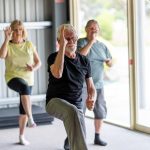
A good physical workout benefits an older brain. So does socializing. Put those two together and the payoff may be even bigger. Researchers in Japan found that link in a new study that looked at exercising solo and in a group. “Exercise is manageable for many older people, and we saw cognitive benefits from it compared with those who don’t exercise,” said study senior author Tomohiro Okura, a professor at the University of Tsukuba in Japan. “But it’s even more noteworthy that we found exercise’s benefits rise — 14.1 percentage points in our study — when performed with others and at least twice a week,” Okura added in a university news release. Starting in 2017, the study collected data on nearly 4,400 older adults for four years in a city 62 miles north of central Tokyo. The investigators analyzed the data to find the relation between cognitive (or mental) decline; exercise in general; and exercise with others. People who exercised alone twice or more weekly decreased their risk of developing impaired thinking or learning skills by more than 15%. Those who exercised with others twice or more weekly showed about a 29% decrease. Exercise provides other physical and mental benefits, such as reducing chronic diseases, including high blood pressure and diabetes, the study authors said in background notes. Socializing is known for reducing development of…  read on >  read on >
Even short bouts of light exercise can help the millions of people with knee osteoarthritis reduce pain and improve their range of motion. Knee osteoarthritis, the wear-and-tear form of the disease, occurs when the cartilage between your bones breaks down, causing pain, stiffness and swelling. Researchers in a new study compared high-dose and low-dose exercise in 189 people with knee osteoarthritis. Everyone exercised three times a week for 12 weeks. Exercises included indoor cycling and various lower body exercises such as de-loaded squats and knee extensions. De-loaded exercises use bands or pulleys to take weight off the knee joint and minimize pain. Folks in the high-dose group performed 11 exercises in 60- to 90-minute sessions. Folks in the low-dose exercise group performed five exercises during 20- to 30-minute sessions. The result? Everyone showed improvements on a standard scale measuring knee osteoarthrosis pain and function at three, six and 12 months. People in the high-dose group did show greater improvements in knee function during sports and recreation at six months, suggesting that a high-dose program may be better for athletes and weekend warriors. The study, led by Wilhelmus Johannes Andreas Grooten, a physiotherapist at the Karolinska Institute in Stockholm, was published Jan. 24 online in the Annals of Internal Medicine. Outside experts are quick to point out that the best exercise plan for someone with knee…  read on >  read on >

It’s no secret that athletic endurance and strength go hand-in-hand with a healthy heart. “Exercise strengthens the heart muscle, enabling it to pump a greater volume of blood with each heartbeat,” said Dr. Deepak Bhatt, editor of the Harvard Heart Letter, in a recent Q&A. The enlarged heart muscles that athletes may develop are also the hallmark of a condition known as athletic heart syndrome (AHS), often called “athlete’s heart,” according to the Cleveland Clinic. What is athletic heart syndrome? When a person does vigorous-intensity exercise for more than an hour a day on the majority of days, changes in the heart may occur, according to the Cleveland Clinic. One of the main changes is thickening of the left ventricle wall. Another marker of AHS is that the space in your left ventricle gets larger. A study of Olympic athletes published in Circulation: Cardiovascular Imaging revealed that AHS shows up differently in the hearts of women and men, although electrical and muscular size changes occurred in the hearts of both. Compared to men, women in the study had relatively larger increases in the size of their right and left ventricle cavities. The absolute dimensions of these cavities in women were smaller than those of men. An electrical measurement called T-wave inversion (which can indicate the presence of heart trauma or disease) was also more common…  read on >  read on >

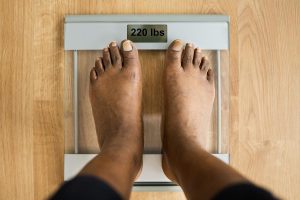
When it comes to picking the best exercise to lose weight, there is no one right answer. That’s because the right answer is variety, mixing and matching types of exercise to keep the body guessing and improving. “The body adapts to the demands we put on it,” said Dr. Russell Camhi, who works in primary care sports medicine for Northwell Health’s Orthopaedic Institute in East Meadow, N.Y. “If we do the same exercise regimen over and over, results are bound to plateau,” he explained. “Now this doesn’t mean you have to change exercises every day or every week, but a little variety will help the body change and grow.” The key to weight loss is a blend of exercise and nutrition, with the latter responsible for about 80% of the heavy lifting, according to Camhi. It’s important to reduce calories while increasing physical activity, according to the Mayo Clinic, which recommends cutting about 500 to 750 calories a day to lose 1.5 pounds per week.` Though diet plays a bigger role than exercise, physical activity can help with weight maintenance, as well as counter loss of bone density and muscle mass, the Mayo Clinic noted. A high amount of physical activity would be necessary to lose weight unless also adjusting diet, according to the U.S. Centers for Disease Control and Prevention. It’s not clear exactly…  read on >  read on >

Some college athletes take longer to recover from a concussion, but a new study offers them some good news. They may still be able to return to play — after one extra month of recovery, researchers report Jan. 18 in the journal Neurology. “Although an athlete may experience a slow or delayed recovery, there is reason to believe recovery is achievable with additional time and injury management,” said study author Dr. Thomas McAllister, from Indiana University School of Medicine. “This is an encouraging message that may help to relieve some of the discouragement that athletes can feel when trying to return to their sport. While some athletes took longer than 24 days to return to play, we found that three-quarters of them were able to return to sports if given just one more month to recover,” McAllister said in a journal news release. The study included 1,751 college varsity athletes who had concussions diagnosed by their team physician. About 63% of the athletes were men who primarily played football, soccer or basketball. The women primarily played soccer, volleyball or basketball. Participants were evaluated multiple times: within six hours of their injury; one or two days later; after being free of symptoms; after being cleared to return to play, and at six months. The athletes reported their symptoms daily for up to 14 days to medical…  read on >  read on >

Winter may feel like a time for hibernation, but it’s important for seniors to safely keep up their hobbies and physical activity in the cold weather. “It’s important to get outside as much as possible, whether it’s temperate or even if it’s colder, as long as it’s safe to do so,” said Dr. Angela Catic, an associate professor in the Center on Aging at Baylor College of Medicine, in Houston. “If it’s cold, bundling up and getting outside is good for your spirit and good for you physically,” she said in a Baylor news release. Continue walking, biking or being in nature, Catic suggested, while being cautious of snow or icy conditions. But don’t pick up a new active sport like skiing or snowboarding, unless that was already a hobby, she cautioned. Here are some of her tips: If you typically garden outside, grow some indoor plants in the winter. Plan for the upcoming growing season by perusing gardening catalogs and making a springtime plan. Explore indoor activities, such as reading, doing puzzles, playing games, crafting or knitting. Go to concerts, visit museums and take road trips. If the thought of picking up a new hobby post-retirement seems daunting, reflect on activities you enjoyed in the past before you were focused on work. Check out adult education programs in your area. They may offer a…  read on >  read on >

Look at a bodybuilder who has bulked up with bulging muscles, and it might not seem that lifting weights can shed pounds. But first impressions can be deceiving. Instead, experts say, building muscle can indeed be one way to transform your body and lose weight. “Weightlifting activates your large muscle groups and, when done appropriately, can burn more calories than steady state cardio,” said Dr. Russell Camhi, who works in primary care sports medicine for Northwell Health’s Orthopaedic Institute in Smithtown, N.Y. Still, weightlifting on its own is not the key to weight loss. At least 80% of weight loss is through nutrition, Camhi said. “No matter what exercise program you choose you will not lose weight if you are not monitoring your intake and properly fueling your body,” Camhi said. A person lifting weights to gain muscle mass should eat a high-protein diet, Camhi said. The goal should be 1 gram of protein per pound of body weight. People who are already fit and trying to gain muscle may not lose weight, but someone who is overweight or obese will, Camhi said. “Once you lose a good portion of fat and become more fit then, yes, the weight loss will plateau but will be replaced with muscle growth and increased fitness,” Camhi said. “At that point, be less concerned about the number on the…  read on >  read on >

Millions of adults spend too much time at a desk or in front of a screen, and experts have long advised them to sit less, move more. But if lower blood pressure, lower blood sugar and a mood boost are the goals, what’s the bare minimum of movement that will get the job done? Apparently just five minutes of walking every 30 minutes. That’s the finding of a small, new study that compared the benefits of five exercise “snacks” — small bursts of exercise spread out during the day. “We’ve found in our past research that, on average, adults in the U.S. spend over three-quarters of their day sedentary, or about 11 to 12 hours a day,” said study co-author Keith Diaz. He directs Columbia University’s Exercise Testing Laboratory at the Center for Behavioral Cardiovascular Health, in New York City. “Previous research has shown that people who sit for hours on end develop chronic diseases — including diabetes, heart disease, dementia and several types of cancer — at much higher rates than people who move throughout their day,” Diaz said. They also face a higher risk of early death. The bottom line: “If you have a job or lifestyle where you have to sit for prolonged periods, we suggest taking a five-minute walking break every half-hour. This one behavior change could reduce your health risks…  read on >  read on >

Six minutes of high-intensity exercise might prolong the lifespan of a healthy brain, perhaps delaying the start of Alzheimer’s and Parkinson’s diseases, a new, small study suggests. Researchers found that short but intense cycling increased the production of a protein called brain-derived neurotrophic factor (BDNF), which is essential for brain formation, learning and memory. It’s thought that BDNF might protect the brain from age-related mental decline. “BDNF has shown great promise in animal models, but pharmaceutical interventions have thus far failed to safely harness the protective power of BDNF in humans,” said lead study author Travis Gibbons, from the University of Otago in New Zealand. “We saw the need to explore non-pharmacological approaches that can preserve the brain’s capacity which humans can use to naturally increase BDNF to help with healthy aging,” Gibbons said. The report was published Jan. 11 in the Journal of Physiology. BDNF promotes the brain’s ability to form new connections and pathways, and also helps neurons survive. Animal studies have shown that increasing the availability of BDNF boosts cognitive performance, such as thinking, reasoning or remembering. For this study, the researchers wanted to look at the influence of fasting and exercise on BDNF production in humans. Working with a dozen men and women, the investigators compared fasting, low-intensity cycling for 90 minutes, six-minute high-intensity cycling, and a combination of fasting and…  read on >  read on >