









All Sauce from Weekly Gravy:

Prior studies have found that statin meds can help lower liver cancer risks, and new research suggests that at least one non-statin cholesterol drug can do the same. A team led by Katherine McGlynn of the U.S. National Cancer Institute looked at the health histories of almost 19,000 people tracked by the U.K.’s Clinical Practice Research Datalink.  About 3,700 of them developed liver cancer, and their medication use was compared to almost 15,000 others who did not get the disease. McGlynn’s team linked use of a non-statin form of cholesterol-lowering meds, called cholesterol absorption inhibitors, to 31% lower odds of developing liver cancer. Their findings were reported July 29 in the journal Cancer. The link held when the researchers accounted for other risk factors such as diabetes and liver disease status.  The study also re-confirmed that statins lower liver cancer risk by 35%. But the use of three other medicines used to lower cholesterol — fibrates, omega-3 fatty acids and niacin — did not seem to affect liver cancer risk, the research showed. Risks attributed to another drug type, bile acid sequestrants, were inconclusive. “As few studies have examined the effects of non-statin cholesterol-lowering drugs on liver cancer risk, the results of our study require replication in other populations,” McGlynn said in a journal news release. “If our findings are confirmed in other studies, however,…  read on >  read on >

Loneliness has been a major concern in America, particularly in the wake of the social isolation imposed by the COVID-19 pandemic. But friendships are not in decline in the United States, a new study has found. An American adult has an average of four to five friends, similar to numbers reported in previous research from 1970 to 2015, researchers reported July 30 in the journal PLOS One. Only 2% of people describe themselves as friendless, which also is in line with data from prior years. However, many people say they’d like to spend more time with friends or have higher quality friendships, researchers found. “Americans long for greater closeness with friends; although over 75% were satisfied with the number of friends they had, 42% felt they were not as close to their friends as they would like,” wrote the research team led by Natalie Pennington, an assistant professor of communication studies at Colorado State University in Fort Collins. For the study, researchers surveyed nearly 6,000 American adults about their friendships and well-being, as part of an ongoing multi-year research project. The data showed that people often talk with friends in person, though texting and phone calls are also common. Overall, results show that the ongoing project could shed new light on friendship and well-being, researchers said. For example, they plan to consider the varying definitions…  read on >  read on >

Puttering around the home or office isn’t enough to protect a person from stroke, a new study says. People need to be more active to lower their stroke risk, either by exercising in their free time or biking or walking to work, results show. “Physical activity during leisure time and as transportation is becoming increasingly important now that many jobs and domestic activities are becoming more sedentary,” lead author Dr. Adam Viktorisson, a researcher at Sahlgrenska Academy at the University of Gothenburg, Sweden, said in a news release. For the study, researchers analyzed health data for more than 3,600 people in Sweden who were tracked for about two decades. Overall, high levels of physical activity in leisure time were tied to a 66% lower risk of dying from a stroke or suffering a debilitating stroke, researchers found. Those who regularly engaged in moderate-intensity exercise had a 46% lower risk of stroke, researchers found. Examples include brisk walking, water aerobics, slow bicycling, ballroom dancing or playing doubles tennis. Regular high-intensity exercise lowered risk even more, dropping it by 53%. Examples include running, swimming laps, jumping rope, fast bicycling or aerobic dancing. Further, people who bike or walk to work had a 31% lower risk of stroke, researchers found. However, household physical activity or time spent at work was not associated with any decrease in stroke. “How…  read on >  read on >

U.S. gymnast Simone Biles vowed to continue her quest for Olympic gold after injuring her calf in a qualifying round at the Paris games. Meanwhile, a thigh injury forced French soccer captain Wendie Renardout of competition in a loss to Canada. And the L.A. Clippers’ Kawhi Leonard was forced to sit out the games entirely due to inflammation in his right knee, which was injured twice before. While Olympic athletes can make their sports look effortless, constant overuse of muscles and tendons can lead to big-time injuries that do more than cost them a medal, according to an orthopedic expert from Baylor College of Medicine. And the risks run through all sports — from gymnastics and distance running to swimming. Biles’ comeback after withdrawing from the 2020 Tokyo games has been a major focus of U.S. fans during the 2024 games. She’s competing in four events — vault, floor, beam and all-around.   “Gymnasts are subjected to tremendous physical demands, and the repetitive nature of their trainings and performances increase the risk of injuries throughout the body,” said Dr. Jet Liu, an assistant professor of orthopedic surgery at Baylor in Houston, who detailed the most common injuries in popular Olympic sports.  For gymnasts, knee sprains, strains and torn ACL ligaments can result from high-impact jumps, flips and dismounts, he said. Ankle injuries are a common…  read on >  read on >

The kids are not alright. New data shows a troubling 8% annual increase in the number of American children ages 8 to 12 who died by suicide, with the sharpest increase seen among girls. Suicide has now become the fifth leading cause of death among both male and female preteens, report a team led by Donna Ruch, of Nationwide Children’s Hospital in Columbus, Ohio. Ruch works at the hospital’s Center for Suicide Prevention and Research. Her team published its findings July 30 in the journal JAMA Network Open. Rising rates of suicides among children have set off alarm bells for experts in recent years. “In 2021, the National Institute of Mental Health convened a research roundtable series to address the rising rates of suicides in preteens, defined as youths aged 8 to 12 years,” Ruch’s group noted. They said that, until now, there’s been little good data on suicides among preteens. To help remedy that, the Ohio group looked at data for 2001 through 2022 from a major federal online database that lists the underlying cause of death for U.S. preteens. Overall, 2,241 preteens are known to have died by suicide during the more than two decades covered by the database. Initially, there was a encouraging downward trend in these deaths between 2001 and 2007, Ruch’s group noted. However, beginning in 2008, that trend reversed.…  read on >  read on >

Three out of five young people who die by suicide don’t have any prior mental health diagnosis, a new study finds. People are missing the telltale signs that children, teens and young adults are troubled in ways that put them at risk for suicide, researchers said. “Our findings point to the critical need to increase equitable access to mental health screening, diagnosis and treatment for all youth,” said researcher Dr. Jennifer Hoffman, an emergency medicine physician with the Children’s Hospital of Chicago. The results also emphasize the need for safe gun storage, given how impulsive young people can be. There had been no signs of mental troubles in 2 of 3 suicides involving a gun, the most common method among young people in this study, researchers found. An estimated 22.6 million U.S. children live in households with firearms, and 4.5 million live in homes where guns are put away loaded in unlocked drawers and cabinets, researchers said. “To reduce the risk of youth suicide by firearms, counseling is needed to encourage parents to store firearms in the home safely. These messages should be delivered in community and school settings, in addition to doctors’ offices,” Hoffmann said in a hospital news release. “Secure storage laws, also known as child-access prevention laws, have also been demonstrated to reduce firearm suicide rates, and more states need to enact…  read on >  read on >

Smokers with diabetes or obesity who take semaglutide (Ozempic/Wegovy) might reap an added benefit: Help in quitting smoking. A yearlong study found that, compared to people using other diabetes drugs, fewer patients who were taking semaglutide sought out medical help to quit smoking. That suggests the drug might have already been helping them to quit, researchers noted. The finding wasn’t a complete surprise to researchers at the National Institute on Drug Abuse (NIDA), since “clinical anecdotes that patients treated with semaglutide … [have] reported reduced desire to smoke” have already been widespread, they said. The new study was published July 29 in the Annals of Internal Medicine. How might semaglutide cut down on smoking? The researchers noted these drugs (along with Mounjaro and Zepbound) are glucagon-like peptide receptor agonists (GLP-1s), which work to suppress appetite by targeting specific receptors in the brain. Studies in mice have shown that GLP-1s also reduce “nicotine-induced increases in dopamine release” in a specific brain area, “a common mechanism underlying the rewarding effects of addictive drugs,” the researchers explained. The new study was led by NIDA director Dr. Nora Volkow. Her team analyzed data from seven trials, all involving smokers who also had type 2 diabetes. Almost 223,000 patients were tracked for a year, and they took a variety of diabetes meds, including insulin, metformin and sulfonylureas, among others. A…  read on >  read on >

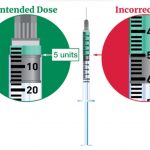
People taking compounded versions of Ozempic have been overdosing on the drug, the U.S. Food and Drug Administration warns. These ODs typically are due to miscommunications or miscalculations regarding dosage, the FDA added. “Dosing errors have resulted from patients measuring and self-administering incorrect doses of the drug and health care providers miscalculating doses of the drug,” the FDA alert said. Health problems caused by overdoses of compounded semaglutide — the main ingredient in Ozempic and Wegovy — include severe nausea, vomiting and hypoglycemia, the FDA said. Other side effects include fainting, headache, migraine, dehydration, pancreatitis and gallstones. People who have a severe overdose might need to be kept for observation for an extended period, since the half-life of semaglutide is about a week, the FDA said. Drug compounding involves combining, mixing or altering drugs to create a medication tailored to the needs of an individual patient. “FDA is aware of compounded semaglutide products that are being marketed for weight loss,” the agency said. “Compounded drugs pose a higher risk to patients than FDA-approved drugs because compounded drugs do not undergo FDA premarket review for safety, quality or effectiveness.” “Compounded drugs should only be used for patients whose medical needs cannot be met by an available FDA-approved drug,” the agency added. Compounded semaglutide products can come in varying concentrations, and often are provided in multiple-use vials…  read on >  read on >

Doctors might be authority figures, but a new review suggests hospital patients feel more comfortable when their physician comes across as less imposing. Getting to a patient’s eye level while talking about their diagnosis or care makes a huge difference, researchers found. Sitting or crouching next to a patient’s bedside prompted more feelings of trust and satisfaction, and even helped patients recover better, according to results published recently in the Journal of General Internal Medicine. “We hope our work will bring more recognition to the significance of sitting and the general conclusion that patients appreciate it,” said lead researcher Dr. Nathan Houchens, an associate professor of medicine with the University of Michigan School of Medicine. For the review, researchers analyzed results from 14 previous studies on the impact of a doctor’s posture when they’re at a patient’s bedside. One study found that half of patients preferred talking to a sitting physician, while only 17% liked it when their doctor stood during a consultation. Other studies indicated that medical professionals who sit with a patient prompt more positive impressions than those who stand. For example, nurses who sat at bedside for three to five minutes at the start of each shift wound up improving patients’ perceptions of their communications. Likewise, seated doctors had more patients who said the doctor “always” listens carefully to them and explains…  read on >  read on >

Pickleball is the fastest-growing sport in the United States, particularly among older adults. It’s also a quick way for seniors to hurt themselves, unless they watch their form and warm up properly, experts say. “We are seeing an epidemic of pickleball Achilles tendon injuries,” said Dr. Timothy Charlton, an orthopedic surgeon at Cedars-Sinai Medical Center in Los Angeles. “Pickleball is really fun, and I encourage anyone to play it, but it’s important to do so in a healthy way,” Charlton added in a Cedars-Sinai news release. “We’re seeing many injuries because new athletes are returning to the court after a long time away or are starting to play competitively without proper training. This creates an environment where injuries are more likely to occur.” More than 13 million people have picked up pickleball, with a 200% increase in participation in the past three years, Cedars-Sinai experts said. Unfortunately, with that has come an increase in injuries. Pickleball injuries in the United States accounted for more than $350 million in medical costs in 2023, experts said. In particular, doctors are seeing a significant number of Achilles tendon ruptures among people ages 60 to 70, particularly among women, Charlton said. “This increase in injuries is largely due to the rapid rise in the number of people playing pickleball, often without adequate preparation or conditioning,” Charlton said. The Achilles…  read on >  read on >