









All Sauce from Weekly Gravy:

It’s a simple and common prescription for global warming and fire suppression: Plant more trees. But where they’re planted makes a real difference, new research shows. “Our study found more cooling from planting in warm, wet regions, where trees grow year-round,” study first author James Gomez, a graduate student at UC Riverside, said in a news release. “Tropical trees not only pull carbon dioxide from the air, they also cool while releasing water vapor.” His team recently reported its findings in the journal npj Climate and Atmospheric Science.  They found that trees planted at higher latitudes, like the U.S., could actually have a slight heating effect.  “It’s not that planting [there] doesn’t help — it does,” Gomez said. “But the tropics offer the strongest returns per tree.” The new research echoes an earlier UC Riverside study. It found that planting trees could cool Earth’s surface more than once anticipated. That research weighed the chemical effects of trees interacting with the atmosphere, while the new study focused more on the physical effects of tree planting. Those effects include evapotranspiration — or in simple terms, “tree sweating.”  Roots of trees suck water from the soil. It travels up through the trunk and into leaves, where some evaporates into the air. This cools the tree and the air, as well. “It’s just like the way sweating cools your…  read on >  read on >

It’s a simple and common prescription for global warming and fire suppression: Plant more trees. But where they’re planted makes a real difference, new research shows. “Our study found more cooling from planting in warm, wet regions, where trees grow year-round,” study first author James Gomez, a graduate student at UC Riverside, said in a news release. “Tropical trees not only pull carbon dioxide from the air, they also cool while releasing water vapor.” His team recently reported its findings in the journal npj Climate and Atmospheric Science.  They found that trees planted at higher latitudes, like the U.S., could actually have a slight heating effect.  “It’s not that planting [there] doesn’t help — it does,” Gomez said. “But the tropics offer the strongest returns per tree.” The new research echoes an earlier UC Riverside study. It found that planting trees could cool Earth’s surface more than once anticipated. That research weighed the chemical effects of trees interacting with the atmosphere, while the new study focused more on the physical effects of tree planting. Those effects include evapotranspiration — or in simple terms, “tree sweating.”  Roots of trees suck water from the soil. It travels up through the trunk and into leaves, where some evaporates into the air. This cools the tree and the air, as well. “It’s just like the way sweating cools your…  read on >  read on >

With a longtime vaccine critic leading the nation’s health departments, you might be wondering whether there’s a new flu shot this fall. There is —  and Health and Human Services Secretary Robert F. Kennedy Jr. says most Americans should get it. He’s basing that recommendation on the advice of a board he appointed to advise the federal government on vaccines. The U.S. Centers for Disease Control and Prevention (CDC) says people 6 months old and up should get a flu shot. That’s pretty much the same advice the CDC has given in the past. This year’s version of the flu vaccine should be widely available soon, according to KFF Health News. No shortages are anticipated. So when should you roll up your sleeve? The best time to take the jab is September, October or early November, doctors say. That not only gives your body time to build up antibodies as outbreaks begin, it also helps ensure your protection won’t disappear before flu season ends.  Dr. William Schaffner, a professor of infectious diseases at Vanderbilt University Medical Center in Nashville, Tennessee, told KFF that flu outbreaks typically peak in February.  This year’s flu vaccine protects against two influenza A viruses and one influenza B virus. Scientists tweaked the formula, as recommended by the World Health Organization, to target a specific strain of the A/H3N2 virus that…  read on >  read on >

With a longtime vaccine critic leading the nation’s health departments, you might be wondering whether there’s a new flu shot this fall. There is —  and Health and Human Services Secretary Robert F. Kennedy Jr. says most Americans should get it. He’s basing that recommendation on the advice of a board he appointed to advise the federal government on vaccines. The U.S. Centers for Disease Control and Prevention (CDC) says people 6 months old and up should get a flu shot. That’s pretty much the same advice the CDC has given in the past. This year’s version of the flu vaccine should be widely available soon, according to KFF Health News. No shortages are anticipated. So when should you roll up your sleeve? The best time to take the jab is September, October or early November, doctors say. That not only gives your body time to build up antibodies as outbreaks begin, it also helps ensure your protection won’t disappear before flu season ends.  Dr. William Schaffner, a professor of infectious diseases at Vanderbilt University Medical Center in Nashville, Tennessee, told KFF that flu outbreaks typically peak in February.  This year’s flu vaccine protects against two influenza A viruses and one influenza B virus. Scientists tweaked the formula, as recommended by the World Health Organization, to target a specific strain of the A/H3N2 virus that…  read on >  read on >

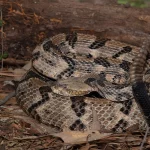
Authorities in Tennessee reported a rare and tragic death after a hiker was bitten by a rattlesnake. Fatal snakebites are extremely uncommon in the United States, with a nationwide average of about five deaths annually, according to the U.S. National Institute for Occupational Safety and Health. The incident occurred on Aug. 8 in Savage Gulf State Park in Gruetli-Laager, Tennessee, a scenic area with some 60 miles of hiking trails that are home to various snake species, The New York Times reports. According to a witness, the man, who has not been publicly identified, picked up what is believed to be a timber rattlesnake and was bitten on his hand. Despite receiving immediate CPR from emergency medical workers who reached him about a half-mile along the trail, he later died at a hospital, according to the report. Why the hiker handled the snake remains unknown. Experts suspect the man’s death was not due to the effects of the snake’s venom, but rather to a severe allergic reaction.  “Some people just may be plain allergic to snake venom,” said William Sutton, an assistant professor of agricultural and environmental sciences at Tennessee State University in Nashville, who studies snakes. He noted that an allergic reaction to the venom could lead to anaphylaxis, a life-threatening condition that can cause the airways to narrow and blood pressure to drop.…  read on >  read on >

Local parks and neighborhood greenery protected people’s mental health from the stresses of the COVID-19 pandemic, a new study says. Overall, depression increased nearly two-fold during the pandemic, with both men and women more frequently diagnosed, researchers said. But middle-aged adults and seniors had a reduced risk of depression if they lived in greener neighborhoods, Canadian researchers reported Aug. 20 in the journal PLOS One. What’s more, the greener a person’s neighborhood, the lower their risk for depression, researchers found. “Urban greenery wasn’t just a backdrop — it played a protective mental health role in one of the most stressful global events in recent history,” said lead researcher Paul Villeneuve, a professor of neuroscience at Carleton University in Ottawa. For the study, researchers analyzed mental health data from more than 13,000 urban-dwelling participants in a Canadian study on aging. The team compared that data to the amount of green space located near each participant’s home, based on satellite imagery. The protective effects of green space were particularly pronounced among people with less financial means, researchers found. “Our findings suggest that green spaces may have played a modest, yet meaningful, role in supporting the mental well-being of lower-income Canadians during the pandemic, offering some relief amid deepening socio-economic inequities,” researcher Susanna Abraham Cottagiri, a doctoral candidate at Queen’s University in Ottawa, said in a news release.…  read on >  read on >

Local parks and neighborhood greenery protected people’s mental health from the stresses of the COVID-19 pandemic, a new study says. Overall, depression increased nearly two-fold during the pandemic, with both men and women more frequently diagnosed, researchers said. But middle-aged adults and seniors had a reduced risk of depression if they lived in greener neighborhoods, Canadian researchers reported Aug. 20 in the journal PLOS One. What’s more, the greener a person’s neighborhood, the lower their risk for depression, researchers found. “Urban greenery wasn’t just a backdrop — it played a protective mental health role in one of the most stressful global events in recent history,” said lead researcher Paul Villeneuve, a professor of neuroscience at Carleton University in Ottawa. For the study, researchers analyzed mental health data from more than 13,000 urban-dwelling participants in a Canadian study on aging. The team compared that data to the amount of green space located near each participant’s home, based on satellite imagery. The protective effects of green space were particularly pronounced among people with less financial means, researchers found. “Our findings suggest that green spaces may have played a modest, yet meaningful, role in supporting the mental well-being of lower-income Canadians during the pandemic, offering some relief amid deepening socio-economic inequities,” researcher Susanna Abraham Cottagiri, a doctoral candidate at Queen’s University in Ottawa, said in a news release.…  read on >  read on >

COVID-19 infection might increase a person’s risk of developing asthma, seasonal allergies and long-lasting sinus problems, a new study says. However, vaccination appears to reduce this risk, researchers report in the Journal of Allergy and Clinical Immunology. “It is interesting to see that vaccination not only protects against the infection itself, but also appears to provide good protection against certain respiratory complications,” senior investigator Philip Curman, a researcher in medical epidemiology and biostatistics at Karolinska Institute in Sweden, said in a news release. For the study, researchers compared nearly 974,000 people who’d been infected with COVID with more than 4.4 million people who’d been neither infected nor vaccinated. The records came from a major U.S. electronic health database. Results showed that COVID patients had a 66% increased risk of developing asthma. They also had a 74% higher risk of chronic sinus inflammation and a 27% increased risk of hay fever, researchers said. However, infection did not increase risk of other diseases like eczema or esophageal inflammation, researchers siad. “Our results suggest that COVID-19 can trigger type-2 inflammation in the airways, but not in other organs,” Curman said. The team also compared healthy people against those vaccinated against COVID and found the opposite effect — risk of asthma was 32% lower against those who’d gotten the jab. But when COVID patients were compared to those vaccinated against…  read on >  read on >

COVID-19 infection might increase a person’s risk of developing asthma, seasonal allergies and long-lasting sinus problems, a new study says. However, vaccination appears to reduce this risk, researchers report in the Journal of Allergy and Clinical Immunology. “It is interesting to see that vaccination not only protects against the infection itself, but also appears to provide good protection against certain respiratory complications,” senior investigator Philip Curman, a researcher in medical epidemiology and biostatistics at Karolinska Institute in Sweden, said in a news release. For the study, researchers compared nearly 974,000 people who’d been infected with COVID with more than 4.4 million people who’d been neither infected nor vaccinated. The records came from a major U.S. electronic health database. Results showed that COVID patients had a 66% increased risk of developing asthma. They also had a 74% higher risk of chronic sinus inflammation and a 27% increased risk of hay fever, researchers said. However, infection did not increase risk of other diseases like eczema or esophageal inflammation, researchers siad. “Our results suggest that COVID-19 can trigger type-2 inflammation in the airways, but not in other organs,” Curman said. The team also compared healthy people against those vaccinated against COVID and found the opposite effect — risk of asthma was 32% lower against those who’d gotten the jab. But when COVID patients were compared to those vaccinated against…  read on >  read on >