









(HealthDay News) –Horseback trail riding is a fun, leisure activity for many Americans. However, it is important to follow rules for trail safety, says the Minnesota State Department of Natural Resources. It encourages people to: Wear a helmet and appropriate footwear. If your horse kicks, tie a red ribbon in its tail. Do not bring unruly horses on public trails. Ride in groups. Carry a trail map and cellphone.
A little about: Weekly Gravy
All Sauce from Weekly Gravy:
Good Smells May Help Ease Tobacco Cravings

Could quitting tobacco involve something as simple as a pleasant scent? New research suggests it’s possible. U.S. smoking rates have fallen over the past 50 years, but about 40 million Americans still smoke, according to the U.S. Centers for Disease Control and Prevention. At least half of adult smokers report trying to quit in the past year, but half of those who try to quit relapse within two weeks. “Even with nicotine replacement, relapse is common,” said the study’s lead author, Michael Sayette, of the University of Pittsburgh. “New interventions are urgently needed to help the millions who wish to quit but are unable.” The study included 232 smokers, aged 18 to 55, who were not trying to quit and were not using any nicotine replacement, such as gum or vaping. In a series of experiments, the researchers found that the smokers’ cigarette cravings declined after they smelled pleasant aromas, such as chocolate, apple, peppermint, lemon or vanilla. “Despite disappointing relapse rates, there have been few new approaches to smoking cessation, in general, and to craving relief in particular,” Sayette said in a news release from the American Psychological Association. “Using pleasant odors to disrupt smoking routines would offer a distinct and novel method for reducing cravings, and our results to this end are promising,” he added. Pleasant aromas may work by distracting smokers from… read on >
Helping the Young Mind Grow

Whether you call it snowplow, bulldozer or helicopter parenting, these child-rearing styles have gotten a lot of attention recently, and the acknowledgment that they may not be the best way to raise a confident, well-adjusted young person. Moving obstacles out of a child’s way is not the same as providing the nurturing he or she needs. Scientists know that one very important period for brain growth occurs during the preschool years. Researchers at Washington University School of Medicine in St. Louis analyzed a series of brain scans of children from this age through the early teen years. The aim: to learn how mom’s early support affected development of the hippocampus, the area of the brain critical to learning, memory and regulating emotions, such as stress. The investigators saw a sharper rise in the volume of the hippocampus in kids who had early nurturing, and found that these kids were healthier emotionally when they entered their teens. Hippocampus volume was smaller in teens whose mothers were less supportive during the preschool period, even if the moms were more nurturing in their elementary or middle school years. So how can you best show support for your children? Start with a positive approach, and parent with your child’s emotional well-being in mind. Offer words of encouragement and praise as they work on and then complete tasks. Show affection… read on >
Is Your Inner Critic Ruining Your Love Life?

Many people are plagued by self-criticism, that inner voice that questions every decision and every move. It can keep you from reaching goals and erode self-confidence. And when it happens during intimacy, it can ruin your sex life and your relationship. No topic is taboo for the inner critic’s scrutiny — your attractiveness or your attraction to your partner, your sexual needs, your performance, and all these aspects of your partner as well. These thoughts can start before the first moment of intimacy and escalate to the point where your mind is not on your partner when lovemaking, but caught up in destructive thoughts. Experts say that to challenge your inner critic, you should first write down all these thoughts in detail, but do so in the second person to distance yourself from them. The next step is harder, but effective: Verbalize these thoughts with your partner. By voicing them, rather than letting them fester in your head, you can both put them in perspective and, together, debunk them. You might start by explaining that self-doubt is keeping you from feeling a close bond during intimacy, and then share your doubts and fears. Be gentle if any of your thoughts directly concern your partner, such as his or her ability to satisfy you. You might each use this opportunity to talk about what gives you… read on >
Don’t Prosecute Sexting Teens as Child Pornographers, Researchers Say

In many U.S. states, teenagers who send “sext” messages to each other can be prosecuted as child pornographers — and that should end, researchers argue. Many states have recently passed laws that specifically address teen sexting — exempting it, to varying degrees, from longstanding child pornography statutes. But in 23 states, those outdated laws still apply to teenagers who willingly send sexual messages to each other. The penalty is up to 20 years in prison and a lifetime as a registered sex offender, according to Dr. Victor Strasburger, of the University of New Mexico, in Albuquerque. Writing in the May issue of the journal Pediatrics, he and his colleagues contend that it’s time for all states to revisit their child pornography laws. Consensual teen-to-teen sexting should be addressed by parents, schools and health providers — not the criminal justice system, they said. “I absolutely agree,” said Elizabeth Englander, a professor of psychology at Bridgewater State University in Massachusetts. “This needs to be treated as a developmental and educational issue.” Englander, who also directs the Massachusetts Aggression Reduction Center at Bridgewater, studies kids’ technology use — including issues like sexting and cyberbullying. It’s no secret that teenagers today are attached to their devices. In the United States, 95% of teens own or have access to a smartphone, according to Strasburger’s team. So, it’s also no surprise… read on >
‘Added Sugars’ Label on Foods Could Save Many Lives
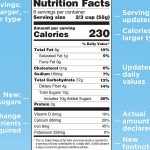
A new Nutrition Facts label that highlights the amount of added sugars in food could prevent nearly 1 million cases of heart disease and type 2 diabetes, a new study suggests. The new label, first proposed by the U.S. Food and Drug Administration in May 2016, adds a new line under the Total Carbohydrate category that details the amount of sugar that has been added on top of the sugars already contained in a food product. If consumers had access to this new label, their food choices could prevent more than 350,000 cases of heart disease and nearly 600,000 cases of type 2 diabetes over the next two decades, researchers predicted using a computer model. This would save the United States $31 billion in health care costs and $62 billion in productivity and other societal costs, said senior researcher Renata Micha. She’s an associate research professor at the Tufts University School of Nutrition Science and Policy, in Boston. These effects could be even stronger if the new Nutrition Facts label prompts food manufacturers to reduce the amount of sugar they add to products, Micha said. “If this added sugar label prompts the food industry to reformulate even a portion of its products to have fewer added sugars, these health and financial benefits would be doubled, which is a staggering impact,” Micha said. Added sugars account… read on >
CPAP Brings Longer Life for Obese People With Sleep Apnea: Study
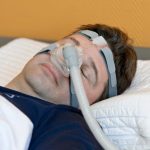
There’s good news for the millions of obese Americans with sleep apnea: Researchers report the use of the CPAP mask may greatly increase their chances for a longer life. Use of the continuous positive airway pressure (CPAP) mask was tied to a 62% decline in the odds for death over 11 years of follow-up. That benefit held even after factoring in health risk factors such as heart disease, weight, diabetes and high blood pressure, said a French team of investigators led by Dr. Quentin Lisan, of the Paris Cardiovascular Research Center. They noted that prior randomized clinical trials had not been able to find a survival benefit for CPAP, but they now believe those trials were simply too short for the effect to emerge. In the new study, the benefit to longevity only “appears six to seven years after initiation of CPAP therapy,” the team reported in the April 11 issue of the journal JAMA Otolaryngology-Head and Neck Surgery. An expert who penned an accompanying editorial said the findings should help doctors and patients, because many people with sleep apnea balk at the notion of wearing a mask to bed each night. “Every knowledgeable sleep specialist has had difficulty in convincing some patients of the need to treat their obstructive sleep apnea with these devices,” wrote Dr. Clete Kushida, a sleep medicine researcher at Stanford… read on >
Young Athletes Need to Be Sidelined After Bout of Mono

Young sports buffs recovering from mononucleosis may be itching to return to the game they love. But one expert says the risk of suffering a burst spleen during play means staying on the sideline longer than some would like. Along with extreme fatigue, sore throat, fever and swollen glands, “mono” causes spleen enlargement. That can be dangerous for athletes because the impacts and pressure on the abdomen that occur during many sports can cause the spleen to burst. “It’s rare — occurring in less than 0.5% of patients — but an infected athlete can rupture their spleen without warning within 21 days after symptoms begin,” said Dr. Lindsay Lafferty, a primary care sports medicine physician at Penn State Health. “The rate declines after four weeks, but ruptures have occurred up to eight weeks after an athlete first notices symptoms,” she noted in a Penn State news release. Determining the risk of a spleen rupture is challenging. Because the normal size of a spleen fluctuates, ultrasounds and CT scans won’t help determine if the organ is enlarged or at risk of rupture, Lafferty said. “Physical examination of spleen size identifies as few as 17% of cases, so deciding when the time is right for a student athlete to return to play can be complex,” she explained. For athletes, protective equipment such as flank jackets or protective… read on >
Get Back to Nature to Put Stress at Bay

A small daily dose of nature may be the perfect prescription for stress. An eight-week study found that people who spent at least 20 minutes a day in places that made them feel connected to nature had significantly lower levels of the stress hormone cortisol. This so-called “nature pill” could be a low-cost antidote to the negative health impacts of urbanization and an indoor lifestyle dominated by screen viewing, researchers said. “We know that spending time in nature reduces stress, but until now it was unclear how much is enough, how often to do it, or even what kind of nature experience will benefit us,” said lead author and associate professor MaryCarol Hunter. She studies social, psychological and ecological aspects of sustainable urban design at the University of Michigan. The findings were recently published in the journal Frontiers in Psychology. The study involved 36 city dwellers. “Participants were free to choose the time of day, duration, and the place of their nature experience, which was defined as anywhere outside that in the opinion of the participant, made them feel like they’ve interacted with nature,” Hunter said in a journal news release. “There were a few constraints to minimize factors known to influence stress: take the nature pill in daylight, no aerobic exercise, and avoid the use of social media, internet, phone calls, conversations and reading,”… read on >
Health Tip: Pool Safety
(HealthDay News) — A tragedy can happen in any swimming pool without proper supervision, says Intermountain Healthcare. Following water safety guidelines can prevent children from drowning. Intermountain Healthcare urges parents to: Always watch children who are in the water. Be alert. Learn infant and child CPR. Have a phone nearby in case of emergency. Never leave children alone or with siblings. Enclose a pool inside a fence. Teach children to swim.