








All Sauce from Weekly Gravy:

The TikTok video shows a teenage girl in braces applying a series of 14 beauty products to her face, an arsenal that costs nearly $350 all told. It’s one of many such videos where girls share their beauty regimens — but then something goes wrong. “This is what my skin looks like. It is very glowy right now, I love it! But also, I just had some allergic reaction to something that I tried, so ignore how red my face is,” says the girl, as her skin turns crimson and inflamed. “I don’t know what’s happening. But if anybody knows how to get it to stop burning, that would be greatly appreciated, because it actually hurts a lot,” the girl tells her audience. This real-life example captures the genuine risks that lurk behind the glamor of “get ready with me” TikTok videos, researchers argue in a new study. Popular TikTok videos featuring teens’ personal skin care routine frequently feature products that carry a high risk of skin irritation and allergy, researchers reported June 9 in the journal Pediatrics. The top-viewed videos contained an average of 11 potentially irritating active ingredients, researchers found. These could cause a higher risk of skin irritation, sun sensitivity, and a full-blown allergic reaction, researchers said. “That high risk of irritation came from both using multiple active ingredients at the same…  read on >  read on >

A Texas woman has died after using tap water in a sinus rinse, leading to a rare but often fatal brain infection, health officials report. The 71-year-old woman died from a condition called primary amebic meningoencephalitis (PAM), which is caused by a microscopic organism called Naegleria fowleri. This brain-eating amoeba can live in warm freshwater and sometimes in untreated tap water, CBS News reported. A case study from the U.S. Centers for Disease Control and Prevention (CDC) says the woman used tap water from an RV’s water system at a Texas campground for her nasal rinse. Four days later, she developed a fever, headache and confusion. Doctors suspected PAM and began treatment, but her condition got worse. She had seizures and died eight days after symptoms began, CBS News said. “Improperly maintained municipal water and recreational vehicle (RV) water systems can be a source of waterborne disease. CDC recommends the use of distilled, sterile, or boiled and cooled tap water for nasal irrigation,” the report said. The amoeba enters the body through the nose and travels to the brain. This often happens during diving or jumping in warm freshwater or hot springs, CBS News said. The CDC says only the following should be used for nasal rinsing: Distilled or sterilized water Boiled and cooled tap water When swimming in fresh water, the CDC also recommends…  read on >  read on >

A Texas woman has died after using tap water in a sinus rinse, leading to a rare but often fatal brain infection, health officials report. The 71-year-old woman died from a condition called primary amebic meningoencephalitis (PAM), which is caused by a microscopic organism called Naegleria fowleri. This brain-eating amoeba can live in warm freshwater and sometimes in untreated tap water, CBS News reported. A case study from the U.S. Centers for Disease Control and Prevention (CDC) says the woman used tap water from an RV’s water system at a Texas campground for her nasal rinse. Four days later, she developed a fever, headache and confusion. Doctors suspected PAM and began treatment, but her condition got worse. She had seizures and died eight days after symptoms began, CBS News said. “Improperly maintained municipal water and recreational vehicle (RV) water systems can be a source of waterborne disease. CDC recommends the use of distilled, sterile, or boiled and cooled tap water for nasal irrigation,” the report said. The amoeba enters the body through the nose and travels to the brain. This often happens during diving or jumping in warm freshwater or hot springs, CBS News said. The CDC says only the following should be used for nasal rinsing: Distilled or sterilized water Boiled and cooled tap water When swimming in fresh water, the CDC also recommends…  read on >  read on >

Don’t get frustrated if switching to a healthy diet doesn’t result in any weight loss – your heart is thanking you nonetheless, a new study says. Even without weight loss, people who adopted a healthy diet received a significant boost to their heart health, researchers reported June 5 in the European Journal of Preventive Cardiology. These included an increase in “good” HDL cholesterol, lower levels of the hunger hormone leptin, and less belly fat putting pressure on internal organs, researchers report. “We have been conditioned to equate weight loss with health, and weight loss-resistant individuals are often labeled as failures,” said lead researcher Anat Yaskolka Meir, a postdoctoral research fellow in epidemiology at Harvard T.H. Chan School of Public Health. “Our findings reframe how we define clinical success,” Yasolka Meir said in a news release. “People who do not lose weight can improve their metabolism and reduce their long-term risk for disease. That’s a message of hope, not failure.” For the study, researchers analyzed data from 761 people with obesity in Israel who participated in three landmark workplace-based clinical trials involving nutrition. In each trial, people were randomly assigned to adopt and stick with healthy diets for between 18 and 24 months. Results showed that nearly one-third of the participants did not lose any weight. However, people who were resistant to weight loss still showed…  read on >  read on >

Don’t get frustrated if switching to a healthy diet doesn’t result in any weight loss – your heart is thanking you nonetheless, a new study says. Even without weight loss, people who adopted a healthy diet received a significant boost to their heart health, researchers reported June 5 in the European Journal of Preventive Cardiology. These included an increase in “good” HDL cholesterol, lower levels of the hunger hormone leptin, and less belly fat putting pressure on internal organs, researchers report. “We have been conditioned to equate weight loss with health, and weight loss-resistant individuals are often labeled as failures,” said lead researcher Anat Yaskolka Meir, a postdoctoral research fellow in epidemiology at Harvard T.H. Chan School of Public Health. “Our findings reframe how we define clinical success,” Yasolka Meir said in a news release. “People who do not lose weight can improve their metabolism and reduce their long-term risk for disease. That’s a message of hope, not failure.” For the study, researchers analyzed data from 761 people with obesity in Israel who participated in three landmark workplace-based clinical trials involving nutrition. In each trial, people were randomly assigned to adopt and stick with healthy diets for between 18 and 24 months. Results showed that nearly one-third of the participants did not lose any weight. However, people who were resistant to weight loss still showed…  read on >  read on >

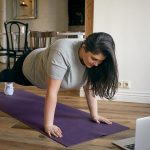
You’re not just getting older, you’re probably getting bigger. Between their 20s and 40s, most Americans can expect to put on 10 to 25 pounds — and after 30, exercise may not have the same payoff it once did.  It’s not just you, but Mother Nature at work.  “Your metabolism tends to slow down as you get older, but your appetite and food intake do not,” said Rafael de Cabo, an expert on aging at the National Institutes of Health (NIH). “So you have a steady increase of body weight with age.” Unfortunately, most of that gain is fat tissue, which settles around your internal organs, secreting chemicals that boost the risk for heart disease and diabetes. At the same time, lean muscle begins to disappear, especially when folks become less active or spend most of their lives at a desk.  And this shift can lead to further muscle loss and fat gain, according to de Cabo, who studies the effects of diet changes on health and longevity.  So, as you get older, you’ll have to make adjustments, de Cabo recently told NIH News in Health. Here’s what de Cabo recommended: Eat right: With a slower metabolism, you need fewer calories, but still have to get the nutrients your body needs. A focus on nutrient-dense foods such as fresh veggies and fruit, seafood, lean meats,…  read on >  read on >

You’re not just getting older, you’re probably getting bigger. Between their 20s and 40s, most Americans can expect to put on 10 to 25 pounds — and after 30, exercise may not have the same payoff it once did.  It’s not just you, but Mother Nature at work.  “Your metabolism tends to slow down as you get older, but your appetite and food intake do not,” said Rafael de Cabo, an expert on aging at the National Institutes of Health (NIH). “So you have a steady increase of body weight with age.” Unfortunately, most of that gain is fat tissue, which settles around your internal organs, secreting chemicals that boost the risk for heart disease and diabetes. At the same time, lean muscle begins to disappear, especially when folks become less active or spend most of their lives at a desk.  And this shift can lead to further muscle loss and fat gain, according to de Cabo, who studies the effects of diet changes on health and longevity.  So, as you get older, you’ll have to make adjustments, de Cabo recently told NIH News in Health. Here’s what de Cabo recommended: Eat right: With a slower metabolism, you need fewer calories, but still have to get the nutrients your body needs. A focus on nutrient-dense foods such as fresh veggies and fruit, seafood, lean meats,…  read on >  read on >

More American teenagers now use the weight-loss drug Wegovy, as doctors and families grow more comfortable with the treatment.  But experts say access is still limited, and more research on its long-term safety in teens is needed, NBC News reported. Prescriptions of Wegovy to teens rose 50% in 2024, according to Truveta, a health data company. The drug was prescribed to 14.8 of every 100,000 adolescents, up from 9.9 in 2023. Wegovy was approved in late 2022 for kids 12 and older who struggle with obesity. In the first three months of 2025, the rate rose again — to 17.3 prescriptions per 100,000 teens. Still, that’s tiny fraction of the U.S. teens who are living with obesity. “It’s promising that more young people are using these medications, but it’s still a very small percentage of patients with severe obesity that are getting access to them,” Dr. Cate Varney, an obesity medicine specialist at the University of Virginia Health System, told NBC News. “When lifestyle changes alone are insufficient, we need these additional tools.” Truveta reviewed the health records of 1.3 million 12- to 17-year-olds. The data included 30 U.S. health systems, with more than 900 hospitals and 20,000 clinics. The study looked only at Wegovy, not other GLP-1 drugs like Ozempic or Zepbound, which are not approved for teen weight loss. About 8 million U.S.…  read on >  read on >

More American teenagers now use the weight-loss drug Wegovy, as doctors and families grow more comfortable with the treatment.  But experts say access is still limited, and more research on its long-term safety in teens is needed, NBC News reported. Prescriptions of Wegovy to teens rose 50% in 2024, according to Truveta, a health data company. The drug was prescribed to 14.8 of every 100,000 adolescents, up from 9.9 in 2023. Wegovy was approved in late 2022 for kids 12 and older who struggle with obesity. In the first three months of 2025, the rate rose again — to 17.3 prescriptions per 100,000 teens. Still, that’s tiny fraction of the U.S. teens who are living with obesity. “It’s promising that more young people are using these medications, but it’s still a very small percentage of patients with severe obesity that are getting access to them,” Dr. Cate Varney, an obesity medicine specialist at the University of Virginia Health System, told NBC News. “When lifestyle changes alone are insufficient, we need these additional tools.” Truveta reviewed the health records of 1.3 million 12- to 17-year-olds. The data included 30 U.S. health systems, with more than 900 hospitals and 20,000 clinics. The study looked only at Wegovy, not other GLP-1 drugs like Ozempic or Zepbound, which are not approved for teen weight loss. About 8 million U.S.…  read on >  read on >