Agency is offering vouchers to some drug manufacturers to shorten review time for final drug applications read on >









Agency is offering vouchers to some drug manufacturers to shorten review time for final drug applications read on >

One of the nation’s largest food companies is planning a big change to its ingredients list. Kraft Heinz said it will stop using artificial dyes in all U.S. products by the end of 2027. The company also said it won’t use any synthetic colors in new products going forward, The Wall Street Journal reported. Artificial dyes — like Red 40, Yellow 5 and 6, Blue 1 and 2 and Green 3 — are used in everything from candy and frosting to pie crusts and salad dressing. They are used to make foods look more appealing or bring back color that was lost during processing. But many health experts, including those in the U.S. government, are now pushing back against them. In April, the U.S. Department of Health and Human Services and the Food and Drug Administration (FDA) announced a plan to work with food companies to remove six synthetic dyes from the U.S. food supply by the end of 2026. The effort is part of U.S. Health Secretary Robert F. Kennedy Jr.’s “Make America Healthy Again” — or MAHA — initiative. Kennedy has blamed artificial dyes and other additives for health problems in children. While some food industry groups argue the dyes are safe and approved by regulators, others are already changing course. Companies like PepsiCo and WK Kellogg are also working to reduce or… read on > read on >
One of the nation’s largest food companies is planning a big change to its ingredients list. Kraft Heinz said it will stop using artificial dyes in all U.S. products by the end of 2027. The company also said it won’t use any synthetic colors in new products going forward, The Wall Street Journal reported. Artificial dyes — like Red 40, Yellow 5 and 6, Blue 1 and 2 and Green 3 — are used in everything from candy and frosting to pie crusts and salad dressing. They are used to make foods look more appealing or bring back color that was lost during processing. But many health experts, including those in the U.S. government, are now pushing back against them. In April, the U.S. Department of Health and Human Services and the Food and Drug Administration (FDA) announced a plan to work with food companies to remove six synthetic dyes from the U.S. food supply by the end of 2026. The effort is part of U.S. Health Secretary Robert F. Kennedy Jr.’s “Make America Healthy Again” — or MAHA — initiative. Kennedy has blamed artificial dyes and other additives for health problems in children. While some food industry groups argue the dyes are safe and approved by regulators, others are already changing course. Companies like PepsiCo and WK Kellogg are also working to reduce or… read on > read on >

Four individuals across two states have been sickened and one person has been hospitalized read on >

Struggling to get a good night’s sleep? A new study suggests that a natural solution might be found right in your fridge: fruits and veggies. Researchers from the University of Chicago and Columbia University found that eating more fruits, vegetables and whole grains during the day may lead to better sleep that same night. “Dietary modifications could be a new, natural and cost-effective approach to achieve better sleep,” study co-author Dr. Esra Tasali, director of the UChicago Sleep Center, said in a news release. The study — published June 11 in the journal Sleep Health — is one of the first to show that what you eat during the day may affect your sleep that very night, researchers said. The researchers asked healthy young adults to log what they ate each day using a smartphone app. Participants also wore wrist monitors that tracked how well they slept. They specifically measured “sleep fragmentation,” or how often someone wakes up or shifts into lighter sleep. Less fragmentation means better, deeper sleep, researchers explained. While research had already been conducted on how poor sleep can lead to unhealthy eating, this study flipped the script, looking at how food choices can impact sleep. The results showed that people who ate more fruits, vegetables and healthy carbohydrates — such as whole grains — had better quality sleep that night. In… read on > read on >
Struggling to get a good night’s sleep? A new study suggests that a natural solution might be found right in your fridge: fruits and veggies. Researchers from the University of Chicago and Columbia University found that eating more fruits, vegetables and whole grains during the day may lead to better sleep that same night. “Dietary modifications could be a new, natural and cost-effective approach to achieve better sleep,” study co-author Dr. Esra Tasali, director of the UChicago Sleep Center, said in a news release. The study — published June 11 in the journal Sleep Health — is one of the first to show that what you eat during the day may affect your sleep that very night, researchers said. The researchers asked healthy young adults to log what they ate each day using a smartphone app. Participants also wore wrist monitors that tracked how well they slept. They specifically measured “sleep fragmentation,” or how often someone wakes up or shifts into lighter sleep. Less fragmentation means better, deeper sleep, researchers explained. While research had already been conducted on how poor sleep can lead to unhealthy eating, this study flipped the script, looking at how food choices can impact sleep. The results showed that people who ate more fruits, vegetables and healthy carbohydrates — such as whole grains — had better quality sleep that night. In… read on > read on >
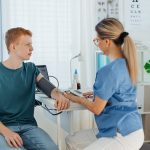
Kids exposed to PFAS “forever chemicals” before birth have an increased risk of high blood pressure in childhood, particularly during their teen years, a new study says. Teenage boys had a 17% higher risk of increased risk of elevated blood pressure if their moms had elevated levels of per- and polyfluoroalkyl substances (PFAS) in blood samples taken after delivery, researchers reported June 12 in the Journal of the American Heart Association. “Prenatal PFAS exposure is associated with higher blood pressure later in childhood, especially during adolescence,” said lead researcher Zeyu Li, a graduate student researcher at Johns Hopkins Bloomberg School of Public Health in Baltimore. “This suggests these forever chemicals can have long-lasting and potentially harmful effects that may only become apparent years after birth,” Li added in a news release. PFAS are called “forever chemicals” because they combine carbon and fluorine molecules, one of the strongest chemical bonds possible. This makes PFAS removal and breakdown extremely difficult. PFAS can be found in 99% of Americans, absorbed through what they eat, drink, breathe or touch, according to the Environmental Working Group. There are thousands of different PFAS chemicals, the Environmental Protection Agency (EPA) says. They can be found in drinking water as well as a wide range of consumer products including paper fast food wrappers, Teflon cookware, stain-resistant furniture and clothing, and cosmetics and personal… read on > read on >
Kids exposed to PFAS “forever chemicals” before birth have an increased risk of high blood pressure in childhood, particularly during their teen years, a new study says. Teenage boys had a 17% higher risk of increased risk of elevated blood pressure if their moms had elevated levels of per- and polyfluoroalkyl substances (PFAS) in blood samples taken after delivery, researchers reported June 12 in the Journal of the American Heart Association. “Prenatal PFAS exposure is associated with higher blood pressure later in childhood, especially during adolescence,” said lead researcher Zeyu Li, a graduate student researcher at Johns Hopkins Bloomberg School of Public Health in Baltimore. “This suggests these forever chemicals can have long-lasting and potentially harmful effects that may only become apparent years after birth,” Li added in a news release. PFAS are called “forever chemicals” because they combine carbon and fluorine molecules, one of the strongest chemical bonds possible. This makes PFAS removal and breakdown extremely difficult. PFAS can be found in 99% of Americans, absorbed through what they eat, drink, breathe or touch, according to the Environmental Working Group. There are thousands of different PFAS chemicals, the Environmental Protection Agency (EPA) says. They can be found in drinking water as well as a wide range of consumer products including paper fast food wrappers, Teflon cookware, stain-resistant furniture and clothing, and cosmetics and personal… read on > read on >

A good number of people don’t know that high blood pressure is a silent killer, increasing a person’s heart risk with no obvious symptoms, a new poll has found. More than a third of Americans (37%) erroneously think high blood pressure always has noticeable symptoms like dizziness or shortness of breath, according to a survey by the University of Pennsylvania’s Annenberg Public Policy Center. In truth, high blood pressure usually has no signs or symptoms to indicate its presence, according to the U.S. Centers for Disease Control and Prevention (CDC). Likewise, nearly 4 in 10 people (39%) mistakenly believe that “feeling calm and relaxed” is an indication that blood pressure is normal, the poll shows. And very few people — only 13% — know the correct reading that reflects high blood pressure, 130/80, poll results show. “Because controlling blood pressure reduces one’s risk of serious health problems, including heart attacks and strokes, correcting misperceptions about ways to identify it should be a public health priority,” Patrick Jamieson, director of the policy center’s Annenberg Health and Risk Communication Institute, said in a news release. About 25% of respondents thought that high blood pressure starts at 140/90, which was the case before heart health organizations revised their guidelines in 2017. Another 16% chose 140/80, and 18% chose 130/90. Despite these misconceptions, the survey found that many Americans… read on > read on >
A good number of people don’t know that high blood pressure is a silent killer, increasing a person’s heart risk with no obvious symptoms, a new poll has found. More than a third of Americans (37%) erroneously think high blood pressure always has noticeable symptoms like dizziness or shortness of breath, according to a survey by the University of Pennsylvania’s Annenberg Public Policy Center. In truth, high blood pressure usually has no signs or symptoms to indicate its presence, according to the U.S. Centers for Disease Control and Prevention (CDC). Likewise, nearly 4 in 10 people (39%) mistakenly believe that “feeling calm and relaxed” is an indication that blood pressure is normal, the poll shows. And very few people — only 13% — know the correct reading that reflects high blood pressure, 130/80, poll results show. “Because controlling blood pressure reduces one’s risk of serious health problems, including heart attacks and strokes, correcting misperceptions about ways to identify it should be a public health priority,” Patrick Jamieson, director of the policy center’s Annenberg Health and Risk Communication Institute, said in a news release. About 25% of respondents thought that high blood pressure starts at 140/90, which was the case before heart health organizations revised their guidelines in 2017. Another 16% chose 140/80, and 18% chose 130/90. Despite these misconceptions, the survey found that many Americans… read on > read on >