









Smokers diagnosed with cancer often shrug and keep lighting up, figuring a few more butts won’t make much difference. They’re very mistaken, a new study finds. Smokers are 22% to 26% less likely to die if they quit following a cancer diagnosis, researchers found. The best outcomes occurred in patients who quit within six months of their cancer diagnosis and remained off the butts for at least three months, researchers reported Oct. 31 in the journal JAMA Oncology. “While smoking cessation is widely promoted across cancer centers for cancer prevention, it remains under-addressed by many oncologists in their routine care,” said principal investigator Paul Cinciripini, chair of behavioral science and executive director of the Tobacco Research and Treatment Program at the University of Texas MD Anderson Cancer Center. “Our research underscores the critical role of early smoking cessation as a key clinical intervention for patients undergoing cancer treatment,” Cinciripini added in an MD Anderson news release. For the study, researchers followed more than 4,500 smokers who had been diagnosed with cancer and were in a quit smoking program at MD Anderson. Nearly all of the quit support was provided via telemedicine. Cancer patients who successfully abstained from smoking had an average survival of four years, compared with two years for those who couldn’t quit, results show. “This is a call to action for experts, regulatory…  read on >  read on >

Doctors in New York City are describing the first known U.S. cases of sexually transmitted ringworm, which can cause a nasty rash that can take months to bring under control. Despite the name, ringworm isn’t any kind of worm but instead is a fungus, Trichophyton mentagrophytes. It’s more commonly known as jock itch (when it affects the groin area) or athlete’s foot, and can produce a round, itchy rash. Until now, transmission of the fungal infection through skin-to-skin sexual contact has been rare, although cases have been reported in Southeast Asia and France since 2021, researchers reported. These have been a subtype of T. mentagrophytes called TMVII. The new report concludes that the first U.S. case of sexually transmitted TMVII was reported in June, and “four additional TMVII infections were diagnosed during April-July 2024 in New York City among men who have sex with men.” The rash appeared “on the [patients’] face, buttocks or genitals, and was successfully treated with antifungal medications,” said a team led by dermatologist Dr. Avrom Caplan, of NYU Langone Health in New York City. His team published its findings Oct. 31 in Morbidity and Mortality Weekly Report, a journal of the U.S. Centers for Disease Control and Prevention. According to the report, all five cases of sexually transmitted ringworm so far documented in the United States involved gay or bisexual…  read on >  read on >
Find it hard to take time to exercise during your busy workweek? No problem, a new study says — one or two “weekend warrior” workouts are just as likely to help you maintain your brain health. People who regularly exercise, whether solely on the weekend or throughout the week, are more likely to stay sharp as they age compared to people who never work out, researchers found. About 13% of cases of mild cognitive impairment might be avoided if all middle-aged adults exercised at least once or twice a week, researchers estimated. “This study is important because it suggests that even busy people can gain cognitive health benefits from taking part in one or two sessions of sport and exercise per week,” concluded the research team led by Gary O’Donovan, an adjunct professor of sport science with Los Andes University in Bogota, Colombia. For the study, researchers analyzed data from more than 10,000 people in Mexico City. All participants were asked how often they worked out or played sports, and they also took part in a cognitive function test. Weekend warriors worked out once or twice a week, while regularly active people said they exercised three or more times a week. During an average follow-up period of 16 years, about 26% of the people who never exercised developed mild cognitive impairment, compared with 14% among…  read on >  read on >

People who regularly use marijuana experience changes in their brain structure and function, but it’s not clear that cannabis is the cause, a new study finds. Researchers found specific differences in the brains of people who’d ever used weed, particularly in areas densely packed with cannabinoid receptors. However, genetic analysis couldn’t pin down any specific association between cannabis use and these brain changes. This means some other factor besides weed might be causing these brain changes in marijuana users. “Our results need to be interpreted with careful consideration,” concluded the research team led by Saba Ishrat, a doctoral student in psychiatry with the University of Oxford in the U.K. “Additional research is needed to understand the effects of heavy cannabis use in this population, including considerations of potency and related information, to inform public policy.” For the study, researchers analyzed data on nearly 15,900 weed users participating in the U.K. Biobank research project for whom genetic profiling and MRI brain scans were available. Looking at the brains of the marijuana users, researchers found that they had poorer integrity of their “white matter,” the part of the brain that connects different brain regions. This was particularly evident in the corpus callosum, which serves as the main route of communication between the left and right sides of the brain. Weed users also had weaker neural connections in…  read on >  read on >

For many reasons, bodybuilders and others involved in weight training might have to take a break from the gym. However, new Finnish research finds that even weeks-long interruptions in training won’t hamper muscle-building efforts. “Of course, the break slows progress some, but it is comforting to know that it is possible to reach the pre-break level surprisingly quickly,” said study lead author Eeli Halonen. He’s a doctoral student in sport and health sciences at the University of Jyväskylä. Halonen and his colleagues published their findings recently in the Scandinavian Journal of Medicine and Science in Sports. In the new study, 42 adults (just over half were males) took part in one of two 20-week weight-training regimens. In one group, folks engaged in weight-training sessions (exercises included leg presses and biceps curls) for the whole 20 weeks without interruption. The second group exercised for 10 weeks, then took a 10-week break, then resumed exercise for another 10 weeks. “Results for maximum strength and muscle size development were similar in both groups,” the researchers concluded in a university news release. For the 20 people that took the 10-week break midway, all measures of muscle improvement bounced back quickly, Halonen’s group said. “During the first few weeks after the break, progress was very rapid and after only five weeks of re-training, the pre-break level had already been reached,”…  read on >  read on >

Most kids with attention issues won’t go on to develop serious psychiatric conditions like psychosis or schizophrenia. However, a new study finds poor attention spans in childhood, plus certain genes, could play a role in raising the risk for these conditions. Of course, much more research is needed to pinpoint precursors to psychotic symptoms in a person’s teens or 20s, said a team from the University of California, Los Angeles. Even if children have certain risk factors, that’s still not a guarantee of psychiatric illness in adulthood, they stressed. “If you have this strong liability based on your genetics and early attentional span, we don’t know what the longer-term trajectories are and who are the people who are going to be more resilient to their underlying risk,” explained study lead author Dr. Carrie Bearden. “That’s going to be really important to look at when those [better] data become available,” said Bearden, a professor at the UCLA Health Semel Institute and the UCLA Health Brain Research Institute. Her team published its findings Oct. 28 in the journal Nature Mental Health. The study looked at cognitive, brain and genetic data for more than 10,000 children tracked for an average of six years, from about age 9 into adolescence. Bearden’s team sought to compare rates of attentional issues in childhood, plus certain genetics, against the likelihood of a…  read on >  read on >

Smoking marijuana during pregnancy may quell your morning sickness, but it could also harm your child’s development, a new study warns. Cannabis exposure in the womb is associated in early childhood with poorer thinking skills, researchers reported Oct. 28 in the journal JAMA Pediatrics. These kids also have behavioral problems like impulse control, poor attention and aggressive behavior, researchers found. “Although cannabis is a natural product, there are still many risks to using it during pregnancy,” said lead researcher Sarah Keim, principal investigator in the Center for Biobehavioral Health at Nationwide Children’s Hospital in Ohio. “Some women may turn to cannabis to help deal with some common issues of pregnancy including nausea, sleep problems and stress,” Keim said. “This is not recommended. Consulting with a health care provider to find safer options to help with these issues during pregnancy is important.” For the study, researchers combined multiple assessment tools to track the development of preschool children. Kids exposed to weed during pregnancy had more difficulty controlling their impulses, paying attention and planning, based on observations of their behavior in a play laboratory environment. They also tended to show more aggressive behavior. “Our findings were not surprising — they actually confirm and expand on longstanding evidence from previous research,” Keim said in a hospital news release. “With our more contemporary and diverse sample of women and…  read on >  read on >

Repeated concussions dramatically increase a hockey player’s risk of depression and burnout, a new study warns. Hockey players who’d suffered three or more concussions had twice the risk of depression symptoms than whose who’d never had a concussion, researchers found. They also faced three and a half times the risk of burnout symptoms, results showed. Concussion caused these effects in both male and female players, the researchers noted. “Other studies have shown that women experience more short-term symptoms after a concussion than men, but it was interesting that the link between concussion and heightened prevalence of symptoms of depression, anxiety and burnout was equally strong for both sexes,” said lead researcher Mitchell Andersson, a doctoral student in psychiatry at Lund University in Sweden. “This might indicate that the long-term neuropsychiatric recovery process is more similar in men and women than the short-term process,” Andersson added in a university news release. For the study, researchers surveyed nearly 650 active hockey players in Sweden’s top hockey divisions. They found that more than 1 in 4 men and nearly 1 in 5 women reported having suffered three or more concussions. Both men and women had a higher risk of depression if they’d suffered repeated concussions, researchers found. Athletes with at least three concussions were also 3.5 times more likely to develop burnout as those with none, and twice…  read on >  read on >

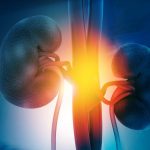
The weight-loss drug Ozempic can guard against kidney disease in obese people, a new study shows. Patients taking semaglutide — the active agent in Ozempic and Wegovy — had as much as a 52% reduction in kidney damage, as measured by urine testing, researchers reported Oct. 25 in the journal Nature Medicine. The results will also be presented simultaneously at the American Society of Nephrology’s annual meeting. Semaglutide patients also had a 30% reduction in kidney inflammation, researchers found. “The great thing is that the drug has both direct and indirect effects on the kidneys,” said lead researcher Hiddo Heerspink, a clinical pharmacologist with the University Medical Center Groningen in the Netherlands. “The drug has direct effects on inflammation parameters in the kidney, and lowers fat tissue around the kidneys, lowering the amount of protein in the urine,” Heerspink said. “And indirectly because it reduces participants‘ weight and blood pressure.” For the study, researchers recruited 101 obese people with chronic kidney disease in Canada, Germany, Spain and the Netherlands, starting in 2022. Half received injections of semaglutide for 24 weeks, while the other half received a placebo. Participants taking the drug lost about 10% of their weight, and they also experienced a decrease in high blood pressure similar to that from taking a blood pressure medication, researchers found. The results also show that the drug…  read on >  read on >

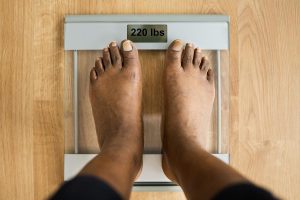
As the popularity of GLP-1 meds like Wegovy and Zepbound grows, fewer Americans are turning to weight-loss surgeries to trim their waistlines, a new report finds. Prescriptions of this GLP-1 class of diabetes and weight-loss medications more than doubled between 2022 and 2023, a new tally finds. “In contrast, there was a 25.6% decrease in patients undergoing metabolic bariatric surgery” during the same time period, reported a team led by Dr. Thomas Tsai, an assistant professor of surgery at Harvard Medical School in Boston. Since the U.S. Food and Drug Administration approved Wegovy (the first GLP-1 medicine aimed at weight loss) in mid-2021, sales of the drug and related GLP-1 meds such as Ozempic, Mounjaro and Zepbound have soared. Rapid weight loss has been a hallmark of these medications, which work, in part, by making folks feel full earlier. Prior to the advent of GLP-1s, diet and exercise or bariatric surgeries were the main routes to weight loss for obese Americans. However, the “Ozempic era” may have changed all that, Tsai’s team said. “Anecdotally, health systems have closed hospital-based metabolic bariatric surgery programs due to decreased demand,” they noted in the introduction to their study. To get at harder numbers, the researchers tracked data from the medical records of more than 17 million Americans insured via private coverage or Medicare Advantage. All patients were non-diabetic but…  read on >  read on >