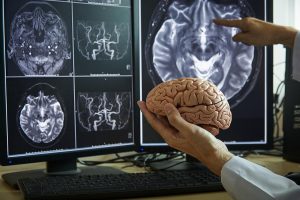








Patients who lose the use of their hands and arms after a stroke or traumatic brain injury could regain some function through deep brain stimulation (DBS), new research demonstrates. DBS involves surgical placement of electrodes to deliver electrical impulses to areas of the brain regulating specific activity. It is often used to treat control movement problems associated with Parkinson’s disease. “Arm and hand paralysis significantly impacts the quality of life of millions of people worldwide,” said corresponding author Elvira Pirondini, an assistant professor of physical medicine at the University of Pittsburgh. “Currently, we don’t have effective solutions for patients who suffered a stroke or traumatic brain injury, but there is growing interest in the use of neuro-technologies that stimulate the brain to improve upper-limb motor functions.” The team proposed using DBS to stimulate a structure deep within the brain called the motor thalmus, a key hub of movement control. Because this had never been done before, they first tested it in monkeys, which have the same links as people between the motor cortex and muscles. As soon as the stimulation was turned on, the monkeys had significantly better muscle activation and grip. No involuntary movement was seen. Then, they repeated the procedure using the same stimulation settings in a human volunteer who was already set to undergo DBS implantation to help with arm tremors caused… read on > read on >