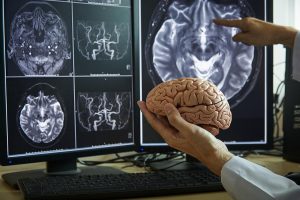









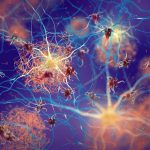
The brain has a waste-disposal system that clears away junk proteins that contribute to the development of dementia and Alzheimer’s disease, a new study finds. Advanced imaging scans have revealed a network of fluid-filled structures along arteries and veins within the brain, researchers reported Oct. 7 in the Proceedings of the National Academy of Sciences. These structures allow cerebrospinal fluid to flow through the brain, potentially flushing out waste proteins like amyloid and tau, researchers said. Those toxic proteins build up in the brains of Alzheimer’s patients, creating plaques and tangles that are hallmarks of the disorder. Previous research found these sort of fluid channels in the brains of mice, but this is the first time they’ve been confirmed to exist in humans as well, researchers said. “Nobody has shown it before now,” said senior researcher Dr. Juan Piantino, an associate professor of pediatric neurology in the Oregon Health & Science University (OHSU) School of Medicine. “This shows that cerebrospinal fluid doesn’t just get into the brain randomly, as if you put a sponge in a bucket of water,” Piantino added in a university news release. “It goes through these channels.” For the study, researchers injected five patients undergoing brain surgery at OHSU with a tracer that would be carried with cerebrospinal fluid into the brain. The research team then used MRI scans to track…  read on >  read on >

Damage to the brainstem could be behind the physical and psychological effects of Long COVID, a new study suggests. Brain scans of 30 Long COVID patients found they had damage to the region of the brainstem associated with breathlessness, fatigue and anxiety, researchers reported Oct. 7 in the journal Brain. “The brainstem is the critical junction box between our conscious selves and what is happening in our bodies,” said co-lead researcher James Rowe, a senior research fellow with the University of Cambridge Department of Clinical Neurosciences. “The ability to see and understand how the brainstem changes in response to COVID-19 will help explain and treat the long-term effects more effectively.” Post-mortem studies of people who died of severe COVID-19 early in the pandemic showed changes in their brainstem, researchers said in background notes. “People who were very sick early in the pandemic showed long-lasting brain changes, likely caused by an immune response to the virus. But measuring that immune response is difficult in living people,” Rowe said. “Normal hospital type MRI scanners can’t see inside the brain with the kind of chemical and physical detail we need.” So, the research team turned to more powerful MRI machines called 7-Tesla scanners, which found that COVID infection caused inflammation damage in multiple regions of the brainstem. These abnormalities appeared several weeks after hospital admission, generally in regions…  read on >  read on >

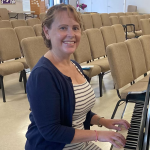
In a small, preliminary study, piano lessons provided to cancer patients undergoing chemotherapy appeared to help them maintain brain health. “There were a lot of outside stressors contributing to my mood, but piano practice and going to lessons were always something good and positive that I would look forward to, no matter what else was happening,” said Robin Hesselink, an enrollee in a pilot program at the Moffitt Cancer Center in Tampa, Fla. Heeselink, who’s undergoing treatment for stage 4 metastatic breast cancer, explained that “even for those 30 minutes or an hour, I could forget about the other stuff and have something enjoyable. At least temporarily, while I’m doing it, it has a very positive effect on me.” Besides those mood-boosting effects, the piano lessons appeared to enhance the “executive function” of participants’ brains, according to a news release from the University of South Florida (USF). The new protocol, called Keys to Staying Sharp, seeks to curb declines in memory and thinking that sometimes accompany chemotherapy, explained Jennifer Bugos, a professor of music education at USF. “We are interested in examining whether social support while learning a musical instrument can increase cognition in patients undergoing treatment for cancer,” she said in a university news release. Specifically, the research is looking at “which areas of cognition may be improved and what duration of music training is…  read on >  read on >

A new, large study from France underscores the link between adult hearing loss and dementia. “Given the major burden of cognitive decline and the absence of curative treatment, identifying modifiable risk factors is of importance,” a team led by Dr. Baptiste Grenier, of the Université Paris Cité, wrote Oct. 1 in the journal JAMA Network Open. They said thinking skills may decline not only because people with hearing loss become socially isolated but also because they go for a long periods without auditory input.  In addition, hearing loss is linked to loss of volume in critical areas of the brain. Even so, researchers said hearing aids for patients with disabling hearing loss should be prescribed based on potential benefit to quality of life and not to ease cognitive decline. For that, they wrote, more research is needed. For the study, Grenier’s team analyzed data from more than 62,000 people in France (average age: 57) recruited between January 2012 and December 2020. Participants age 45 and older underwent cognitive testing at the outset. In all, 49% had normal hearing; 38% had mild hearing loss; and 10% had disabling hearing loss but did not use a hearing aid; 3% wore a hearing aid. Participants took both hearing and cognitive tests. In all, 27% of participants with mild hearing loss and 37% with disabling hearing loss had cognitive…  read on >  read on >

Japanese researchers have successfully used a transplant of human stem cells to close a hole in a key part of a monkey’s retina. They say the achievement could pave the way for better treatment of small gaps that form in the macula, the central part of the eye’s retina. These macular holes can cause distorted or blurred vision, making it hard to see fine details, read or drive a car. “Our results suggest that this method could become a practical, safe and effective treatment option with minimal invasive risks, particularly for difficult macular hole cases,” said senior study author Dr. Michiko Mandai, of Kobe City Eye Hospital in Japan. However, experts stress that the results of research in animals don’t always pan out in people. While treatment advances over the past decade have successfully closed more than 90% of macular holes, stubborn cases that defy treatment persist, researchers explained in background notes. Managing care after surgery is also difficult. While retina transplants are able to close the holes, they do little to improve vision.  Mandai’s team wondered whether a transplant of human stem cells might overcome these obstacles.  In this new study, published Oct. 3 in the journal Stem Cell Reports, they successfully transplanted retinal tissue derived from human stem cells to close a macular hole in a monkey’s eye. The transplant grafted successfully and…  read on >  read on >

Even air pollution levels considered safe by U.S. standards appear to cause differences in the brains of growing children, a new review suggests. “We’re seeing differences in brain outcomes between children with higher levels of pollution exposure versus lower levels of pollution exposure,” said corresponding author Camelia Hostinar, an associate professor of psychology at the University of California, Davis. In all, she and her colleagues reviewed 40 studies. Most linked outdoor air pollution with differences in children’s brains, including the amount of the brain’s “white matter.” These differences affect thinking skills and may even be early markers for Alzheimer’s.  Because their brains are still developing, air pollution poses a special risk to kids and teens. Relative to their weight, they absorb more contaminants than adults, researchers explained. As such, the authors called on parents and policymakers to add air filters to homes and schools near freeways to protect children from outdoor air pollutants. They urged other researchers to incorporate air quality measures into studies related to brain health and other health outcomes. The new review looked at research from the United States, Mexico, Europe, Asia and Australia that compared pollution levels with brain outcomes at various ages, from newborns to age 18.  Some relied on brain imaging. Some looked at chemical changes in the body that affect brain function. Others looked for tumors in the…  read on >  read on >

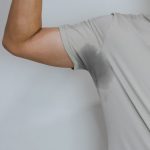
If  you sweat excessively, you’re likely to have sensitive skin as well, with new research confirming the two go hand-in-hand. A team led by Adam Friedman of George Washington University and Linqing Zhang of Virginia Tech used machine learning models to examine survey data from more than 600 people who sweat excessively. It uncovered a significant link excessive sweating — a condition known as primary hyperhidrosis — and sensitive skin. People with primary hyperhidrosis sweat four times more than needed to cool the body — even when they’re not exposed to high temperatures or exercising. The condition affects specific areas such as the hands, feet, face and armpits.  People with sensitive skin often experience itching, burning and tightness when exposed to heat, sweat, skincare products and stress.  Researchers found that folks with hyperhydrosis are more likely than most people to have sensitive skin. Sensitivity often goes beyond areas that sweat excessively, showing that perspiration isn’t the cause of their skin sensitivity. “Someone with primary hyperhidrosis is more likely to have sensitive skin than the general public, even in areas where there is no excessive sweating,” said Friedman, head of dermatology at GWU School of Medicine and Health Sciences.  Friedman’s team suspects the connection is more complex than has previously been recognized. They theorize that abnormal nerve signals connected to sweating may be involved. The study…  read on >  read on >

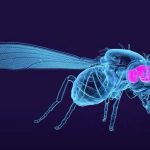
The head of a Princeton team that mapped the brain of an adult fruit fly — a watershed step in understanding the human brain — explains the feat in a way that belies its complexity. “Just like you wouldn’t want to drive to a new place without Google Maps, you don’t want to explore the brain without a map,” explained lead author Sven Dorkenwald, who received his Ph.D. last year from Princeton and is now at the Allen Institute for Brain Science in Seattle. “What we have done is build an atlas of the brain, and added annotations for all the businesses, the buildings, the street names.” With this, he added in a Princeton news release, “researchers are now equipped to thoughtfully navigate the brain as we try to understand it.”  Likening it to a roadmap that traces every tiny alley as well as every superhighway, he said the new map — called a “connectome” — shows connections in the fruit fly brain at every scale. It could one day lead to tailored treatments for brain diseases. Researchers described their work Oct. 2 in a special issue of the journal Nature.  They created a neuron-by-neuron and synapse-by-synapse map of the brain of an adult fruit fly (Drosophila melanogaster). It identifies different types of neurons and chemical links — or synapses — between them and offers…  read on >  read on >

As the southeastern United States begins to recover from Helene’s devastation, a new study suggests the health impact of major storms can linger for over a decade. So far, more than 120 people across six states have already been confirmed dead in Helene’s aftermath, although that number could rise much higher as rescue efforts continue. Now, a team from Stanford University reports the death toll over the much longer term could be in the thousands. Even years later, “in any given month, people are dying earlier than they would have if the storm hadn’t hit their community,” explained senior study author Solomon Hsiang. “A big storm will hit, and there’s all these cascades of effects where cities are rebuilding or households are displaced or social networks are broken. These cascades have serious consequences for public health,” said Hsiang, professor of environmental social sciences at Stanford’s Doerr School of Sustainability. Overall, the researchers estimate that anywhere between 7,000 and 11,000 excess deaths can be attributed to the years-long aftermath of a major tropical storm or hurricane. Adding up the damage, major storms have since 1930 contributed to the deaths of anywhere from 3.6 million and 5.2 million Americans, the team reported Oct. 2 in the journal Nature. That exceeds the combined number of deaths from motor vehicle accidents, infectious diseases or battle deaths in wars during…  read on >  read on >

Scientists say they’ve discovered a protein that seems crucial to the onset of age-related macular degeneration (AMD), a common cause of blindness in older people. The research is in its very early stages, but it might help lead to the first effective therapy against the vision-robbing illness, which affects up to 15 million Americans. “Current treatments for AMD have limited efficacy and often come with significant side effects,” said study lead author Ruchira Singh. “Our research aims to identify novel therapeutic targets that could potentially halt the progression of this disease,” said Singh, who is associate professor of ophthalmology at the University of Rochester in New York. With AMD, a portion of the eye’s retina, called the macula, undergoes progressive damage. This typically means a person loses central vision, while retaining the ability to see things on the periphery. There are currently no treatments that can stop AMD, which the American Academy of Ophthalmology says is the leading cause of blindness in people over the age of 50. What causes AMD has long remained unclear. What is known is that a layer of cells at the back of the eye, called the retinal pigment epithelium (RPE), is central to the illness. A buildup within the RPE of fats and proteins, called drusen, is a hallmark of early-stage AMD In their new study, Singh’s team bypassed…  read on >  read on >