States with strong clean energy policies are better equipped to protect public health read on >










States with strong clean energy policies are better equipped to protect public health read on >
A newly developed AI tool may help predict which kids with asthma are at higher risk for severe complications like respiratory infections and pneumonia, researchers say. A subgroup of kids identified by the AI tool developed pneumonia more than twice as often as other children with asthma, researchers recently reported in the Journal of Allergy and Clinical Immunology. They also got the flu nearly three times more often than other asthmatic kids, and had the highest rates of asthma attacks that required steroids, an ER visit or hospitalization, researchers said. The tool could highlight risks in these children as early as age 3, researchers said. “This study takes us a step closer to precision medicine in childhood asthma, where care shifts from reactive care for advanced severe asthma to prevention and early detection of high-risk patients,” senior researcher Dr. Young Juhn, a professor of pediatrics at the Mayo Clinic in Rochester, Minnesota, said in a news release. Asthma affects nearly 6 million U.S. children, but it can be tough to tell which kids are most vulnerable to severe health problems tied to the disease, researchers noted. For the new study, researchers examined health records for more than 22,000 children born between 1997 and 2016 in southeastern Minnesota. The team used two widely used diagnostic checklists for asthma to train an AI program to look for… read on > read on >
A newly developed AI tool may help predict which kids with asthma are at higher risk for severe complications like respiratory infections and pneumonia, researchers say. A subgroup of kids identified by the AI tool developed pneumonia more than twice as often as other children with asthma, researchers recently reported in the Journal of Allergy and Clinical Immunology. They also got the flu nearly three times more often than other asthmatic kids, and had the highest rates of asthma attacks that required steroids, an ER visit or hospitalization, researchers said. The tool could highlight risks in these children as early as age 3, researchers said. “This study takes us a step closer to precision medicine in childhood asthma, where care shifts from reactive care for advanced severe asthma to prevention and early detection of high-risk patients,” senior researcher Dr. Young Juhn, a professor of pediatrics at the Mayo Clinic in Rochester, Minnesota, said in a news release. Asthma affects nearly 6 million U.S. children, but it can be tough to tell which kids are most vulnerable to severe health problems tied to the disease, researchers noted. For the new study, researchers examined health records for more than 22,000 children born between 1997 and 2016 in southeastern Minnesota. The team used two widely used diagnostic checklists for asthma to train an AI program to look for… read on > read on >

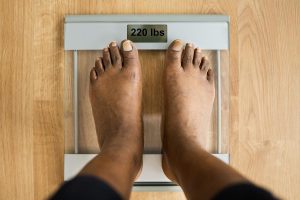
People with severe obesity are likely to face discrimination when seeking health care, with many clinics outright refusing to see them, a new study says. About 2 in 5 (41%) of clinics refused to schedule an appointment for a hypothetical patient weighing 465 pounds, according to findings published Sept. 29 in the Annals of Internal Medicine. “We’ve reached our limit for bariatric patients at this site,” one receptionist with an orthopedic surgeon’s office said without providing a reason, researchers report. Further, more than half (52%) lacked the facilities or equipment that could meet the basic standards of care for patients with a body mass index (BMI) of 60 or greater, results show. Severe obesity is categorized as a BMI of 40 or greater, according to the U.S. Centers for Disease Control and Prevention. BMI is an estimate of body fat based on height and weight. For example, they didn’t have exam tables or chairs with a high enough weight limit, sufficiently wide hallways and doorways, or large enough gowns. “Patients living with severe obesity are likely already struggling with shame and difficulty navigating the world,” said senior author Dr. Tara Lagu, an adjunct lecturer of medicine and medical social sciences at Northwestern University Feinberg School of Medicine in Chicago. “To tell a patient that they can’t be examined on a table, or can’t wear a… read on > read on >

People with severe obesity are likely to face discrimination when seeking health care, with many clinics outright refusing to see them, a new study says. About 2 in 5 (41%) of clinics refused to schedule an appointment for a hypothetical patient weighing 465 pounds, according to findings published Sept. 29 in the Annals of Internal Medicine. “We’ve reached our limit for bariatric patients at this site,” one receptionist with an orthopedic surgeon’s office said without providing a reason, researchers report. Further, more than half (52%) lacked the facilities or equipment that could meet the basic standards of care for patients with a body mass index (BMI) of 60 or greater, results show. Severe obesity is categorized as a BMI of 40 or greater, according to the U.S. Centers for Disease Control and Prevention. BMI is an estimate of body fat based on height and weight. For example, they didn’t have exam tables or chairs with a high enough weight limit, sufficiently wide hallways and doorways, or large enough gowns. “Patients living with severe obesity are likely already struggling with shame and difficulty navigating the world,” said senior author Dr. Tara Lagu, an adjunct lecturer of medicine and medical social sciences at Northwestern University Feinberg School of Medicine in Chicago. “To tell a patient that they can’t be examined on a table, or can’t wear a… read on > read on >

Babies who grow up around dogs might be less likely to develop childhood asthma, a new study says. However, they don’t get the same protection from growing up around cats, according to findings presented Sunday in Amsterdam at a meeting of the European Respiratory Society. “We found that, while cat allergens showed no association, exposure to dog allergens was linked to improved lung function and a reduced risk of asthma,” researcher Jacob McCoy said in a news release. He’s a graduate student at the Hospital for Sick Children in Toronto, Canada. For the study, researchers analyzed samples of dust taken from 1,050 Canadian babies’ homes when they were 3 to 4 months old. The dust samples were tested for three potential allergens: Can f1, a protein shed in dog skin and saliva; Fel d1, a protein shed in cat skin and saliva; and endotoxin, a protein found on the surface of bacteria. The team then retested the children for asthma at age 5. Their lung function was measured by the amount of air they could exhale in one second after a deep inhale. Babies exposed to higher levels of the dog allergen had a 48% lower risk of developing asthma by age 5, results showed. These children also had better lung function. Further, researchers found this protective effect was even stronger in babies with a… read on > read on >
Babies who grow up around dogs might be less likely to develop childhood asthma, a new study says. However, they don’t get the same protection from growing up around cats, according to findings presented Sunday in Amsterdam at a meeting of the European Respiratory Society. “We found that, while cat allergens showed no association, exposure to dog allergens was linked to improved lung function and a reduced risk of asthma,” researcher Jacob McCoy said in a news release. He’s a graduate student at the Hospital for Sick Children in Toronto, Canada. For the study, researchers analyzed samples of dust taken from 1,050 Canadian babies’ homes when they were 3 to 4 months old. The dust samples were tested for three potential allergens: Can f1, a protein shed in dog skin and saliva; Fel d1, a protein shed in cat skin and saliva; and endotoxin, a protein found on the surface of bacteria. The team then retested the children for asthma at age 5. Their lung function was measured by the amount of air they could exhale in one second after a deep inhale. Babies exposed to higher levels of the dog allergen had a 48% lower risk of developing asthma by age 5, results showed. These children also had better lung function. Further, researchers found this protective effect was even stronger in babies with a… read on > read on >
-150x150.jpg)
It sounds counterintuitive: Eat more fat and lose more weight. But it’s the underpinning of a keto diet — a controversial eating regimen designed to retrain the body to rely on something other than sugar for energy. The regimen is rich in meat, eggs, high-fat dairy and oils. “I think a lot of people look at a ketogenic diet and think, ‘I’ll lose weight, I’ll be healthier,’ ” said lead researcher Molly Gallop, an assistant professor of anatomy and physiology at Earlham College in Richmond, Ind. The biology goes like this: On a keto diet, a person’s liver converts fat into molecules called ketone bodies that the body can burn for energy. Despite a high fat intake — up to 90% of daily calories — it can lead to substantial weight loss. And while it may seem OK on the surface, new research in mice suggests that staying on a keto regimen for a long time might be risky. Lab rats fed a keto diet for up to a year — decades in human time — showed signs of liver and heart disease and developed glucose intolerance, a team led by Gallop recently reported in the journal Science Advances. “It’s a cautionary tale,” said study co-author Amandine Chaix, an assistant professor of nutrition and integrative physiology at the University of Utah in Salt Lake City.… read on > read on >
It sounds counterintuitive: Eat more fat and lose more weight. But it’s the underpinning of a keto diet — a controversial eating regimen designed to retrain the body to rely on something other than sugar for energy. The regimen is rich in meat, eggs, high-fat dairy and oils. “I think a lot of people look at a ketogenic diet and think, ‘I’ll lose weight, I’ll be healthier,’ ” said lead researcher Molly Gallop, an assistant professor of anatomy and physiology at Earlham College in Richmond, Ind. The biology goes like this: On a keto diet, a person’s liver converts fat into molecules called ketone bodies that the body can burn for energy. Despite a high fat intake — up to 90% of daily calories — it can lead to substantial weight loss. And while it may seem OK on the surface, new research in mice suggests that staying on a keto regimen for a long time might be risky. Lab rats fed a keto diet for up to a year — decades in human time — showed signs of liver and heart disease and developed glucose intolerance, a team led by Gallop recently reported in the journal Science Advances. “It’s a cautionary tale,” said study co-author Amandine Chaix, an assistant professor of nutrition and integrative physiology at the University of Utah in Salt Lake City.… read on > read on >

Routine screening can help find kids who are suffering from undiagnosed asthma in communities with high levels of the breathing disorder, a new study says. Asthma screening during well-child visits found that more than two-thirds (35%) of children with no previous diagnosis of asthma had at least one risk factor for the disease, researchers will report Monday at an American Academy of Pediatrics’ meeting in Denver. Further, about 24% of kids with risk factors were subsequently diagnosed with asthma, researchers said. Those diagnosed with asthma reported coughing or shortness of breath at night, previous use of an inhaler or difficulty exercising due to breathing problems, researchers said. “Asthma is often diagnosed late or not at all because parents may not think of certain symptoms such as night-time cough or needing to stop activity to catch your breath, as being related to asthma,” researcher Dr. Janine Rethy, division chief of community pediatrics at MedStar Health, a not-for-profit health care provider in the Baltimore-Washington D.C., metropolitan area, said in a news release. For the study, researchers screened 650 children ages 2 and older for asthma during well-child visits performed in a mobile medical clinic between 2021 and 2024. The mobile clinic performed these screens in urban areas with a known high prevalence of asthma. Overall, about 8% of children screened were found to have previously undiagnosed asthma,… read on > read on >