









All Sauce from Weekly Gravy:

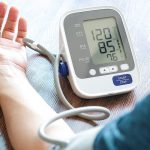
Folks figuring out how to take their blood pressure at home might be tempted to use online stock photos to see how it’s done — but they really shouldn’t, a new study warns. Only about 1 in 7 stock photos found online correctly depict the right way to measure blood pressure, researchers reported in the journal Hypertension. “We expected that about 50% of images would be accurate. However, our findings were worse than expected,” said lead researcher Alta Schutte, a professor of cardiovascular medicine at the University of New South Wales Sydney in Australia. “Because people tend to remember images better than words — a phenomenon known as the picture-superiority effect — inaccurate visuals could have serious public health consequences,” she added in a news release. Home blood pressure readings have become increasingly important, with clinical guidelines now recommending that people regularly self-monitor their pressure and report the data to their doctor, researchers said in background notes. But fewer than 1 in every 5 home blood pressure device owners report that someone has shown them how to properly take their own readings, researchers said. Many likely turn to the internet for guidance. For the new study, researchers analyzed more than 1,100 images found on 11 major online stock photo sites using the term “blood pressure check.” Only 14% of those images depicted people properly checking…  read on >  read on >

Folks figuring out how to take their blood pressure at home might be tempted to use online stock photos to see how it’s done — but they really shouldn’t, a new study warns. Only about 1 in 7 stock photos found online correctly depict the right way to measure blood pressure, researchers reported in the journal Hypertension. “We expected that about 50% of images would be accurate. However, our findings were worse than expected,” said lead researcher Alta Schutte, a professor of cardiovascular medicine at the University of New South Wales Sydney in Australia. “Because people tend to remember images better than words — a phenomenon known as the picture-superiority effect — inaccurate visuals could have serious public health consequences,” she added in a news release. Home blood pressure readings have become increasingly important, with clinical guidelines now recommending that people regularly self-monitor their pressure and report the data to their doctor, researchers said in background notes. But fewer than 1 in every 5 home blood pressure device owners report that someone has shown them how to properly take their own readings, researchers said. Many likely turn to the internet for guidance. For the new study, researchers analyzed more than 1,100 images found on 11 major online stock photo sites using the term “blood pressure check.” Only 14% of those images depicted people properly checking…  read on >  read on >

A novel pill that blocks the hormone aldosterone shows promise for lowering blood pressure and potentially delaying the progression of kidney disease in people with both conditions.  The preliminary findings were presented Saturday at an American Heart Association (AHA) meeting in Baltimore and simultaneously published in the Journal of the American Society of Nephrology. The Phase 2 clinical trial, known as FigHTN, found that the new medication, baxdrostat, yielded a roughly 5% reduction in systolic blood pressure when given to patients with chronic kidney disease (CKD) who were unable to control their high blood pressure with existing medications.  Systolic blood pressure is the top number in a blood pressure reading. It measures pressure against your artery walls as the heart beats, according to the AHA. “These findings are encouraging for people living with chronic kidney disease and high blood pressure, two conditions that often go hand-in-hand and create a dangerous cycle,” said study leader Dr. Jamie Dwyer, a professor of medicine at University of Utah Health in Salt Lake City. Unmanaged blood pressure can worsen kidney function, and declining kidney function can, in turn, further elevate blood pressure, creating a challenging loop for patients, he explained. Reported previously in HealthDay News, the new drug also showed benefit in other patients with treatment-resistant high blood pressure when taken once a day for three months. In an…  read on >  read on >

A novel pill that blocks the hormone aldosterone shows promise for lowering blood pressure and potentially delaying the progression of kidney disease in people with both conditions.  The preliminary findings were presented Saturday at an American Heart Association (AHA) meeting in Baltimore and simultaneously published in the Journal of the American Society of Nephrology. The Phase 2 clinical trial, known as FigHTN, found that the new medication, baxdrostat, yielded a roughly 5% reduction in systolic blood pressure when given to patients with chronic kidney disease (CKD) who were unable to control their high blood pressure with existing medications.  Systolic blood pressure is the top number in a blood pressure reading. It measures pressure against your artery walls as the heart beats, according to the AHA. “These findings are encouraging for people living with chronic kidney disease and high blood pressure, two conditions that often go hand-in-hand and create a dangerous cycle,” said study leader Dr. Jamie Dwyer, a professor of medicine at University of Utah Health in Salt Lake City. Unmanaged blood pressure can worsen kidney function, and declining kidney function can, in turn, further elevate blood pressure, creating a challenging loop for patients, he explained. Reported previously in HealthDay News, the new drug also showed benefit in other patients with treatment-resistant high blood pressure when taken once a day for three months. In an…  read on >  read on >

A heart health journey may start much earlier than once thought, as new research shows that kids with higher blood pressure at age 7 had a sharply increased risk of dying of heart disease by their mid-50s. The preliminary findings were presented Sunday at an American Heart Association (AHA) meeting in Baltimore and simultaneously published in the Journal of the American Medical Association.  The study is the first to examine the impact of both systolic and diastolic blood pressure in childhood on the long-term risk of heart-related death across a diverse group of children.  Systolic blood pressure, the top number in a blood pressure reading, is the force exerted in arteries while the heart is beating. Diastolic pressure is force between beats. “We were surprised to find that high blood pressure in childhood was linked to serious health conditions many years later,” said lead author Alexa Freedman, an assistant professor at Northwestern University’s Feinberg School of Medicine in Evanston, Ill. “Specifically, having hypertension or elevated blood pressure as a child may increase the risk of death by 40% to 50% over the next five decades of an individual’s life,” she added in a news release. The study followed some 38,000 children who were part of a massive health study across 12 U.S. sites in the 1960s and 1970s. Their blood pressure was measured at age…  read on >  read on >

A heart health journey may start much earlier than once thought, as new research shows that kids with higher blood pressure at age 7 had a sharply increased risk of dying of heart disease by their mid-50s. The preliminary findings were presented Sunday at an American Heart Association (AHA) meeting in Baltimore and simultaneously published in the Journal of the American Medical Association.  The study is the first to examine the impact of both systolic and diastolic blood pressure in childhood on the long-term risk of heart-related death across a diverse group of children.  Systolic blood pressure, the top number in a blood pressure reading, is the force exerted in arteries while the heart is beating. Diastolic pressure is force between beats. “We were surprised to find that high blood pressure in childhood was linked to serious health conditions many years later,” said lead author Alexa Freedman, an assistant professor at Northwestern University’s Feinberg School of Medicine in Evanston, Ill. “Specifically, having hypertension or elevated blood pressure as a child may increase the risk of death by 40% to 50% over the next five decades of an individual’s life,” she added in a news release. The study followed some 38,000 children who were part of a massive health study across 12 U.S. sites in the 1960s and 1970s. Their blood pressure was measured at age…  read on >  read on >

Older adults managing high blood pressure might just have one more tool in the toolbox.  A new study suggests that artificial intelligence (AI)-powered voice agents can help older adults manage their high blood pressure, potentially transforming how remote patient care is delivered.  These preliminary findings were presented Sunday during an American Heart Association meeting in Baltimore. During the study, an AI voice agent prompted patients who were missing blood pressure data or whose most recent BP reading was not within the normal range of less than 120/80 mm Hg to report home blood pressure readings. The research aimed to assess how adding AI into the clinical workflow could improve patients’ management of home blood pressure checks and identify those needing follow-up medical care.  The voice agent was designed to function like a health care professional, contacting patients, talking to them and asking them to provide blood pressure readings. “Controlling blood pressure remains a cornerstone for improving cardiovascular outcomes for patients, however, capturing timely, compliant blood pressure readings remains a challenge, particularly for patients with limited access to care,” said lead author Dr. Tina-Ann Kerr Thompson, a senior vice president at Emory Healthcare in Atlanta.  “In our study, we were able to improve accuracy of blood pressure measures and patient outcomes,” she added in a news release. Home monitoring is recommended for all adults with any…  read on >  read on >

Older adults managing high blood pressure might just have one more tool in the toolbox.  A new study suggests that artificial intelligence (AI)-powered voice agents can help older adults manage their high blood pressure, potentially transforming how remote patient care is delivered.  These preliminary findings were presented Sunday during an American Heart Association meeting in Baltimore. During the study, an AI voice agent prompted patients who were missing blood pressure data or whose most recent BP reading was not within the normal range of less than 120/80 mm Hg to report home blood pressure readings. The research aimed to assess how adding AI into the clinical workflow could improve patients’ management of home blood pressure checks and identify those needing follow-up medical care.  The voice agent was designed to function like a health care professional, contacting patients, talking to them and asking them to provide blood pressure readings. “Controlling blood pressure remains a cornerstone for improving cardiovascular outcomes for patients, however, capturing timely, compliant blood pressure readings remains a challenge, particularly for patients with limited access to care,” said lead author Dr. Tina-Ann Kerr Thompson, a senior vice president at Emory Healthcare in Atlanta.  “In our study, we were able to improve accuracy of blood pressure measures and patient outcomes,” she added in a news release. Home monitoring is recommended for all adults with any…  read on >  read on >

Just like their human counterparts, cats may act cranky or confused and have trouble sleeping as they age.  They may even yowl more than usual at night. These, researchers say, are dementia-like behaviors that may owe to an accumulation of plaques in their brain, just like those in people with Alzheimer’s disease. And this similarity might mean that cats could offer scientists an important new model of human Alzheimer’s and how to treat the irreversible disease.  “It’s exciting to have a naturally occurring model,” Roberta Marongiu, a neuroscientist at Weill Cornell Medicine in New York City, said in a news release. She was reacting to findings of a study published recently in the European Journal of Neuroscience. In their work, researchers studying Alzheimer’s generally use mice that have been genetically modified to develop the disease. But cats develop dementia naturally, just like people, which could make them a valuable resource. As with people, amyloid-beta plaques build up in their brains.  Researchers suspect that this buildup could be causing a cascade of problems within cats’ brain — for example, activating immune cells that attack links between nerve cells. These links are called synapses. Earlier research had found amyloid beta in cats’ brains, but scientists didn’t know how much it was affecting the animals’ brain function. Dr. Robert McGeachan, a veterinarian at the University of Edinburgh in…  read on >  read on >

Just like their human counterparts, cats may act cranky or confused and have trouble sleeping as they age.  They may even yowl more than usual at night. These, researchers say, are dementia-like behaviors that may owe to an accumulation of plaques in their brain, just like those in people with Alzheimer’s disease. And this similarity might mean that cats could offer scientists an important new model of human Alzheimer’s and how to treat the irreversible disease.  “It’s exciting to have a naturally occurring model,” Roberta Marongiu, a neuroscientist at Weill Cornell Medicine in New York City, said in a news release. She was reacting to findings of a study published recently in the European Journal of Neuroscience. In their work, researchers studying Alzheimer’s generally use mice that have been genetically modified to develop the disease. But cats develop dementia naturally, just like people, which could make them a valuable resource. As with people, amyloid-beta plaques build up in their brains.  Researchers suspect that this buildup could be causing a cascade of problems within cats’ brain — for example, activating immune cells that attack links between nerve cells. These links are called synapses. Earlier research had found amyloid beta in cats’ brains, but scientists didn’t know how much it was affecting the animals’ brain function. Dr. Robert McGeachan, a veterinarian at the University of Edinburgh in…  read on >  read on >