








All Sauce from Weekly Gravy:

Just weeks after colleges across the United States reopened their campuses for the fall semester, thousands of coronavirus infections are cropping up in students and staff alike. More than 1,500 American colleges and universities were tallied in The New York Times survey. That included every four-year public institution, every private college that competes in NCAA sports and others that identified cases. The case total: At least 26,000 cases and 64 deaths have been reported since the pandemic began, the Times reported. The trend is unfolding everywhere. The University of North Carolina at Chapel Hill sent most undergraduates home after COVID-19 clusters popped up in campus housing. In-person classes were delayed at Notre Dame as students tested positive by the hundreds. Clemson, Baylor, Louisville and dozens of other Division I universities have confirmed COVID-19 cases in their athletic departments. Meanwhile, aggressive testing of students moving into dorms turned up scores of cases at Iowa State, the Times reported. Meanwhile, the potential of convalescent plasma as a treatment for severe COVID-19 was still unclear Tuesday, as the World Health Organization cautioned the therapy remains experimental and American scientists challenged a key statistic cited by U.S. officials as grounds for emergency approval of the treatment. In announcing the approval this week, President Donald Trump and two of his top health officials stirred controversy when they used the same…  read on >

Women who are pregnant or trying to get pregnant may need to forgo coffee, tea, sodas and other sources of caffeine. A new data analysis finds no safe level of the drug during this time. “The cumulative scientific evidence supports pregnant women and women contemplating pregnancy being advised to avoid caffeine,” concluded study author Jack James, a professor at Reykjavik University in Iceland. The findings challenge current U.S. expert recommendations from organizations such as the March of Dimes and the American College of Obstetricians and Gynecologists. Those guidelines say that consuming a small amount of caffeine each day — 200 milligrams, equal to about a cup or two of coffee — does not appear to harm the fetus. In the new analysis, James tracked data from 37 studies and 11 meta-analyses (data gleaned from multiple studies) published over the past two decades. The study focused on six major negative pregnancy outcomes: miscarriage, stillbirth, low birth weight and/or babies small for gestational age, preterm birth, childhood acute leukemia, and childhood overweight/obesity. Of the 42 separate findings in the observational studies, 32 found that caffeine significantly increased the risk of a negative pregnancy outcome, while 10 others found either no associations or inconclusive associations. Caffeine-related risks were reported with moderate to high levels of consistency for all pregnancy outcomes except preterm birth. Of the 17 findings from…  read on >

Smokers with the most common type of heart rhythm disorder can reduce their risk of stroke and death by giving up cigarettes, a new study says. “Smoking precipitates blood clots that could lead to a stroke, which may be why giving up lowers risk,” said study author So-Ryoung Lee of Seoul National University Hospital in South Korea. But even former smokers had higher odds for stroke compared to never smokers, the study found. “The remaining stroke risk after quitting might be through the damage already caused to the arteries — called atherosclerosis,” Lee said in a European Society of Cardiology news release. Stroke is the most common cause of death in people with atrial fibrillation (a-fib). People with a-fib are five times more likely to have a stroke than those without the heart rhythm disorder. And a-fib increases the risk of death two-fold in women and 1.5-fold in men. Previous research has shown that smokers are at higher risk for a-fib and a subsequent stroke. This study included nearly 98,000 people, average age 61, in South Korea who were diagnosed with a-fib from 2010 to 2016. They were followed until the end of 2017, for a median follow-up of three years. Compared to current smokers, quitters were 30% less likely to have a stroke and 16% less likely to die from any cause. However, quitters…  read on >

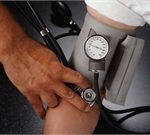
If you have hypertension and you’re depressed, don’t blame your blood pressure drugs. Although previous research hinted there might be a connection between high blood pressure medications and depression, a new study of dozens of commonly used drugs found no such link. In fact, the Danish researchers found the opposite — nine blood pressure drugs were associated with a lower risk of depression. How could blood pressure medication help depression? “It is possible that the mechanism involved in decreasing the risk of depression is the anti-inflammatory effect among these nine medications,” study author Dr. Lars Vedel Kessing said in a statement from the journal Hypertension, where the findings were published Aug. 24. He’s a professor of psychiatry at the Psychiatric Center Copenhagen and the University of Copenhagen in Denmark. Kessing added that more study is needed. But the findings might help doctors when choosing medications to treat high blood pressure in patients who also have depression or a high risk of depression. He also noted that the study wasn’t designed to prove a cause-and-effect relationship between the medications and a lower risk of depression. The new study relied on a Danish population registry. The researchers included 5.4 million people in Denmark in 2005 and followed their health outcomes until December 2015. During that time, nearly 3.75 million people were given a prescription for a high…  read on >

As the World Health Organization cautioned on Monday that using plasma from COVID-19 survivors to treat other patients is still an experimental therapy, American scientists challenged a key statistic cited by U.S. officials as grounds for emergency approval of the treatment. In announcing the approval on Sunday, President Donald Trump and two of his top health officials spoke of the same stunning statistic — that the treatment had reduced deaths by 35 percent, the New York Times reported. Dr. Stephen Hahn, the commissioner of the Food and Drug Administration, went so far as to say that 35 out of 100 COVID-19 patients “would have been saved because of the administration of plasma.” But many scientists, including a researcher on the Mayo Clinic study from which the statistic was supposedly gleaned, said Monday they could not ascertain where the number came from and that Hahn had appeared to overstate the treatment’s benefits, the Times reported. “Do I know where the 35 percent comes from?” said Dr. Arturo Casadevall, one of the May Clinic study’s main authors who hails from Johns Hopkins University in Baltimore. “No.” The actual data from the Mayo Clinic study shows that, among a group of more than 35,000 patients, when plasma was given within three day of diagnosis, the death rate was about 22 percent, compared with 27 percent when it was…  read on >

It may seem like a paradox, but giving someone a gift to help them save money is a sure way to make them hate it. The reason: It will make the recipient feel inferior to you, researchers say. In contrast, a gift that helps a recipient save time is taken as a compliment. The findings, from a series of experiments, are outlined in a study recently published in the Journal of the Association for Consumer Research. “Most of us have this belief that any gift we give is going to be appreciated — but the way a gift is presented can influence how people feel about it,” said study co-author Grant Donnelly, assistant professor of marketing at Ohio State University, in Columbus. “When you don’t have time, you’re perceived as busy and in high demand. There’s something high-status about that, compared to not having enough money, which is seen as low status,” Donnelly said in a university news release. In one experiment, the researchers asked 405 people how they felt about receiving a gift they thought was intended to save them either time or money. Those who received a gift that was intended to save them money were more likely to say it made them feel embarrassed, ashamed and bad, compared to those who received a time-saving gift. “They thought the gift-giver was implying they…  read on >

It may seem like a paradox, but giving someone a gift to help them save money is a sure way to make them hate it. The reason: It will make the recipient feel inferior to you, researchers say. In contrast, a gift that helps a recipient save time is taken as a compliment. The findings, from a series of experiments, are outlined in a study recently published in the Journal of the Association for Consumer Research. “Most of us have this belief that any gift we give is going to be appreciated — but the way a gift is presented can influence how people feel about it,” said study co-author Grant Donnelly, assistant professor of marketing at Ohio State University, in Columbus. “When you don’t have time, you’re perceived as busy and in high demand. There’s something high-status about that, compared to not having enough money, which is seen as low status,” Donnelly said in a university news release. In one experiment, the researchers asked 405 people how they felt about receiving a gift they thought was intended to save them either time or money. Those who received a gift that was intended to save them money were more likely to say it made them feel embarrassed, ashamed and bad, compared to those who received a time-saving gift. “They thought the gift-giver was implying they…  read on >

With the arrival of late summer, it’s essential to know the signs of heat exhaustion and how to intervene before it escalates to a more severe condition like heat stroke, emergency medicine experts say. Heat exhaustion comes with symptoms including: heavy sweating; breathlessness; a fast, but weak, pulse; headache; dizziness; nausea or vomiting. “Heat exhaustion can happen to anyone overexerting themselves in extreme heat,” said Dr. Laura Burke, an emergency medicine physician at Beth Israel Deaconess Medical Center in Boston. “If symptoms are severe, call for medical help right away.” Some people have an increased risk of heat exhaustion, including: People with heart disease or high blood pressure. People over age 65. Infants and children. People with sunburn, which impairs the cooling mechanism of the skin. If heat exhaustion occurs and appropriate measures are not taken to cool down, it can sometimes escalate to a life-threatening condition called heat stroke. “During heat stroke, the body can no longer cool itself down through sweating, which can result in damage to major organs,” Burke said in a hospital news release. Symptoms of heat stroke include hot and dry skin, a fever higher than 102 degrees Fahrenheit, headache, confusion and unconsciousness. “If you see someone suffering from heat stroke, try to cool the person down by getting to shade or into the air conditioning. Apply cool water with…  read on >

The Trump administration has blocked the U.S. Food and Drug Administration from regulating a wide swath of laboratory tests, including ones for the coronavirus. The new policy, which was posted Wednesday and is strongly opposed by the FDA itself, stunned health experts and laboratories because of its timing, the Washington Post reported. The change could result in unreliable coronavirus tests getting on the market, potentially worsening the testing crisis in the United States, experts told the newspaper. The one thing the change won’t do is solve testing shortages, because those are due mostly to a lack of the swabs and chemical reagents needed to perform COVID-19 tests, the Post reported. However, supporters claimed it could help get innovative tests to market more quickly. They said that the FDA review process sharply slowed testing at the beginning of the pandemic, and that the new policy could guard against future bottlenecks, the Post reported. Administration officials told the Post that the decision was made for legal reasons. But FDA Commissioner Stephen Hahn staunchly opposed the change, arguing that such authority is critical during a public health emergency like the pandemic, the newspaper reported. The tests affected by the change are those developed by and used at laboratories regulated under the federal government’s Clinical Laboratory Improvement Amendments program, the newspaper said. Such labs are in big academic medical…  read on >

High levels of air pollution may increase young children’s risk of developing asthma and persistent wheezing, researchers warn. The findings “support emerging evidence that exposure to air pollution might influence the development of asthma,” according to a report by Torben Sigsgaard, of Aarhus University in Denmark, and colleagues. For the new study, the researchers analyzed data on more than 797,000 Danish children who were born between 1997 and 2014 and followed from ages 1 year up to 15 years of age. Nearly 123,000 of the children developed asthma or persistent wheezing, just before age 2 on average. The researchers then checked data on air pollution levels at the children’s home addresses, parents’ asthma, mothers’ smoking, parental education and income. After accounting for other potentially influential factors, the investigators found higher levels of asthma and persistent wheezing in children of parents with asthma and in children of mothers who smoked during pregnancy. Lower levels of asthma and persistent wheezing were found in children of parents with high levels of education and high incomes. The researchers also found that children exposed to higher levels of fine particulate air pollution (PM2.5) were more likely to develop asthma and wheezing than those who weren’t exposed. In people with asthma, the airways become inflamed and produce extra mucus, which makes it difficult to breathe. The study was published online Aug.…  read on >