









All Sauce from Weekly Gravy:

Even low levels of lead exposure can harm kids’ working memory, potentially affecting their education and development, according to a new study. Exposure to lead in the womb or during early childhood appears to increase kids’ risk of memory decay, accelerating the rate at which they forget information, researchers reported July 9 in the journal Science Advances. “There may be no more important a trait than the ability to form memories. Memories define who we are and how we learn,” said senior researcher Dr. Robert Wright, chair of environmental medicine at the Icahn School of Medicine at Mount Sinai in New York City. “This paper breaks new ground by showing how environmental chemicals can interfere with the rate of memory formation,” Wright said in a news release. For the study, researchers took blood lead measurements from the mothers of 576 children in Mexico during the second and third trimester of pregnancy. Later, the team took samples directly from the kids themselves, at ages 4 to 6. Between 6 and 8 years of age, the kids took a test called the delayed matching-to-sample task, or DMST, to measure their rate of forgetting. In the test, kids had to remember a simple shape for up to 32 seconds after it had been briefly shown to them, and then choose it from three offered options. The test lasted…  read on >  read on >

Loneliness dramatically increases a person’s risk of depression and poor health, a new study says. Half of folks who say they always feel lonely (50%) have clinical depression, compared with just 10% of those who report never feeling lonely, researchers reported July 9 in the journal PLOS One. They also have many more days when their mental or physical health falters, researchers found. “People who felt lonely ‘always’ had a fivefold increase in depression risk, 11 more poor mental health days, and five additional poor physical health days per month compared to those who never felt lonely,” lead researcher Dr. Oluwasegun Akinyemi, a senior research fellow at Howard University College of Medicine in Washington, D.C., said in a news release. “Loneliness is not just an emotional state — it has measurable consequences for both mental and physical health,” his team added. “Addressing loneliness may be a critical public health priority to reduce depression and improve overall well-being.” For the study, researchers analyzed data gathered between 2016 and 2023 as part of an annual government survey on health risks, involving more than 47,000 people. More than 80% of people surveyed reported some level of loneliness, but those with higher levels were more likely to suffer mentally and physically, results show. “What stood out most was how strongly loneliness affected every aspect of health — underscoring the…  read on >  read on >

Loneliness dramatically increases a person’s risk of depression and poor health, a new study says. Half of folks who say they always feel lonely (50%) have clinical depression, compared with just 10% of those who report never feeling lonely, researchers reported July 9 in the journal PLOS One. They also have many more days when their mental or physical health falters, researchers found. “People who felt lonely ‘always’ had a fivefold increase in depression risk, 11 more poor mental health days, and five additional poor physical health days per month compared to those who never felt lonely,” lead researcher Dr. Oluwasegun Akinyemi, a senior research fellow at Howard University College of Medicine in Washington, D.C., said in a news release. “Loneliness is not just an emotional state — it has measurable consequences for both mental and physical health,” his team added. “Addressing loneliness may be a critical public health priority to reduce depression and improve overall well-being.” For the study, researchers analyzed data gathered between 2016 and 2023 as part of an annual government survey on health risks, involving more than 47,000 people. More than 80% of people surveyed reported some level of loneliness, but those with higher levels were more likely to suffer mentally and physically, results show. “What stood out most was how strongly loneliness affected every aspect of health — underscoring the…  read on >  read on >

According to the U.S. Centers for Disease Control and Prevention (CDC), in 2022, the majority of the 28.8 million U.S. adults who smoked cigarettes wanted to quit; approximately half had tried to quit, but fewer than 10% were successful. Many folks say quitting smoking was the hardest thing they have ever done. This includes people who have climbed mountains, corporate ladders, tackled childbirth and raised families. Successfully overcoming tobacco addiction is a process, and it takes time. It can’t be done at once. Individuals taught themselves how to smoke, vape or chew tobacco products and practiced for so long that the behavior became as automatic as breathing, eating or sleeping. Quitting, then, is a process of overcoming addiction and learned behaviors. Individuals must learn to manage nicotine addiction, unlearn their automatic behavior of tobacco use, and replace it with healthy new alternatives. Because tobacco dependence is a chronic relapsing condition, Freedom From Smoking® identifies quitting tobacco use and maintaining abstinence as a process in which a person may cycle through multiple periods of relapse and remission before experiencing long-term lifestyle and behavior change. The CDC suggests that it takes eight to 11 attempts before quitting permanently. It’s essential to understand three challenges associated with quitting and create a plan to address each with proven-effective strategies: 1. Psychological Link of Nicotine Addiction  What is it?  Over time,…  read on >  read on >

According to the U.S. Centers for Disease Control and Prevention (CDC), in 2022, the majority of the 28.8 million U.S. adults who smoked cigarettes wanted to quit; approximately half had tried to quit, but fewer than 10% were successful. Many folks say quitting smoking was the hardest thing they have ever done. This includes people who have climbed mountains, corporate ladders, tackled childbirth and raised families. Successfully overcoming tobacco addiction is a process, and it takes time. It can’t be done at once. Individuals taught themselves how to smoke, vape or chew tobacco products and practiced for so long that the behavior became as automatic as breathing, eating or sleeping. Quitting, then, is a process of overcoming addiction and learned behaviors. Individuals must learn to manage nicotine addiction, unlearn their automatic behavior of tobacco use, and replace it with healthy new alternatives. Because tobacco dependence is a chronic relapsing condition, Freedom From Smoking® identifies quitting tobacco use and maintaining abstinence as a process in which a person may cycle through multiple periods of relapse and remission before experiencing long-term lifestyle and behavior change. The CDC suggests that it takes eight to 11 attempts before quitting permanently. It’s essential to understand three challenges associated with quitting and create a plan to address each with proven-effective strategies: 1. Psychological Link of Nicotine Addiction  What is it?  Over time,…  read on >  read on >

A government-backed meal delivery service for people on Medicaid and Medicare is getting national attention — but not all of it is positive. Health Secretary Robert F. Kennedy Jr. recently praised Mom’s Meals, a company that sends prepackaged meals to people who are older or living with illnesses like cancer or diabetes, the Associated Press reported. “This is really one of the solutions for making our country healthy again,” Kennedy said in a video posted on X. He toured the company’s Oklahoma facility last week and thanked them for providing meals “without additives.” But experts say that’s not entirely true. An Associated Press investigation found that many of Mom’s Meals’ offerings are highly processed and contain ingredients that wouldn’t be found in a home kitchen. Marion Nestle, a nutrition expert at New York University, reviewed the menu, including nutrition labels and ingredients. Some meals — like chicken bacon ranch pasta or French toast sticks with ham — were high in salt, sugar or saturated fat, Nestle said. “It is perfectly possible to make meals like this with real foods and no ultra-processing additives but every one of the meals I looked at is loaded with such additives,” she said. “What’s so sad is that they don’t have to be this way,” Nestle added. “Other companies are able to produce much better products, but of course…  read on >  read on >

A government-backed meal delivery service for people on Medicaid and Medicare is getting national attention — but not all of it is positive. Health Secretary Robert F. Kennedy Jr. recently praised Mom’s Meals, a company that sends prepackaged meals to people who are older or living with illnesses like cancer or diabetes, the Associated Press reported. “This is really one of the solutions for making our country healthy again,” Kennedy said in a video posted on X. He toured the company’s Oklahoma facility last week and thanked them for providing meals “without additives.” But experts say that’s not entirely true. An Associated Press investigation found that many of Mom’s Meals’ offerings are highly processed and contain ingredients that wouldn’t be found in a home kitchen. Marion Nestle, a nutrition expert at New York University, reviewed the menu, including nutrition labels and ingredients. Some meals — like chicken bacon ranch pasta or French toast sticks with ham — were high in salt, sugar or saturated fat, Nestle said. “It is perfectly possible to make meals like this with real foods and no ultra-processing additives but every one of the meals I looked at is loaded with such additives,” she said. “What’s so sad is that they don’t have to be this way,” Nestle added. “Other companies are able to produce much better products, but of course…  read on >  read on >

A healthy plant-based diet might protect people from inflammatory bowel diseases, a new study says. People noshing healthy plant-based foods had a 14% lower risk of Crohn’s disease and an 8% lower risk of ulcerative colitis, researchers found. On the other hand, an unhealthy diet containing more animal fats and vegetable oils was associated with a 15% increased risk of Crohn’s disease, results show. “Our research indicates that a healthy plant-based diet may protect against inflammatory bowel disease, with its anti-inflammatory properties playing a key role,” senior researcher Dr. Zhe Shen of the Zhejiang University School of Medicine in China said in a news release. For the study, researchers tracked more than 143,000 people participating in the UK Biobank, a large-scale health research project among residents of the United Kingdom. As part of the project, patients filled out diet questionnaires. During an average 14.5 years of follow-up, more than 1,000 people developed inflammatory bowel disease, researchers found. Researchers graded participants’ diet based on their intake of healthy plant foods, unhealthy plant foods, and animal products. Analysis showed that higher intake of fruits and vegetables accounted for part of the lower risk for Crohn’s disease, researchers said. Blood tests from participants indicate that the anti-inflammatory properties of plant-based foods might explain this protection, researchers said. “These findings underscore the beneficial association between healthy plant-based diets and…  read on >  read on >

A healthy plant-based diet might protect people from inflammatory bowel diseases, a new study says. People noshing healthy plant-based foods had a 14% lower risk of Crohn’s disease and an 8% lower risk of ulcerative colitis, researchers found. On the other hand, an unhealthy diet containing more animal fats and vegetable oils was associated with a 15% increased risk of Crohn’s disease, results show. “Our research indicates that a healthy plant-based diet may protect against inflammatory bowel disease, with its anti-inflammatory properties playing a key role,” senior researcher Dr. Zhe Shen of the Zhejiang University School of Medicine in China said in a news release. For the study, researchers tracked more than 143,000 people participating in the UK Biobank, a large-scale health research project among residents of the United Kingdom. As part of the project, patients filled out diet questionnaires. During an average 14.5 years of follow-up, more than 1,000 people developed inflammatory bowel disease, researchers found. Researchers graded participants’ diet based on their intake of healthy plant foods, unhealthy plant foods, and animal products. Analysis showed that higher intake of fruits and vegetables accounted for part of the lower risk for Crohn’s disease, researchers said. Blood tests from participants indicate that the anti-inflammatory properties of plant-based foods might explain this protection, researchers said. “These findings underscore the beneficial association between healthy plant-based diets and…  read on >  read on >

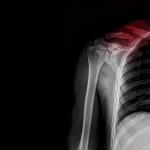
More kids are being hospitalized for broken collarbones, a new study has found. In fact, the hospitalization rate for broken collarbones more than doubled among children between 2014 and 2021, researchers reported. This increase occurred even though the overall rate of childhood clavicle fractures remained relatively stable during the past 10 years, researchers said. “This suggests that while the rate of clavicle fractures is stagnant, the severity of these fractures is rising,” wrote the research team led by Charu Jain, a student at the Icahn School of Medicine at Mount Sinai in New York City. For the study, researchers analyzed records from an injury surveillance database representing about 100 ERs in the United States, looking for collarbone fractures among kids 18 and younger. They wound up examining more than 391,000 cases of broken collarbone that occurred between 2014 and 2023. The hospitalization rate for broken collarbones rose to a high of 2.6% in 2021 from a low of 0.8% in 2014, researchers report. This jibes with previous studies that found more kids require metal implants to properly set their broken collarbones, indicating the fractures are too severe to be treated with a simple sling or cast, researchers said.  The study also found that younger kids are more likely to sustain a broken collarbone falling out of bed, while tweens and teens more often suffer breaks…  read on >  read on >