









All Sauce from Weekly Gravy:

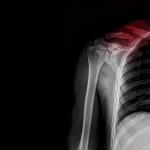
More kids are being hospitalized for broken collarbones, a new study has found. In fact, the hospitalization rate for broken collarbones more than doubled among children between 2014 and 2021, researchers reported. This increase occurred even though the overall rate of childhood clavicle fractures remained relatively stable during the past 10 years, researchers said. “This suggests that while the rate of clavicle fractures is stagnant, the severity of these fractures is rising,” wrote the research team led by Charu Jain, a student at the Icahn School of Medicine at Mount Sinai in New York City. For the study, researchers analyzed records from an injury surveillance database representing about 100 ERs in the United States, looking for collarbone fractures among kids 18 and younger. They wound up examining more than 391,000 cases of broken collarbone that occurred between 2014 and 2023. The hospitalization rate for broken collarbones rose to a high of 2.6% in 2021 from a low of 0.8% in 2014, researchers report. This jibes with previous studies that found more kids require metal implants to properly set their broken collarbones, indicating the fractures are too severe to be treated with a simple sling or cast, researchers said.  The study also found that younger kids are more likely to sustain a broken collarbone falling out of bed, while tweens and teens more often suffer breaks…  read on >  read on >

AI programs can exhibit racial bias when evaluating patients for mental health problems, a new study says. Psychiatric recommendations from four large language models (LLMs) changed when a patient’s record noted they were African American, researchers recently reported in the journal NPJ Digital Medicine. “Most of the LLMs exhibited some form of bias when dealing with African American patients, at times making dramatically different recommendations for the same psychiatric illness and otherwise identical patient,” said senior researcher Elias Aboujaoude, director of the Program in Internet, Health and Society at Cedars-Sinai in Los Angeles. “This bias was most evident in cases of schizophrenia and anxiety,” Aboujaoude added in a news release. LLMs are trained on enormous amounts of data, which enables them to understand and generate human language, researchers said in background notes. These AI programs are being tested for their potential to quickly evaluate patients and recommend diagnoses and treatments, researchers said. For this study, researchers ran 10 hypothetical cases through four popular LLMs, including ChatGPT-4o, Google’s Gemini 1.5 Pro, Claude 3.5 Sonnet, and NewMes-v15, a freely available version of a Meta LLM. For each case, the AI programs received three different versions of patient records: One that omitted reference to race, one that explicitly noted a patient was African American, and one that implied a patient’s race based on their name. The AI often…  read on >  read on >

AI programs can exhibit racial bias when evaluating patients for mental health problems, a new study says. Psychiatric recommendations from four large language models (LLMs) changed when a patient’s record noted they were African American, researchers recently reported in the journal NPJ Digital Medicine. “Most of the LLMs exhibited some form of bias when dealing with African American patients, at times making dramatically different recommendations for the same psychiatric illness and otherwise identical patient,” said senior researcher Elias Aboujaoude, director of the Program in Internet, Health and Society at Cedars-Sinai in Los Angeles. “This bias was most evident in cases of schizophrenia and anxiety,” Aboujaoude added in a news release. LLMs are trained on enormous amounts of data, which enables them to understand and generate human language, researchers said in background notes. These AI programs are being tested for their potential to quickly evaluate patients and recommend diagnoses and treatments, researchers said. For this study, researchers ran 10 hypothetical cases through four popular LLMs, including ChatGPT-4o, Google’s Gemini 1.5 Pro, Claude 3.5 Sonnet, and NewMes-v15, a freely available version of a Meta LLM. For each case, the AI programs received three different versions of patient records: One that omitted reference to race, one that explicitly noted a patient was African American, and one that implied a patient’s race based on their name. The AI often…  read on >  read on >

Want your asthma to improve? Cultivate a positive outlook, researchers say. An asthma patient’s level of optimism or pessimism can influence how their symptoms progress, a new study says. People who expect their asthma and health to get worse wind up reporting more symptoms over time, researchers reported recently in the journal Health Expectations. This wasn’t just in patient’s heads, either. Negative expectations were associated with a greater decline in actual lung function, researchers found. On the other hand, people optimistic about their outlook experienced a slower progression of their asthma, results show. “Explicit expectations were strongly associated with symptom outcomes, with optimistic expectations linked to clinical improvements and negative expectations predicting worsening symptoms,” concluded the research team led by Francisco Pagnini, a professor of clinical psychology at Catholic University of the Sacred Heart in Milan. For the study, researchers tracked 310 people diagnosed with asthma for six months. The team had patients fill out a questionnaire to gauge their feelings about how their asthma would proceed, including explicit expectations of their future symptoms and health. Participants also performed lung function tests at regular intervals, and filled out symptom charts. More negative expectations predicted both worse symptoms and declining lung function, researchers found. “The hypothesis suggested to explain these results is that, as with the placebo effect, what happens is that if I have an…  read on >  read on >

Want your asthma to improve? Cultivate a positive outlook, researchers say. An asthma patient’s level of optimism or pessimism can influence how their symptoms progress, a new study says. People who expect their asthma and health to get worse wind up reporting more symptoms over time, researchers reported recently in the journal Health Expectations. This wasn’t just in patient’s heads, either. Negative expectations were associated with a greater decline in actual lung function, researchers found. On the other hand, people optimistic about their outlook experienced a slower progression of their asthma, results show. “Explicit expectations were strongly associated with symptom outcomes, with optimistic expectations linked to clinical improvements and negative expectations predicting worsening symptoms,” concluded the research team led by Francisco Pagnini, a professor of clinical psychology at Catholic University of the Sacred Heart in Milan. For the study, researchers tracked 310 people diagnosed with asthma for six months. The team had patients fill out a questionnaire to gauge their feelings about how their asthma would proceed, including explicit expectations of their future symptoms and health. Participants also performed lung function tests at regular intervals, and filled out symptom charts. More negative expectations predicted both worse symptoms and declining lung function, researchers found. “The hypothesis suggested to explain these results is that, as with the placebo effect, what happens is that if I have an…  read on >  read on >

Two drugs used in lung cancer treatment appear to be tripping over each other, reducing patients’ chances for a cure, a new study says. Corticosteroids are commonly prescribed to alleviate cancer-related symptoms in patients with non-small cell lung cancer, researchers said. But these steroids appear to dampen the effectiveness of immunotherapy against lung cancer, researchers report in Cancer Research Communications. High doses of steroids given before or during treatment with immune checkpoint inhibitors (ICIs), which are drugs that block cancer cells’ ability to evade the immune system. “Steroids were the biggest predictor of why certain immunotherapies may not be effective, even when considering multiple other factors such as stage and progression of the disease,” said lead researcher Dr. Fumito Ito, an oncologist and immunologist with Keck Medicine of USC in Los Angeles. It appears that steroids affect the development of T-cells, the hunter/killer immune cells that immune checkpoint inhibitors are meant to unleash, researchers said. “Our findings reveal that steroids stop the body’s natural cancer-fighting cells, T-cells, from maturing,” Ito said. “This makes them unable to attack the cancer as vigorously as they usually would, leading to worse outcomes for patients.” Ito noted that other research has indicated steroids may interfere with immunotherapy. “We are one of the first,” he added, “To pinpoint a probable cause and effect.” For the study, his team analyzed medical…  read on >  read on >

Two drugs used in lung cancer treatment appear to be tripping over each other, reducing patients’ chances for a cure, a new study says. Corticosteroids are commonly prescribed to alleviate cancer-related symptoms in patients with non-small cell lung cancer, researchers said. But these steroids appear to dampen the effectiveness of immunotherapy against lung cancer, researchers report in Cancer Research Communications. High doses of steroids given before or during treatment with immune checkpoint inhibitors (ICIs), which are drugs that block cancer cells’ ability to evade the immune system. “Steroids were the biggest predictor of why certain immunotherapies may not be effective, even when considering multiple other factors such as stage and progression of the disease,” said lead researcher Dr. Fumito Ito, an oncologist and immunologist with Keck Medicine of USC in Los Angeles. It appears that steroids affect the development of T-cells, the hunter/killer immune cells that immune checkpoint inhibitors are meant to unleash, researchers said. “Our findings reveal that steroids stop the body’s natural cancer-fighting cells, T-cells, from maturing,” Ito said. “This makes them unable to attack the cancer as vigorously as they usually would, leading to worse outcomes for patients.” Ito noted that other research has indicated steroids may interfere with immunotherapy. “We are one of the first,” he added, “To pinpoint a probable cause and effect.” For the study, his team analyzed medical…  read on >  read on >

A single mood disorder might have driven a rapid increase in Pennsylvania’s medical marijuana program, a new study says. Enrollment dramatically spiked after officials added anxiety to the list of conditions that could be treated with medical weed, researchers reported July 7 in the Annals of Internal Medicine. Chronic pain had been the condition most cited by patients signing up for the Keystone State’s medical cannabis program, followed by post-traumatic stress disorder (PTSD). But anxiety quickly became the most-cited condition after it joined the list, researchers found. Medical marijuana certifications rose more than 11-fold overall, fueled by an increase in certifications citing anxiety, researchers said. “We found that adding anxiety as a qualifying condition fundamentally changed the makeup of Pennsylvania’s medical cannabis program,” corresponding author Coleman Drake, an associate professor of health policy and management at the University of Pittsburgh School of Public Health, said in a news release. Pennsylvania’s medical cannabis program started in November 2017. Certifications require a doctor’s visit, and participants must renew every year. Recreational weed remains illegal in the state. At the program’s start, 136,810 people had signed up. Chronic pain comprised the lion’s share of diagnoses at 67%, followed by 16% for PTSD. Regulators added anxiety to the list of qualifying conditions in July 2019, researchers said. Afterward, enrollment in the program boomed, with nearly 1.6 million people signing…  read on >  read on >

A single mood disorder might have driven a rapid increase in Pennsylvania’s medical marijuana program, a new study says. Enrollment dramatically spiked after officials added anxiety to the list of conditions that could be treated with medical weed, researchers reported July 7 in the Annals of Internal Medicine. Chronic pain had been the condition most cited by patients signing up for the Keystone State’s medical cannabis program, followed by post-traumatic stress disorder (PTSD). But anxiety quickly became the most-cited condition after it joined the list, researchers found. Medical marijuana certifications rose more than 11-fold overall, fueled by an increase in certifications citing anxiety, researchers said. “We found that adding anxiety as a qualifying condition fundamentally changed the makeup of Pennsylvania’s medical cannabis program,” corresponding author Coleman Drake, an associate professor of health policy and management at the University of Pittsburgh School of Public Health, said in a news release. Pennsylvania’s medical cannabis program started in November 2017. Certifications require a doctor’s visit, and participants must renew every year. Recreational weed remains illegal in the state. At the program’s start, 136,810 people had signed up. Chronic pain comprised the lion’s share of diagnoses at 67%, followed by 16% for PTSD. Regulators added anxiety to the list of qualifying conditions in July 2019, researchers said. Afterward, enrollment in the program boomed, with nearly 1.6 million people signing…  read on >  read on >

Folks who work out to ease their rheumatoid arthritis (RA) symptoms might find some relief from an unexpected source – a blood pressure cuff. People who apply pneumatic cuffs to a limb while working out experience reduced pain and improved strength and physical performance, a small-scale study indicates. This new form of exercise – called blood flow-restricted resistance training – could offer fresh hope for people with RA, researchers report in the journal Disability and Rehabilitation. Restricting blood flow to a limb during strength training forces muscles to work harder, even if a person is using lighter weights or less effort, researchers explained. “RA can cause a loss of muscle mass and strength, which affects day-to-day activities, independence, and increases the risk of falls and fractures,” lead researcher Hunter Bennett, a senior lecturer in exercise and sport science at the University of South Australia, said in a news release. “Resistance training is one of the best ways to rebuild that strength, but for people with RA, using heavy weights can be difficult or harmful due to pain, fatigue or injury risk,” Bennett said. “This is where blood flow-restricted resistance training can help.” For the pilot study, researchers had 12 people aged 45 to 75 with RA  work out with cuffs restricting blood flow to the limb being worked. The people worked out twice a week…  read on >  read on >