









All Sauce from Weekly Gravy:

Folks who work out to ease their rheumatoid arthritis (RA) symptoms might find some relief from an unexpected source – a blood pressure cuff. People who apply pneumatic cuffs to a limb while working out experience reduced pain and improved strength and physical performance, a small-scale study indicates. This new form of exercise – called blood flow-restricted resistance training – could offer fresh hope for people with RA, researchers report in the journal Disability and Rehabilitation. Restricting blood flow to a limb during strength training forces muscles to work harder, even if a person is using lighter weights or less effort, researchers explained. “RA can cause a loss of muscle mass and strength, which affects day-to-day activities, independence, and increases the risk of falls and fractures,” lead researcher Hunter Bennett, a senior lecturer in exercise and sport science at the University of South Australia, said in a news release. “Resistance training is one of the best ways to rebuild that strength, but for people with RA, using heavy weights can be difficult or harmful due to pain, fatigue or injury risk,” Bennett said. “This is where blood flow-restricted resistance training can help.” For the pilot study, researchers had 12 people aged 45 to 75 with RA  work out with cuffs restricting blood flow to the limb being worked. The people worked out twice a week…  read on >  read on >
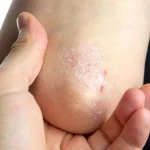
Psoriasis is a chronic autoimmune condition that mainly affects the skin. When you have psoriasis, your immune system sends signals to your skin cells to grow too fast. Normally, skin cells take about a month to form and rise to the surface. In people with psoriasis, this process happens in just a few days. Because the skin can’t shed these cells fast enough, they pile up and form thick, scaly patches called plaques. These plaques can appear anywhere, but they are most common on the elbows, knees, scalp and lower back. Psoriasis is not contagious, meaning you cannot catch it from someone else or give it to anyone. What causes psoriasis? Psoriasis develops when the immune system becomes overactive, but the exact reason why this happens isn’t fully understood. It seems to be a combination of genetics and triggers in the environment. Genetics: If someone in your family has psoriasis, your chances of getting it are higher. Immune system: Psoriasis is considered an autoimmune disease, in which your body attacks healthy skin cells by mistake. Triggers: Even if you’re genetically prone to psoriasis, it may only show up after something sets it off. Triggers vary from person to person, but common ones include: stress, infections (like strep throat), skin injuries (cuts, burns, bug bites), certain medications, cold or dry weather and smoking and heavy alcohol…  read on >  read on >

Psoriasis is a chronic autoimmune condition that mainly affects the skin. When you have psoriasis, your immune system sends signals to your skin cells to grow too fast. Normally, skin cells take about a month to form and rise to the surface. In people with psoriasis, this process happens in just a few days. Because the skin can’t shed these cells fast enough, they pile up and form thick, scaly patches called plaques. These plaques can appear anywhere, but they are most common on the elbows, knees, scalp and lower back. Psoriasis is not contagious, meaning you cannot catch it from someone else or give it to anyone. What causes psoriasis? Psoriasis develops when the immune system becomes overactive, but the exact reason why this happens isn’t fully understood. It seems to be a combination of genetics and triggers in the environment. Genetics: If someone in your family has psoriasis, your chances of getting it are higher. Immune system: Psoriasis is considered an autoimmune disease, in which your body attacks healthy skin cells by mistake. Triggers: Even if you’re genetically prone to psoriasis, it may only show up after something sets it off. Triggers vary from person to person, but common ones include: stress, infections (like strep throat), skin injuries (cuts, burns, bug bites), certain medications, cold or dry weather and smoking and heavy alcohol…  read on >  read on >

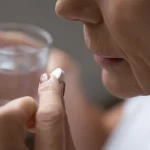
About 1 in 6 older adults takes daily aspirin to prevent heart disease, even though stricter guidelines say it’s not for everyone, a new study says. Worse, nearly a quarter of those folks started taking aspirin without a doctor’s recommendation, and about 1 in 10 haven’t discussed their use with any health care provider, researchers found. “For some patients without a history of cardiovascular disease, the benefits of taking aspirin for primary prevention may be offset by an increased risk of bleeding, especially as patients get older,” said senior researcher Dr. Jordan Schaefer, a clinical associate professor of internal medicine-hematology at the University of Michigan Medical School. “It is even more concerning when patients are taking aspirin without consulting their physician,” Schaefer added in a news release. “A provider can’t help a patient understand the risks and benefits of aspirin if they are left in the dark.” During the past decade, newer research highlighted a significant bleeding risk associated with aspirin’s use in people who have no history of heart attack or heart disease, researchers said in background notes. As a result, guidelines have tightened around aspirin’s use as primary prevention — warding off heart problems before they develop, researchers said. A significant number of people remain unaware of this bleeding risk, the new study found. Only 68% of people agree that daily aspirin increases…  read on >  read on >

About 1 in 6 older adults takes daily aspirin to prevent heart disease, even though stricter guidelines say it’s not for everyone, a new study says. Worse, nearly a quarter of those folks started taking aspirin without a doctor’s recommendation, and about 1 in 10 haven’t discussed their use with any health care provider, researchers found. “For some patients without a history of cardiovascular disease, the benefits of taking aspirin for primary prevention may be offset by an increased risk of bleeding, especially as patients get older,” said senior researcher Dr. Jordan Schaefer, a clinical associate professor of internal medicine-hematology at the University of Michigan Medical School. “It is even more concerning when patients are taking aspirin without consulting their physician,” Schaefer added in a news release. “A provider can’t help a patient understand the risks and benefits of aspirin if they are left in the dark.” During the past decade, newer research highlighted a significant bleeding risk associated with aspirin’s use in people who have no history of heart attack or heart disease, researchers said in background notes. As a result, guidelines have tightened around aspirin’s use as primary prevention — warding off heart problems before they develop, researchers said. A significant number of people remain unaware of this bleeding risk, the new study found. Only 68% of people agree that daily aspirin increases…  read on >  read on >

Alkaline. Electrolyte. Flavored. Walk down the beverage aisle and you’ll find all kinds of waters promising extra health perks. But are these fancy waters really better for you? Not really, Tufts University experts say. “There’s no physiological basis that there’s some metabolic benefit to these specialty waters over just regular, plain old water,” said Roger Fielding, a senior scientist at the Jean Mayer USDA Human Nutrition Research Center on Aging at Tufts in Boston. For most people, Fielding said the best thing to do is simply drink more fluids — especially since many people walk around mildly dehydrated. “If you have a preference for a beverage and that’s going to make you drink more and you’ll be more attentive to rehydrating with that beverage, and you have the resources to purchase that beverage, well have at it,” Fielding said in a news release. “Just like with sweetened beverages to an extent, if you’re not in excess, you’re more likely to rehydrate because a beverage is sweetened or flavored,” he added. Still, Fielding urged people to check nutrition labels — yes, even on water. Waters labeled with “added electrolytes” may contain added sodium. Adults should aim for less than 2 grams of sodium a day. “If someone consumes large amounts of water with high levels of sodium, they could elevate their risk of hypertension and other…  read on >  read on >

Alkaline. Electrolyte. Flavored. Walk down the beverage aisle and you’ll find all kinds of waters promising extra health perks. But are these fancy waters really better for you? Not really, Tufts University experts say. “There’s no physiological basis that there’s some metabolic benefit to these specialty waters over just regular, plain old water,” said Roger Fielding, a senior scientist at the Jean Mayer USDA Human Nutrition Research Center on Aging at Tufts in Boston. For most people, Fielding said the best thing to do is simply drink more fluids — especially since many people walk around mildly dehydrated. “If you have a preference for a beverage and that’s going to make you drink more and you’ll be more attentive to rehydrating with that beverage, and you have the resources to purchase that beverage, well have at it,” Fielding said in a news release. “Just like with sweetened beverages to an extent, if you’re not in excess, you’re more likely to rehydrate because a beverage is sweetened or flavored,” he added. Still, Fielding urged people to check nutrition labels — yes, even on water. Waters labeled with “added electrolytes” may contain added sodium. Adults should aim for less than 2 grams of sodium a day. “If someone consumes large amounts of water with high levels of sodium, they could elevate their risk of hypertension and other…  read on >  read on >

Fireworks are the pinnacle of many Fourth of July celebrations, and while they can be festive and fun, they can also land you in the emergency room if you don’t take proper precautions, experts warn. About 250 people a day wind up in the ER with fireworks-related injuries in the month before and after Independence Day. More than 75% of these injuries affect the head, neck, arms and hands, according to the American Academy of Facial Plastic & Reconstructive Surgery (AAFPRS). “These injuries can include burns, eye trauma and hearing or vision issues, and in some cases, disfigurement,” said Dr. Patrick Byrne, a facial plastic and reconstructive surgeon and president of AAFPRS.  “Treatment frequently requires a multidisciplinary approach,” he added in a news release. Taking simple precautions, however, can keep you safe during firework displays:  For starters, leave the light show to the pros. Always attend professional fireworks shows instead of lighting your own firecrackers, the academy recommends. Keep children at a safe distance from all fireworks, including sparklers, which burn at nearly 2,000 degrees. Never re-light or handle fireworks that fail to ignite (duds). Instead, wait 20 minutes, then soak them in water before disposing of them. Always have water nearby in case of fire or malfunction. If you are lighting your own firecrackers, light one at a time and back away quickly. More information  The U.S. Consumer Product…  read on >  read on >

Fireworks are the pinnacle of many Fourth of July celebrations, and while they can be festive and fun, they can also land you in the emergency room if you don’t take proper precautions, experts warn. About 250 people a day wind up in the ER with fireworks-related injuries in the month before and after Independence Day. More than 75% of these injuries affect the head, neck, arms and hands, according to the American Academy of Facial Plastic & Reconstructive Surgery (AAFPRS). “These injuries can include burns, eye trauma and hearing or vision issues, and in some cases, disfigurement,” said Dr. Patrick Byrne, a facial plastic and reconstructive surgeon and president of AAFPRS.  “Treatment frequently requires a multidisciplinary approach,” he added in a news release. Taking simple precautions, however, can keep you safe during firework displays:  For starters, leave the light show to the pros. Always attend professional fireworks shows instead of lighting your own firecrackers, the academy recommends. Keep children at a safe distance from all fireworks, including sparklers, which burn at nearly 2,000 degrees. Never re-light or handle fireworks that fail to ignite (duds). Instead, wait 20 minutes, then soak them in water before disposing of them. Always have water nearby in case of fire or malfunction. If you are lighting your own firecrackers, light one at a time and back away quickly. More information  The U.S. Consumer Product…  read on >  read on >

The age-old “early to bed, early to rise” proverb applies to your daily exercise regimen as well as your health, wealth and wisdom, a new study says. Folks who get to bed earlier tend to be more physically active every day, researchers reported June 30 in the Proceedings of the National Academy of Sciences. On average, folks with a typical bedtime around 9 p.m. logged about 30 more minutes of moderate-to-vigorous physical activity each day, compared to night owls up ’til 1 a.m., researchers found. Even delaying sleep by a couple of hours can hamper the next day’s workout, results show. Those hitting the hay at 9 p.m. recorded nearly 15 additional minutes of exercise compared to those who delayed their sleep until 11 p.m., researchers found. “Sleep and physical activity are both critical to health, but until now we didn’t fully grasp how intricately connected they are in everyday life,” senior investigator Elise Facer-Childs, a senior research fellow with the Monash University School of Psychological Sciences in Australia, said in a news release. For the study, nearly 20,000 people wore a sleep-and-activity tracker on their wrist for a year. On average, the entire sample tended to nod off around 11 p.m. Results show that sleeping less than usual and falling asleep earlier were both associated with increased physical activity, compared with sleeping longer or…  read on >  read on >