









All Sauce from Weekly Gravy:

A new Chinese-developed GLP-1 weight loss drug could prove a new competitor to blockbuster drugs Ozempic/Wegovy and Zepbound, clinical trial results show. Ecnoglutide helped people lose between 9% to 13% of their body weight on average after 40 weeks of treatment, according to phase 3 trial findings published June 21 in The Lancet Diabetes & Endocrinology. That average weight loss rose to more than 15% by week 48 on the heaviest dose of ecnoglutide, researchers reported in updated trial results presented Saturday at the American Diabetes Association’s annual meeting in Chicago. Overall, nearly 93% of trial participants lost 5% or more of their body weight, nearly seven times the weight loss achieved by a control group given a placebo, researchers said. Those results outperformed the Chinese clinical trials of semaglutide (Ozempic) and tirzepatide (Zepbound), which helped 85% to 88% of participants lose 5% of more of their weight, researchers noted in their paper. Participants “continued to have weight loss at week 48 without reaching a plateau, indicating that even greater weight loss might be achievable with extended ecnoglutide treatment,” lead researcher Dr. Linong Ji of the Peking University People’s Hospital in Beijing said in a news release. “Considering the high potency of ecnoglutide, it might also serve as a viable option for individuals who do not achieve sufficient weight reduction with existing GLP-1 receptor agonists…  read on >  read on >

Want to lose weight and reverse type 2 diabetes? Trade your diet soda for a tall glass of water, a new small-scale study argues. Women were more likely to drop pounds and see their type 2 diabetes go into remission if they drank water rather than diet beverages, according to a study presented Sunday at a meeting of the American Diabetes Association (ADA). “These findings challenge a common belief in the U.S. that diet drinks have no potential negative effects for managing weight and blood sugar,” lead researcher Dr. Hamid Farshchi, CEO of D2Type Health, said in a news release. About 1 in 5 Americans imbibe a diet drink on any given day, according to the U.S. Centers for Disease Control and Prevention (CDC). Although they’re calorie-free, diet sodas might have other effects on the body, researchers said in background notes. A July 2023 study in the journal Diabetes Care found that people who consumed more artificial sweeteners were more likely to develop type 2 diabetes. In that paper, researchers speculated that artificial sweeteners might disturb blood sugar and body fat metabolism, alter the gut bacteria that play a role in digestion, or cause increased hunger. For the new study, 81 women with type 2 diabetes and excess weight completed a six-month weight-loss program followed by one year on a weight maintenance program. Half the women…  read on >  read on >

Want to lose weight and reverse type 2 diabetes? Trade your diet soda for a tall glass of water, a new small-scale study argues. Women were more likely to drop pounds and see their type 2 diabetes go into remission if they drank water rather than diet beverages, according to a study presented Sunday at a meeting of the American Diabetes Association (ADA). “These findings challenge a common belief in the U.S. that diet drinks have no potential negative effects for managing weight and blood sugar,” lead researcher Dr. Hamid Farshchi, CEO of D2Type Health, said in a news release. About 1 in 5 Americans imbibe a diet drink on any given day, according to the U.S. Centers for Disease Control and Prevention (CDC). Although they’re calorie-free, diet sodas might have other effects on the body, researchers said in background notes. A July 2023 study in the journal Diabetes Care found that people who consumed more artificial sweeteners were more likely to develop type 2 diabetes. In that paper, researchers speculated that artificial sweeteners might disturb blood sugar and body fat metabolism, alter the gut bacteria that play a role in digestion, or cause increased hunger. For the new study, 81 women with type 2 diabetes and excess weight completed a six-month weight-loss program followed by one year on a weight maintenance program. Half the women…  read on >  read on >

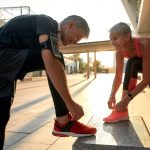
Spending time outside walking, hiking or running is a great way to stay healthy during the summer. But before you jump into a new routine, health experts say it’s important to take steps to stay safe and avoid injury. They recommend getting at least 150 minutes of moderate activity each week, such as brisk walking, to stay in shape. Outdoor exercise comes with fresh air and great views — but it can also come with some added risks,  warned Dr. Travis Miller, a sports medicine doctor at Penn State Health Orthopedics in Berks County, Pa. He shared his top safety tips: 1. Start slow and steady. If you haven’t worked out much during winter or spring, take it easy. “As people are excited to work on their fitness goals, sometimes they decide they’re going to exercise for an hour a day starting Monday, but by Wednesday or Thursday they’re so sore they can’t move,” Miller said. Start with a 15-minute walk daily, then increase that by 10% every week to build endurance slowly. 2. Stretch your feet and ankles. One of the most common injuries Miller sees involves overused tendons in the feet, ankles and heels. Try this simple stretch: Sit with legs straight and loop a towel or shirt around your toes and hold both ends. Push your toes forward to stretch your feet,…  read on >  read on >

Spending time outside walking, hiking or running is a great way to stay healthy during the summer. But before you jump into a new routine, health experts say it’s important to take steps to stay safe and avoid injury. They recommend getting at least 150 minutes of moderate activity each week, such as brisk walking, to stay in shape. Outdoor exercise comes with fresh air and great views — but it can also come with some added risks,  warned Dr. Travis Miller, a sports medicine doctor at Penn State Health Orthopedics in Berks County, Pa. He shared his top safety tips: 1. Start slow and steady. If you haven’t worked out much during winter or spring, take it easy. “As people are excited to work on their fitness goals, sometimes they decide they’re going to exercise for an hour a day starting Monday, but by Wednesday or Thursday they’re so sore they can’t move,” Miller said. Start with a 15-minute walk daily, then increase that by 10% every week to build endurance slowly. 2. Stretch your feet and ankles. One of the most common injuries Miller sees involves overused tendons in the feet, ankles and heels. Try this simple stretch: Sit with legs straight and loop a towel or shirt around your toes and hold both ends. Push your toes forward to stretch your feet,…  read on >  read on >

The first two years of a baby’s life are critical for brain development, and how the brain grows during that time may help predict future learning, behavior and health. That’s according to experts at Cedars-Sinai, who are working to better understand how brain connections and genetics influence a child’s development. “We want to use advanced imaging as a tool to detect deviations as early as possible so that we can hopefully bring them back to the normal trajectory,” said Wei Gao, director of Neuroimaging Research at Cedars-Sinai and a professor of biomedical sciences. Gao said a baby’s brain first develops areas that control movement and senses, followed closely by social and emotional skills. “The first year is where you need to pay very special attention to the social-emotional development of the baby,” Gao said in a news release. “You want to provide sensitive support to the baby so the baby can develop a secure attachment with you as a caregiver. That has long-term impacts to their later achievements and quality of life.” He and his team created one of the first detailed maps showing how parts of the brain connect during early childhood. In a new study, they are tracking more than 7,000 children from birth through age 10. By combining brain scans with information about each child’s environment and genetics, researchers hope to learn…  read on >  read on >

The first two years of a baby’s life are critical for brain development, and how the brain grows during that time may help predict future learning, behavior and health. That’s according to experts at Cedars-Sinai, who are working to better understand how brain connections and genetics influence a child’s development. “We want to use advanced imaging as a tool to detect deviations as early as possible so that we can hopefully bring them back to the normal trajectory,” said Wei Gao, director of Neuroimaging Research at Cedars-Sinai and a professor of biomedical sciences. Gao said a baby’s brain first develops areas that control movement and senses, followed closely by social and emotional skills. “The first year is where you need to pay very special attention to the social-emotional development of the baby,” Gao said in a news release. “You want to provide sensitive support to the baby so the baby can develop a secure attachment with you as a caregiver. That has long-term impacts to their later achievements and quality of life.” He and his team created one of the first detailed maps showing how parts of the brain connect during early childhood. In a new study, they are tracking more than 7,000 children from birth through age 10. By combining brain scans with information about each child’s environment and genetics, researchers hope to learn…  read on >  read on >

A popular crisis support line for LGBTQ+ youth and young adults is shutting down July 17, federal officials confirmed this week. The “Press 3” option on the 988 National Suicide & Crisis Lifeline, which offers specialized support for LGBTQ+ callers, will no longer be available. The same is true for the “PRIDE” text option, The Associated Press said. The U.S. Department of Health and Human Services’ Substance Abuse and Mental Health Services Administration (SAMHSA) said it made the decision to better serve all callers instead of separating services. The decision was made to “no longer silo the services,” and “to focus on serving all help seekers, including those previously helped through the Press 3 option,” the agency said in a June 17 statement. Since it launched in September 2022, the LGBTQ+ line has handled nearly 1.3 million calls, according to SAMHSA data. LGBTQ+ advocates say the change puts vulnerable youth at greater risk. “Suicide prevention is about people, not politics,” Jaymes Black, CEO of The Trevor Project, a nonprofit that helps LGBTQ+ youth in crisis, told The AP. “The administration’s decision to remove a bipartisan, evidence-based service that has effectively supported a high-risk group of young people through their darkest moments is incomprehensible,” Black said. The Trevor Project is one of seven groups that provide 988 crisis support services. It says it alone handled nearly…  read on >  read on >

A popular crisis support line for LGBTQ+ youth and young adults is shutting down July 17, federal officials confirmed this week. The “Press 3” option on the 988 National Suicide & Crisis Lifeline, which offers specialized support for LGBTQ+ callers, will no longer be available. The same is true for the “PRIDE” text option, The Associated Press said. The U.S. Department of Health and Human Services’ Substance Abuse and Mental Health Services Administration (SAMHSA) said it made the decision to better serve all callers instead of separating services. The decision was made to “no longer silo the services,” and “to focus on serving all help seekers, including those previously helped through the Press 3 option,” the agency said in a June 17 statement. Since it launched in September 2022, the LGBTQ+ line has handled nearly 1.3 million calls, according to SAMHSA data. LGBTQ+ advocates say the change puts vulnerable youth at greater risk. “Suicide prevention is about people, not politics,” Jaymes Black, CEO of The Trevor Project, a nonprofit that helps LGBTQ+ youth in crisis, told The AP.  “The administration’s decision to remove a bipartisan, evidence-based service that has effectively supported a high-risk group of young people through their darkest moments is incomprehensible,” Black said. The Trevor Project is one of seven groups that provide 988 crisis support services. It says it alone handled nearly…  read on >  read on >

Harried parents aren’t wrong to suspect something’s changed in what is expected of them when it comes to their children’s sports activities, a new study says. Modern-day parents are spending more time, money and resources on their kids’ sports activities than moms and dads from previous generations, researchers report. “We’ve heard these stories about how parents are spending so much time going to their kids’ athletic events, spending more money, going all in — but it wasn’t clear if these were just stories,” senior researcher Chris Bjork, a professor of education at Vassar College in Poughkeepsie, N.Y., said in a news release. “Now we have some empirical evidence that parents aren’t wrong about this,” he continued. “Things have changed.” For the study, researchers analyzed data from nearly 4,000 adults who participated in the National Sports and Society Survey, a poll sponsored by Ohio State University’s Sports and Society Initiative. Participants from all 50 states answered the survey online between fall 2018 and spring 2019.  They were asked about how often their parents attended their athletic events and how much money their parents spent on their sports participation in a typical year, when they were growing up. Results show a pattern of increasing parental involvement in children’s sports, especially among parents with higher education. Most participants born in the 1950s said their parents attended their sporting…  read on >  read on >