









All Sauce from Weekly Gravy:

Harried parents aren’t wrong to suspect something’s changed in what is expected of them when it comes to their children’s sports activities, a new study says. Modern-day parents are spending more time, money and resources on their kids’ sports activities than moms and dads from previous generations, researchers report. “We’ve heard these stories about how parents are spending so much time going to their kids’ athletic events, spending more money, going all in — but it wasn’t clear if these were just stories,” senior researcher Chris Bjork, a professor of education at Vassar College in Poughkeepsie, N.Y., said in a news release. “Now we have some empirical evidence that parents aren’t wrong about this,” he continued. “Things have changed.” For the study, researchers analyzed data from nearly 4,000 adults who participated in the National Sports and Society Survey, a poll sponsored by Ohio State University’s Sports and Society Initiative. Participants from all 50 states answered the survey online between fall 2018 and spring 2019.  They were asked about how often their parents attended their athletic events and how much money their parents spent on their sports participation in a typical year, when they were growing up. Results show a pattern of increasing parental involvement in children’s sports, especially among parents with higher education. Most participants born in the 1950s said their parents attended their sporting…  read on >  read on >

Throbbing, swollen knees hobble many seniors, but there are many solid means of treating knee arthritis that don’t involve meds, a new evidence review says. Knee braces, water therapy and exercise all effectively ease the ache of wear-and-tear knee arthritis, researchers reported today in the journal PLOS One. “They reduce pain and improve mobility without the gastrointestinal or cardiovascular risks linked to common pain medications,” wrote the research team led by senior researcher Yuan Luo of the First People’s Hospital of Neijiang in China. “Patients and clinicians should prioritize these evidence-based options,” researchers concluded. More than 10% of people older than 60 have knee arthritis, researchers said in background notes. That makes simple, cheap treatments a must, especially if they come without the side effects associated with many drugs. For the study, researchers pooled data from 139 clinical trials involving nearly 10,000 people to compare 12 knee arthritis treatments that don’t involve drugs. These studies focused on knee osteoarthritis, which occurs when cartilage breaks down over time and bones start rubbing together. Knee braces came out on top, with results showing that wearing the devices can reduce pain, improve function and relieve stiffness. Exercises or treatments performed in warm water, also known as hydrotherapy, were particularly effective at easing pain, researchers found. And general exercise also was consistently effective, improving both pain and physical function…  read on >  read on >

One of the nation’s largest food companies is planning a big change to its ingredients list. Kraft Heinz said it will stop using artificial dyes in all U.S. products by the end of 2027. The company also said it won’t use any synthetic colors in new products going forward, The Wall Street Journal reported. Artificial dyes — like Red 40, Yellow 5 and 6, Blue 1 and 2 and Green 3 — are used in everything from candy and frosting to pie crusts and salad dressing. They are used to make foods look more appealing or bring back color that was lost during processing. But many health experts, including those in the U.S. government, are now pushing back against them. In April, the U.S. Department of Health and Human Services and the Food and Drug Administration (FDA) announced a plan to work with food companies to remove six synthetic dyes from the U.S. food supply by the end of 2026. The effort is part of U.S. Health Secretary Robert F. Kennedy Jr.’s “Make America Healthy Again” — or MAHA — initiative. Kennedy has blamed artificial dyes and other additives for health problems in children. While some food industry groups argue the dyes are safe and approved by regulators, others are already changing course. Companies like PepsiCo and WK Kellogg are also working to reduce or…  read on >  read on >

One of the nation’s largest food companies is planning a big change to its ingredients list. Kraft Heinz said it will stop using artificial dyes in all U.S. products by the end of 2027. The company also said it won’t use any synthetic colors in new products going forward, The Wall Street Journal reported. Artificial dyes — like Red 40, Yellow 5 and 6, Blue 1 and 2 and Green 3 — are used in everything from candy and frosting to pie crusts and salad dressing. They are used to make foods look more appealing or bring back color that was lost during processing. But many health experts, including those in the U.S. government, are now pushing back against them. In April, the U.S. Department of Health and Human Services and the Food and Drug Administration (FDA) announced a plan to work with food companies to remove six synthetic dyes from the U.S. food supply by the end of 2026. The effort is part of U.S. Health Secretary Robert F. Kennedy Jr.’s “Make America Healthy Again” — or MAHA — initiative. Kennedy has blamed artificial dyes and other additives for health problems in children. While some food industry groups argue the dyes are safe and approved by regulators, others are already changing course. Companies like PepsiCo and WK Kellogg are also working to reduce or…  read on >  read on >

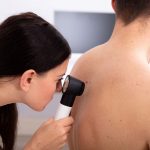
An experimental AI tool can help speed detection of melanoma and other skin diseases, a new study says. The tool, PanDerm, improved accuracy of skin cancer diagnoses by 11% when used by doctors, researchers reported recently in the journal Nature Medicine. It also helped doctors improve by nearly 17% accurate diagnosis of other skin conditions, researchers said. “PanDerm is a tool designed to work alongside clinicians, helping them interpret complex imaging data and make informed decisions with more confidence,” senior researcher Zongyuan Ge said in a news release. He’s an associate professor of data science and AI at Monash University in Australia. An estimated 70% of people have some sort of skin condition, researchers said in background notes. This makes early detection crucial, as it can lead to better treatment. PanDerm was developed by an international team of researchers and trained on more than 2 million skin images, across four types of medical imaging, researchers said. The AI was specifically designed to look for many different types of skin conditions, using images ranging from microscopic slides to wide-field images showing lesions and surrounding skin. “Previous AI models have struggled to integrate and process various data types and imaging methods, reducing their usefulness to doctors in different real-world settings,” Ge said. For this study, researchers tested the AI on a range of clinical tasks involving skin…  read on >  read on >

An experimental AI tool can help speed detection of melanoma and other skin diseases, a new study says. The tool, PanDerm, improved accuracy of skin cancer diagnoses by 11% when used by doctors, researchers reported recently in the journal Nature Medicine. It also helped doctors improve by nearly 17% accurate diagnosis of other skin conditions, researchers said. “PanDerm is a tool designed to work alongside clinicians, helping them interpret complex imaging data and make informed decisions with more confidence,” senior researcher Zongyuan Ge said in a news release. He’s an associate professor of data science and AI at Monash University in Australia. An estimated 70% of people have some sort of skin condition, researchers said in background notes. This makes early detection crucial, as it can lead to better treatment. PanDerm was developed by an international team of researchers and trained on more than 2 million skin images, across four types of medical imaging, researchers said. The AI was specifically designed to look for many different types of skin conditions, using images ranging from microscopic slides to wide-field images showing lesions and surrounding skin. “Previous AI models have struggled to integrate and process various data types and imaging methods, reducing their usefulness to doctors in different real-world settings,” Ge said. For this study, researchers tested the AI on a range of clinical tasks involving skin…  read on >  read on >

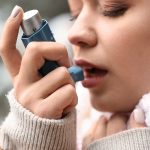
Women working the night shift appear to have an increased risk of asthma, a new study says. Women who only work nights have a 50% increased risk of moderate to severe asthma compared to those on the day shift, researchers reported June 16 in the journal ERJ Open Research. Researchers did not find a similar link between night shift work and asthma in men. “This type of research cannot explain why shift work and asthma are linked,” lead researcher Robert Maidstone, a research fellow at the University of Manchester in the U.K., said in a news release. “However, it could be because shift work disrupts the body clock, including the levels of male and female sex hormones.” Bolstering this argument, researchers found that postmenopausal women on the night shift not using hormone replacement therapy had a nearly doubled risk of moderate to severe asthma, results show. Asthma is already known to disproportionately impact women more than men, researchers said in background notes. “Women generally have more severe asthma, and higher rate of hospitalization and death from asthma compared to men,” Maidstone said. Previous research also has found that night shift workers are more likely to have moderate or severe asthma. This led researchers to see if night shift work would drive asthma risk even higher among women. For the study, researchers tracked the health of…  read on >  read on >

Women working the night shift appear to have an increased risk of asthma, a new study says. Women who only work nights have a 50% increased risk of moderate to severe asthma compared to those on the day shift, researchers reported June 16 in the journal ERJ Open Research. Researchers did not find a similar link between night shift work and asthma in men. “This type of research cannot explain why shift work and asthma are linked,” lead researcher Robert Maidstone, a research fellow at the University of Manchester in the U.K., said in a news release. “However, it could be because shift work disrupts the body clock, including the levels of male and female sex hormones.” Bolstering this argument, researchers found that postmenopausal women on the night shift not using hormone replacement therapy had a nearly doubled risk of moderate to severe asthma, results show. Asthma is already known to disproportionately impact women more than men, researchers said in background notes. “Women generally have more severe asthma, and higher rate of hospitalization and death from asthma compared to men,” Maidstone said. Previous research also has found that night shift workers are more likely to have moderate or severe asthma. This led researchers to see if night shift work would drive asthma risk even higher among women. For the study, researchers tracked the health of…  read on >  read on >

Talk therapy can help stroke survivors who are in the throes of depression or anxiety, a new study says. About half of patients (49%) fully recovered from a post-stroke mood disorder after participating in talk psychotherapy, researchers reported recently in the journal Nature Mental Health. Overall, 71% of stroke survivors experienced a significant improvement in symptoms of depression or anxiety through talk therapy, results show. “We also found that the sooner stroke survivors begin talking therapy, the better the outcomes,” lead author Jae Won Suh, a mental health research fellow with University College London in the U.K., said in a news release. “It is essential for general practitioners and other clinicians working with stroke survivors to screen for depression and anxiety symptoms and refer patients for psychological therapy as early as possible,” she added. It’s estimated that depression affects 1 in 3 stroke survivors, and anxiety more than 1 in 4, researchers said in background notes. Survivors have a doubled risk of depression and a quadrupled risk of anxiety in the first year after their stroke. For the new study, researchers tracked data from all 1.9 million patients who attended NHS Talking Therapies for Anxiety and Depression services in England between 2012 and 2019, including nearly 7,600 stroke survivors. The free National Health Service program offers cognitive-behavioral therapy and counseling for U.K. residents with mood…  read on >  read on >